Egypt's Red Sea is one of the most accessible, most varied, and most consistently rewarding liveaboard diving destinations in the world — and has been drawing divers from across Europe, the Middle East, and beyond for decades. Stretching more than 1,200 kilometres along Egypt's eastern coastline, the Egyptian Red Sea is a semi-enclosed body of water of extraordinary biological richness: over 1,100 species of reef fish, more than 200 types of coral, and a pelagic community that includes oceanic whitetip sharks, hammerheads, thresher sharks, and occasional whale sharks and manta rays. At least 10 percent of the fish species found here occur nowhere else in the world.
What makes Egypt exceptional as a liveaboard destination is the combination of variety and value that no other Red Sea nation can match. In the north, the waters around the Sinai Peninsula and Hurghada hold some of the most celebrated wreck dives on earth — including the SS Thistlegorm, arguably the most famous wreck dive in the world — alongside pristine reef systems, dramatic walls, and the protected marine park of Ras Mohammed. In the south, remote offshore pinnacles and island chains accessible only by liveaboard host concentrations of pelagic sharks that are among the most reliable in the Indian Ocean. In the deep south, close to the Sudanese border, St. John's Reef and the Fury Shoals system deliver some of the healthiest and most varied coral reef diving in the entire Red Sea.
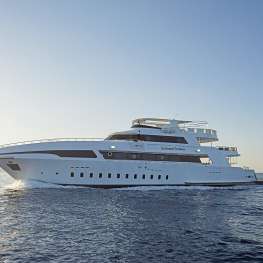
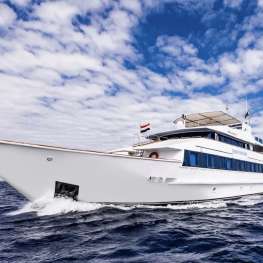
Egypt liveaboards are available year-round, operate from four major ports, and span every price point from budget-friendly safari boats to premium luxury vessels — making the Red Sea one of the most logistically straightforward liveaboard destinations in the world to plan and book.
Why Dive Egypt by Liveaboard
Egypt's Red Sea rewards liveaboard divers for a simple and compelling reason: its best dive sites are offshore, spread over a vast stretch of coastline, and cannot be meaningfully reached by day trips from any single base. The SS Thistlegorm lies 90 kilometres from Sharm el-Sheikh by sea. The Brothers Islands are 68 kilometres from Hurghada. Daedalus Reef sits 80 kilometres from Marsa Alam. Fury Shoals and St. John's Reef are only reachable after full overnight passages from the nearest port. A liveaboard connects all of these sites into a single itinerary, moving overnight while you sleep and delivering you to the next dive site fresh and ready at first light.
Beyond simple access, a liveaboard in Egypt means diving the offshore sites — the Brothers, Daedalus, Elphinstone, Fury Shoals — in a fundamentally different environment from the crowds that day boats generate at accessible sites near the coast. Egypt's offshore marine parks prohibit day-tripping entirely at many of their most sensitive sites, and the combination of permit requirements and passage distances means that liveaboard divers at these locations typically share the water with a handful of other boats rather than dozens. For a destination as popular as Egypt, this level of exclusivity at the best sites is remarkable, and it is the liveaboard that makes it possible.
Egypt is also one of the most cost-effective liveaboard markets in the world. The large number of operators, vessels, and routes creates genuine competition that keeps prices lower than comparable destinations in Southeast Asia or the Pacific, without any sacrifice in diving quality at the offshore sites that matter most.
Egypt Liveaboard Seasonal Guide
Egypt's Red Sea can be dived year-round, and the different seasons each bring their own highlights. Understanding the seasonal marine life calendar is the key to timing your trip around the encounters that matter most to you.
From December to February, water temperatures drop to around 22°C to 24°C and surface conditions can be windier, but this is the peak season for oceanic whitetip shark encounters — the species is most abundant and most reliably encountered at Brothers, Elphinstone, and Daedalus during these cooler months. It is also the best time to combine a Red Sea liveaboard with cultural tourism on land, as the cooler air temperatures make exploring Cairo, Luxor, and the Valley of the Kings far more comfortable.
From March to May, conditions throughout the Red Sea are at their most balanced — water temperatures of 24°C to 26°C, lighter winds, good visibility, and reef life at its most active. This is high season, and the most popular booking window. Whale sharks are occasionally spotted in the northern Red Sea during these months. Popular sites can be busier than at other times of year.
From June to August, air temperatures become intense but the diving rewards are considerable: hammerhead sharks are driven further north by the warmer surface water and are encountered more reliably at Brothers and Daedalus during these months. Summer is Egypt's low season for tourism, meaning liveaboard prices are often at their most competitive and popular sites have fewer visiting boats.
From September to November, the ideal combination of comfortable temperatures and peak thresher shark season makes this the second-highest-demand booking window of the year. Thresher sharks are most reliably encountered at Brothers, Elphinstone, and Shaab Sharm during these months, often visiting cleaning stations at depth in the early morning dives.
Liveaboard Diving Regions in Egypt
Egypt's Red Sea divides naturally into two liveaboard regions, each departing from different ports and offering a distinct character, primary experience, and optimal diving season. Many itineraries combine elements of both in a single week-long route — particularly the central "BDE" circuit covering the Brothers, Daedalus, and Elphinstone — which sits at the transition between north and south and is the most popular Egypt liveaboard route of all.
Northern Egypt
The Northern Red Sea — encompassing the waters around Sharm el-Sheikh, Hurghada, Safaga, and the Sinai Peninsula — is where most divers begin their Egypt liveaboard experience, and where the world's most famous wreck diving is concentrated. Liveaboards depart from Sharm el-Sheikh (served by Sharm el-Sheikh International Airport, SSH) and Hurghada (Hurghada International Airport, HRG), both of which have direct international connections from across Europe and the Middle East, making the northern Red Sea one of the easiest liveaboard destinations in the world to reach.
The undisputed centrepiece of northern Egypt diving is the SS Thistlegorm — a British WWII supply vessel sunk by German bombers in October 1941 in the northern Red Sea, rediscovered by Jacques Cousteau in the 1950s, and now regarded as one of the greatest wreck dives on earth. The Thistlegorm rests in 30 metres of water with its cargo holds open and intact: motorcycles, trucks, aircraft parts, railway carriages, rifles, and soldiers' boots lie exactly where they came to rest after the ship sank, now draped in soft corals and inhabited by a thriving community of fish that make every penetration dive into the holds a dual encounter with history and marine life. The Abu Nuhas reef system in the Shadwan Channel adds four more significant wrecks — the Carnatic, the Giannis D, the Chrisoula K, and the Kimon M — creating a wreck diving concentration found nowhere else in the Red Sea.
Beyond the wrecks, the northern Red Sea offers outstanding reef diving. Ras Mohammed National Park, at the southern tip of the Sinai Peninsula, is one of Egypt's oldest and most protected marine reserves, with the famous Shark Reef and Yolanda Reef walls delivering abundant fish life, eagle rays, and schooling pelagics in one of the most dramatic reef environments in Egypt. The Straits of Tiran — a narrow passage between the Sinai and Saudi Arabia — generate currents that concentrate extraordinary numbers of fish at the four major reefs of Jackson, Woodhouse, Thomas, and Gordon, making it one of the most productive drift diving circuits in the northern Red Sea. Whale sharks are occasionally spotted in the northern Red Sea between March and May, adding a welcome element of pelagic surprise to what is primarily a wreck and reef diving region.
The north is the most accessible region for less experienced divers — many sites are in relatively sheltered waters, depths are manageable, and the combination of wreck history and reef diversity makes for a full and varied week of diving without requiring significant current experience. Best season: March to May for optimal conditions and whale shark potential; October to November for good conditions and fewer crowds.
Southern Egypt
The Southern Red Sea — extending from the offshore marine parks of the Brothers and Daedalus down through Elphinstone Reef, the Fury Shoals system, and the remote reefs of St. John's close to the Sudanese border — is where Egypt's liveaboard diving reaches its most dramatic, its most pristine, and its most pelagic. Liveaboards serving the south depart from Port Ghalib (Marsa Alam International Airport, RMF) or Hamata, with some central itineraries operating out of Hurghada to cover both the BDE circuit and sites further north in a single route.
The Brothers Islands — Big Brother and Little Brother — are the iconic centrepiece of southern Egypt liveaboard diving, and consistently rank among the finest dive sites in the entire Red Sea. These two tiny, remote limestone islands rise sheer from the open sea, surrounded on all sides by vertical walls plunging hundreds of metres into blue water, encrusted in a dense tapestry of hard and soft corals that rivals anything in the Indo-Pacific for colour and coverage. The marine life above the reef matches the coral quality: schooling hammerhead sharks gather here particularly from May to July when conditions concentrate them in numbers of five to ten at a time; oceanic whitetip sharks patrol the outer walls throughout the year and are most reliably encountered from October to December, when they are at peak density; thresher sharks visit cleaning stations from September to November. Two historic wrecks — the Numidia and the Aida — rest on the Brothers' walls, adding a dive dimension that no other offshore reef system in the southern Red Sea can offer.
Daedalus Reef, a remote circular reef 90 kilometres southwest of Marsa Alam, is famous for its schooling hammerheads — the site reliably produces aggregations of scalloped hammerheads particularly from May to July, sometimes in groups of 20 or more — as well as manta ray sightings at its anemone gardens and regular encounters with oceanic whitetips at its exposed northern tip. Elphinstone Reef, closer to the coast at 7 miles from shore, is a dramatically elongated reef with sheer walls dropping to beyond 70 metres, celebrated for its dense populations of oceanic whitetip sharks and regular thresher shark encounters at its northern and southern plateaus.
Further south, the Fury Shoals is a vast mosaic of reef systems, coral gardens, swim-throughs, and lagoons spread over more than 100 kilometres of coastline that offers some of the most varied and least crowded diving in Egypt. Shaab Sataya within the Fury Shoals system is home to a resident pod of spinner dolphins that regularly interact with divers in the water, creating encounters that are both joyful and memorable. At Shaab Claudio, an extraordinary concentration of moray eels, lionfish, and reef life inhabits a complex of caves and overhangs. St. John's Reefs, at the southernmost extremity of Egyptian diving close to the Sudanese border, require a full liveaboard passage to reach and deliver reef diving of a remoteness, health, and visual drama rarely matched elsewhere in the Red Sea — cave systems illuminated by shafts of natural light, walls carpeted in pristine coral, and a large-fish community that reflects the near-complete absence of fishing pressure.
Diving in the south requires more experience than the north. Most southern marine parks require a minimum of 50 logged dives for entry, currents are stronger, seas more exposed, and conditions more variable. The south rewards divers who are ready for it with a level of encounter quality and diversity that consistently exceeds expectations. Best season: May to July for hammerheads at Brothers and Daedalus; October to December for oceanic whitetips; September to November for thresher sharks; year-round for reef and wide-angle photography.
How to Choose Your Egypt Liveaboard Route
Egypt's two regions serve genuinely different diver profiles, and the right route depends on your experience level, diving priorities, and the time of year you can travel.
First-time Egypt liveaboard divers, or those whose priority is wreck diving and reef variety in accessible conditions, should begin with the Northern Red Sea. A seven-night northern itinerary covering the SS Thistlegorm, Abu Nuhas, Ras Mohammed, and the Straits of Tiran delivers an exceptional range of dive experiences that would satisfy the most demanding diver. Conditions are generally manageable for Advanced Open Water certified divers, and the logistical simplicity of flying directly into Sharm el-Sheikh or Hurghada makes the north the easiest entry point into Egypt liveaboard diving.
Divers with 50 or more logged dives, an Advanced Open Water certification, and a specific interest in large pelagic sharks should plan a southern or central itinerary. The "Simply the Best" or BDE route — Brothers, Daedalus, Elphinstone — is widely regarded as the finest one-week liveaboard itinerary in Egypt, combining the three most productive shark diving sites in the Red Sea in a single trip that most operators consider the pinnacle of what the Egyptian Red Sea can offer. The best months for this route are May to July for hammerheads and October to December for oceanic whitetips.
Divers who want the deepest and most remote experience Egypt has to offer should extend their itinerary to include Fury Shoals and St. John's on a 10-night deep-south departure from Port Ghalib. These longer itineraries cover the full spectrum of southern Red Sea diving from the Brothers down to the Sudanese border and back, and represent Egypt at its most wild and least crowded.
Combined northern and southern routes of 10 to 14 nights are also available for divers who want to experience both the historic wreck diving of the north and the shark-focused offshore reefs of the south in a single trip.
Contact our liveaboard diving specialists for personalised Red Sea liveaboard advice
Frequently Asked Questions
When is the best time to dive Egypt by liveaboard?
Egypt can be dived year-round, and the best time depends on which marine species you most want to encounter. March to May and September to November offer the most balanced conditions overall — comfortable temperatures, good visibility, and active marine life. For oceanic whitetip sharks, December to February is peak season. For hammerheads at Brothers and Daedalus, May to July is most productive. For thresher sharks, September to November is optimal. Summer months offer competitive pricing and good hammerhead encounters despite the hot air temperatures.
How much diving experience do I need for Egypt?
It varies significantly by region. Northern Red Sea itineraries are suitable for Open Water certified divers with reasonable experience in wreck diving or an interest in learning. Southern Red Sea marine parks — including the Brothers Islands, Daedalus, and Elphinstone — officially require a minimum of 50 logged dives and Advanced Open Water certification for entry. Some operators also recommend or require previous liveaboard experience for the deeper south itineraries. Northern routes are Egypt's best starting point for less experienced divers.
Is nitrox available on Egypt liveaboards?
Yes — nitrox is available on the vast majority of Egypt liveaboards, either included in the price or available for a small supplement. Many of the larger operators, including Emperor Divers, include nitrox as standard on all routes. Onboard nitrox certification courses are widely offered for divers who want to qualify during their trip.
What is the SS Thistlegorm, and why is it so famous?
The SS Thistlegorm was a British merchant vessel sunk by German bombers in 1941 while carrying military supplies to the Allied forces in North Africa. She rests in 30 metres of water in the northern Red Sea, her cargo holds open and largely intact — a time capsule of wartime material including motorcycles, trucks, aircraft parts, rifles, and personal effects, now coated in decades of coral growth and teeming with fish life. Jacques Cousteau rediscovered the wreck in the 1950s, and she has been regarded as one of the world's finest wreck dives ever since. Diving the Thistlegorm is a near-universal ambition for any diver visiting the Egyptian Red Sea, and is typically included on all northern itineraries.
Can complete beginners dive in Egypt?
Yes — Egypt's northern Red Sea has numerous sites suitable for Open Water certified beginners, and some liveaboards actively cater to divers who want to complete their certification or advance their training during the trip. Conditions in sheltered northern sites around Hurghada and the Sinai are often gentle, and the wreck and reef diving available in the north is accessible and rewarding for newer divers. Southern itineraries require more experience and are not recommended as a first diving destination.
Part of Indian Ocean & Red Sea · Browse all Egypt liveaboards
Marine life
The Red Sea is one of the most biodiverse seas in the world. Highlights include:
- Reef sharks (grey, hammerhead, oceanic at offshore reefs)
- Dolphins (Spinner, bottlenose) — common
- Turtles (green, hawksbill)
- Crown-of-thorns starfish on reefs
- Schools of jacks, snappers, barracuda
- Thick coral gardens, gorgonians, soft corals
- Schools of barracuda at Daedalus and Elphinstone
- Historical Thistlegorm wreck
What to pack
Diving gear
- 5mm full wetsuit (most divers — water 26-29°C)
- Hood optional but recommended for thermoclines
- Mask, snorkel, fins
- Dive computer
- SMB + reel
Clothing & personal
- Reef-safe sunscreen
- Long-sleeve UV top
- Light rain jacket
- Quick-dry towel
- Insect repellent
Documents & health
- Dive certification + logbook
- Dive insurance
- Passport (6+ months)
- Personal medications