- Best-Price Guarantee
- 24/7 Expert Support
- No Booking Fees
- Direct with Operators
- 500+ Boats Worldwide
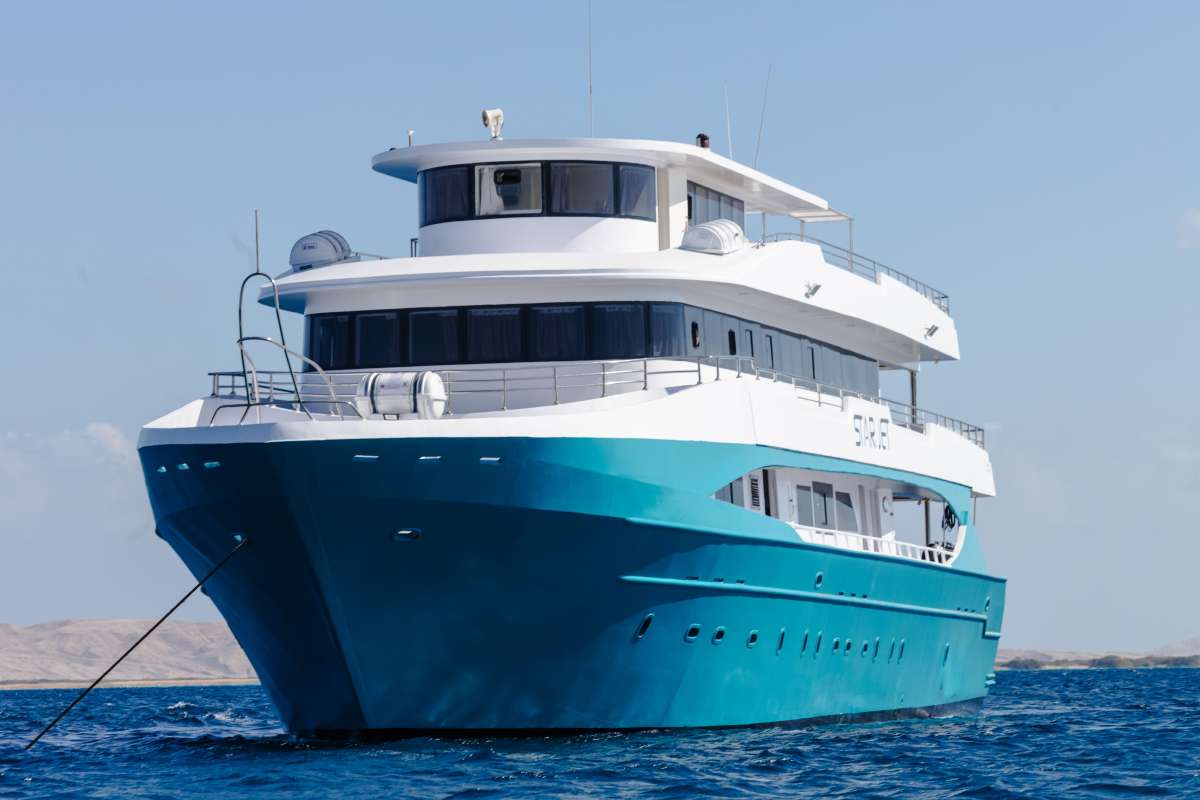
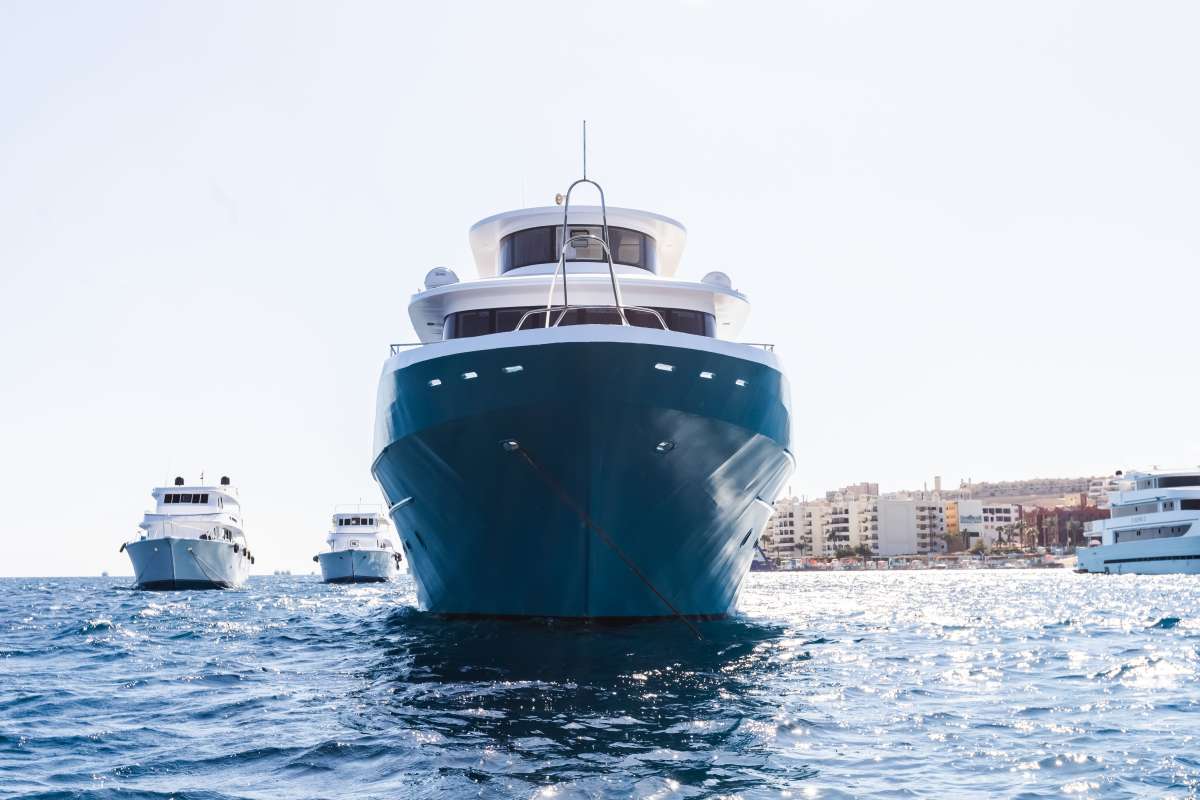
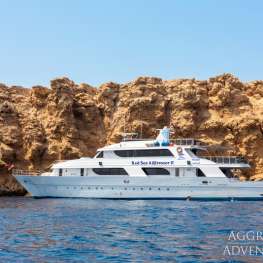
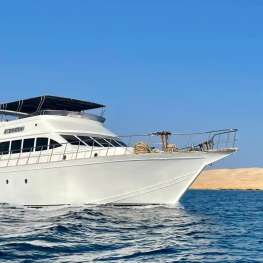
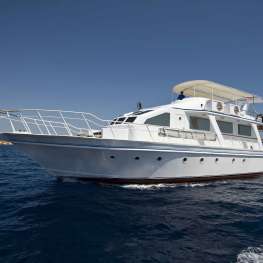
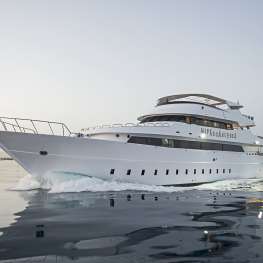
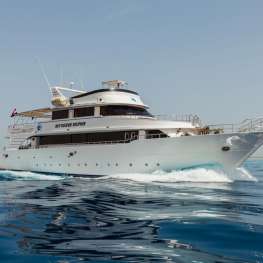
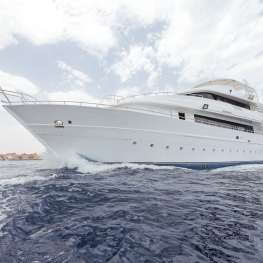
Star Jet is a 35-metre steel Red Sea liveaboard, comprehensively renovated in 2025 and currently sold for up to 28 guests in 14 ensuite cabins. Five bookable room categories span the lower, main and sun decks, while two sun decks, an air-conditioned salon, a photographer-friendly dive deck and two speedboats support routes from Thistlegorm and Tiran to Brothers, Daedalus, Elphinstone, St. John’s and Fury Shoals.
Description
Boat
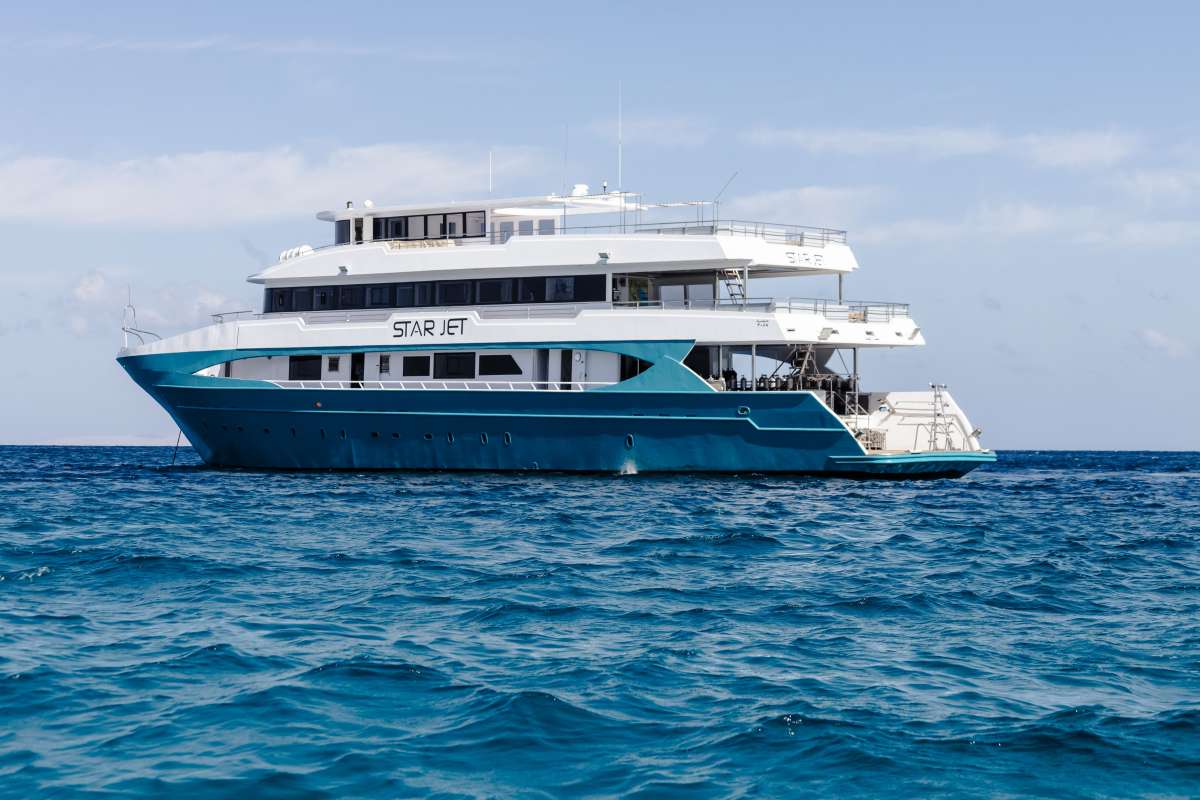
M/Y Star Jet combines the volume of a steel safari vessel with a bright, contemporary finish following her 2025 renovation. The current detailed sales specification gives a length of 35 metres and a beam of 8.9 metres. Her working layout is designed around week-long Red Sea expeditions: accommodation is separated across three decks, meals and briefings take place in an air-conditioned interior, and two extensive sun decks give guests somewhere to spread out between dives.
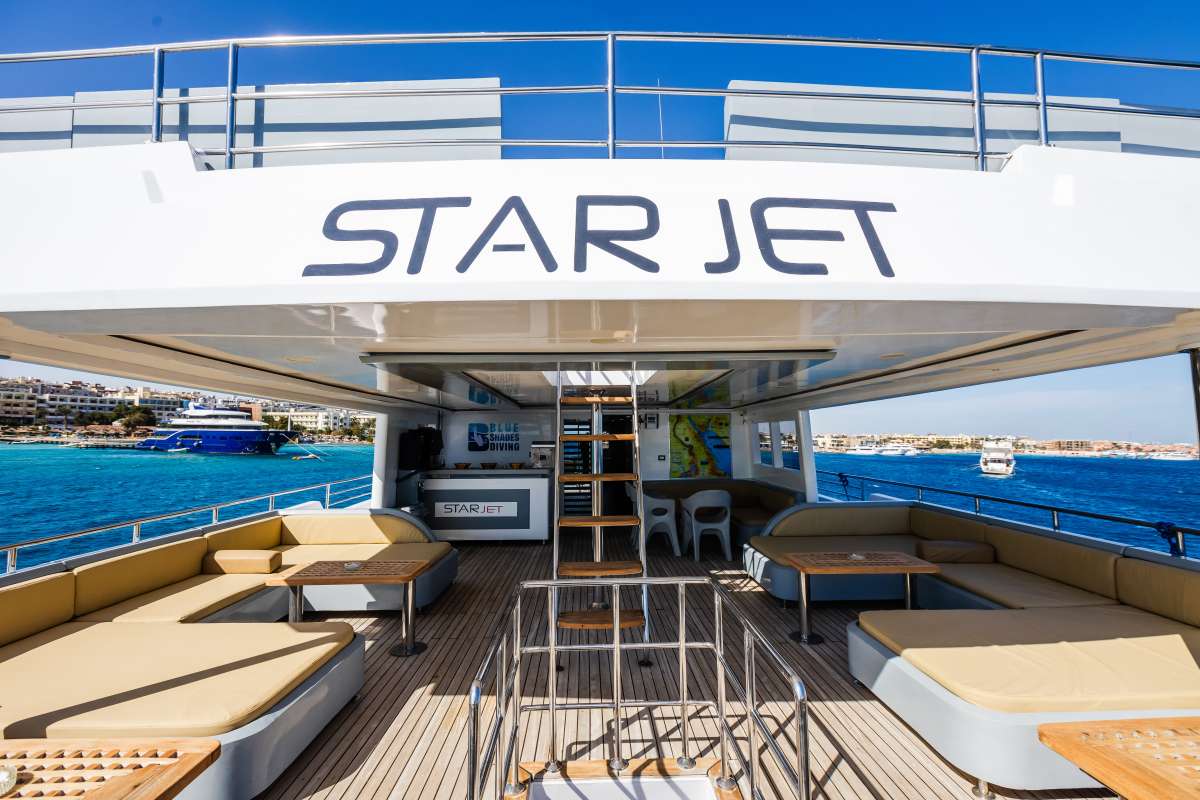
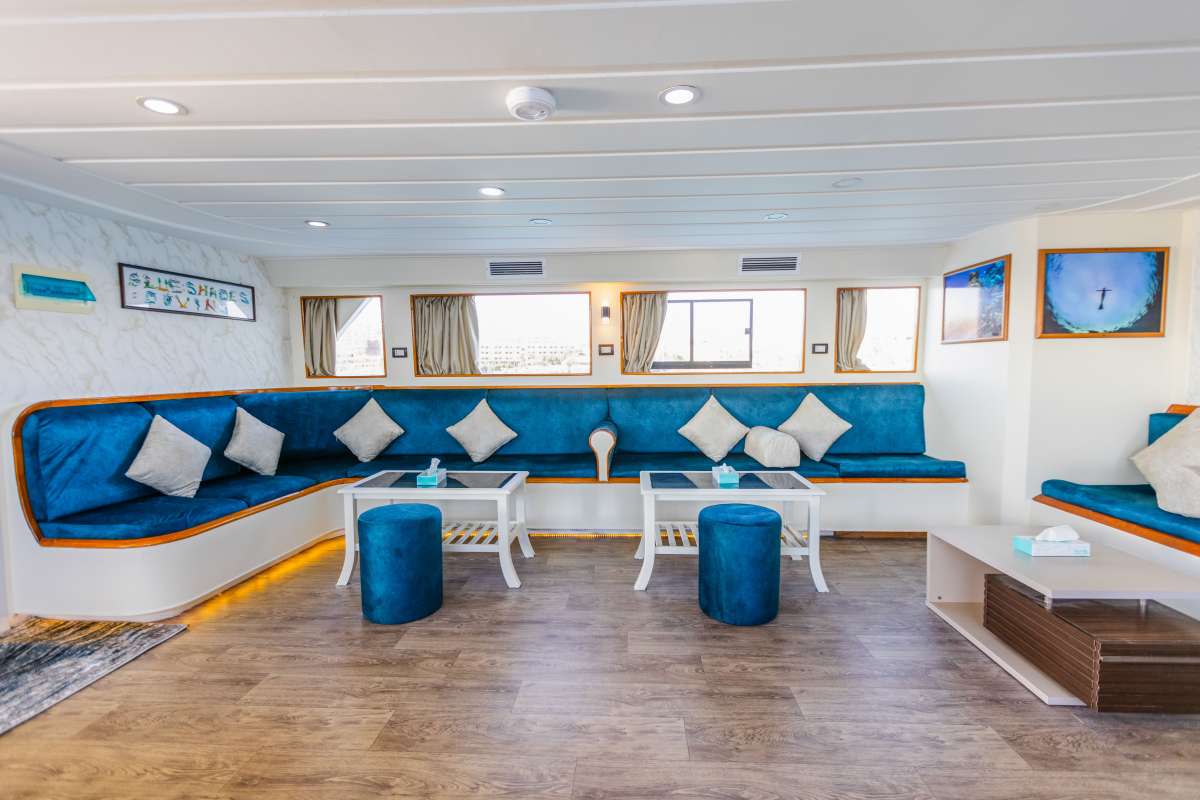
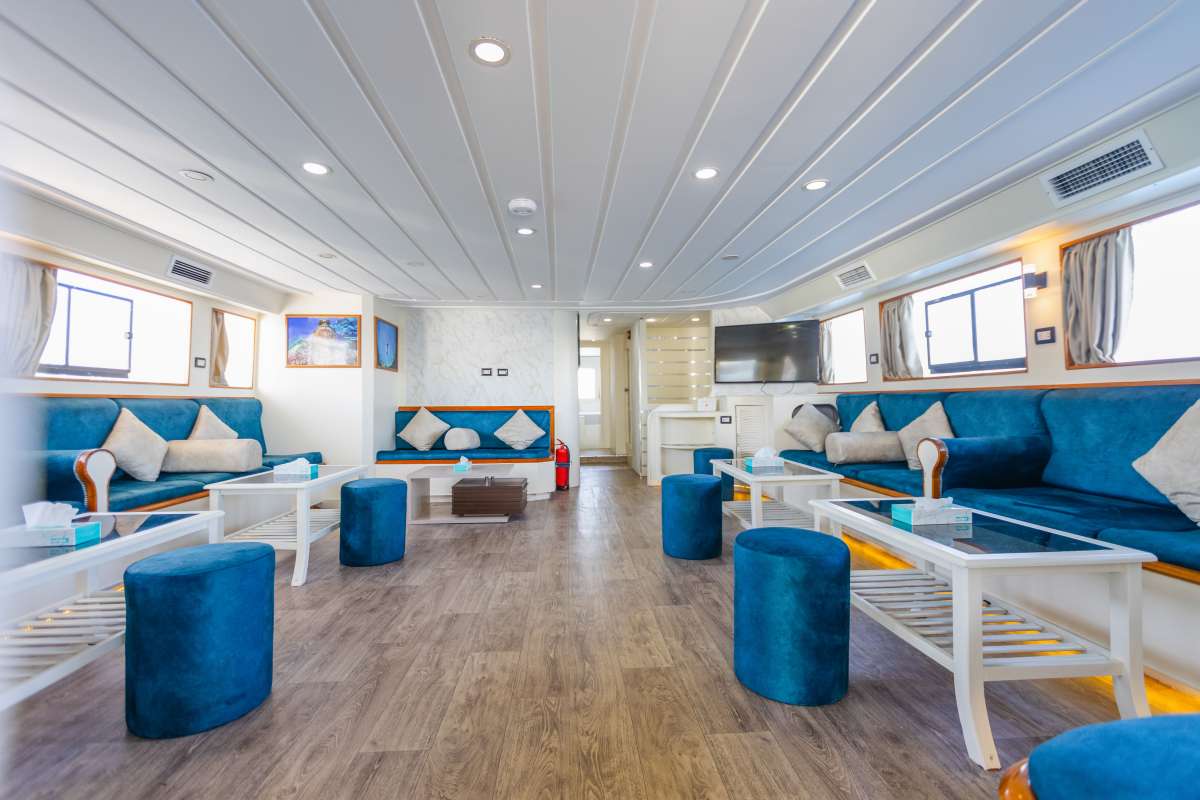
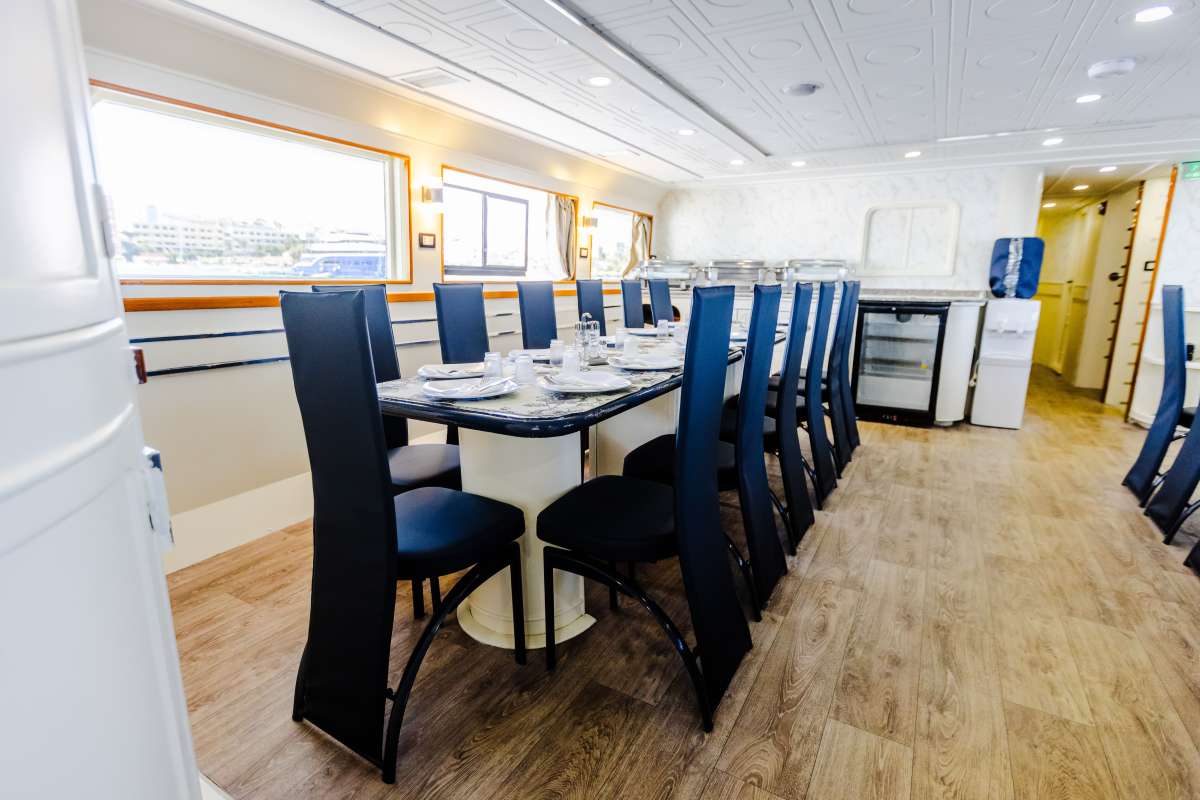
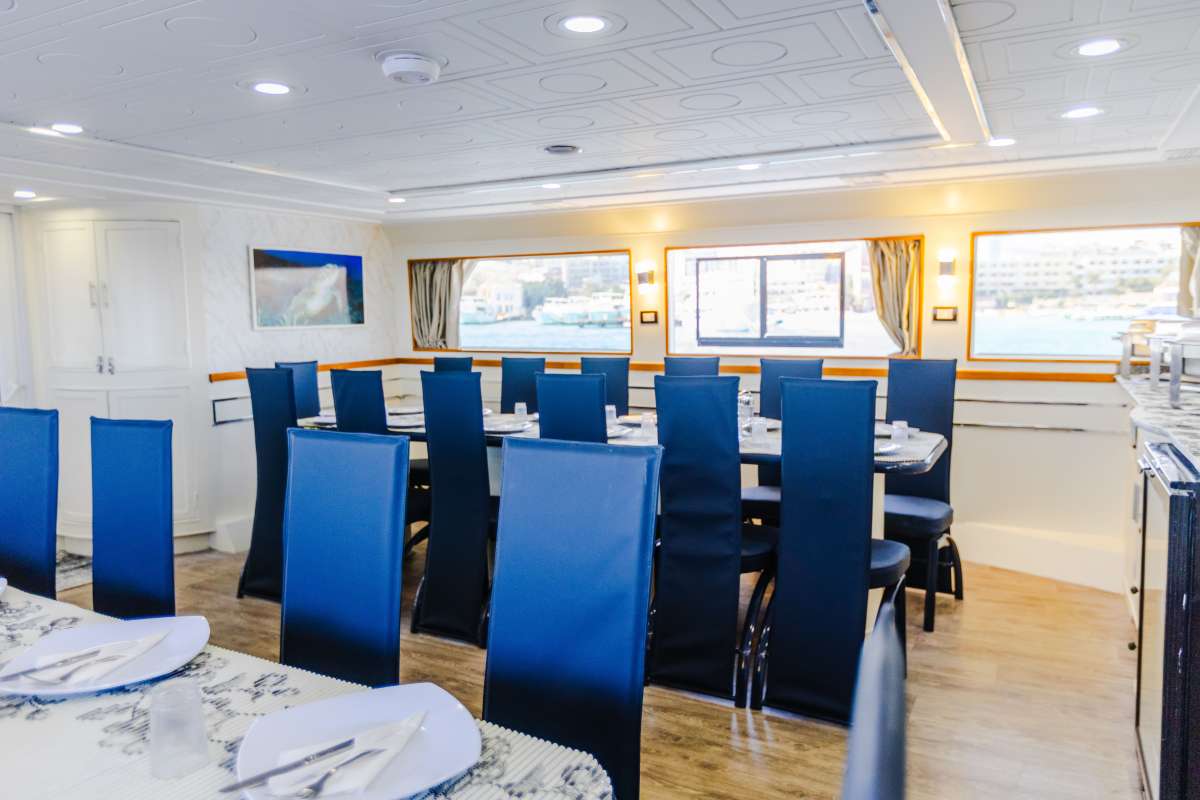
The indoor salon uses wraparound seating, pale finishes and broad windows to keep the room open and social. It incorporates a bar and entertainment area with television and DVD facilities, while Wi-Fi is available when the vessel’s offshore connection permits. The adjoining dining room is arranged for buffet service. Menus combine Egyptian and international cooking, with fish, seafood, chicken, beef and advance-request vegetarian or vegan options. Snacks and non-alcoholic drinks remain accessible between the main meals.
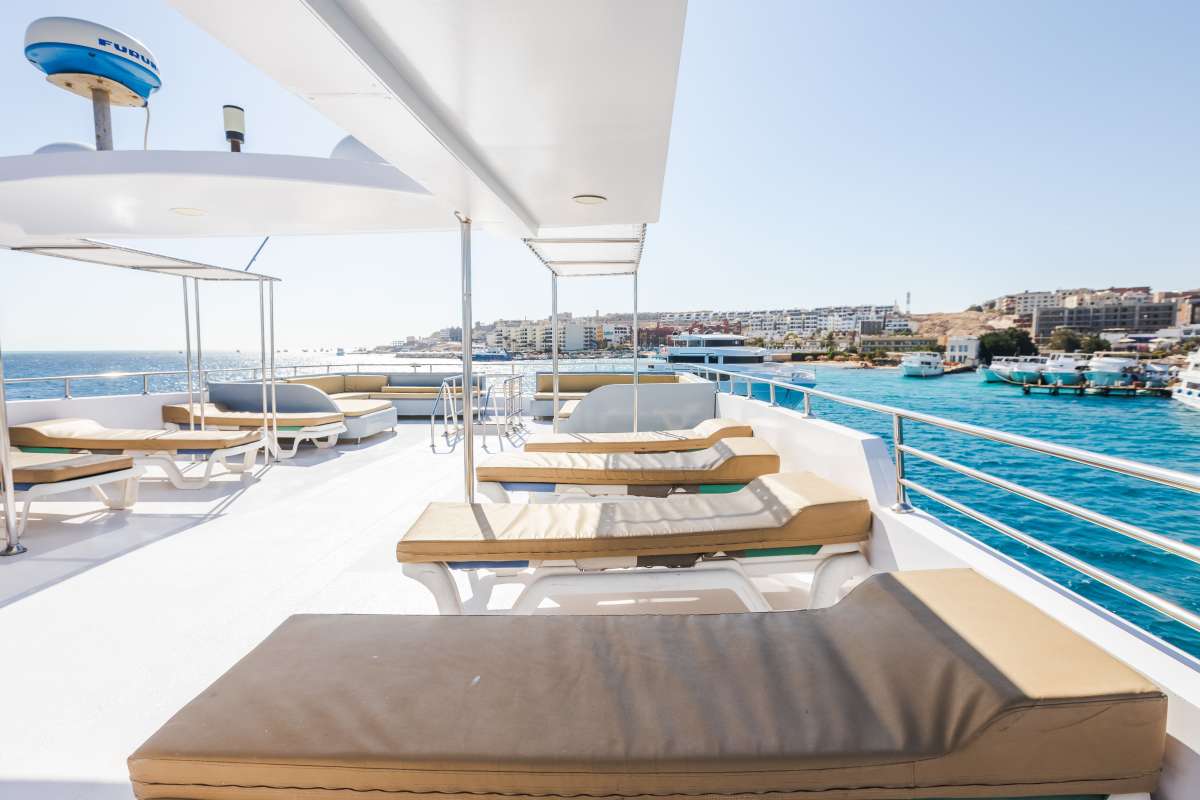
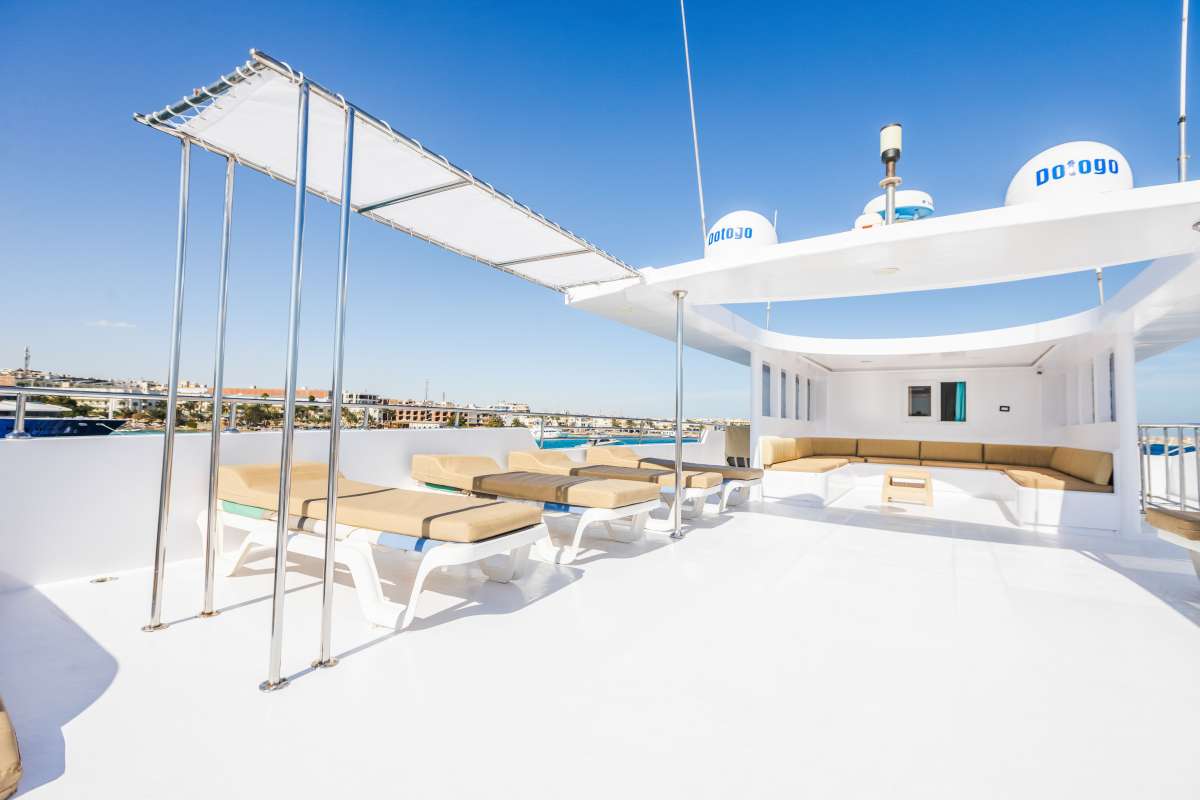
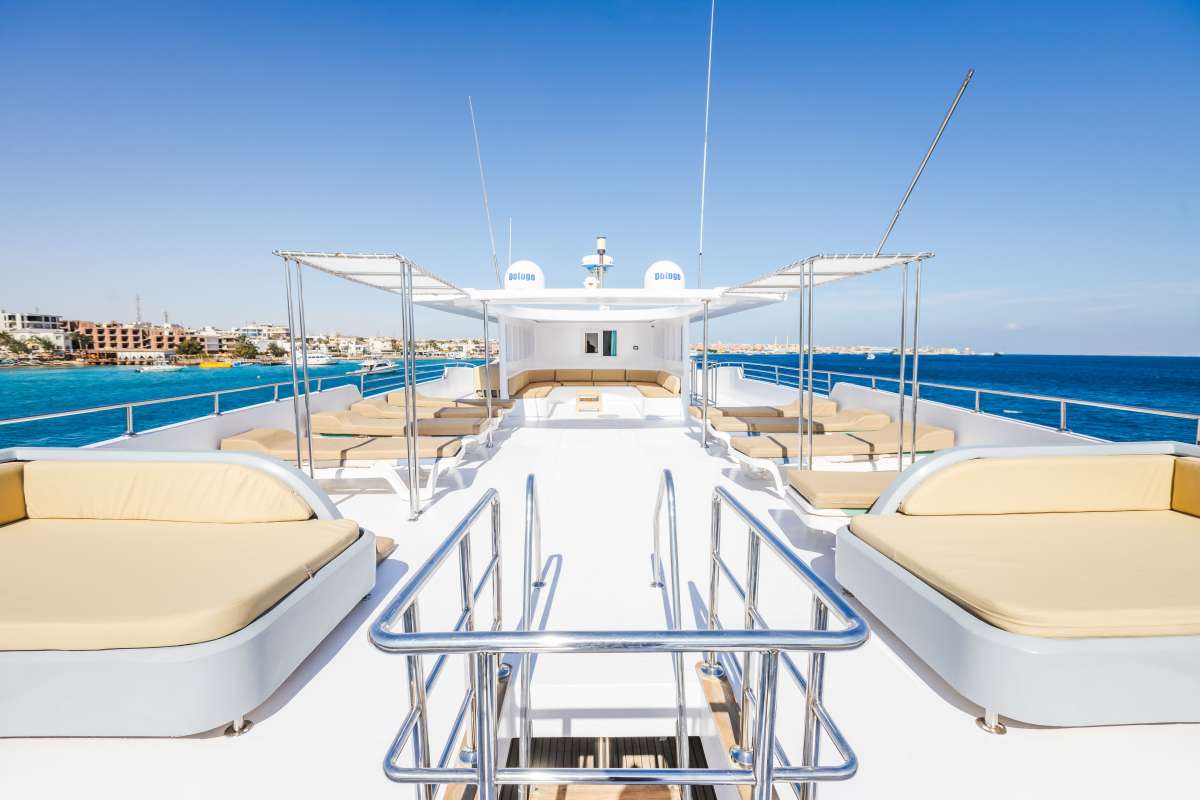
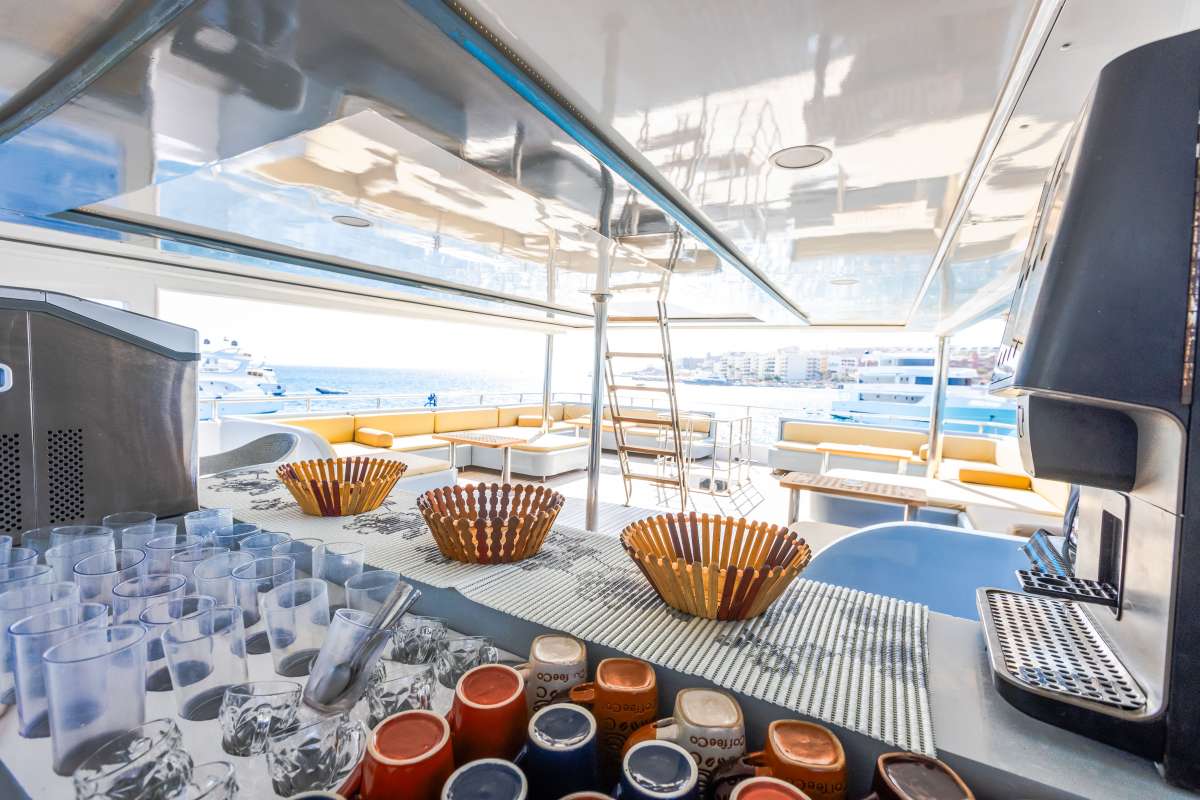
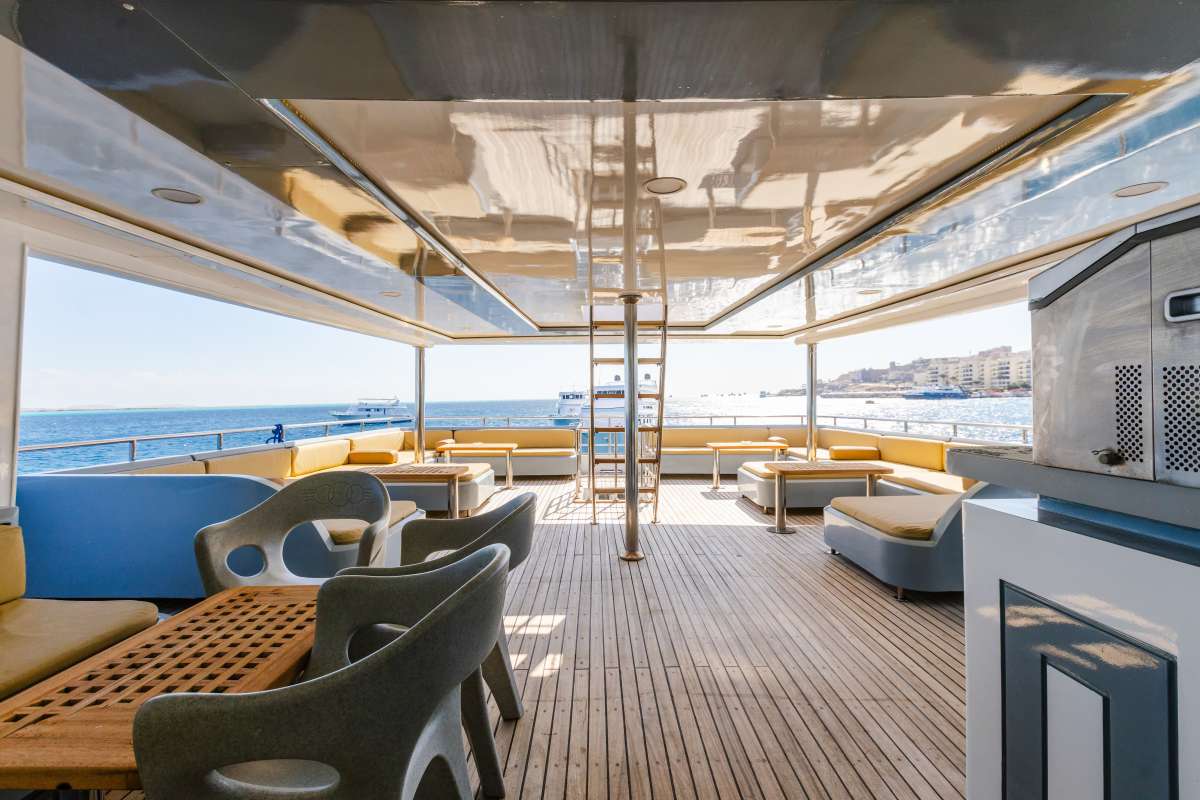
Outside, shaded sofas, open sunbeds and a separate bar area allow guests to choose between breeze, sun and shelter. This is particularly valuable on an intensive itinerary: the dive deck can stay organised for cylinders and equipment while non-divers or resting divers retain comfortable outdoor space. Snorkelling equipment, paddleboards and kayaks are listed among the leisure options, but their availability should be reconfirmed for the chosen departure rather than assumed for a private charter.
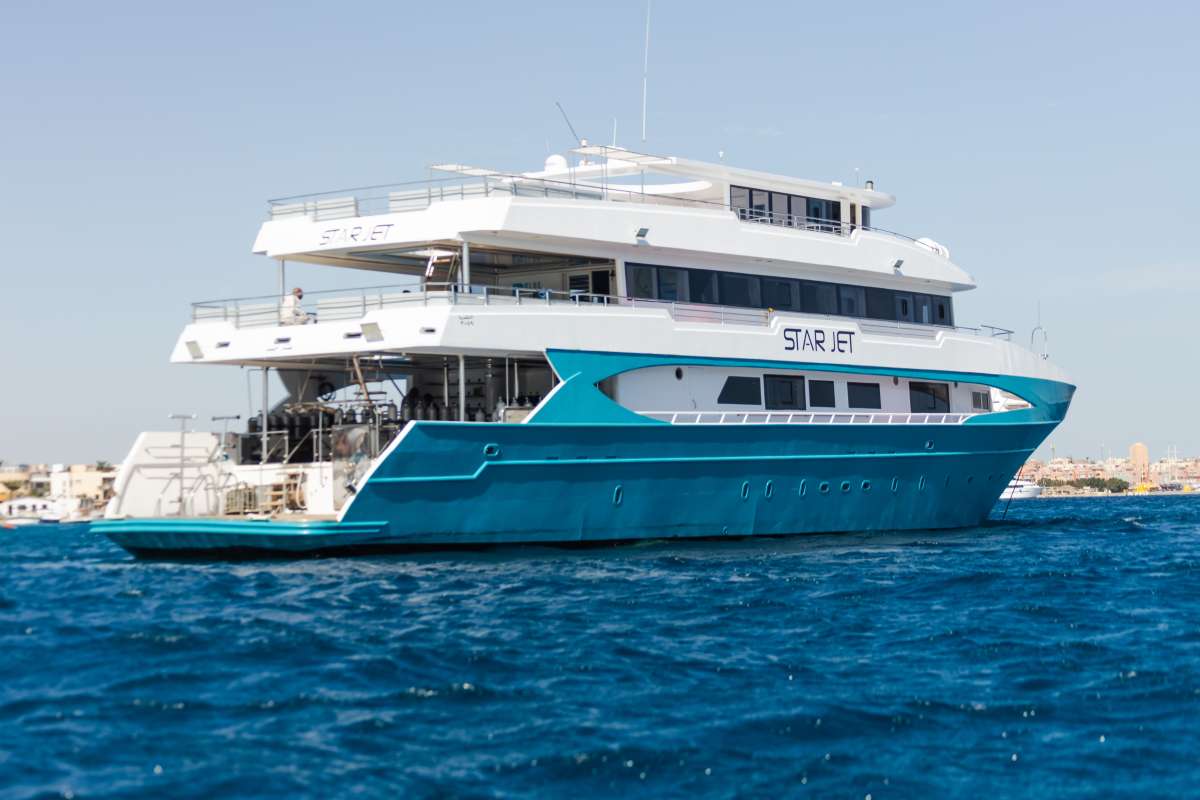
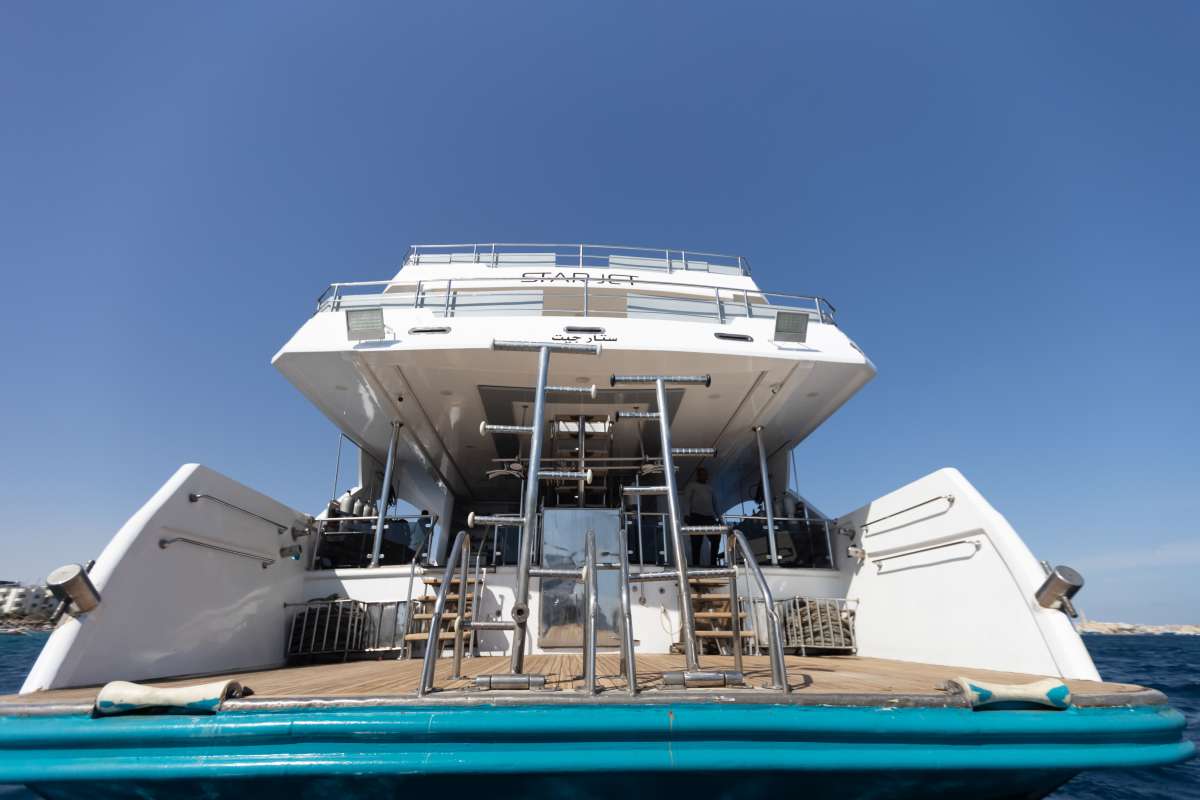
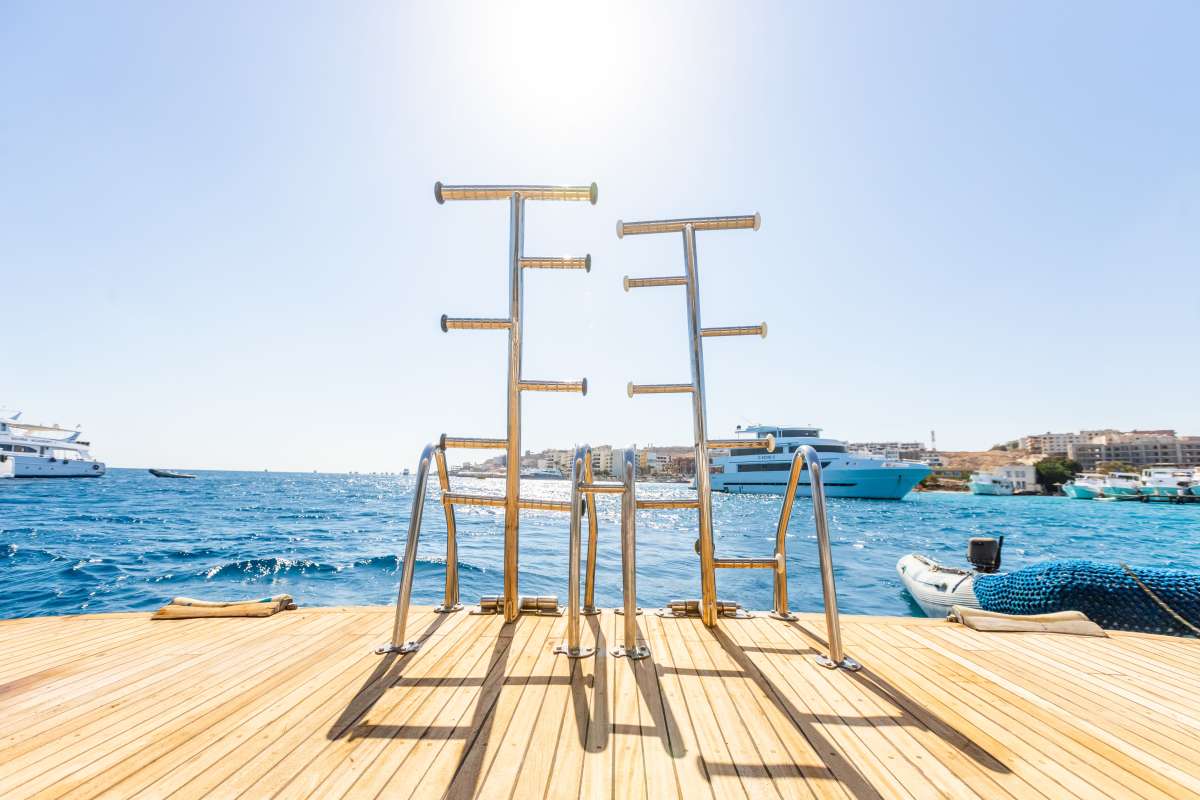
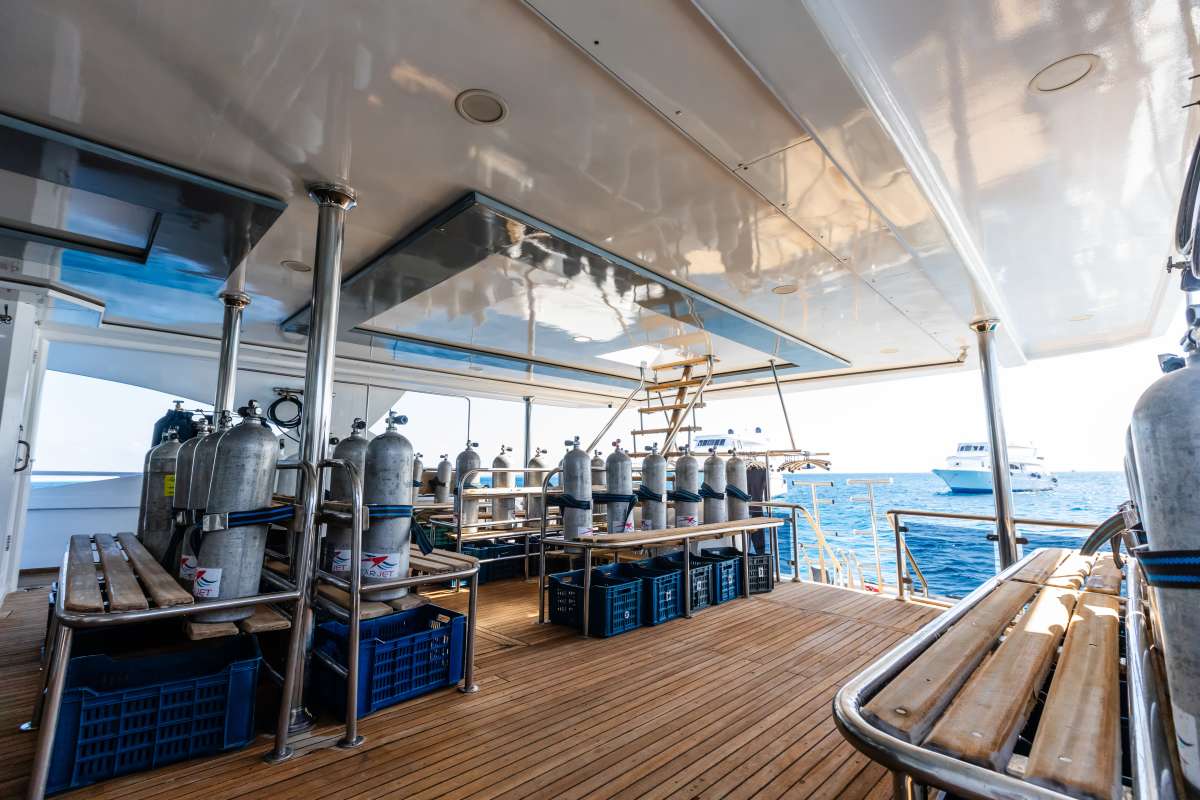
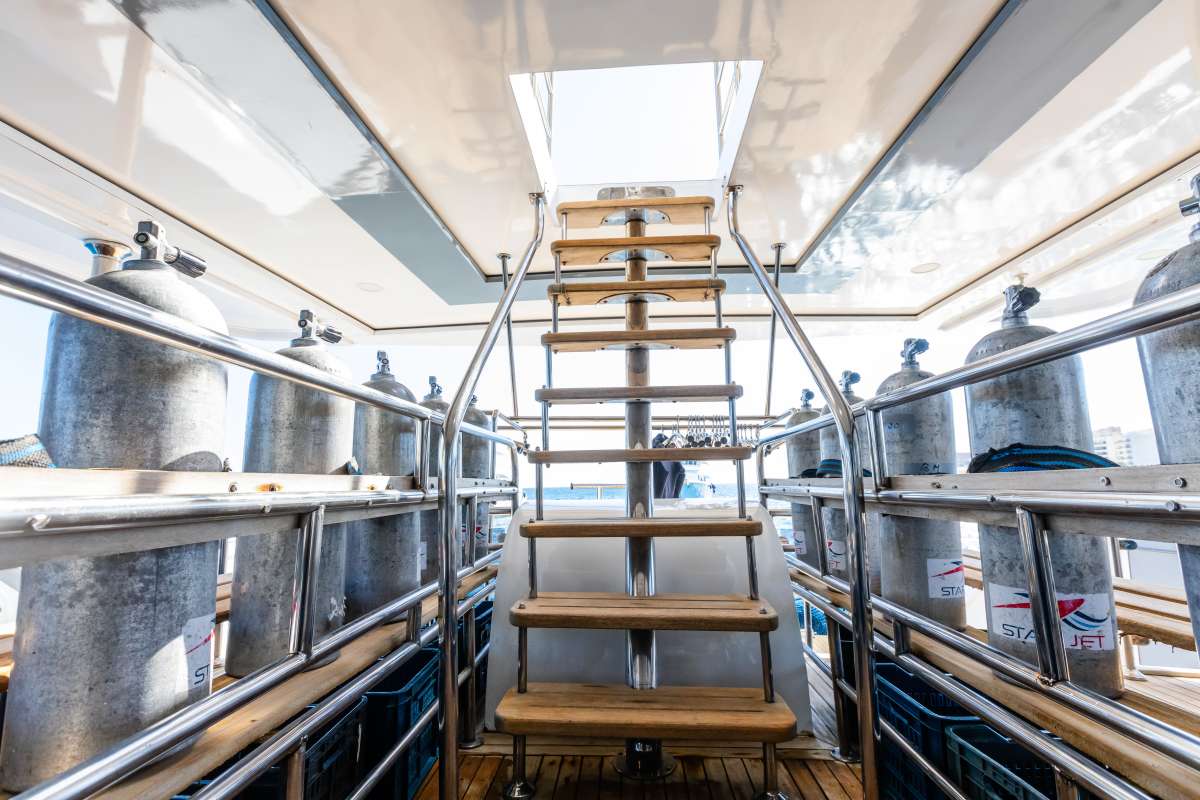
Star Jet’s stern is purpose-built for repeated entries. The broad shaded dive deck provides individual working positions, storage crates, rinse hoses, outdoor freshwater showers and two speedboats for sites where the main hull cannot approach. Underwater photographers have a camera table, charging points, dedicated storage and a separate camera rinse. Nitrox, sidemount and rebreather support are advertised, but gases, cylinders and compatible consumables must be ordered before arrival.
The current technical record lists two Mercedes engines, 15-knot cruising and a 25-knot published maximum. Navigation and emergency equipment includes radar, depth sounder, GPS, VHF/DSC/SSB radio, EPIRB, emergency rafts, life jackets, fire detection and extinguishers, oxygen, first-aid kits, a bilge alarm, searchlight, engine-room CCTV and flares. Equipment lists cannot replace the captain’s embarkation briefing: guests should locate their life jacket, nearest exit and muster point before sailing.
Cabin
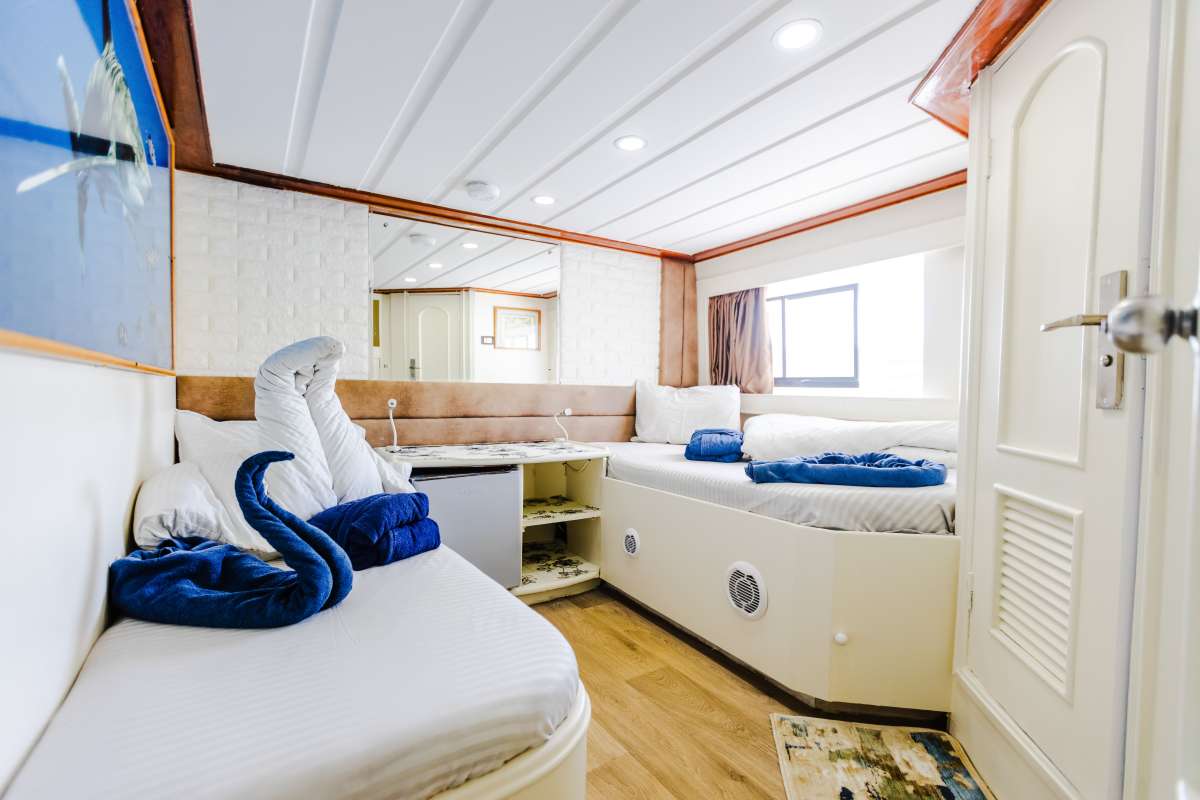
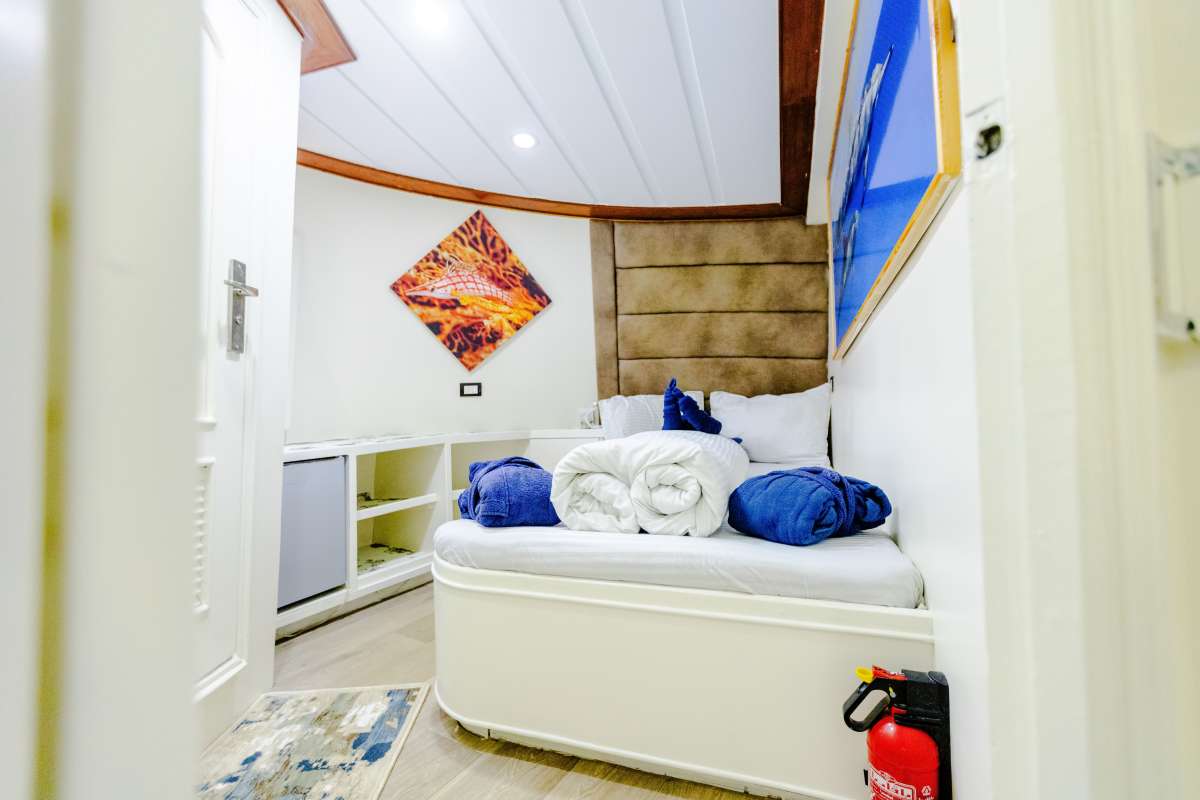
The current bookable inventory accommodates 28 guests in 14 air-conditioned ensuite cabins. Its five categories reconcile exactly:
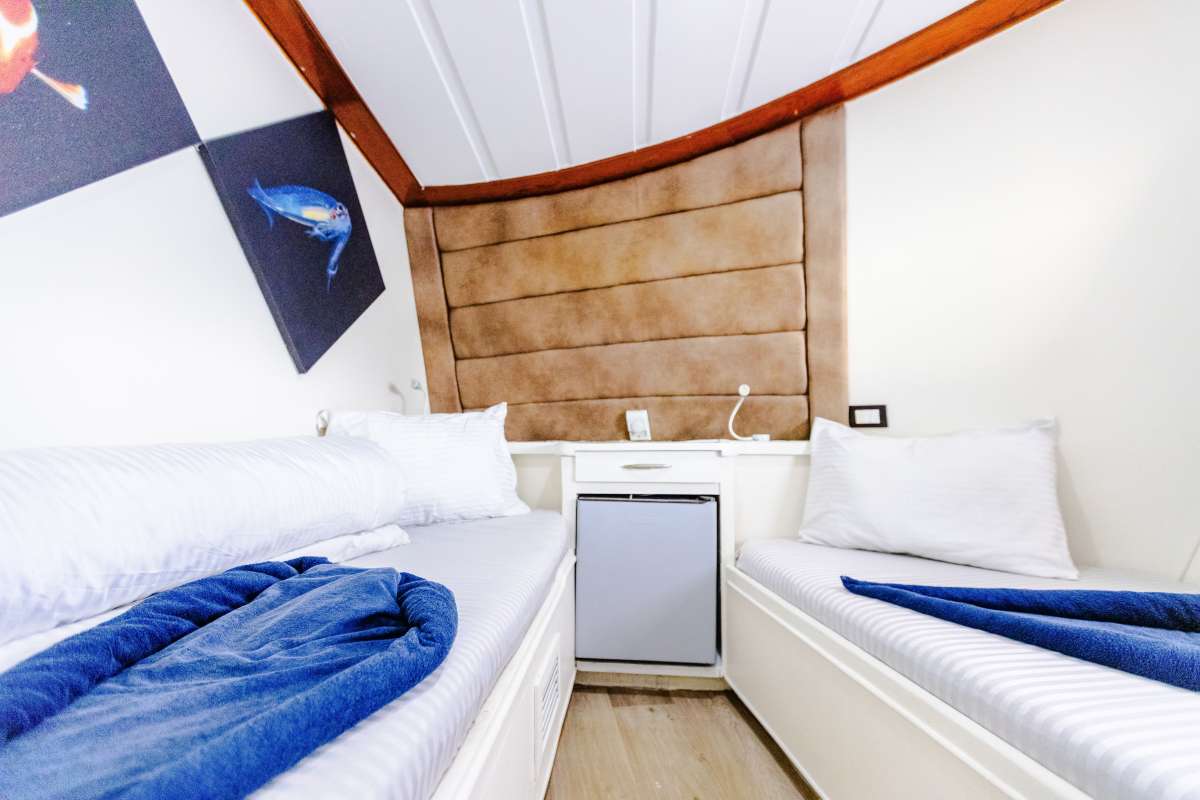
- 7 Lower Deck Share Cabins — approximately 11 m²: sold under the Lower Deck Twin category; the detailed room text shows one double bed plus one single bed in most rooms, while the inventory note says two rooms have two twin beds and five have a double-plus-single arrangement; porthole, mini-fridge, storage, private shower and toilet, individual air-conditioning control; maximum 2 guests per cabin
- 1 Main Deck Double Cabin — approximately 12 m²: one double bed, porthole, mini-fridge, storage, private shower and toilet, individual air-conditioning control; maximum 2 guests
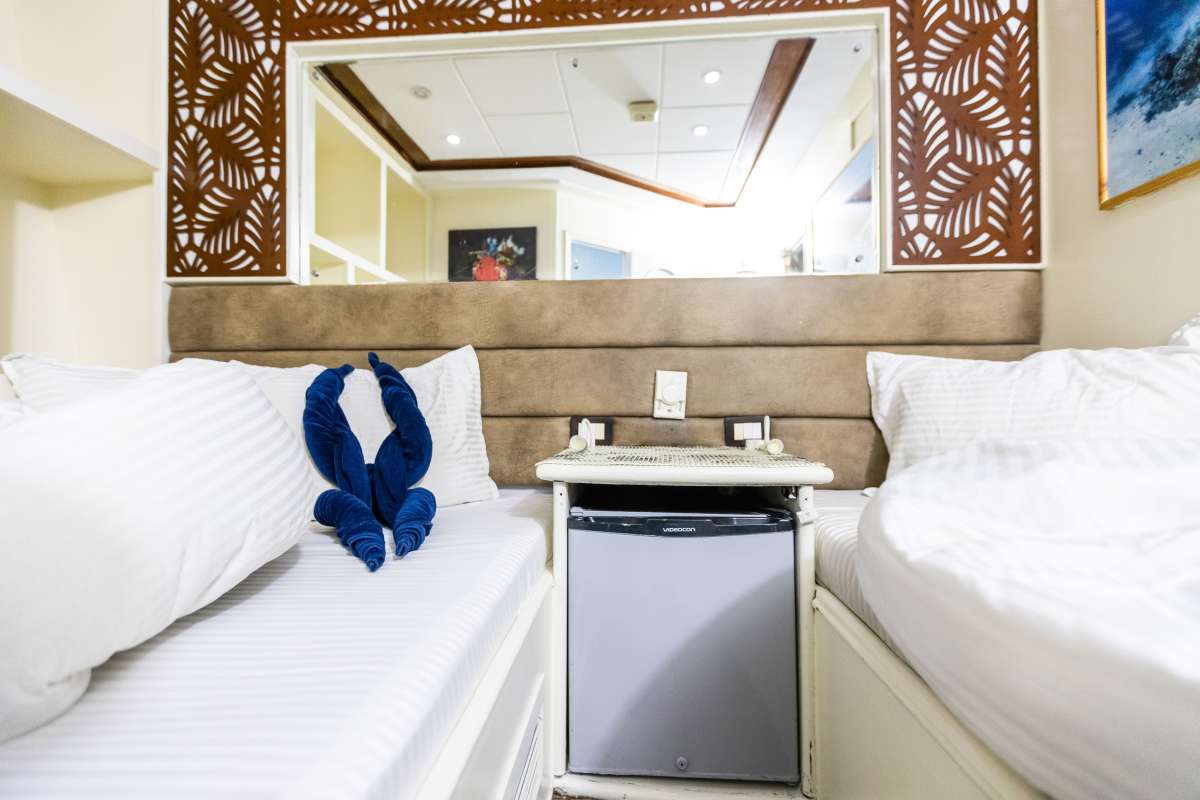
- 3 Main Deck Twin Cabins — approximately 12 m²: two separate single beds, standard exterior window, mini-fridge, storage, private shower and toilet, individual air-conditioning control; maximum 2 guests each
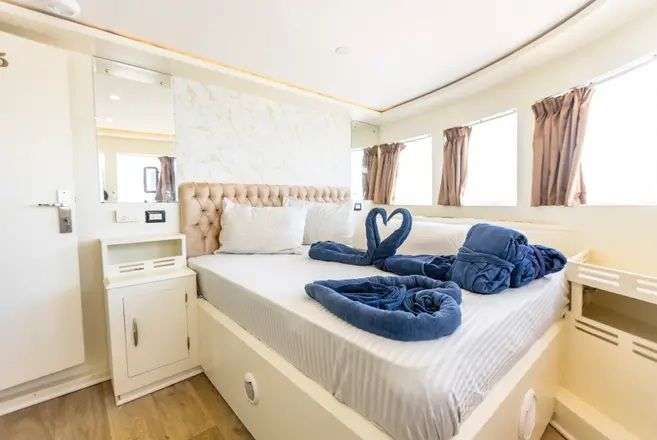
- 2 Sun Deck Suite Cabins — approximately 14 m²: one queen-size bed, outward view through a standard window, mini-fridge, storage, private shower and toilet, individual air-conditioning control; maximum 2 guests each
- 1 Sun Deck Twin Cabin — approximately 14 m²: two separate single beds, panoramic window, mini-fridge, storage, private shower and toilet, individual air-conditioning control; maximum 2 guests
The arithmetic is complete: 7 + 1 + 3 + 2 + 1 equals 14 sellable cabins, and every category has a two-person maximum, giving 28 berths. The lower-deck wording deserves attention. “Twin” is the sales category name, but five of those rooms are described as a double bed plus a single rather than two equivalent singles. Only two occupants are accepted even where two different bed surfaces are present. Dive partners who require two separate beds must have that arrangement written into the confirmation.
The main deck offers the clearest distinction between couples and sharing divers: one double room and three true twins. Its three twin rooms have standard windows, while the sole double is currently listed with a porthole. On the sun deck, the two queen suites are the named couple category. The single sun-deck twin has the strongest published window description—a panoramic window—and is the only room of its category, so early reservation is sensible.
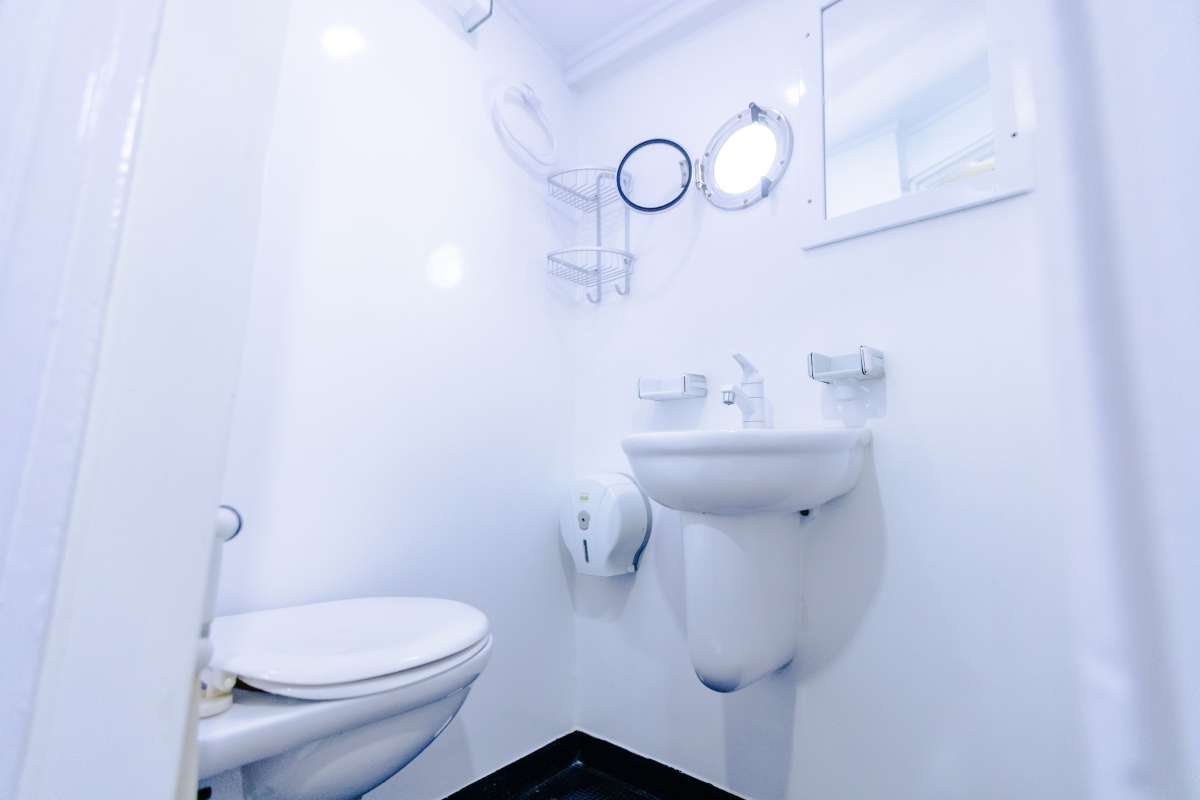
All fourteen guest cabins include a private bathroom with shower and toilet, individually controlled air conditioning, a mini-fridge and storage. Towels, toiletries, daily housekeeping and hair dryers are listed in current seller data. No mattress dimensions are published, and the approximate room areas come from the current category inventory rather than a measured architectural plan.
The operator’s own page remains internally inconsistent: its header says 15 rooms and 28 guests, while the text says 13 guest cabins plus two instructor cabins and a 26-guest maximum. A current booking record instead publishes 14 cabins and 28 guests, with the complete room split used above. For an actual sale, the dated rooming list must identify deck, bed layout and cabin number; the website headline alone is not sufficient.
Diving
Star Jet is scheduled across both the northern wreck corridor and the more exposed central and southern reefs. Northern programmes combine Abu Nuhas, Ras Mohammed, Tiran, Dahab and the SS Thistlegorm, sometimes adding Brothers or Safaga. Southern options include Brothers–Daedalus–Elphinstone, Daedalus–Fury Shoals, St. John’s, Sataya, Rocky and Zabargad. This range makes the boat suitable for clubs whose next trip may focus on wrecks, sharks, coral architecture or a mixture of all three.
The representative Abu Nuhas–Ras Mohammed–Tiran itinerary is published for Open Water divers with at least 25 logged dives and plans about 19 dives over seven nights. Other routes are more demanding. Brothers–Daedalus–Elphinstone and combinations that include exposed walls, deeper plateaus or blue-water exits normally require Advanced Open Water or equivalent, recent experience and at least the minimum logbook total stated for that departure.
At Abu Nuhas, guides choose among historic wrecks and surrounding reefs according to current, visibility and group competence. Ras Mohammed adds dramatic reef corners and concentrated fish life, while the Straits of Tiran offer current-shaped walls and coral gardens. The southern marine parks exchange wreck focus for offshore drop-offs and the possibility of hammerheads, threshers, oceanic whitetips, tuna and other pelagics. No species is guaranteed, and guides do not control whether an animal approaches.
The standard diving package is included in the current seller record, but Nitrox is optional and paid. Published examples are €12 per day or €70 per trip, with a Nitrox course at €150. A 15-litre cylinder, private guide, rental equipment and training courses are also extra. Rental stock must be reserved with sizes and certification details; technical, sidemount or rebreather guests require written confirmation of gases, cylinders, valves, sorb, oxygen-clean equipment and guide support.
Other Information
- Destination: Egyptian Red Sea
- Typical duration: 8 days / 7 nights
- Construction: steel
- Current detailed build record: 2004, renovated in 2025
- Length / beam: 35 m / 8.9 m in the current detailed seller specification
- Bookable capacity used here: 28 guests in 14 ensuite cabins
- Cabin split: 7 lower share cabins, 1 main-deck double, 3 main-deck twins, 2 sun-deck suites and 1 sun-deck twin
- Engines: 2 × Mercedes
- Published cruising / maximum speed: 15 / 25 knots
- Dive tenders: 2 speedboats
- Electricity: European-style 220 V outlets
- Internet: Wi-Fi, subject to offshore coverage
- Dive support: shaded deck, camera station, camera rinse, charging, outside showers, Nitrox, rental equipment and specialist configuration by advance request
Confirmed in the current standard seller package: seven nights’ accommodation; VAT; drinking water, soft drinks, tea and coffee; full-board meals; snacks and a special dinner; the booked diving programme; route-permitted night dives; cabin, beach and deck towels; and Wi-Fi. A second current inventory also confirms dive guides, standard 12-litre cylinders and weights. The number of dives is a plan, not a guaranteed entitlement when weather, regulation, health or safety changes the programme.
Required extras currently shown: €100 per person per trip mandatory service charge and €100 per person per trip park and port fees. The same seller page uses broad “included” labels for certain taxes and port-related costs while still displaying the separate compulsory park/port charge. The safe customer budget is therefore the two explicit required payments until the dated invoice states otherwise.
Optional or excluded: international and domestic flights; Egyptian visa; airport transfer (€17–90 in current examples); hotel transfer (€30–90); Nitrox; Nitrox course; 15-litre cylinder; private dive guide; rental scuba or snorkelling equipment; additional dives; training courses; alcoholic drinks; insurance; and personal expenses. Current rental examples include €50 per trip for regulator, BCD, computer or 15-litre cylinder; €20–50 for smaller individual items; and €210 for a complete recreational set. These are examples only and must be reconfirmed.
Itineraries
Star Jet’s published programme covers more than a dozen northern and southern combinations. The itinerary below expands the current Abu Nuhas–Ras Mohammed–Tiran outline into original visitor-facing copy. It represents 8 days / 7 nights, about 19 planned dives and a Hurghada round trip for Open Water divers with at least 25 logged dives. Sites, order and dive count remain subject to weather, traffic, permissions and the group’s real ability.
Abu Nuhas, Ras Mohammed & Tiran — Representative 8 Days / 7 Nights
Day 1 — Hurghada embarkation and preparation
Boarding begins at the published afternoon time after guests have received the confirmed marina instructions. The crew allocates cabins and working stations, checks certification and rental orders, and explains the salon, decks, charging rules and equipment storage. The safety briefing covers exits, life jackets, fire response, oxygen, tenders and muster procedure. Divers assemble their kit before dinner so missing or unsuitable components can be addressed while the vessel is still accessible from shore. Sailing time depends on clearance and the captain’s plan; no dive is scheduled on embarkation day.
Day 2 — Hurghada check dives and the approach to Abu Nuhas
The published outline plans three Hurghada-area dives followed by a possible fourth at Shaab Abu Nuhas. The first entry is operational as well as scenic: guides observe weighting, buoyancy, air use, DSMB deployment and buddy communication in a more forgiving setting. Subsequent reefs can add coral gardens, pinnacles and schools of fusiliers while the team settles into the deck rhythm. If distance, daylight and conditions allow, a late dive near Abu Nuhas introduces the reef that caused several famous shipwrecks. The captain may reduce the day rather than compress unsafe turnarounds.
Day 3 — The wrecks of Abu Nuhas
Three planned dives allow the guides to select from the wreck field according to visibility and other boats. Giannis D, Carnatic, Chrisoula K and Kimon M are among the names associated with the reef, but no particular hull is guaranteed. Each has a different orientation, history and depth range. Exterior routes can combine propellers, broken holds, coral growth and dense fish life. Penetration is undertaken only when the guide expressly includes it and the diver has appropriate training, gas, light and control; an open doorway is not permission to enter.
Day 4 — Ras Mohammed and a permitted night dive near Gordon Reef
Star Jet moves toward the Sinai sector for three daylight dives around Ras Mohammed, followed in the published plan by a night dive in the Gordon Reef area. Shark and Yolanda Reef can bring steep walls, current-fed coral, schooling snapper, barracuda and the scattered cargo of the Yolanda, while other sites offer different shelter and depth. Entry points are selected after a current check, not from a fixed marketing map. At night the reef’s smaller animals become the focus. The night dive proceeds only outside prohibited marine-park zones and when mooring, weather and experience are suitable.
Day 5 — First full day in the Straits of Tiran
The four reefs of Tiran sit across a channel where moving water can generate exhilarating drifts. Guides may consider Gordon, Thomas, Woodhouse or Jackson, but vessel traffic, wind and current decide the safe side and timing. Coral walls, plateaus and blue-water edges can hold turtles, rays, large schools and occasional pelagics. Divers listen carefully to pickup instructions because the speedboat may collect the group away from the entry point. The day contributes to a combined seven dives across Days 5 and 6 rather than guaranteeing four entries today.
Day 6 — Tiran revisited, with the week’s second eligible night dive
A second Tiran day lets the team use a different reef face or return under improved conditions. Morning light can favour wide coral scenes; afternoon current may concentrate fish at a corner. One night dive is included in the two-day outline where regulations permit. Guests who skip an entry retain the benefit of Star Jet’s shaded lounges and sun decks without needing to occupy the equipment area. After the final session, the crew secures cylinders and the vessel begins its return passage toward Hurghada.
Day 7 — Two final Hurghada dives and equipment care
Two coastal dives complete the planned programme while preserving a sensible no-fly interval. The captain chooses sheltered reefs compatible with the return distance, often giving photographers a calmer finale and divers time to refine buoyancy after the more dynamic northern sites. Once diving ends, equipment is rinsed, drained and placed where the crew directs; wet suits and cylinders should never obstruct exits. Guests complete logbooks, settle required and optional charges, confirm transfer arrangements and pack dry belongings while Star Jet returns to port.
Day 8 — Breakfast and disembarkation
After the final night aboard, breakfast precedes checkout at approximately the published late-morning time. Guests inspect the cabin, return rental equipment and verify that computers, chargers and documents have not been left behind. Any airport or hotel transfer must appear on the booking because it is an optional service in the current exact-vessel listing. Flight departure should respect the diver’s computer, agency guidance and the operator’s required no-fly interval.
Before choosing this route
This is one of Star Jet’s more accessible itineraries, but “Open Water plus 25 dives” is a minimum, not a promise that every person will enter every wreck or current. Recent buoyancy practice, comfortable boat entries, DSMB use and the ability to follow a moving reef improve both safety and enjoyment. A diver who has not been in the water recently should arrange a refresher before travel rather than relying on the first safari dive as training.
The same vessel also runs Tiran–Ras Mohammed–Thistlegorm, Brothers–Ras Mohammed–Thistlegorm, Safaga combinations, Brothers–Daedalus–Elphinstone, St. John’s–Sataya, Daedalus–Fury Shoals and Rocky–Zabargad programmes. Those names do not describe interchangeable products: departure port, certification, minimum experience, marine-park fees and night-dive access can differ. Always match the customer to the dated itinerary and qualification line, not simply to the boat.
The captain has final authority over navigation and site choice. Strong wind, exceptional current, port direction, marine-park regulation, congestion, mechanical needs or a medical situation can change the sequence and total. Sharks, dolphins, turtles, rays and large schools remain natural encounters. Responsible sales language offers the opportunity to explore a remarkable wreck-and-reef corridor without turning wildlife or weather into a contractual promise.
How the week works aboard
The route’s published dive count is concentrated into five active days, so organisation begins before the first briefing. Each diver keeps the assigned crate and station orderly, labels personal accessories and brings the correct exposure protection to the platform. A small dry bag for the Zodiac, a working DSMB and reel, whistle, computer and suitable surface protection remove avoidable delays. Cameras are prepared at the designated table, never on the floor between stations. These simple habits matter when several teams are entering in succession and the crew must fill, analyse and move cylinders safely.
Daily timing is announced aboard and may shift with sunrise, current, traffic and the distance still to cover.
Meals and crossings form part of the itinerary rather than empty time. Breakfast may follow the first dive, with lunch after the late-morning session and snacks around the afternoon plan. A longer passage offers time for logbooks, camera maintenance and rest, but loose items must be secured before Star Jet leaves a sheltered reef. Guests prone to seasickness should discuss medication with a clinician before travel and take it according to professional advice, not after the offshore motion has already become uncomfortable.
The guide briefing is specific to each site. It identifies maximum depth and time, entry direction, current, relevant wreck openings, marine-park restrictions, ascent method and pickup signal. A previous visit does not replace listening: current direction, mooring and traffic can transform the same reef. Buddy teams repeat their own gas, lost-buddy and separation plan before entering. If a diver is uncertain about penetration or a negative entry, saying so early gives the guide time to offer a safer exterior route or place the diver in a compatible team.
On the final afternoon, drying and departure logistics should not compromise the working deck. The crew indicates where suits, boots and luggage belong while the vessel is still moving. Customers settle only the charges shown on their account and ask for clarification before payment if the mandatory fees differ from the confirmation. The aim is to finish the week as deliberately as it began: equipment accounted for, flights safely timed and the memories centred on what the Red Sea actually delivered rather than on a checklist that conditions never promised.
Schedules & routes
Prices & conditions
Included
- Full-board meal plan (including snacks)
- Complimentary beverages (water, tea, coffee)
- Soft drinks
- Diving activity (incl. tanks, weights, weight belts)
- Dive guide service
- Cabin towels and complimentary toiletries
- Cabin cleaning service
- Wi-Fi
Not included
- Domestic flights in destination country
- Marine park fees & Port fees
- Fuel surcharge
- Alcoholic beverage
- Dive equipment rentals
- Larger tank (15 L)
- Nitrox fills
- Dive courses on board
- Dive insurance (mandatory requirement)
- Travel insurance (trip cancellation insurance)
- Crew gratuity
Useful information
Northern Egypt
Best time for diving
The best diving conditions are usually from March to May and from September to November, when water temperatures are comfortable and visibility is excellent. During the summer months from June to August, the water becomes warmer and marine life is very active. In winter months, divers can still enjoy great visibility with fewer crowds. Dolphins, turtles, reef sharks, napoleon wrasse, and large schools of barracuda and jacks are commonly seen throughout the year. Wreck diving is one of the main highlights in this region, including the famous SS Thistlegorm, Dunraven, and Abu Nuhas wrecks.
About temperatures
Air : winter months are between 18°C - 24°C, summer months are between 30°C - 38°C.
Sea : winter months are between 21°C - 24°C, summer months are between 26°C - 30°C.
Wetsuit Recommendation
For the Northern Red Sea liveaboard, we recommend a 5mm full wetsuit during the cooler months (Dec – Apr) and a 3mm full wetsuit during the warmer months (May – Nov). Some divers may also prefer a hooded vest during winter dives, especially on repetitive dives and night dives.
Diver requirement
The Northern Routes are suitable for all levels of divers, including beginners on many itineraries. However, some wreck dives and drift dives may require better buoyancy control and experience with currents. Certain wreck penetration dives may require Advanced Open Water certification and previous wreck diving experience. Most liveaboards provide dive guides and detailed dive briefings before every dive. You can find out more information here : Northern Egypt.
Embarkation / Disembarkation
Depending on which route you are heading to, the embarkation and disembarkation can be from Hurghada (HRG), Marsa Alam (RMF), or Sharm El Sheikh (SSH).
Visa Requirements
Most nationalities can obtain a visa on arrival at Egypt’s international airports. If you opt for a visa on arrival, you’ll need a passport that’s valid for at least six months from your arrival date, a travel itinerary, and documentation to prove accommodation or any booked tours.
Vaccinations
A yellow fever vaccination certificate is required if traveling from a country with a risk of YF virus transmission and ≥9 months of age, including transit >12 hours in an airport located in a country with a risk of YF virus transmission. This includes Eritrea, Rwanda, Somalia, Tanzania, and Zambia.1 In the absence of a vaccination certificate, the person will be detained in quarantine for up to 6 days after departure from an area at risk of YF virus transmission. An overview of the countries to which this applies can be downloaded here: Yellow Fever Risk Countries.
Money Matters
The local currency is the Egyptian Pound (EGP), and ATMs are common, especially in the main tourist areas. Major hotels will usually accept payment by credit card. However, smaller hotels may expect cash and hard currency payments (USD/EUR).
Drones
To bring a drone to Egypt and fly it, you need to receive permission from the country’s Civil Aviation Authority (CAA). If you do not have documentation of authorization, your drone will be confiscated at customs. However, getting permission to fly a drone from the CAA is difficult. Should you somehow manage to get your drone in, the onboarding screening will detect your drone and one of two things will happen: 1. your drone will be confiscated at the point of arrival and stored at the airport. 2. the drone will be detected and confiscated when you are leaving the country and you’ll be sanctioned for bringing an illegal commodity to Egypt. - So don't risk it, and leave your drone at home if you’re planning to travel to Egypt.
Extending your holiday
We offer a range of hotels/resorts, land-based diving packages, and excursions that can be arranged before or after your liveaboard holiday. Just ask us if you need such a service.
Southern Egypt
Best time for diving
The Southern Red Sea in Egypt offers excellent diving conditions year round, with warm water, good visibility, and rich marine life throughout the seasons.
Daedalus, Elphinstone & Brothers : The best time is from March to November when sea conditions are calmer and pelagic encounters are more frequent. Oceanic whitetip sharks are commonly seen from October to December, while hammerhead sharks are most frequently encountered from June to September around Daedalus Reef. Thresher sharks can occasionally be spotted early in the morning at Brothers Islands.
St. Johns & Fury Shoals : Best diving conditions are generally from April to November with warm water and excellent visibility. These southern reefs are famous for colorful coral gardens, reef sharks, dolphins, turtles, and abundant macro life. Encounters with manta rays are possible during spring and autumn seasons.
About temperatures
Air : winter months are between 20°C - 26°C, summer months are between 30°C - 40°C.
Sea : winter months are between 22°C - 24°C, summer months are between 27°C - 30°C.
Wetsuit Recommendation
For the Southern Red Sea liveaboards, we recommend a 5mm full wetsuit during the cooler months (Dec – Apr) and a 3mm full wetsuit or shorty during the warmer months (May – Nov).
Diver requirement
The Southern Red Sea routes are generally recommended for Advanced Open Water divers or experienced Open Water divers due to strong currents, deep dives, and blue water drift diving conditions around offshore reefs such as Daedalus, Elphinstone, and Brothers Islands. For St. Johns and Fury Shoals, some itineraries may be suitable for less experienced divers when sea conditions are calm, however good buoyancy control and comfortable drift diving skills are still recommended.
You can find out more information here : Southern Egypt.
Embarkation / Disembarkation
Most Southern Red Sea liveaboard trips depart from either Hurghada, Port Ghalib, or Marsa Alam. Guests usually need to fly into Hurghada International Airport (HRG) or Marsa Alam International Airport (RMF), depending on the itinerary and liveaboard selected.
Visa Requirements
Most nationalities can obtain a visa on arrival at Egypt’s international airports. If you opt for a visa on arrival, you’ll need a passport that’s valid for at least six months from your arrival date, a travel itinerary, and documentation to prove accommodation or any booked tours.
Vaccinations
A yellow fever vaccination certificate is required if traveling from a country with a risk of YF virus transmission and ≥9 months of age, including transit >12 hours in an airport located in a country with a risk of YF virus transmission. This includes Eritrea, Rwanda, Somalia, Tanzania, and Zambia.1 In the absence of a vaccination certificate, the person will be detained in quarantine for up to 6 days after departure from an area at risk of YF virus transmission. An overview of the countries to which this applies can be downloaded here: Yellow Fever Risk Countries.
Money Matters
The local currency is the Egyptian Pound (EGP), and ATMs are common, especially in the main tourist areas. Major hotels will usually accept payment by credit card. However, smaller hotels may expect cash and hard currency payments (USD/EUR).
Drones
To bring a drone to Egypt and fly it, you need to receive permission from the country’s Civil Aviation Authority (CAA). If you do not have documentation of authorization, your drone will be confiscated at customs. However, getting permission to fly a drone from the CAA is difficult. Should you somehow manage to get your drone in, the onboarding screening will detect your drone and one of two things will happen: 1. your drone will be confiscated at the point of arrival and stored at the airport. 2. the drone will be detected and confiscated when you are leaving the country and you’ll be sanctioned for bringing an illegal commodity to Egypt. - So don't risk it, and leave your drone at home if you’re planning to travel to Egypt.
Extending your holiday
We offer a range of hotels/resorts, land-based diving packages, and excursions that can be arranged before or after your liveaboard holiday. Just ask us if you need such a service.
Diver's reviews (0)
Photos