- Best-Price Guarantee
- 24/7 Expert Support
- No Booking Fees
- Direct with Operators
- 500+ Boats Worldwide
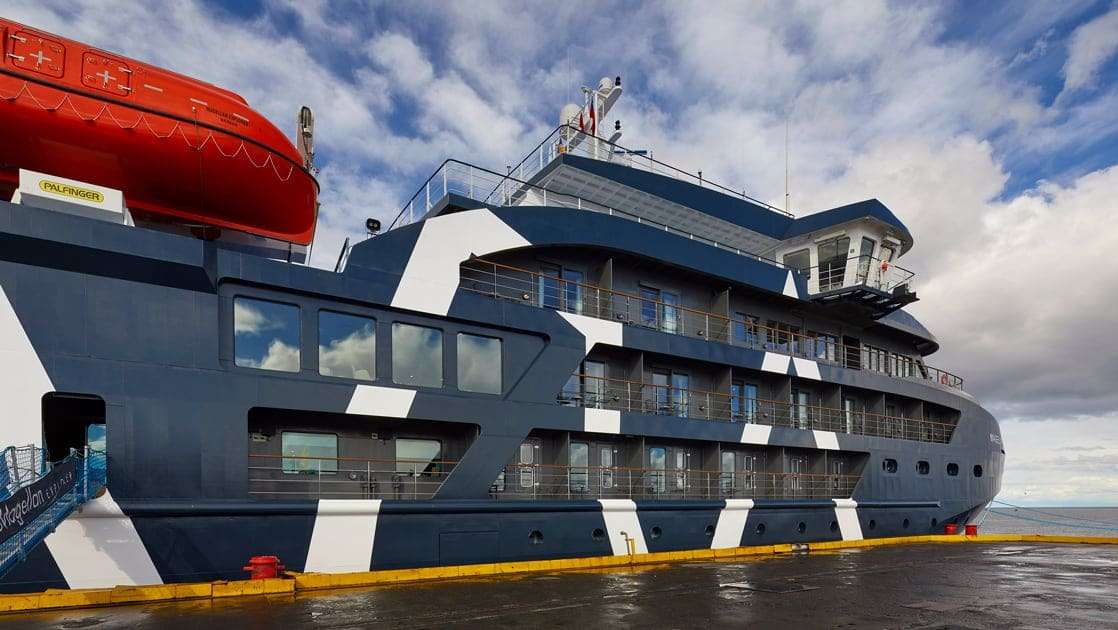
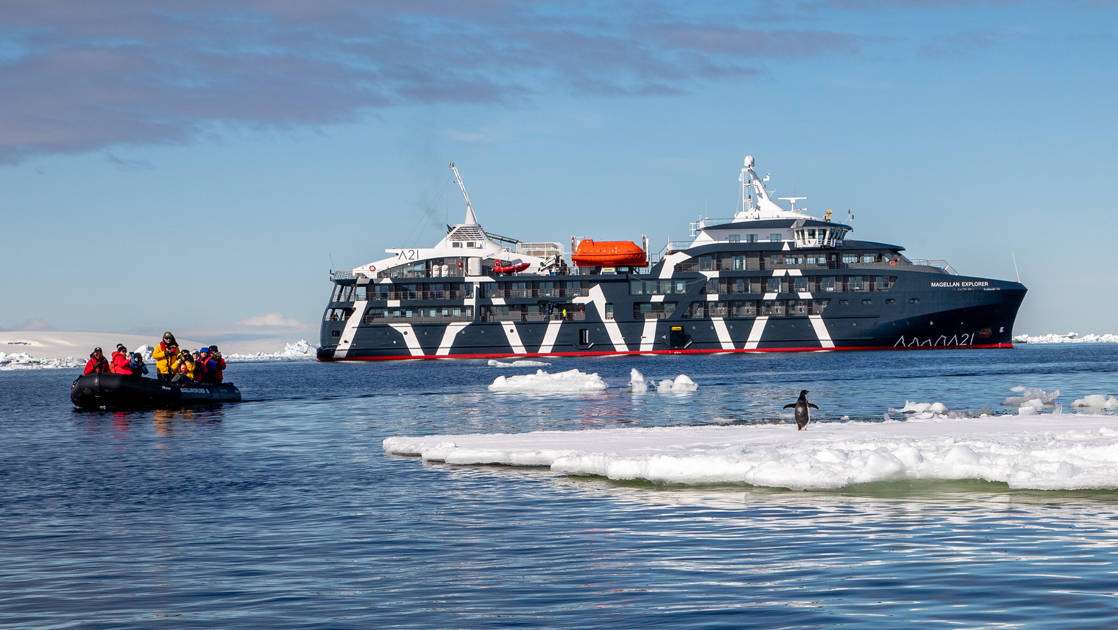
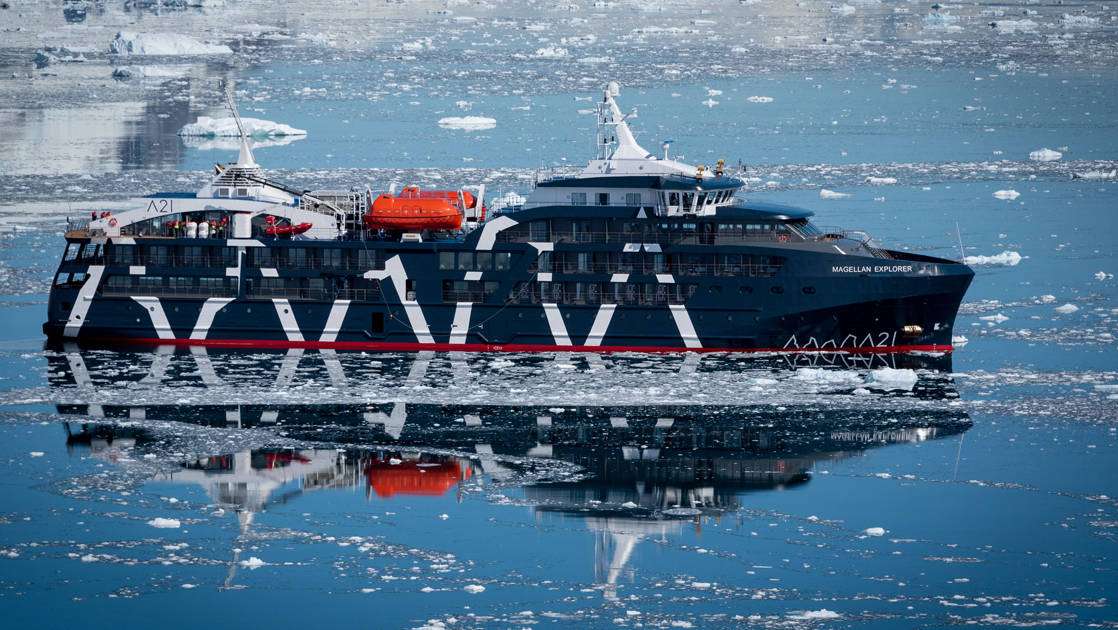
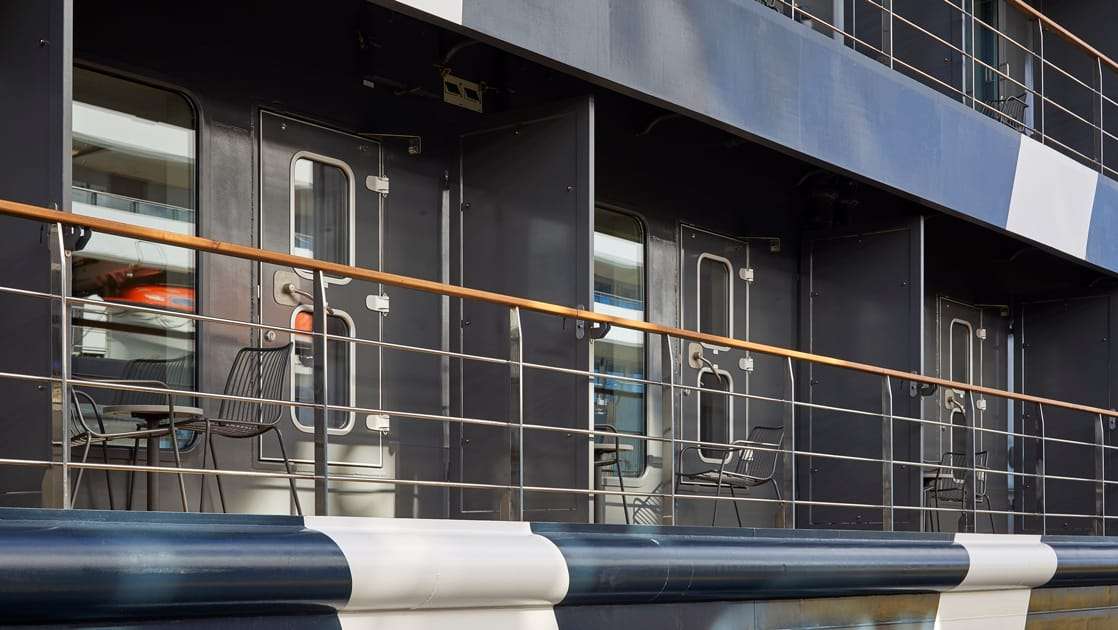
Fly across the Drake Passage and step straight into Antarctica aboard Magellan Explorer, a 90.7-metre, PC6 expedition ship purpose-built for air-cruises. Limited to 76 guests, she combines 10 Zodiacs and open observation areas with 39 carefully mapped cabins, most with private balconies. The signature eight-day journey includes two Punta Arenas hotel nights, the return Antarctic charter flight, expert-led landings and refined full-board life at sea.
Description
Boat
Magellan Explorer was created for travellers who want the drama of Antarctica without spending two days each way crossing the Drake Passage by sea. Built in Chile and launched in 2019, she is a modern expedition vessel designed specifically around Antarctica21's air-cruise operation. Guests fly roughly two hours from Punta Arenas to King George Island, board by Zodiac and begin exploring among the South Shetland Islands and the western Antarctic Peninsula. That combination replaces the long ocean crossing with more immediate access to ice, wildlife and shore activity.
The ship carries a maximum of 76 guests on air-cruises, supported by 60 expedition staff and crew. At 90.7 metres long and 16.2 metres wide, she is substantial enough to offer proper lounges, dining and technical spaces while remaining far more intimate than a conventional cruise ship. Her LR PC6 ice class, double-hull construction, ice radar, bow and stern thrusters and retractable stabilisers were selected for polar operations. Three diesel engines provide 3,440 kW, and the published cruising speed is 14 knots in open water.
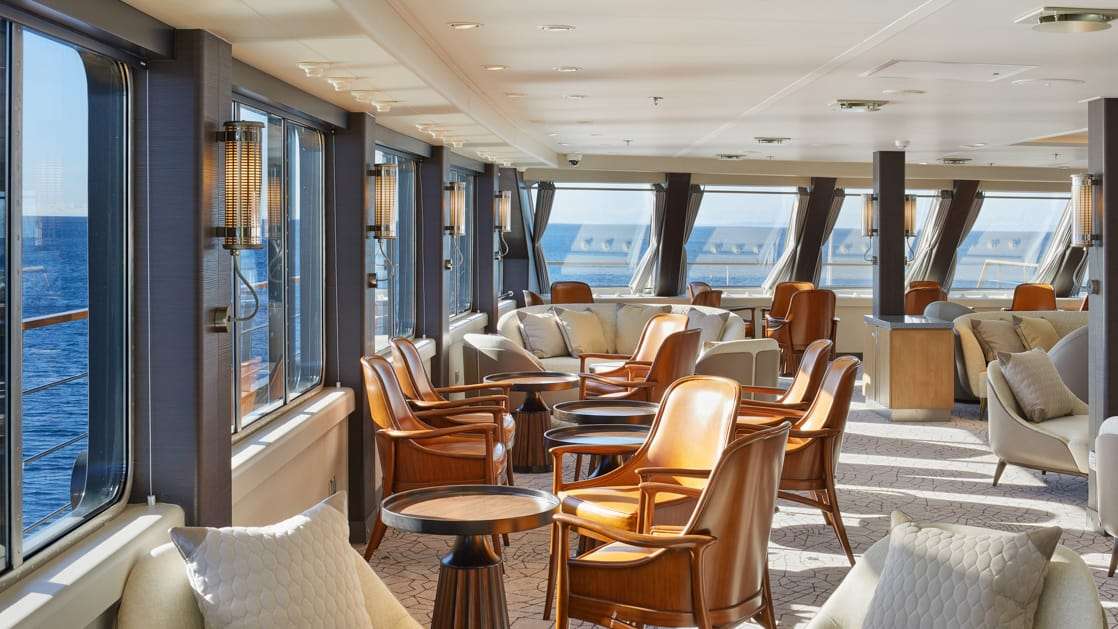
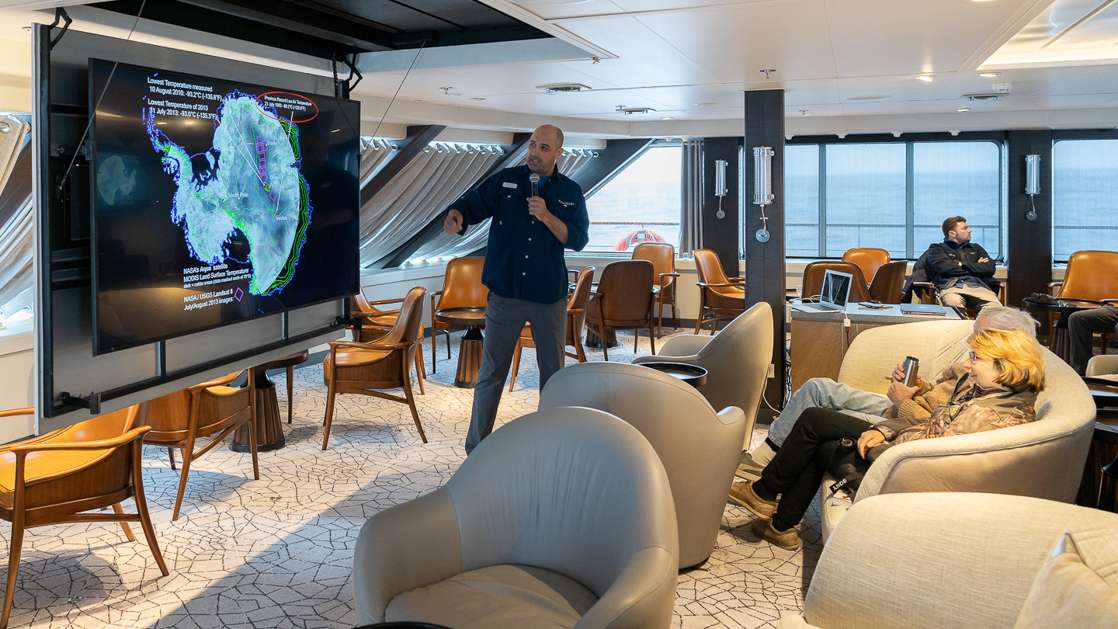
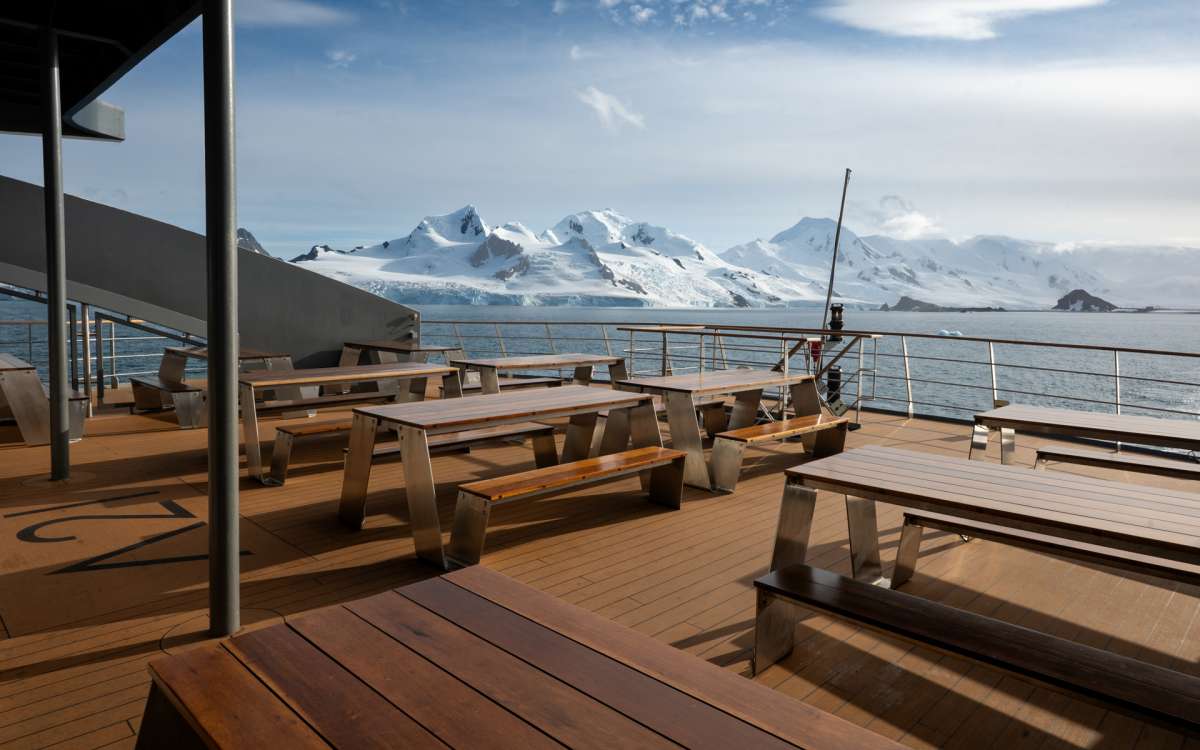
Magellan Explorer's strongest public room is the glass-enclosed observation lounge and bar on Deck 5. Wide forward windows keep the landscape present during lectures, route updates and quiet sailing, while an exterior observation deck leads towards the bow for a closer view of ice and marine life when access is authorised. The same deck carries the Zodiac storage area and a sheltered outdoor barbecue space, making the transition from comfortable interior to working expedition platform feel unusually direct.
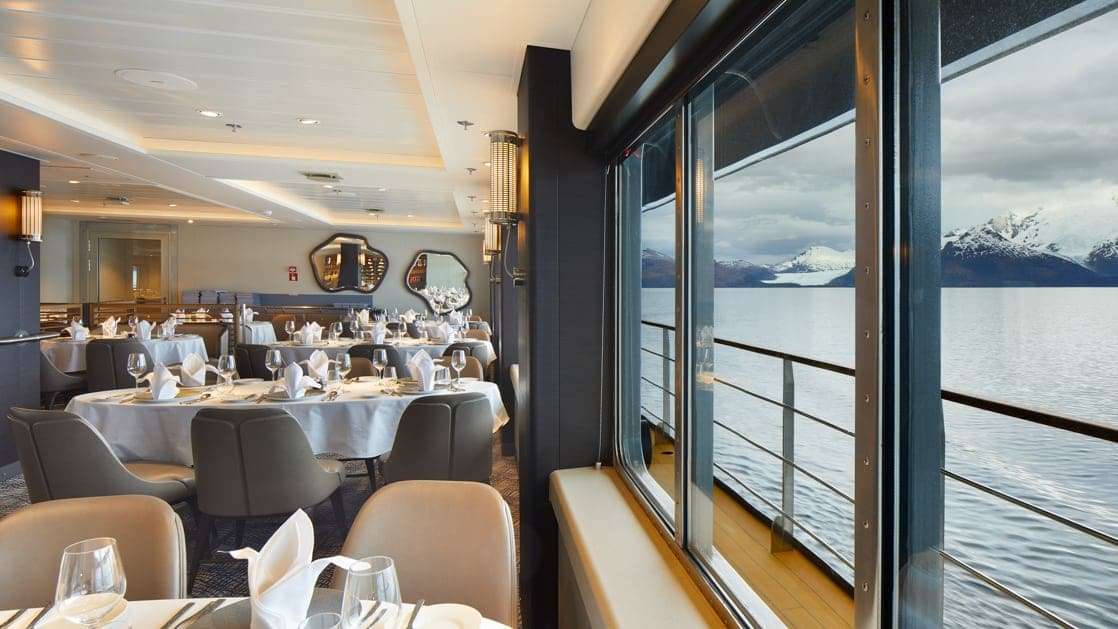
The dining room uses large windows and serves buffet breakfast and lunch followed by a three-course dinner. Wine, beer, juice and soft drinks are included with lunch and dinner; coffee, tea, chocolate, cappuccino, water and snacks remain available during the expedition. Drinks ordered separately from the ship's bar are not included. Dietary requests should be entered in the required participation form before travel rather than left until embarkation.
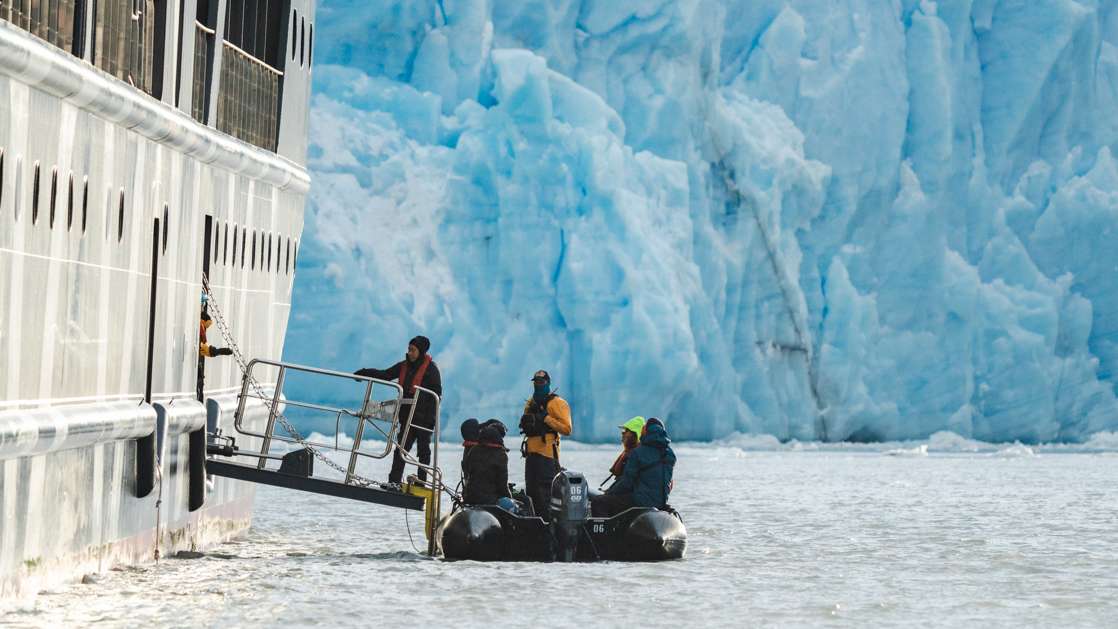
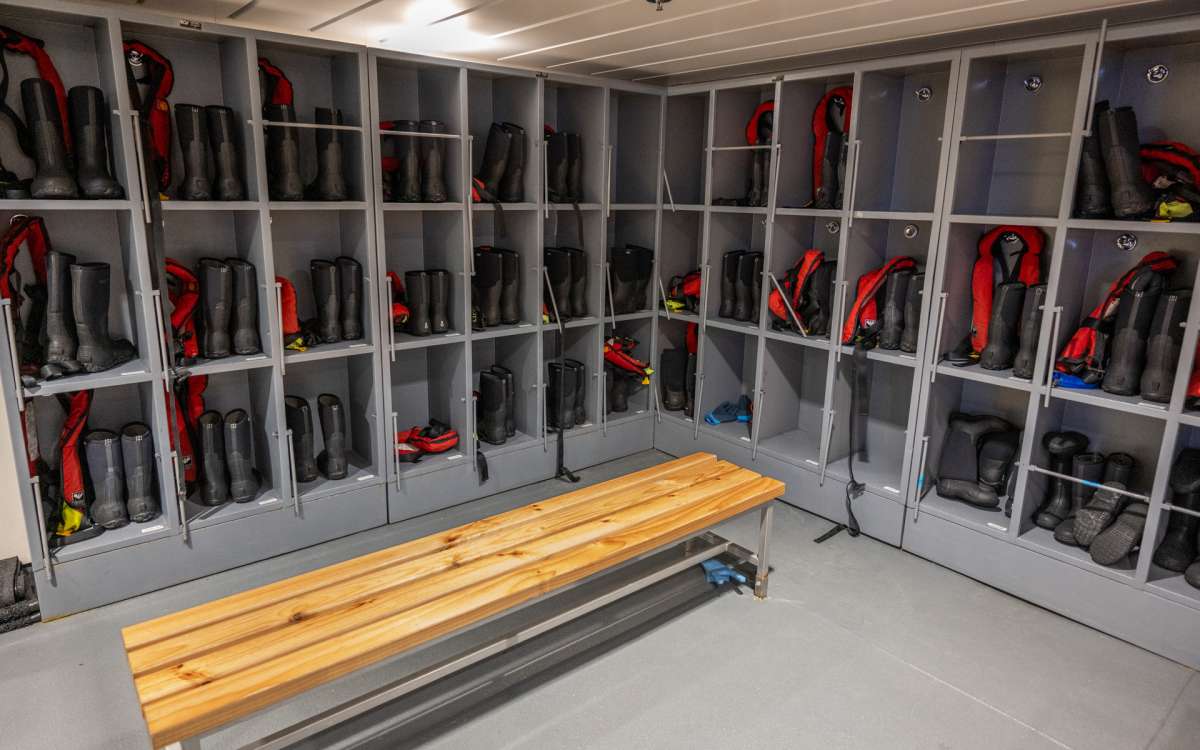
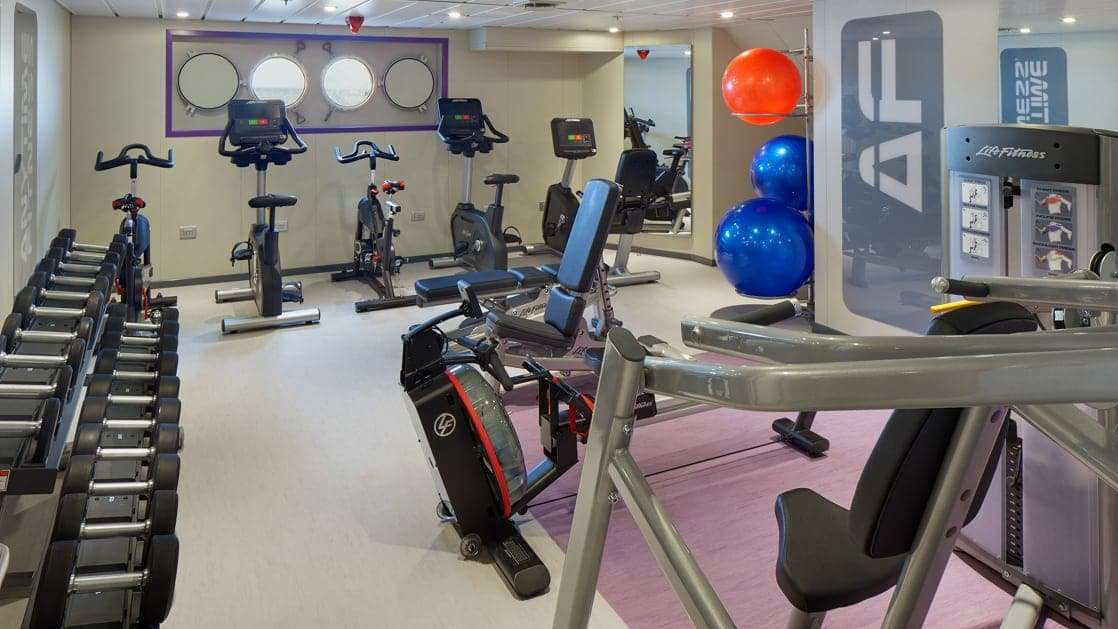
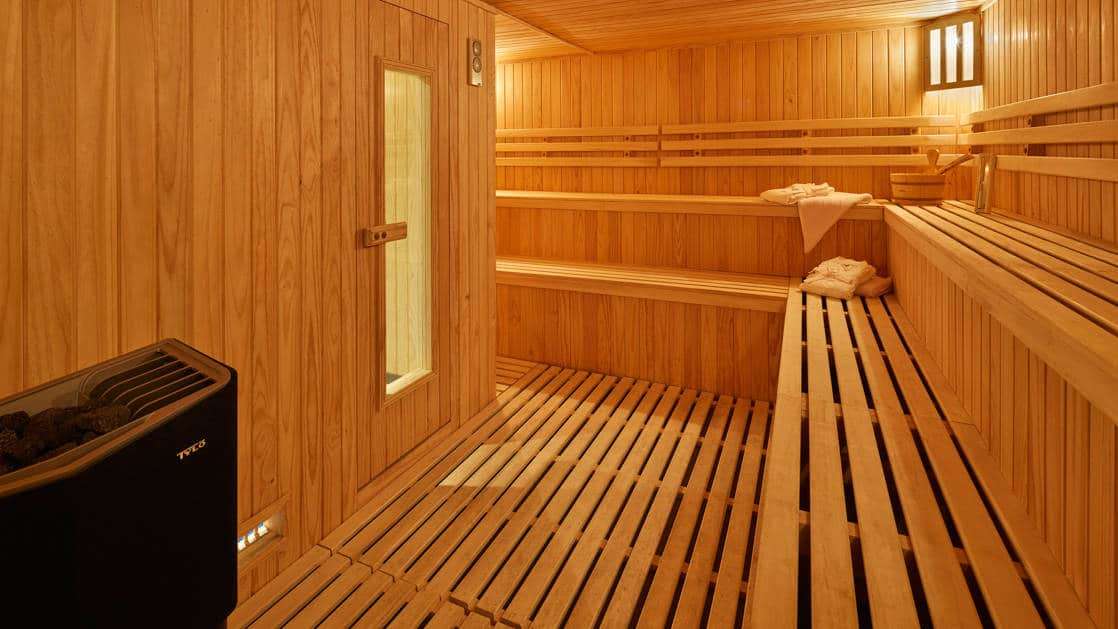
Elsewhere are a library, presentation and meeting facilities, expedition office, gift shop, gym, sauna and medical clinic. The expedition boarding area and mudroom on Deck 2 give guests an assigned place for boots and outer layers before Zodiac calls. Ten Zodiacs support shore landings and wildlife cruises, and the two midship gangways are designed to move small groups efficiently. Each day's operation still depends on sea state, ice, wind, visibility and landing permissions; the vessel's equipment creates opportunity, not a guaranteed list of sites.
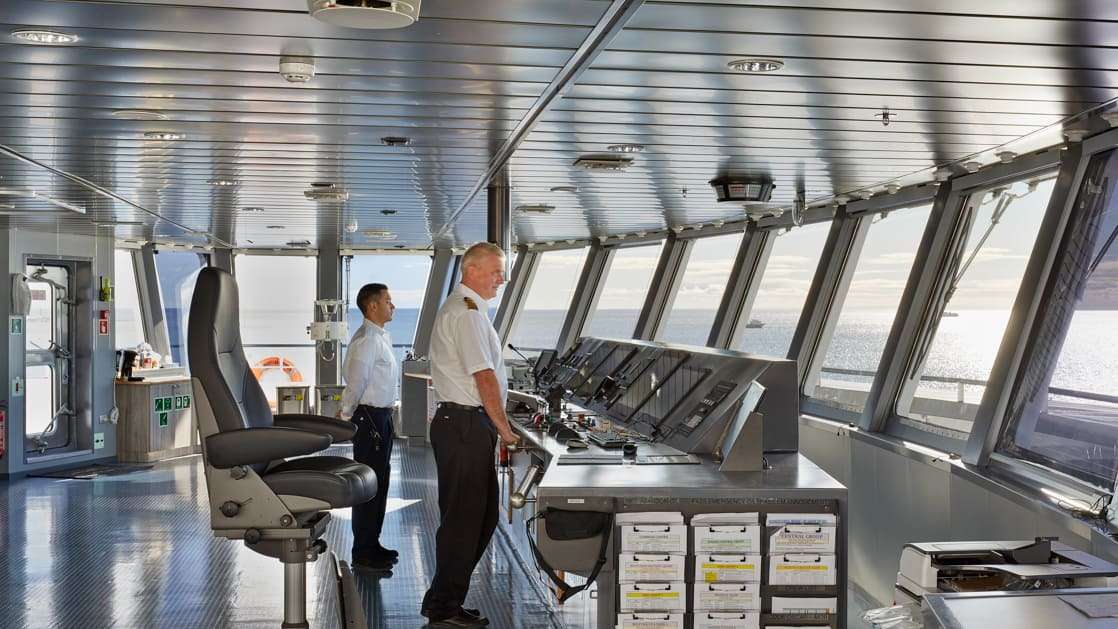
Environmental and safety features include Tier III emissions compliance, heat recovery from the engines, modern navigation systems, two fully enclosed lifeboats and eight life rafts. Published survival-craft capacity is 320 in total. These specifications are reassuring, but the most important safety information remains the voyage-specific briefing: guests must learn their own muster station, life-jacket location, exterior routes and the crew's instructions for stairs, decks and Zodiac transfers.
The atmosphere is polished but expedition-led. There is no need for formal evening dress; warm, practical layers and rubber-soled shoes suit life aboard. A lecture may give way to a whale sighting, dinner time may shift after a long landing, and the captain can reposition the ship overnight. Travellers who enjoy expert interpretation, active days and flexible decisions will gain more from Magellan Explorer than guests expecting a fixed sightseeing timetable.
Cabin
For the 2026–27 air-cruise season, Magellan Explorer has exactly 39 guest accommodation units in seven categories, providing a maximum of 76 berths. The current deck plan gives the following complete inventory:
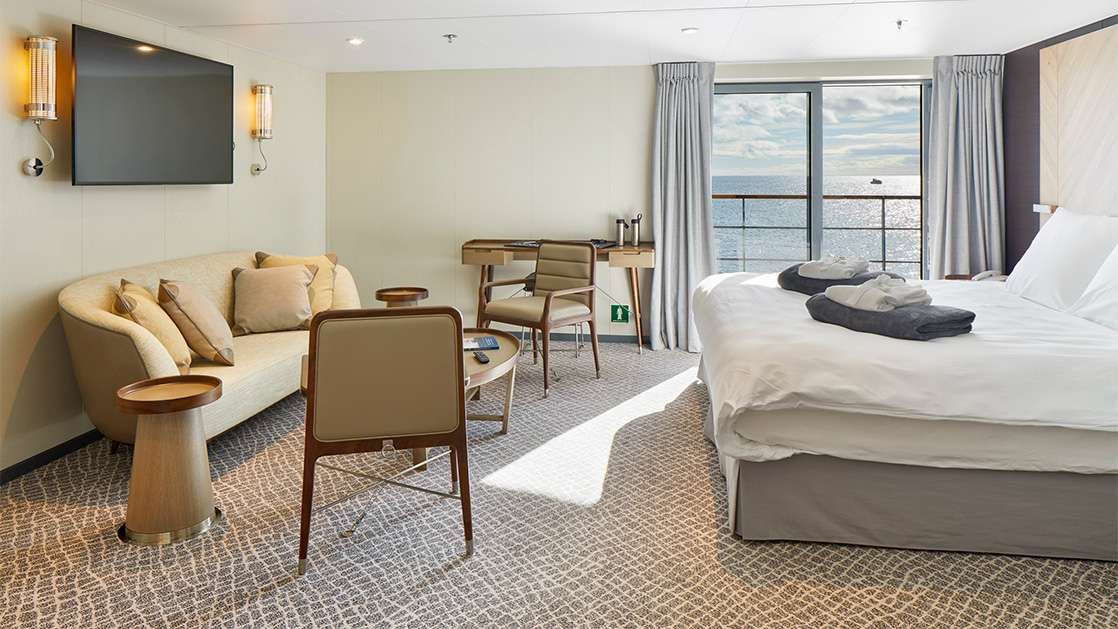
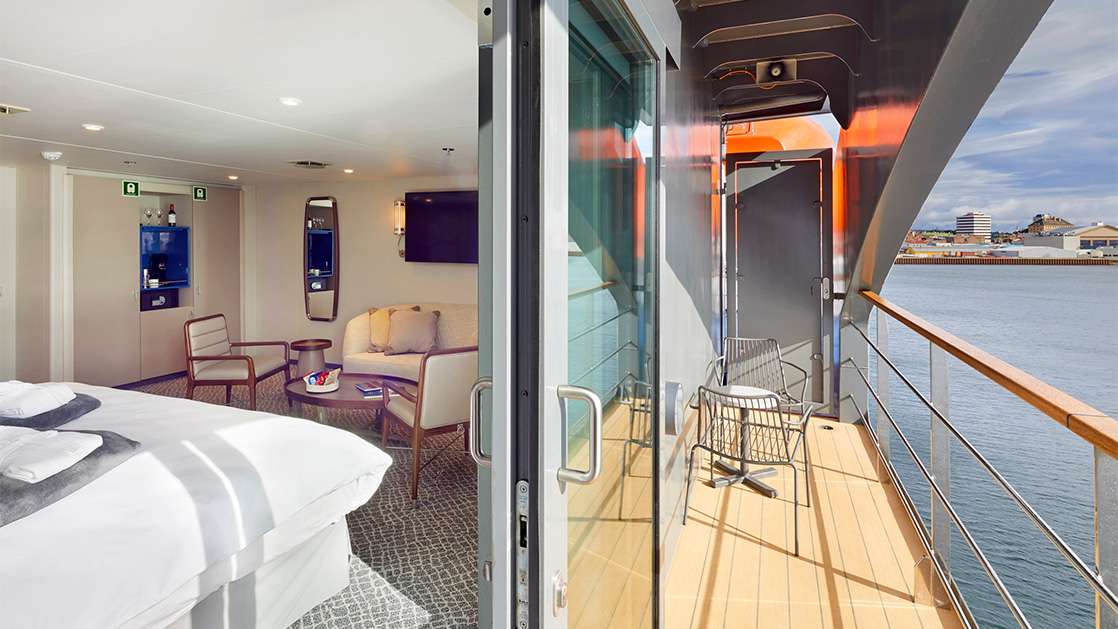
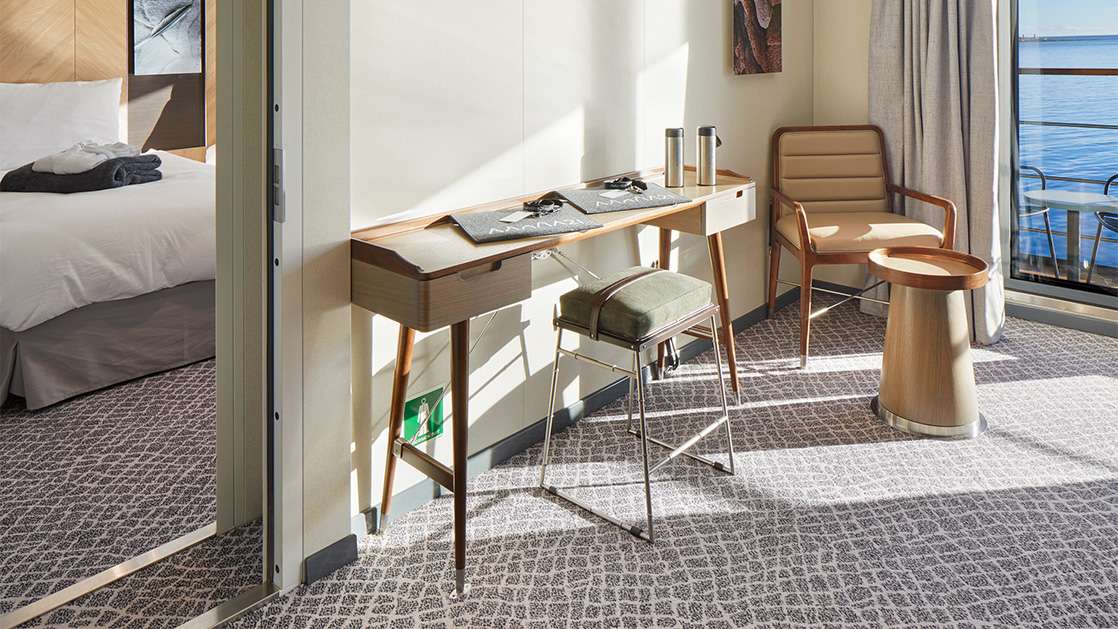
- 3 Penthouse Suites — 33 m² / 360 ft², Deck 5, cabins 501, 502 and 504: one king bed or two twins; separate sitting area with sofa and coffee table; desk and chair; two armchairs; private furnished balcony; private shower room; maximum 2 guests
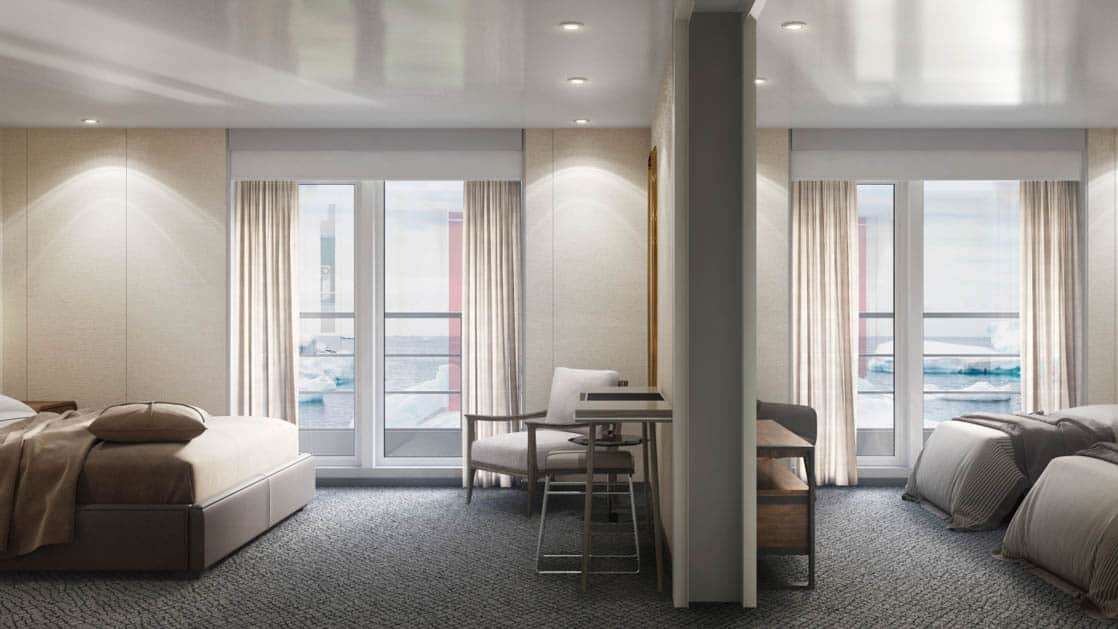
- 5 Deluxe Suites — 44 m² / 480 ft², Deck 4, cabins 401, 402, 405, 406 and 411: two-room layout with bedroom and separate living room; two private balconies; two private shower rooms; queen sofa bed in the living area; king or twin configuration in the bedroom, except cabin 405, which has a fixed queen bed; sold for a maximum of 2 guests in the current category plan
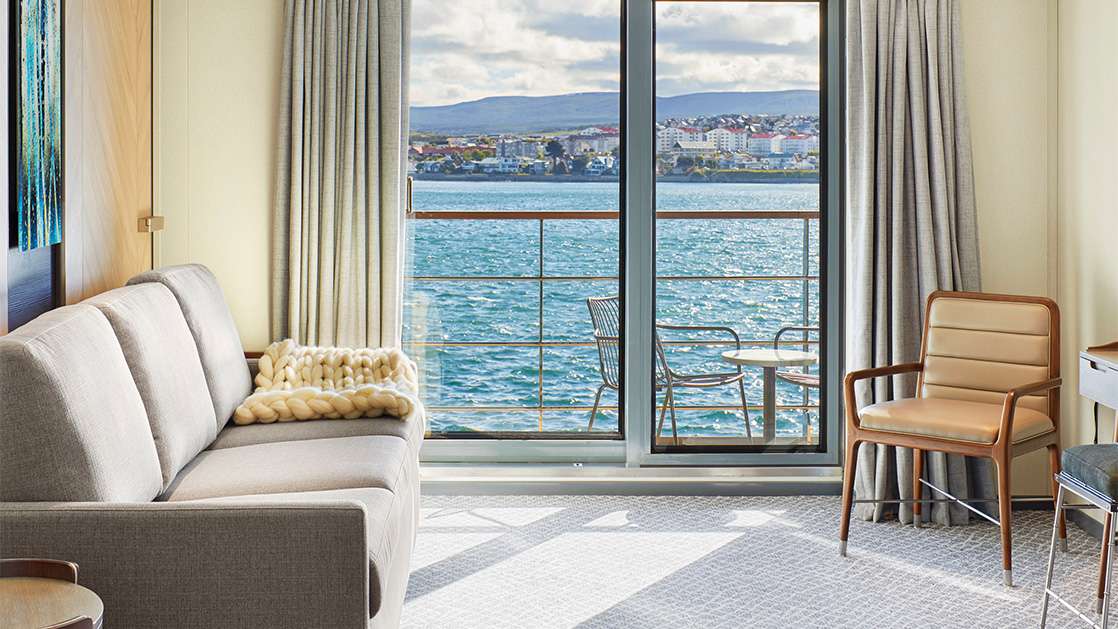
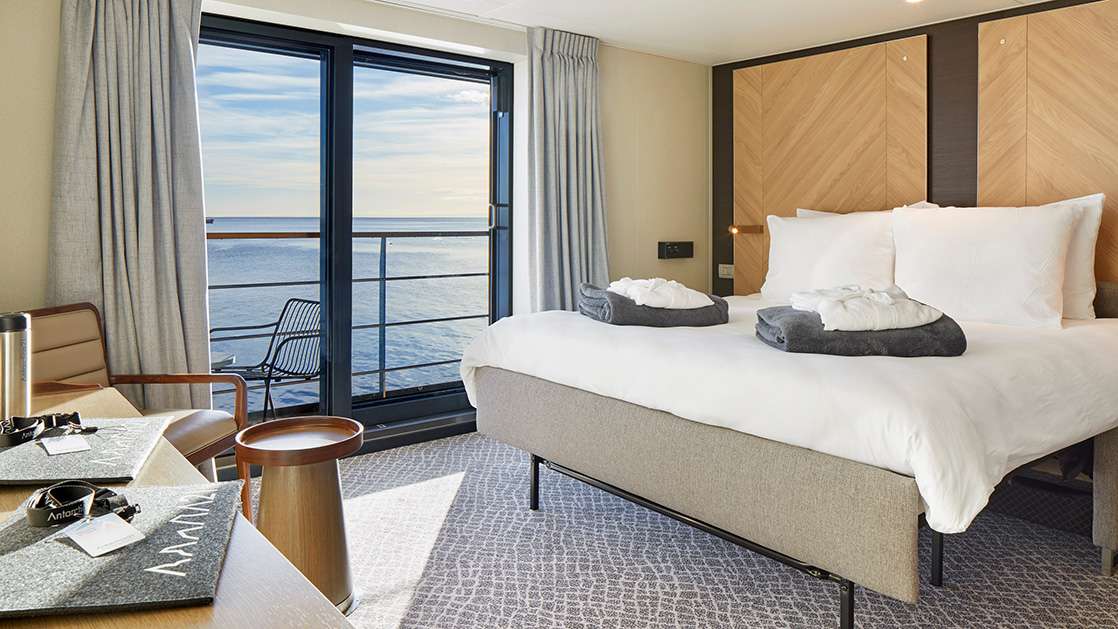
- 16 Deluxe Veranda Cabins — 22 m² / 240 ft², Deck 4, cabins 409, 410, 412, 415, 417, 418, 419, 420, 421, 422, 423, 424, 425, 426, 428 and 430: sitting area, private furnished balcony and private shower room; king or twin configuration, except cabins 409, 412 and 420, which have fixed queen beds; maximum 2 guests
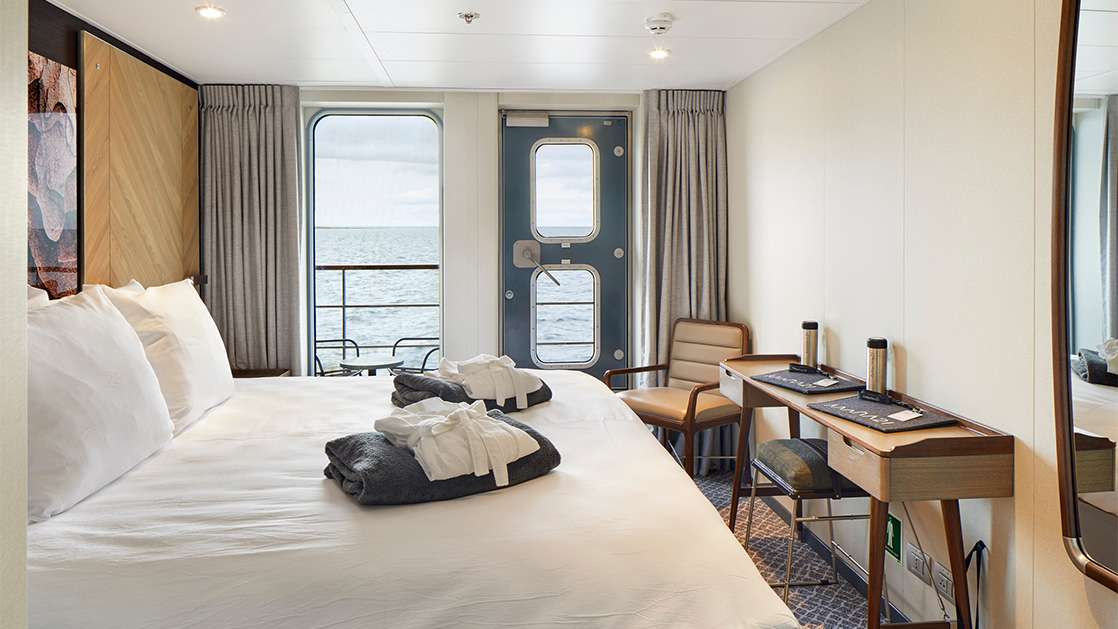
- 8 Veranda Cabins — 19 m² / 210 ft², Deck 3, cabins 301, 302, 303, 304, 305, 306, 308 and 310: sitting area, private furnished balcony and private shower room; one king or two twins; maximum 2 guests
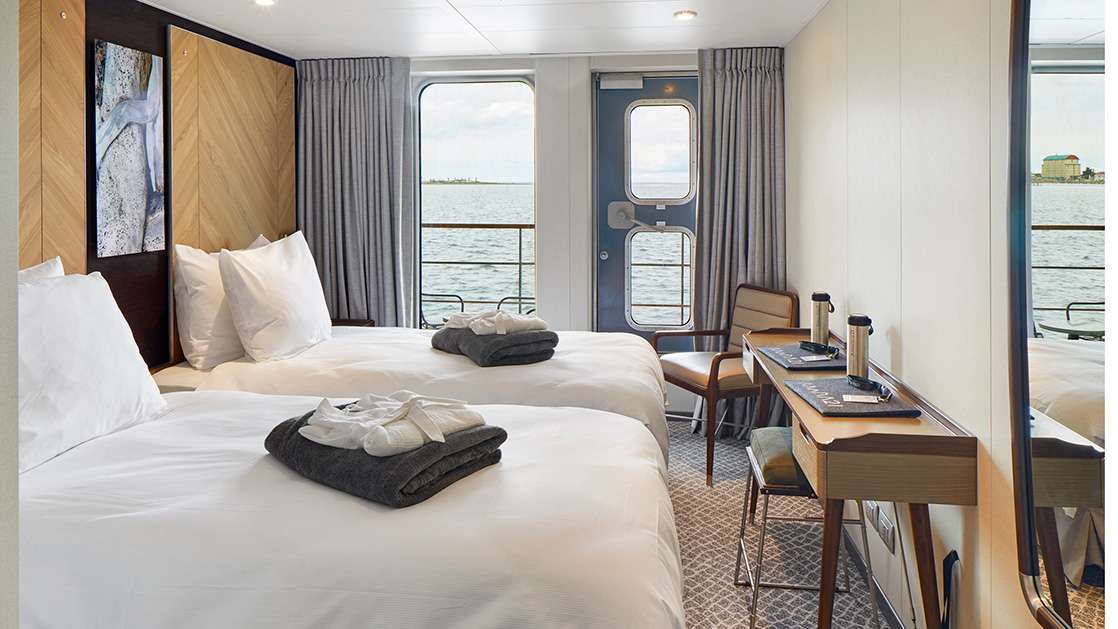
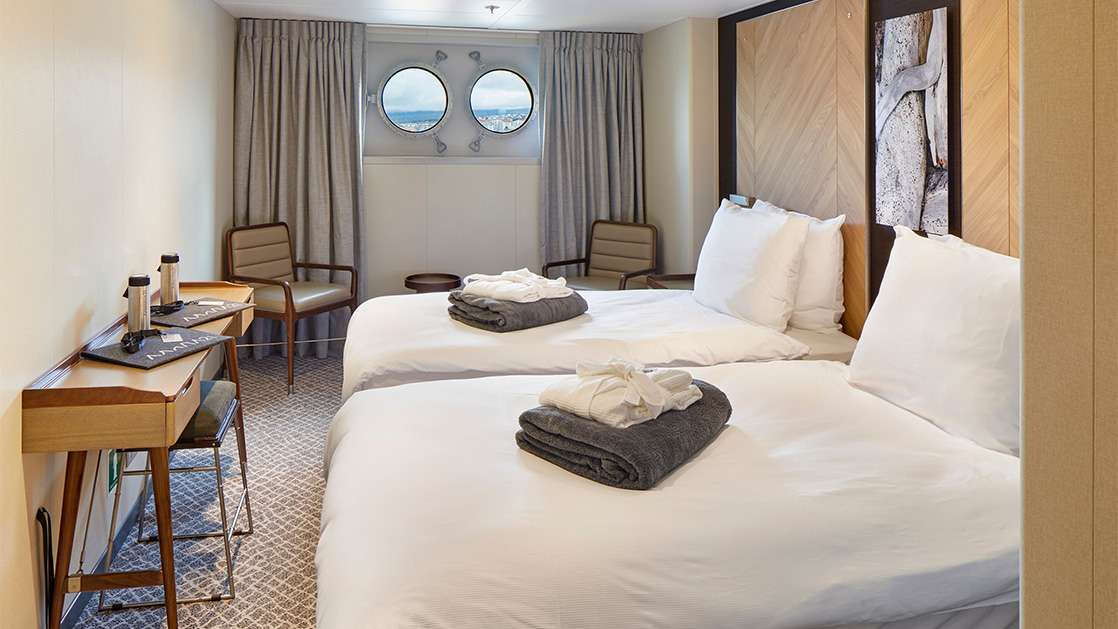
- 3 Porthole Cabins — 18 m² / 200 ft², Deck 3, cabins 311, 314 and 316: sitting area, porthole windows and private shower room; one king or two twins; no balcony; maximum 2 guests
- 3 Single Veranda Cabins — 19 m² / 210 ft², Deck 3, cabins 307, 309 and 312: dedicated solo cabin with king bed, sitting area, private furnished balcony and private shower room; maximum 1 guest
- 1 Triple Suite — 44 m² / 480 ft², Deck 4, cabin 414: two-bedroom layout with a king-or-twin main room and a queen sofa bed in the second room; separate sitting space; two private balconies; two private shower rooms; maximum 3 guests
The arithmetic is exact: three Penthouses, five Deluxe Suites, sixteen Deluxe Verandas, eight Verandas, three Portholes, three Singles and one Triple equal 39 units. At the published occupancy for each category, they provide 76 places. This current configuration differs from older 73-guest material still circulating online; room selection should follow the dated 2026–27 plan and booking confirmation.
Every cabin includes a wardrobe, sitting area, individually controlled heating and a private bathroom with shower. The operator's detailed cabin material also lists a desk and chair, combination European-American electrical outlets with USB, safe, telephone, hairdryer, bathroom amenities, bathrobe and slippers. Heated bathroom floors are described on the current ship page. Exact outlet count, voltage for a particular appliance and current amenity brand should not be assumed without a pre-departure check.
The Penthouse Suite is the most elevated accommodation, positioned beside the observation lounge on Deck 5. It adds a larger seating zone without becoming a physically separate second room. Snacks and the minibar are restocked daily, a coffee maker is supplied, and the bathroom and amenities are upgraded. Penthouse guests receive premium internet on 2026–27 air-cruises under the operator's stated conditions; all other categories receive standard internet.
The Deluxe Suite is the best choice for two guests wanting genuine separation between sleeping and living areas. Two balconies and two bathrooms make morning preparation easier, while the living room provides a comfortable private retreat during sea time. Although the room contains a queen sofa bed, the current air-cruise category is displayed for two guests. It should not be sold to three unless the operator gives written permission for the exact departure.
The Deluxe Veranda is the largest conventional one-room category and represents the biggest inventory on the ship. Its Deck 4 position is convenient for the library, sauna, gym and observation deck. Cabins 409, 412 and 420 cannot be converted to twins because their queen beds are fixed. The remaining Deluxe Verandas are described as twin-to-king convertible, subject to the bedding request being confirmed before travel.
The Veranda Cabin offers nearly the same everyday ingredients in a smaller Deck 3 footprint: bed, desk, seating, private shower room and direct outdoor space. The Single Veranda is especially valuable because it gives a solo traveller a purpose-designed room rather than a reduced double or an automatically shared cabin. Guests seeking the lowest deck position and lowest double-occupancy category can choose a Porthole Cabin, but must understand that its view is through portholes and it is the only category without a private balcony.
The Triple Suite is unique: there is only one, cabin 414. It is the sole published three-person category and combines two rooms, two bathrooms and two balconies. This is an attractive solution for three relatives or friends who want to stay together, but the second sleeping place is a queen sofa bed, not two additional twins. Its bedding arrangement and single-unit availability should be discussed openly before deposit.
Solo guests may book one of the three dedicated Singles with no single-use supplement. The 2026–27 brochure also permits a limited number of Porthole or Veranda cabins for single use with an 85% supplement, or same-gender sharing in those two categories. Shared-cabin guests are placed in single hotel rooms in Punta Arenas and pay the applicable hotel single supplement. Inventory and matching remain subject to confirmation.
Other Information
- Featured programme: Classic Antarctica Air-Cruise
- Duration: 8 days / 7 nights
- Gateway and finish: Punta Arenas, Chile
- Operating season: late November to early March
- Ship launched: 2019
- Air-cruise capacity: 76 guests
- Expedition staff and crew: 60
- Current air-cruise cabins: 39 units / 76 berths
- Length / breadth / draft: 90.7 m / 16.2 m / 4.3 m
- Ice class: LR PC6
- Propulsion: diesel engines, 3,440 kW
- Open-water cruising speed: 14 knots
- Landing craft: 10 Zodiacs
- Expedition language: English
- Mobility profile: active expedition travel with vehicle, beach and Zodiac transfers; full mobility and reasonably good health are expected
Confirmed in the 2026–27 Classic Antarctica rate: the ship cruise and scheduled charter flights between Punta Arenas and King George Island; airport-to-hotel group transfer on Day 1 for guests arriving as required; group transfers connected with the Antarctic flights; hotel-to-airport group transfer on Day 8; two Punta Arenas hotel nights at Cabo de Hornos or similar with breakfast, one before and one after Antarctica; Day 1 welcome dinner and access to Explorers House; all onboard breakfasts and lunches; three-course onboard dinners; wine, beer, juice and soft drinks with lunch and dinner; coffee, tea, chocolate, cappuccino, water and snacks on the ship; guided shore landings and Zodiac excursions; lectures and onboard entertainment; pre- and post-voyage information; loan of waterproof landing boots; onboard app content; standard internet, with premium service for Penthouse guests; the operator's Contingency Plan; and the IAATO passenger fee.
Not included in that rate: any service not specifically listed; international or domestic travel to Punta Arenas; accommodation, meals, excursions or transfers outside the itinerary and Contingency Plan; dinner in Punta Arenas after the return flight on Day 7; drinks purchased at the ship's bar; personal travel and medical insurance; laundry, communications beyond the included internet conditions, souvenirs and other personal expenses; gratuities; visas, passport costs and applicable arrival or departure taxes. The optional Hotel & Transfer Package for an extra night is separate from the two programme nights.
Optional paid activities: Sea Kayaking and Hiking & Snowshoeing are not part of the base rate. The 2026–27 brochure lists the kayaking programme at USD 995 per person on applicable departures and marks Hiking & Snowshoeing as available, while operator information describes the latter as an extra activity. Places, experience rules, weather and minimum participation apply. A standard Zodiac cruise or normal shore walk does not become chargeable merely because the optional programmes exist.
Arrival timing is strict. Travellers must be in Punta Arenas and ready for the programme before 2:00 PM on Day 1 to complete check-in, the mandatory briefing, Antarctic visitor guidance and boot fitting. The operator warns that missing this deadline can be treated as a no-show without refund. Arriving one day early is the prudent choice, even though the extra hotel night is not in the standard rate.
Antarctic charter flights are weather-dependent. The included Contingency Plan can move the outbound flight to the afternoon or evening of Day 1, delay it in Punta Arenas with accommodation, meals and possible local activities, or interrupt the voyage and refund the cruise fare if the group still cannot depart by 2:00 PM on Day 4. A return flight can also operate one day early, with accommodation provided but no voyage refund, or be delayed in Antarctica. If an extended delay requires the ship to sail back to South America, onboard meals and accommodation continue, but travellers pay the cost of changing onward tickets.
Mandatory insurance must cover aero-medical evacuation from Antarctica, including relevant pre-existing conditions and pandemics. Trip cancellation and interruption cover is strongly recommended. This insurance is excluded from the fare. Guests submit a participation and health declaration at least 90 days before departure; the remote setting has no normal airport or port infrastructure and boarding requires a vehicle transfer, uneven shore movement and Zodiac access.
The Antarctic flight allows 25 kg total baggage per person including hand luggage, with no individual item over 20 kg. The operator recommends 20 kg checked plus 5 kg carry-on and does not sell extra allowance. Excess luggage for the Classic itinerary is held in Punta Arenas. At several points guests may need to handle their own bag.
Waterproof boots are loaned and collected before the end of the trip. A waterproof expedition jacket is not listed as included; the current brochure directs guests to purchase the operator's jacket separately if desired. Travellers should bring their own waterproof outer jacket and trousers, warm layers, insulated gloves, hat, neck protection, UV sunglasses and rubber-soled onboard footwear.
No landing, wildlife encounter or named channel is guaranteed. The expedition leader and captain select the route after assessing ice, wind, swell, visibility, daylight, other vessels and wildlife guidance. Penguins, seals and whales are wild animals. The programme may visit the South Shetland Islands, Antarctic Sound, Gerlache Strait or Penola Strait, but these are possibilities rather than a contractual checklist.
Itineraries
The itinerary below is an original visitor-facing expansion of Antarctica21's Classic Antarctica Air-Cruise, the signature 8-day / 7-night programme operated by Magellan Explorer. It preserves the official day structure while explaining how a real polar expedition unfolds. Flights, landings and site order remain dependent on weather, ice and operational permission.
Classic Antarctica Air-Cruise — Representative 8 Days / 7 Nights
Day 1 — Punta Arenas, Explorers House and expedition preparation
Arrive in Punta Arenas early enough to be fully available before the mandatory 2:00 PM deadline. The included group transfer takes eligible arriving guests to the programme hotel, Cabo de Hornos or a similar property. At Explorers House, the team checks documents, explains the flight and contingency process, reviews Antarctic conduct and fits the waterproof boots loaned for the journey. This preparation is part of the expedition, not an optional city briefing.
In the evening, a welcome dinner brings the travelling group together. It is a useful moment to meet expedition staff, confirm dietary information and understand the rhythm of Zodiac groups. Pack the small items needed for Antarctica, keep essential medication in hand luggage and respect the 25 kg total flight allowance. Weather may require the charter to operate earlier than expected, even on the afternoon or evening of Day 1, so guests should remain reachable and follow the operator's instructions.
Day 2 — Chartered flight to King George Island and Zodiac embarkation
When the weather window opens, the private charter flies approximately two hours over the Drake Passage to King George Island in the South Shetlands. The high-wing aircraft lands at Frei Station. There is no conventional cruise terminal: guests step into the Antarctic environment, board a transfer vehicle, pass Frei and Bellingshausen stations, then walk the final shore section under staff direction.
The first Zodiac ride transfers the group to Magellan Explorer. Crew members manage luggage and the moving interface between inflatable boat and gangway; guests must keep both hands available and obey the sailor's timing. On board, cabin orientation, ship safety and the expedition briefing follow. A first sail past low volcanic coast, glaciers or brash ice may begin immediately, but the captain protects the programme from haste after a weather-sensitive travel day.
Day 3 — First full exploration day in the South Shetland Islands
The first landing is chosen for conditions rather than a fixed brochure promise. A sheltered bay may offer a gentle introduction to gentoo or chinstrap penguins, historic remains or broad volcanic beaches. The expedition team divides guests into Zodiac groups, reviews biosecurity and explains the safe distance from wildlife. Penguins decide their own route; visitors give way at their pathways and never surround an animal for a photograph.
A Zodiac cruise can complement the landing by moving quietly among grounded ice, glacier fronts viewed at a safe distance and feeding seabirds. Back aboard, naturalists identify species and connect what guests have seen to sea ice, geology and the seasonal breeding cycle. Magellan Explorer's observation lounge keeps the horizon visible between activities, while the mudroom gives wet boots and outerwear a proper place before lunch.
Day 4 — Bransfield Strait and the western Antarctic Peninsula
An overnight repositioning may carry the ship through Bransfield Strait towards the Peninsula. Depending on ice and wind, the day can combine a continental landing with a cruise through a sculpted bay. Stepping onto the Antarctic mainland is emotionally powerful, but expedition quality is measured by the whole encounter rather than a passport-style claim. An island landing with active wildlife may be better than a congested continental site.
From the Zodiacs, guests may watch an ice cliff calve from the required distance, trace blue layers in an iceberg or encounter a seal resting on a floe. The guide controls approach and engine use. Afternoon lectures can cover polar history, marine mammals or photography in high-reflectance conditions. After dinner, long summer light may invite an open-deck watch as the ship sails deeper along the west coast.
Day 5 — Gerlache Strait possibilities and a flexible two-outing day
The Gerlache Strait region offers some of the Peninsula's most dramatic scenery: steep mountains, glacier-filled valleys and protected channels where reflected light can transform an ordinary transit. A morning landing might focus on a penguin colony or a ridge walk within the team's marked route. Guests booked on Hiking & Snowshoeing may join their separate guided programme when conditions permit; normal shore exploration remains included for everyone else.
In the afternoon, the captain may enter a quieter waterway for a Zodiac cruise. Humpback whales often feed in the Peninsula season, but the team observes their direction and lets the animals control proximity. Kayakers, when their optional programme operates, paddle under a dedicated leader and do not replace the main included outing. Evening recap explains what was achieved and why tomorrow's plan can only be provisional.
Day 6 — Penola Strait, Antarctic Sound or the best opportunity nature offers
The final full exploration day is deliberately open. Ice conditions may favour a southern push towards the Penola Strait, while wind or traffic can make a northern site or Antarctic Sound more rewarding. This is where a small expedition ship proves its value: the leader can select among several realistic options instead of forcing a published landmark in poor conditions.
Guests may climb to a viewpoint above an iceberg-filled channel, visit a scientific or historic site when access is granted, or cruise through a maze of blue and white forms. Every landing begins with a current briefing and ends with a boot and clothing biosecurity check. On board, the farewell mood builds slowly rather than ending the expedition early. The lounge, library and outer decks remain observation spaces until the ship turns towards King George Island.
Day 7 — Return to King George Island and Punta Arenas
Magellan Explorer approaches King George Island according to the aircraft's confirmed weather window. After breakfast and final instructions, guests settle any personal bar, laundry, shop or gratuity expenses, return loan boots and leave the cabin ready for disembarkation. Zodiacs transfer the group ashore, followed by the vehicle journey to Frei Station and the scheduled flight over the Drake Passage.
On arrival in Punta Arenas, an included group transfer leads to the second programme hotel night. Breakfast the next morning is included; dinner this evening is not. Travellers choose and pay for their own meal, and should keep plans flexible because the Antarctic flight can land at a different time from an ordinary scheduled service. The operator's contingency arrangements take precedence if weather changes the day.
Day 8 — Breakfast, airport transfer and onward journey
After the included hotel breakfast, the programme provides a group transfer to Punta Arenas airport. The operator recommends that onward travel on the final day should not begin until late afternoon and that tickets remain changeable. This buffer protects against a delayed return from Antarctica; it is not wasted time in a programme built around a remote, weather-controlled airfield.
Guests leave with the rare advantage of having crossed the Drake twice by air while still living several complete expedition days among the islands and Peninsula. The journey ends in Punta Arenas, but onward flights, extra hotel nights and extensions are separate unless the booking explicitly adds them.
Why the air-cruise format works
The Classic Antarctica programme is designed for travellers with limited time, apprehension about the Drake crossing or a strong preference to maximise days near the continent. The flight does not make Antarctica predictable; it changes where uncertainty is managed. Weather can delay a two-hour charter, while a ship crossing accepts two days of ocean conditions. Antarctica21's contingency structure, Punta Arenas operation and dedicated aircraft relationship are therefore central parts of the product.
Magellan Explorer complements the format. Seventy-six guests can fit on one aircraft and move through Zodiac operations without the long rotations common on large vessels. Ten Zodiacs, two gangways and a purpose-built mudroom help the expedition team use short weather windows. Most cabins have a private balcony, yet the best sightings still happen in shared observation spaces where guides can interpret behaviour and the captain can announce an unexpected opportunity.
Choosing the right cabin for the route
Travellers prioritising open views should begin with the balcony categories. A Deck 3 Veranda provides the core experience at a lower position; a Deck 4 Deluxe Veranda adds space and proximity to several facilities. Penthouse Suites offer the broadest one-room layout and premium internet, while Deluxe Suites are genuinely divided into bedroom and living room. The single Triple Suite is the clear three-person choice.
Porthole Cabins remain comfortable, private-bathroom rooms, but they do not have balconies. They suit guests who expect to spend observation time on deck and prefer the lowest double category. Dedicated Single Verandas protect solo travellers from an automatic single-use surcharge. Fixed queen-bed cabins—405, 409, 412 and 420—should never be promised as twins.
Preparing for a successful expedition
Arrive before the deadline, build an extra day into the gateway when possible and insure the whole journey. Pack within the aircraft limit and keep waterproof layers, medication, documents and a warm layer accessible. The supplied boots solve the landing footwear requirement, but they do not replace waterproof trousers, gloves, eye protection or a proper outer shell.
On expedition days, listen for changes. A wake-up call may move earlier for calm water, and a landing can become a Zodiac cruise when surf builds. Carry only the camera equipment you can manage while keeping one hand free for boarding. Protect batteries from cold, follow biosecurity exactly and ask a guide before stepping away from the marked route.
A typical day aboard
There is no rigid clock in Antarctica, but the ship develops a dependable rhythm. An early wake-up announcement is followed by breakfast and a detailed briefing in the lounge. Guests dress in layers, collect their boots from the mudroom and wait until their Zodiac group is called. At the gangway, sailors control the step between ship and inflatable boat. On return, every guest cleans boots and trouser cuffs through the biosecurity station before leaving expedition gear in its assigned place.
Lunch provides time to warm up, recharge cameras and watch the route through the dining-room windows. A second outing often follows in the afternoon, then the expedition team holds a recap and introduces the next day's possibilities. Dinner is served rather than buffet-style. Wildlife can interrupt this sequence at any point: an announcement may invite guests to the bow for whales or to an outer deck for exceptional ice. Participation is always optional; missing an outing to rest is better than becoming cold, fatigued or unsteady.
Other Magellan Explorer air-cruise options
The ship is also scheduled on programmes beyond the featured Classic route. The Polar Circle Air-Cruise extends to 10 days / 9 nights and aims farther south, attempting to cross the Antarctic Circle when conditions allow. The Antarctica Express combines a southbound Drake sailing from Ushuaia with exploration in the South Shetlands and a flight back to Punta Arenas. Selected longer departures link the Peninsula with South Georgia, adding sea days and a substantially different wildlife focus.
Those itineraries do not share exactly the same hotel nights, transfers, ports or activity opportunities. Their inclusions must be read from their own dated programme. A customer drawn to Magellan Explorer should first choose the journey that fits available time, tolerance for sea passages and wildlife priorities, then select the cabin. The eight-day Classic remains the cleanest expression of the fly-both-ways concept.
Responsible time ashore
Every landing is a visit to a protected environment. Clothing and bags are inspected for seeds and loose material, boots are disinfected, and food stays aboard. Guests keep the distance set by the guides, never touch wildlife and avoid blocking the direct path between an animal and the sea. Historic objects, bones, feathers, rocks and plants remain exactly where they are found.
Small choices protect both access and experience. Walk slowly, keep voices low, remain inside the flagged boundary and kneel only where the guide confirms it will not damage vegetation. A telephoto lens creates a better close-up than approaching an animal. These rules are not an obstacle to discovery; they are what allow Magellan Explorer and future visitors to return without turning a wild place into a stage.
The most rewarding mindset is specific about services and flexible about nature. The cabin, meals, flights, group transfers and listed inclusions can be documented precisely. The iceberg, whale, landing beach and sky cannot. Magellan Explorer sells best when that distinction is made clear: a refined, purpose-built base with expert logistics, opening a door onto an Antarctic journey whose finest moments remain unscripted.
Schedules & routes

Prices & conditions
Included
- Transfers from airport and/or hotel to the yacht
- Marine park fees & Port fees
- Fuel surcharge
- Full-board meal plan (including snacks)
- Complimentary beverages (water, tea, coffee)
- Complimentary alcoholic beverage with dinner
- Alcoholic beverage
- Soft drinks
- Cabin towels and complimentary toiletries
- Cabin cleaning service
- Wi-Fi
Not included
- Domestic flights in destination country
- VAT and local taxes
- Use of Kayaks or/and SUPs
- Land excursions and activities throughout the trip
- Travel insurance (trip cancellation insurance)
- Boat accident insurance
- Crew gratuity
Useful information
Antarctica
Best time for visiting
The best time to visit Antarctica is during the austral summer, which runs from late October to March. Outside of this short window, the continent is inaccessible to tourists due to extreme cold, constant darkness, and thick pack ice. The "best" specific month depends on your interests, as each phase of the summer offers different wildlife spectacles and environmental conditions.
Late October – November: Best for Pristine Landscapes & Ice. Witness penguin courtship rituals and nest-building. You may also see elephant seals battling for territory on subantarctic islands.
December – January: Best for Warmth & Penguin Chicks. Peak time for penguin chicks hatching, especially in late December. Whale sightings also increase significantly. Receding sea ice allows ships to travel further south, often crossing the Antarctic Circle.
February – March: Best for Whale Watching. Considered the prime window for seeing humpback, minke, and orca whales, which are more curious and social after feeding all season. Penguin chicks are older and very active, though landing sites may be muddy and less "pristine".
About temperatures
Air - Antarctic Peninsula : summer months are between -5°C – 5°C.
Sea - Antarctic Peninsula : summer months are between -2°C – 2°C.
Wetsuit Recommendation
For Antarctica diving, a drysuit with proper thermal undergarments is mandatory all season long. Thick gloves, hood, and additional thermal protection are essential due to near-freezing water temperatures.
Diver requirement
Antarctica is suitable for advanced divers only. Divers must be experienced in cold water diving and ideally certified in drysuit diving. Due to the remote location and extreme conditions, strong buoyancy control, situational awareness, and comfort in challenging environments are essential. Some operators may require a minimum number of logged dives and prior cold-water experience. You can find out more information about diving in Antarctica here : Antarctica.
Embarkation / Disembarkation
Most Antarctica trips depart from Ushuaia, Argentina (USH), the southernmost city in the world. Guests need to fly in/out from Ushuaia Airport. Some itineraries may include a fly-cruise option from Punta Arenas, Chile (PUQ), which reduces the Drake Passage crossing. On the embarkation day depends on the liveaboard or expedition vessel you chose, our agent will provide detailed instructions.
Visa Requirements
Travellers generally do not require a visa for Antarctica itself, as it is governed by the Antarctic Treaty System. However, visas may be required for transit countries such as Argentina or Chile depending on your nationality. Please refer to the relevant embassy or immigration websites for the latest requirements.
Vaccinations
There are no specific vaccination requirements for Antarctica. However, standard travel vaccinations are recommended, and travellers should ensure they are in good health due to the remote nature of the destination. Medical facilities are extremely limited.
Money Matters
There is no official currency in Antarctica. Transactions are typically handled onboard using major currencies such as US Dollars (USD). Credit cards are often accepted on expedition vessels, but it is advisable to carry some cash for contingencies in transit ports.
Drones
Drone usage in Antarctica is highly regulated and often restricted to protect wildlife and the environment. Most operators prohibit personal drone use. If permitted, special authorization is required in advance in accordance with Antarctic Treaty environmental guidelines.
Extending your holiday
We offer a range of hotels/resorts, land-based tours, and excursions in Argentina and Chile that can be arranged before or after your Antarctica expedition. Popular extensions include Patagonia, Torres del Paine, and Tierra del Fuego. Just ask us if you need such service.
Diver's reviews (0)
Photos