- Best-Price Guarantee
- 24/7 Expert Support
- No Booking Fees
- Direct with Operators
- 500+ Boats Worldwide
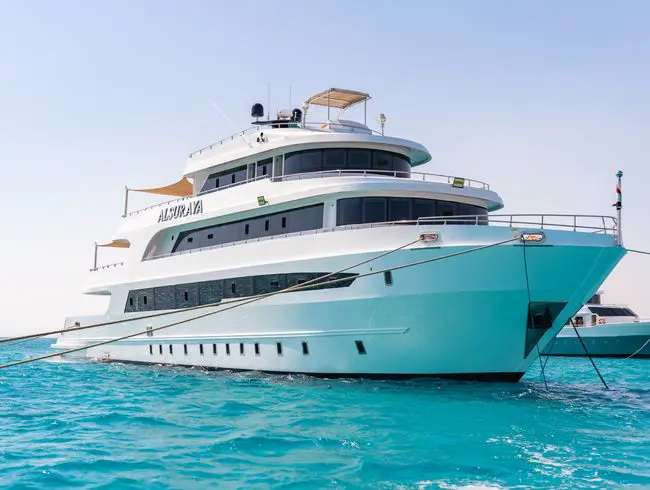
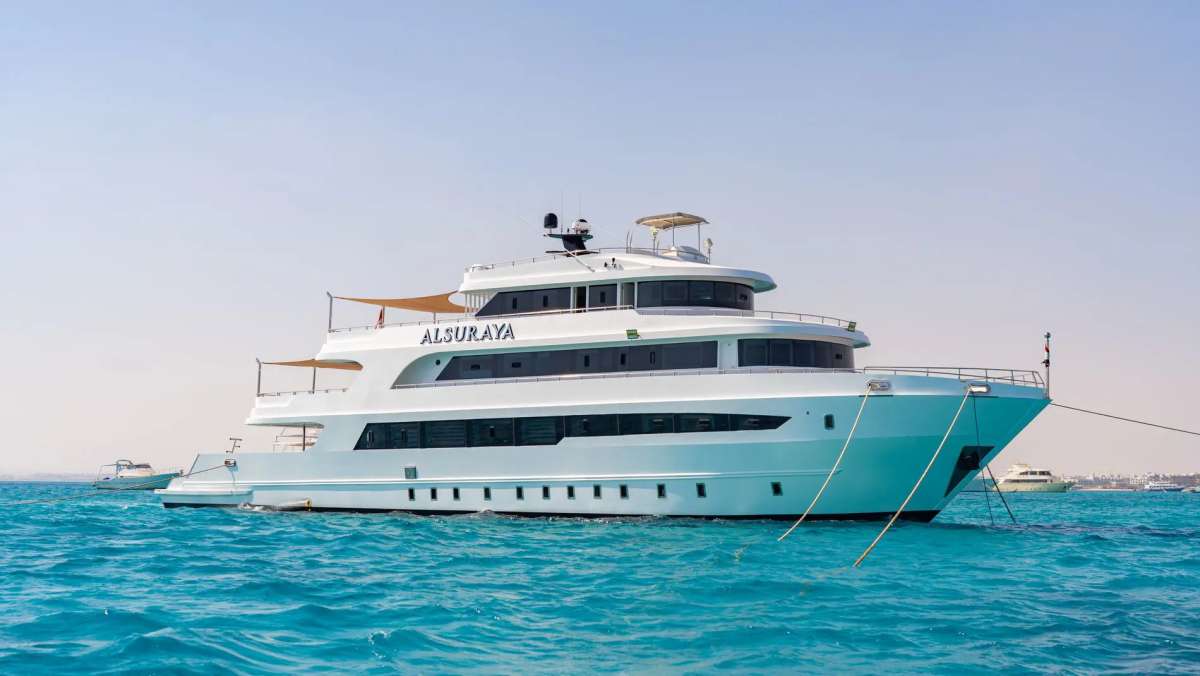
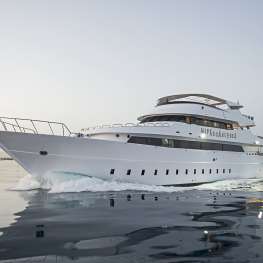
Alsuraya is a modern 37-metre Egypt liveaboard built in 2024 for Red Sea diving and kitesurfing safaris. She welcomes 24 guests in 12 air-conditioned cabins and combines generous lounges, broad open decks, a streamlined dive platform, complimentary Nitrox and a powerful RIB for itineraries from northern wrecks to remote southern reefs.
Description
Boat
Built in 2024, M/Y Alsuraya is a contemporary steel-hulled liveaboard based in Hurghada and designed for long-range exploration of the Egyptian Red Sea. The vessel measures 37 metres in length, 8 metres across the beam and 2 metres in draft. With accommodation limited to 24 guests, her four-deck layout leaves ample room for preparing to dive, relaxing in the shade or enjoying open-sea views during longer crossings.
Twin 1,000 hp Mercedes engines provide a published top speed of 16 knots. Two 140 kW Cummins generators support onboard services, while tank capacities of 15,710 litres for fuel and 6,000 litres for fresh water help the yacht operate between the northern wreck fields and remote offshore marine parks. The vessel is registered in Hurghada under the Egyptian flag and is classed for unrestricted navigation by the operator.
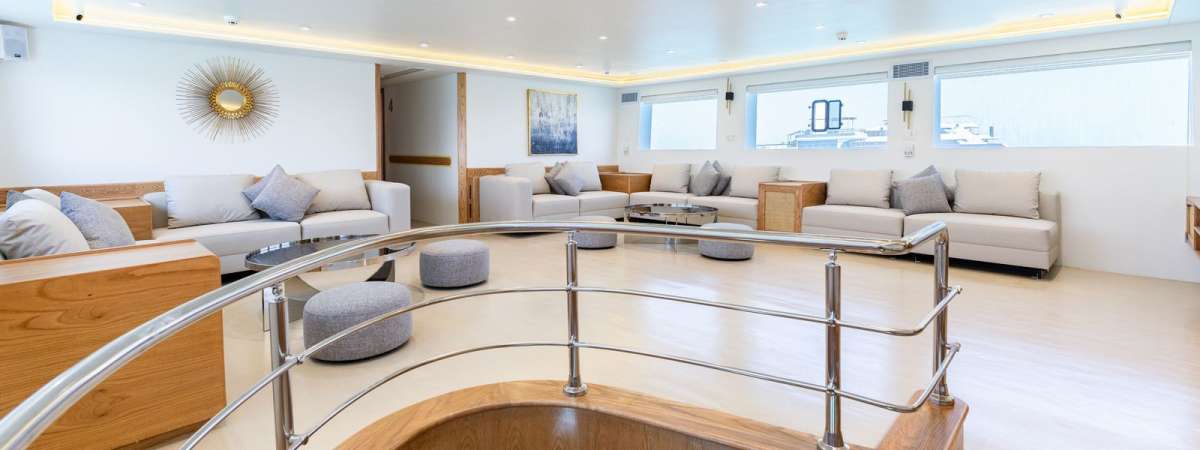
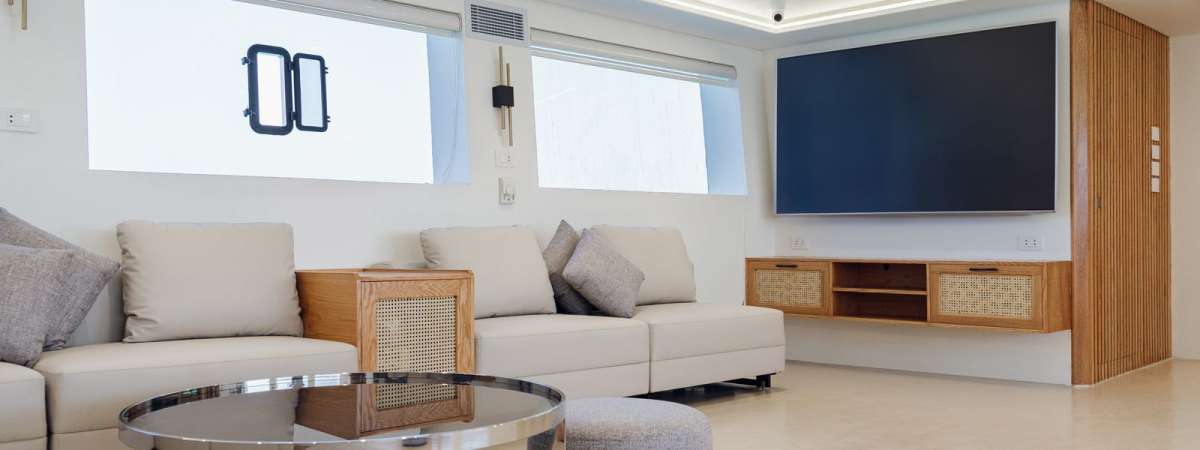
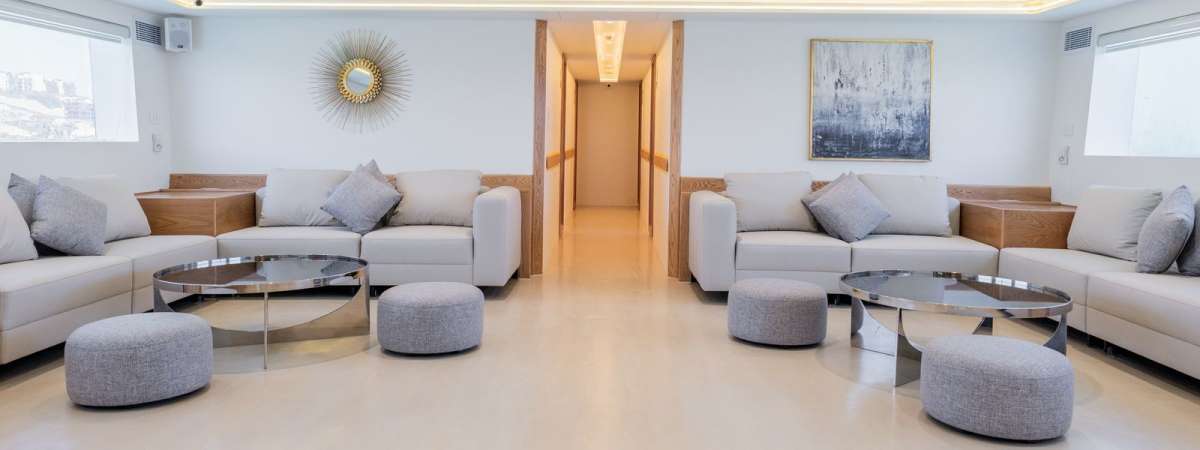
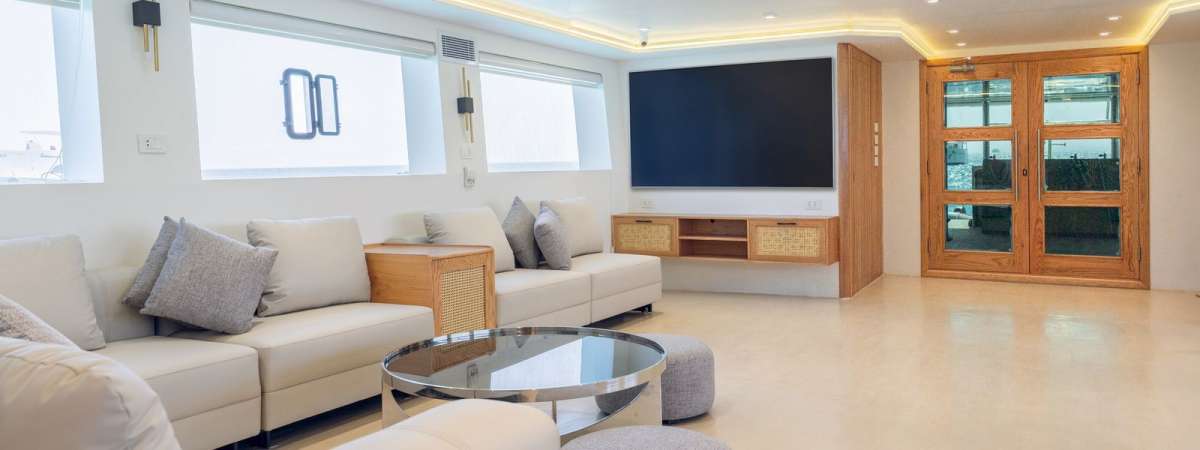
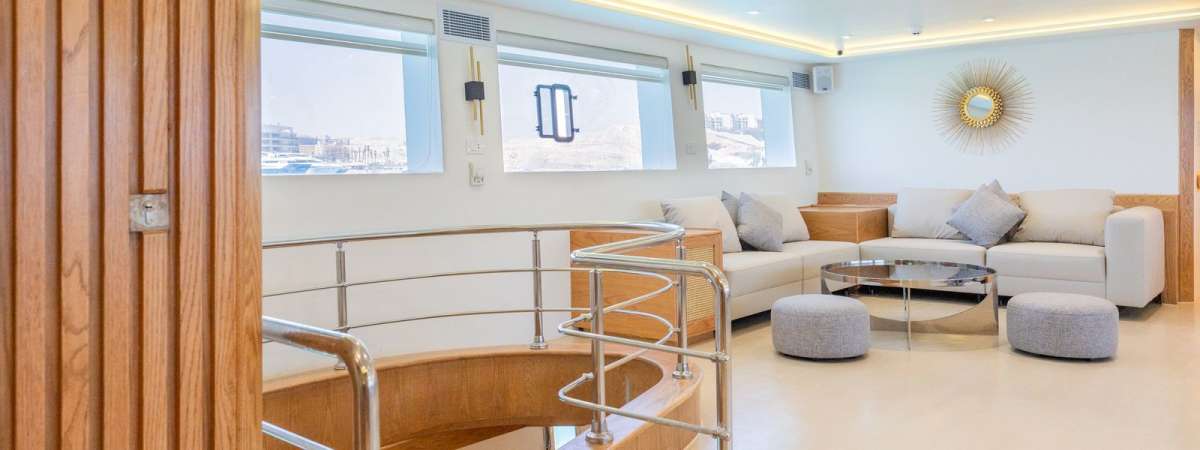
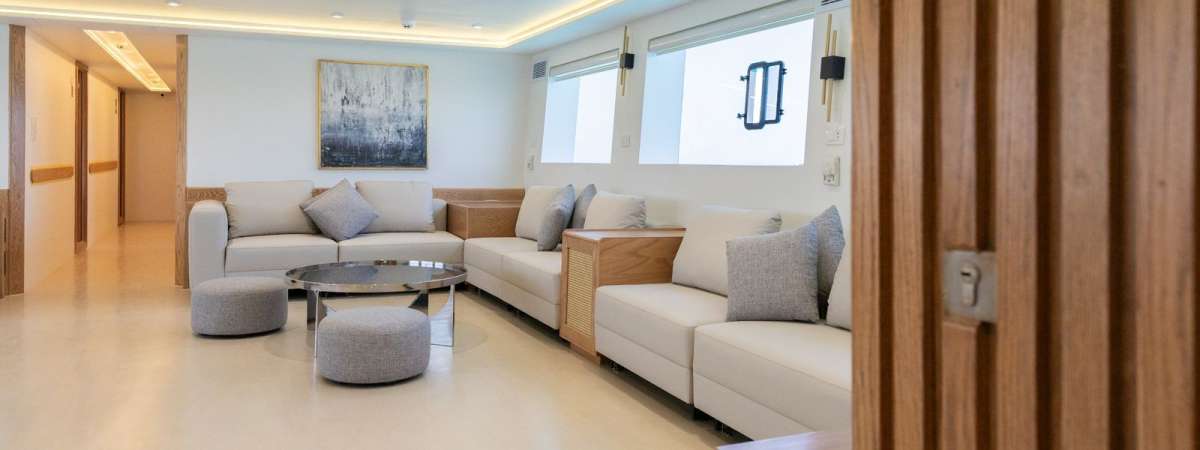
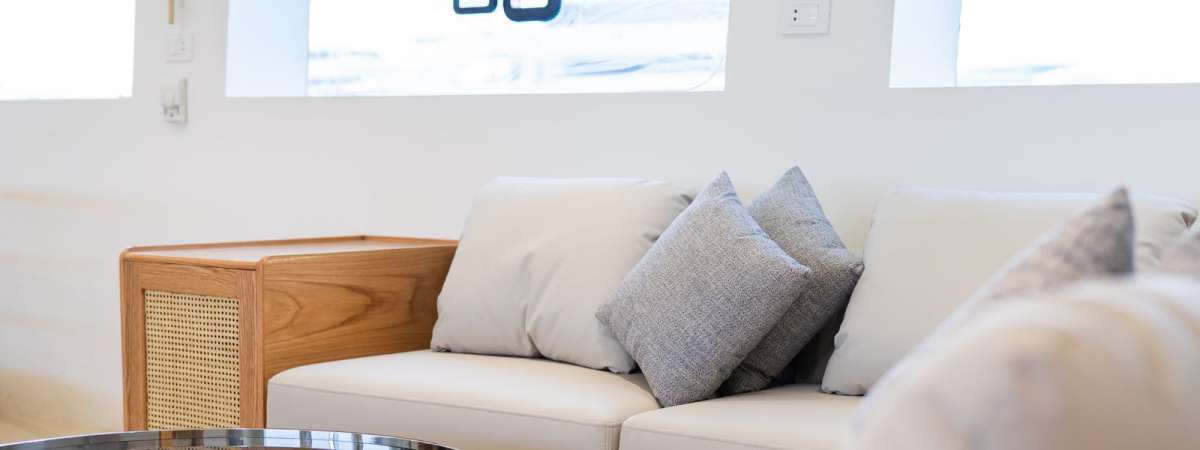
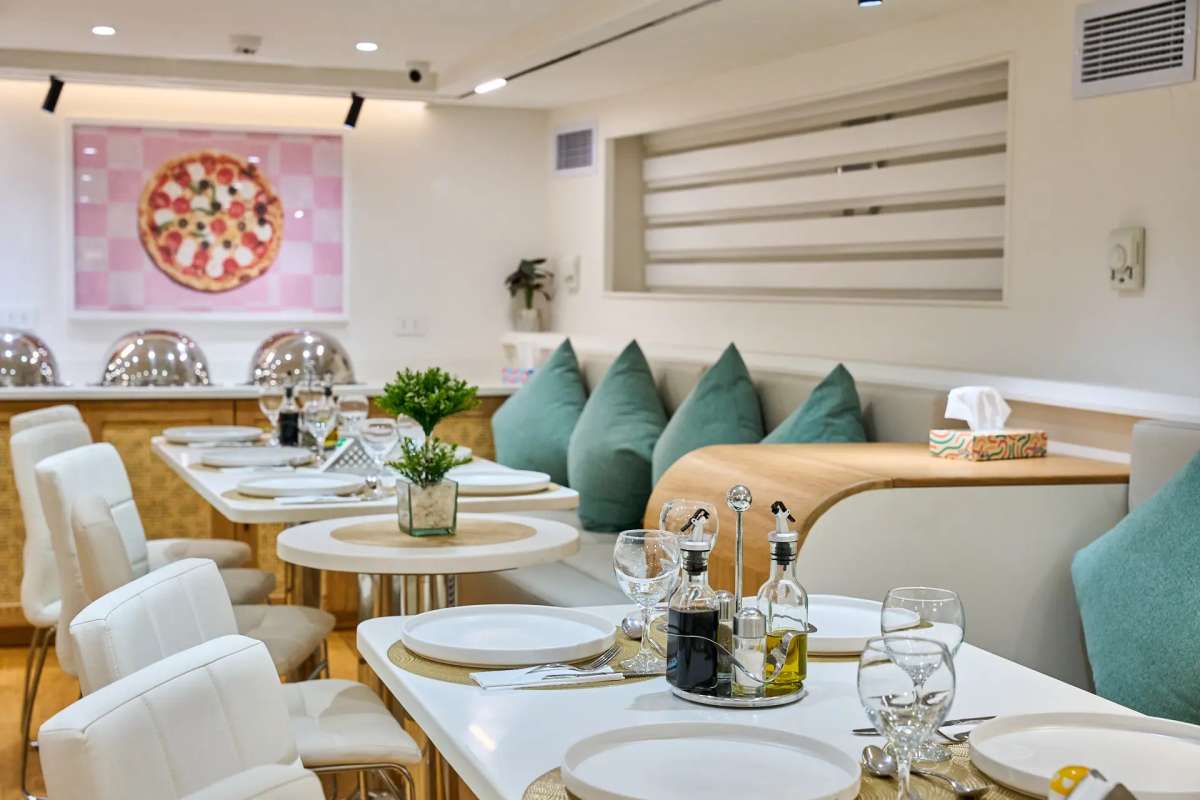
The bright main salon uses large windows, pale finishes and several sofa groups to create a comfortable social centre. It offers space for dive briefings, conversation and reviewing underwater images without crowding the dining areas. A separate restaurant occupies the lower deck, where three freshly prepared meals are normally served each day. Snacks are presented between dives, and the kitchen can consider dietary requirements when these are supplied before departure.
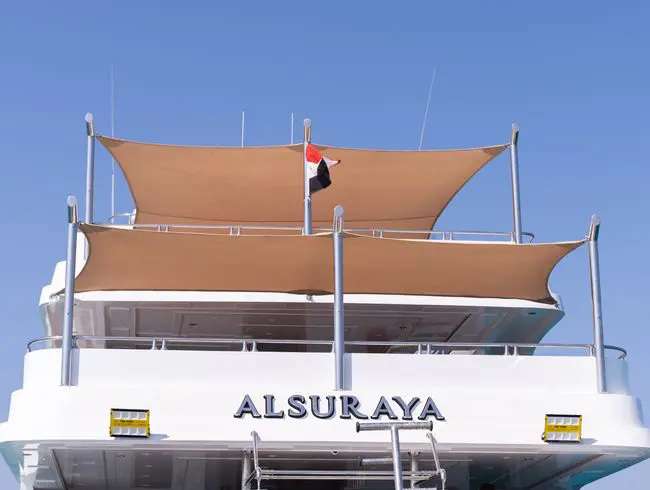
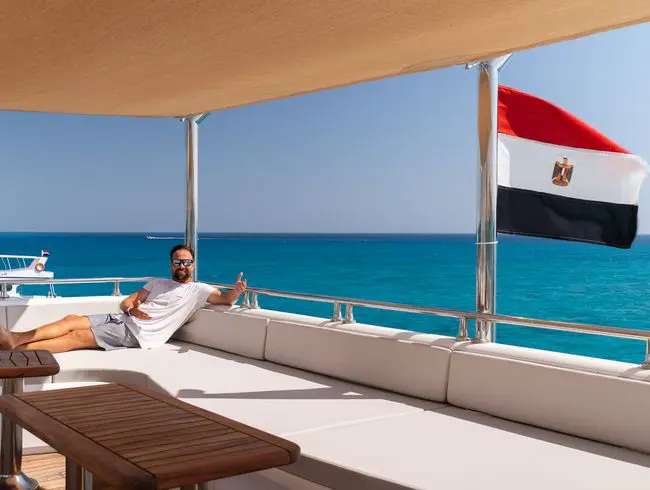
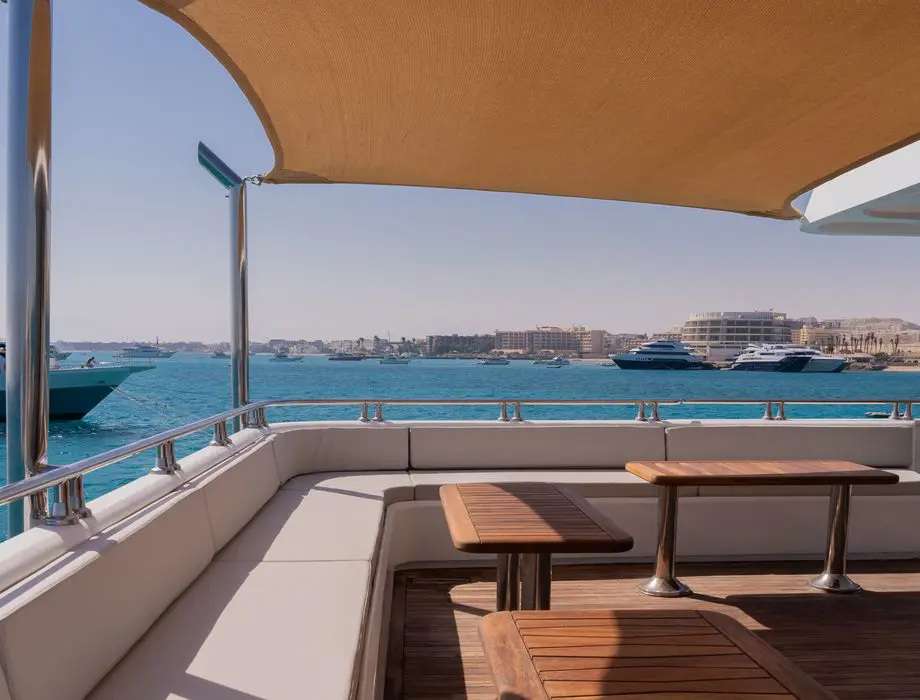
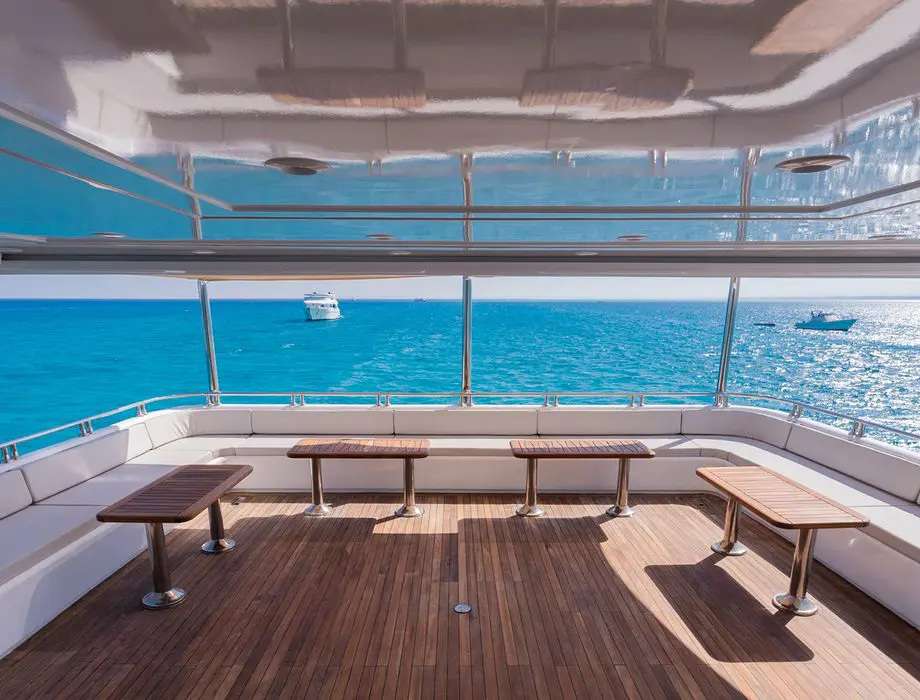
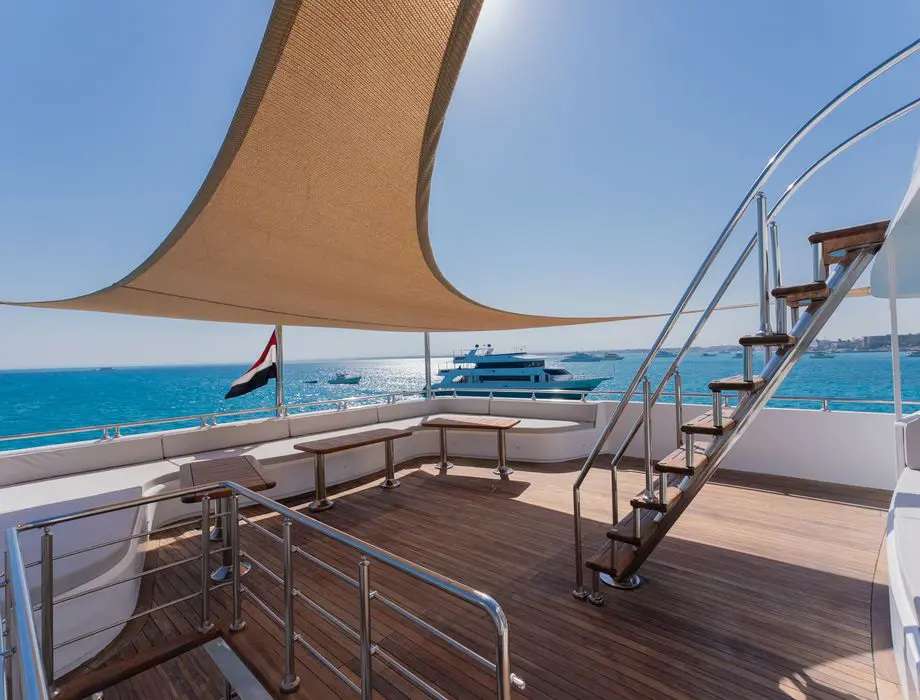
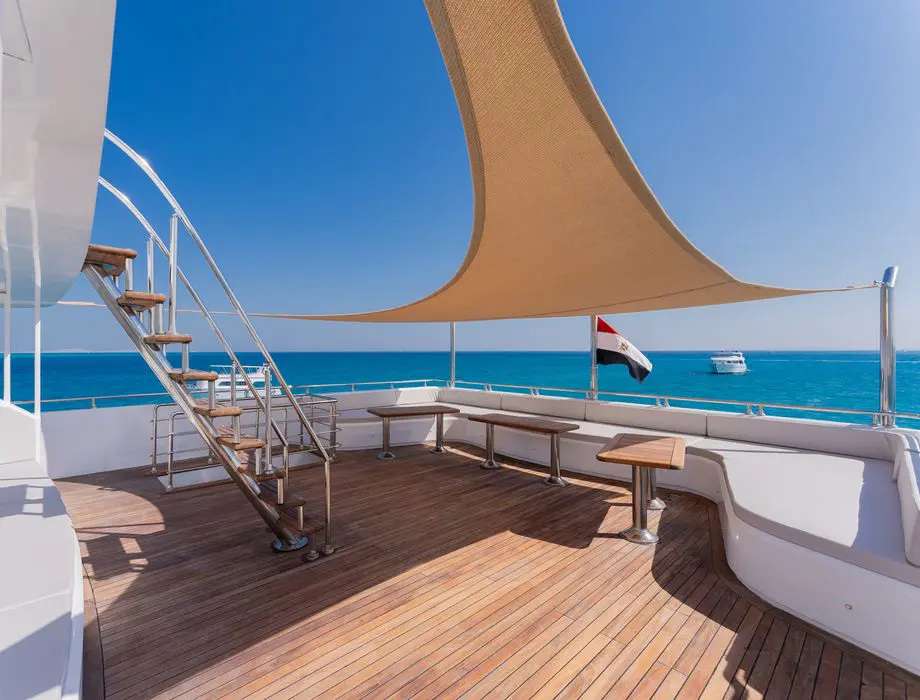
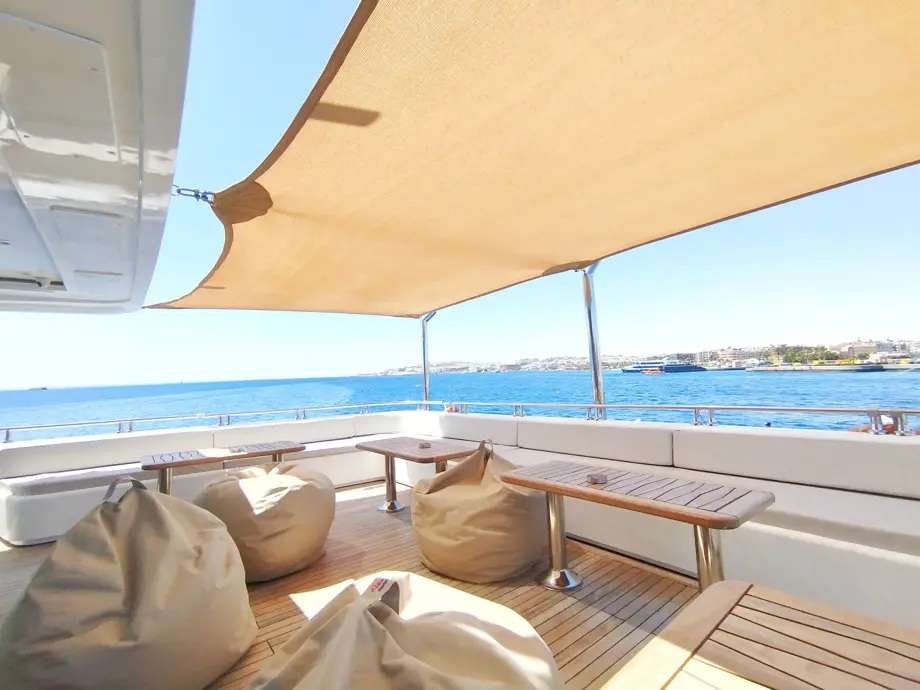
Outdoor areas extend across the upper and sun decks. Shaded lounges with fixed seating provide shelter between dives, while open sections are suited to sunbathing and watching the Red Sea horizon. The broad side decks connect the accommodation and leisure zones with the stern working area. A dedicated dive platform keeps wet activity away from the dry salon and cabins.
Alsuraya also supports kitesurfing charters on selected dates. For divers, however, her strongest advantage is flexibility: the same platform can serve Hurghada wreck itineraries, Straits of Tiran reefs, the Brothers–Daedalus–Elphinstone circuit and deep-south expeditions from Port Ghalib.
Cabin
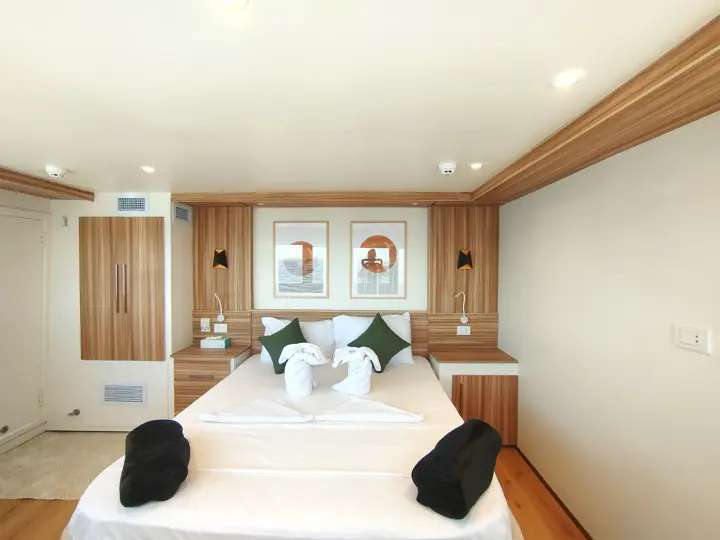
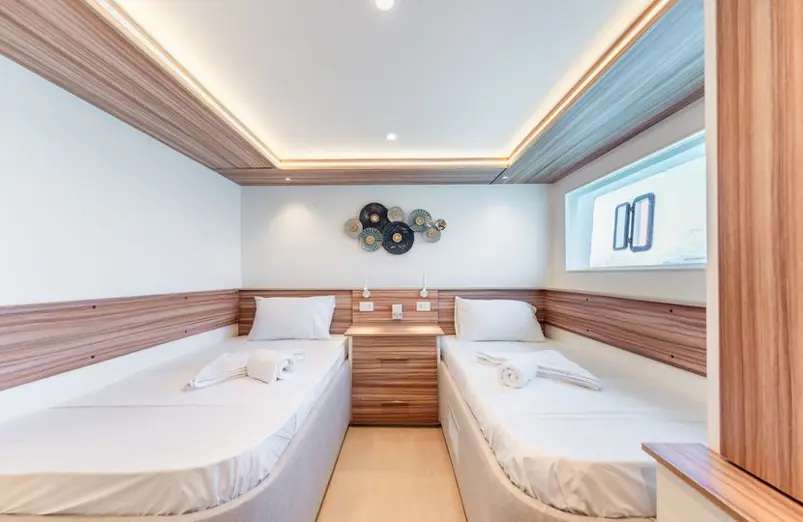
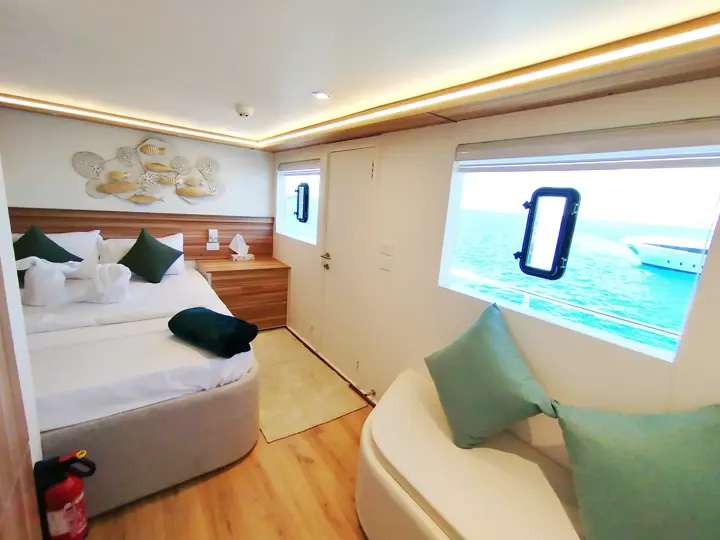
Alsuraya accommodates 24 guests in 12 air-conditioned cabins distributed above the lower-deck service areas. The published deck plan lists eight twin cabins, one bunk-bed cabin and three double-bed suites. Four twin cabins are on the main deck; the upper deck contains four more twin cabins, the bunk cabin and the Panorama Suite; two additional suites are positioned on the sun deck.
The main accommodation choices are:
- 8 Twin Cabins: two separate beds, divided between the main and upper decks
- 1 Bunk-Bed Cabin: upper-deck accommodation with two berths
- 1 Panorama Suite: upper-deck double-bed cabin
- 2 Sun Deck Suites: double-bed cabins in an elevated location
The boat specification records 14 bathrooms in total. Cabin information highlights individually adjustable air conditioning and onboard Wi-Fi, although internet access remains dependent on mobile coverage. Portholes should stay closed while the yacht is travelling, and wet suits or dive equipment must remain outside the salon and cabins.
Guests should place toilet paper and sanitary products in the bins provided rather than in the marine toilets. Smoking is prohibited in every interior space and on the dive platform; designated exterior lounge areas provide ashtrays. Final cabin assignment, exact window configuration and single-occupancy availability should be confirmed at booking. Sole use of a cabin is currently advertised with a 75% supplement over the standard per-person fare.
Diving
Alsuraya’s diving operation centres on a spacious stern platform supported by an 8.5-metre RIB with two 85 hp Yamaha engines. The RIB carries a medical box, life jackets and snorkelling equipment and is used for entries or pickups where direct access from the mother ship is unsuitable.
Gas production is handled by two Bauer K150 air compressors rated at 450 litres per minute each and an NRC Nitrox compressor rated at 1,000 litres per minute. Complimentary Nitrox is included for certified enriched-air divers. Standard dive support also includes a 12-litre cylinder, weight belt and weights. Fifteen-litre cylinders, sidemount pairs, twinsets, stage cylinders and other special configurations are separate requests and must be reserved in advance.
The operator assigns two or three dive guides according to group size. A typical seven-night safari includes up to three or four dives on full diving days, but open-sea crossings, marine-park rules and the final no-fly interval can reduce the number. Night dives appear on protected northern and Fury Shoals sections of the published programs; they are not promised at every site.
Each diver is expected to carry a dive computer, surface marker buoy, mask, snorkel, fins, regulator with alternate air source, BCD, suitable exposure protection and a torch for night diving. Missing equipment can be rented for an additional charge, but it is not routinely stored aboard and should be requested at least two weeks ahead. Bringing spares and batteries is advisable on remote routes.
Egyptian rules impose a maximum depth of 40 metres, and the operator requires at least 50 logged dives for marine-park itineraries. Current, surge and surface conditions at Daedalus, Brothers, Elphinstone and Rocky Island can be demanding, so certification alone does not replace recent experience and confident buoyancy, drift and blue-water skills.
Other Information
The following summary reflects Alsuraya’s official terms and FAQ at the time of research. The booking confirmation for a specific departure remains authoritative because charter terms, route fees and transfer arrangements can change.
Published as included:
- Full-board accommodation aboard Alsuraya
- Breakfast, lunch and dinner each full day
- Catering from dinner on embarkation day through breakfast on disembarkation day
- Snacks between dives
- Water, coffee, tea, cola, Sprite and fruit juices
- Private return transfers between the itinerary-associated airport or hotel and marina, within a 60 km radius
- Two or three dive guides according to the number of guests
- Standard 12-litre cylinder, weight belt and weights
- Complimentary Nitrox for appropriately certified divers
- Limited Wi-Fi when network coverage is available
- First and/or final hotel night when specifically required by the travel schedule
Published as excluded or charged separately:
- Egyptian entry visa and any visa-assistance service
- International or domestic flights
- Diving and travel insurance
- Rental dive equipment
- Fifteen-litre cylinders, sidemount, twinsets, stage cylinders and other special tank requests
- Private dive guide
- Marine-park fees, port fees and permits, currently stated as approximately €150–€250 per person depending on the itinerary
- Transfers beyond the complimentary 60 km radius or involving a different city or airport from the scheduled route
- Crew and guide gratuity; the operator recommends €100 per guest per trip
- Single-cabin use, currently subject to a 75% supplement
- Alcohol and any premium or canned drinks not expressly listed as complimentary; the current FAQ permits guests to bring their own beer, but this should be reconfirmed
- Personal purchases, courses and services listed on the onboard price sheet
Published example charges, subject to change: full standard rental kit €250; 15-litre cylinder €35; computer, torch, wetsuit, BCD or regulator €40 each; single sidemount cylinder €45; sidemount pair €80; private guide €450; visa assistance €40. Specialty courses and Advanced Open Water training are also available at additional cost with advance coordination.
Practical information:
- Embarkation: from 16:00; the first night is usually spent in the marina
- Disembarkation: after breakfast, normally by 10:00; the boat generally returns to port the previous afternoon
- Likely ports: Hurghada or Port Ghalib according to the route
- Documents: passport or eligible national ID, dive certification, logbook and a medical fitness certificate no more than one year old
- Insurance: separate dive-accident coverage is required at check-in and is not included
- Onboard payment: cash in euros, US dollars or Egyptian pounds; credit cards incur a published 3% bank fee
- Environmental rules: no fishing, collecting, animal feeding, reef contact, gloves, dive knives or drones
- Safety equipment: fire alarms and extinguishing systems, emergency hatches and plans, first-aid kit, oxygen, signals and flares, plus two annually serviced 25-person life rafts
- Operational flexibility: ports and itineraries can change for weather, governmental, military or scheduling reasons; if fewer than eight guests are booked, the operator may assign another vessel under its published terms
Itineraries
Alsuraya’s program spans the northern Egyptian Red Sea, the Straits of Tiran, the offshore marine parks and the deep south. Most published examples run for eight days and seven nights, with check-in on the first afternoon, six principal diving days and breakfast before departure on day eight. The sequences below explain the character of each route rather than guaranteeing a particular reef or wreck.
Northern Wrecks, Reefs and the Straits of Tiran
Northern safaris generally begin and end in Hurghada. Following the first marina night, a check dive around Giftun, Poseidon Reef or another sheltered site allows guides to assess weighting and experience before the yacht moves toward the Gulf of Suez wrecks and Sinai reefs.
Ras Mohammed and Shaab Mahmoud
Shark and Yolanda Reef, Anemone City and Jackfish Alley combine steep walls, current-fed coral and dense schools of reef fish at the southern tip of Sinai. Shaab Mahmoud offers more protected conditions and may host a night dive. Nearby Dunraven adds an atmospheric nineteenth-century wreck to the reef program.
SS Thistlegorm
The northern route’s signature wreck is the SS Thistlegorm, a British wartime cargo ship whose holds contain motorcycles, trucks and other military supplies. Alsuraya’s example schedules allow repeated dives, including a possible night dive, so guests can explore both the exterior and selected cargo areas without trying to see everything in one descent. Depth, current, penetration limits and other dive boats require disciplined group procedures.
Gubal Strait and Abu Nuhas
The Kingston and Ulysses wrecks may lead into an overnight stop near Gubal Island. At Abu Nuhas, the route can include Chrisoula K, Carnatic and Giannis D, three contrasting wrecks resting against the same hazardous reef system. Siyul Island, Umm Gamar and Dolphin House add coral gardens and a gentler finish before returning toward Hurghada.
Tiran extension
North and Tiran departures continue to Gordon, Thomas and Jackson reefs. Their exposed corners, deep walls and current lines create excellent coral and schooling-fish dives, while protected sides offer alternative profiles when conditions change. The operator’s sample then reconnects with Thistlegorm, Abu Nuhas and the Hurghada reefs for a varied combination of walls and wrecks.
Brothers, Daedalus and Elphinstone
Alsuraya schedules several versions of the celebrated Brothers–Daedalus–Elphinstone circuit, including Hurghada returns, Port Ghalib returns and one-way combinations. These offshore reefs rise from deep open water and favour experienced divers comfortable with negative entries, current and blue-water safety procedures.
The Brothers Islands
Big Brother and Little Brother are isolated marine-park outposts known for steep coral walls and pelagic encounters. Big Brother also offers the historic Numidia and Aida wrecks when weather and experience permit. Little Brother’s current-washed plateaus and gorgonian-covered walls may attract grey reef sharks, thresher sharks and schooling fish. Sightings are entirely natural and never guaranteed.
Daedalus Reef
Recognisable by its lighthouse, Daedalus stands far offshore east of Marsa Alam. Alsuraya commonly schedules several dives here rather than a single visit. North-side blue-water searches may reveal scalloped hammerheads, while southern plateaus and walls carry colourful coral, trevally, tuna, mantas or oceanic whitetip sharks. Current can change quickly around the reef tips, making close group formation and a visible SMB essential.
Elphinstone Reef
Elphinstone’s narrow north and south plateaus divide two long walls covered in soft coral. Early dives may bring shark activity, while the walls themselves support anthias, jacks and passing pelagics. The site is often used near the start or end of southern itineraries, but access depends heavily on wind and sea state.
Daedalus, Rocky, Zabargad and Elphinstone
This deep-south route usually operates through Port Ghalib. The operator’s representative schedule begins with Abu Dabbab and Shaab Marsa Alam before dedicating two days to Daedalus. The longer stay gives the guides room to change entry points as the current shifts and to balance shark searches with wall diving.
Rocky Island follows with dramatic drop-offs, dense soft coral and the possibility of large fish patrolling beyond the reef. Nearby Zabargad Island provides a contrasting landscape of sheltered bays, coral pinnacles and sloping reef. The journey north can then move through Sataya’s Dolphin House, Claudia and the small wreck at Abu Galawa Soghayr, where the published plan includes a night dive.
Two final dives at Elphinstone complete the sample route before the vessel returns to port. The actual order can reverse or omit a remote site if sea conditions do not support a safe crossing.
Daedalus, Sataya and Fury Shoals
This alternative combines open-ocean action with the more intricate reefs of Fury Shoals. After checkout dives at Shaab Marsa Alam and Shaab Sharm, the yacht may visit Shaab Maksur, Malahi and Claudia. These southern sites offer coral towers, channels and swim-through scenery rather than continuous deep walls.
Sataya, widely called Dolphin House, is associated with spinner dolphins, though respectful distance and local guidance always take priority over an encounter. Stairway to Heaven and Abu Galawa Soghayr add coral formations and a small wreck; the sheltered Abu Galawa area may support a night dive.
The route then allocates two full days to Daedalus before finishing with two dives at Elphinstone. It suits divers who want both pelagic potential and colourful reef topography, while still accepting the longer crossings and variable current of the marine parks.
Choosing the Right Alsuraya Route
The North, Wrecks and Reefs program is the broadest introduction to Egyptian Red Sea liveaboard diving. It combines protected reefs with famous wrecks and usually offers more opportunities for night diving. Divers interested in history and photography may prefer this route, but anyone planning penetration should have appropriate training, maintain good trim and follow the guide’s limits. The Tiran version adds stronger-current wall diving and reduces the emphasis on wrecks.
The Brothers, Daedalus and Elphinstone combinations are more specialised. Long crossings, exposed entry points and repeated open-ocean dives make them best for confident divers with recent drift experience. They trade sheltered night dives and wreck variety for a stronger chance of seeing pelagic species along dramatic marine-park walls.
The Rocky–Zabargad and Sataya–Fury Shoals programs create a useful middle ground. Daedalus and Elphinstone provide the demanding offshore element, while southern reefs add lagoons, pinnacles, small wrecks and possible night diving. Rocky and Zabargad favour dramatic walls and remote-island scenery; Sataya and Fury Shoals place more emphasis on coral formations and the possibility of dolphins.
On a normal full diving day, guests receive a briefing before each dive and may complete a dawn dive, two daytime dives and, where permitted, a night dive. Travel distance, current and permit rules sometimes produce a three-dive day instead. The first dives are used to check skills and equipment, while the final day is shortened for the return passage and safe flight interval.
Important Itinerary Notes
- Published dive lists are examples; the captain and guides control the final route.
- Weather, sea conditions, permits, government regulations or military restrictions may change sites and ports without notice.
- A minimum of 50 logged dives applies to marine-park trips, and some departures may require advanced or equivalent certification.
- The legal maximum depth is 40 metres; dives should remain within certification and no-decompression limits.
- Wildlife such as hammerheads, oceanic whitetips, threshers, mantas and dolphins cannot be guaranteed.
- Night diving is offered only where local rules and conditions permit.
- The final day normally contains fewer dives to preserve an appropriate surface interval before flying.
Schedules & routes

Prices & conditions
Included
- Transfers from airport and/or hotel to the yacht
- Full-board meal plan (including snacks)
- Complimentary beverages (water, tea, coffee)
- Soft drinks
- Diving activity (incl. tanks, weights, weight belts)
- Dive guide service
- Nitrox fills
- Boat accident insurance
- Cabin cleaning service
- Wi-Fi
Not included
- Domestic flights in destination country
- Marine park fees & Port fees
- Fuel surcharge
- Alcoholic beverage
- Soft drinks
- Dive equipment rentals
- Larger tank (15 L)
- Dive courses on board
- Dive insurance (mandatory requirement)
- Travel insurance (trip cancellation insurance)
- Crew gratuity
Useful information
Northern Egypt
Best time for diving
The best diving conditions are usually from March to May and from September to November, when water temperatures are comfortable and visibility is excellent. During the summer months from June to August, the water becomes warmer and marine life is very active. In winter months, divers can still enjoy great visibility with fewer crowds. Dolphins, turtles, reef sharks, napoleon wrasse, and large schools of barracuda and jacks are commonly seen throughout the year. Wreck diving is one of the main highlights in this region, including the famous SS Thistlegorm, Dunraven, and Abu Nuhas wrecks.
About temperatures
Air : winter months are between 18°C - 24°C, summer months are between 30°C - 38°C.
Sea : winter months are between 21°C - 24°C, summer months are between 26°C - 30°C.
Wetsuit Recommendation
For the Northern Red Sea liveaboard, we recommend a 5mm full wetsuit during the cooler months (Dec – Apr) and a 3mm full wetsuit during the warmer months (May – Nov). Some divers may also prefer a hooded vest during winter dives, especially on repetitive dives and night dives.
Diver requirement
The Northern Routes are suitable for all levels of divers, including beginners on many itineraries. However, some wreck dives and drift dives may require better buoyancy control and experience with currents. Certain wreck penetration dives may require Advanced Open Water certification and previous wreck diving experience. Most liveaboards provide dive guides and detailed dive briefings before every dive. You can find out more information here : Northern Egypt.
Embarkation / Disembarkation
Depending on which route you are heading to, the embarkation and disembarkation can be from Hurghada (HRG), Marsa Alam (RMF), or Sharm El Sheikh (SSH).
Visa Requirements
Most nationalities can obtain a visa on arrival at Egypt’s international airports. If you opt for a visa on arrival, you’ll need a passport that’s valid for at least six months from your arrival date, a travel itinerary, and documentation to prove accommodation or any booked tours.
Vaccinations
A yellow fever vaccination certificate is required if traveling from a country with a risk of YF virus transmission and ≥9 months of age, including transit >12 hours in an airport located in a country with a risk of YF virus transmission. This includes Eritrea, Rwanda, Somalia, Tanzania, and Zambia.1 In the absence of a vaccination certificate, the person will be detained in quarantine for up to 6 days after departure from an area at risk of YF virus transmission. An overview of the countries to which this applies can be downloaded here: Yellow Fever Risk Countries.
Money Matters
The local currency is the Egyptian Pound (EGP), and ATMs are common, especially in the main tourist areas. Major hotels will usually accept payment by credit card. However, smaller hotels may expect cash and hard currency payments (USD/EUR).
Drones
To bring a drone to Egypt and fly it, you need to receive permission from the country’s Civil Aviation Authority (CAA). If you do not have documentation of authorization, your drone will be confiscated at customs. However, getting permission to fly a drone from the CAA is difficult. Should you somehow manage to get your drone in, the onboarding screening will detect your drone and one of two things will happen: 1. your drone will be confiscated at the point of arrival and stored at the airport. 2. the drone will be detected and confiscated when you are leaving the country and you’ll be sanctioned for bringing an illegal commodity to Egypt. - So don't risk it, and leave your drone at home if you’re planning to travel to Egypt.
Extending your holiday
We offer a range of hotels/resorts, land-based diving packages, and excursions that can be arranged before or after your liveaboard holiday. Just ask us if you need such a service.
Southern Egypt
Best time for diving
The Southern Red Sea in Egypt offers excellent diving conditions year round, with warm water, good visibility, and rich marine life throughout the seasons.
Daedalus, Elphinstone & Brothers : The best time is from March to November when sea conditions are calmer and pelagic encounters are more frequent. Oceanic whitetip sharks are commonly seen from October to December, while hammerhead sharks are most frequently encountered from June to September around Daedalus Reef. Thresher sharks can occasionally be spotted early in the morning at Brothers Islands.
St. Johns & Fury Shoals : Best diving conditions are generally from April to November with warm water and excellent visibility. These southern reefs are famous for colorful coral gardens, reef sharks, dolphins, turtles, and abundant macro life. Encounters with manta rays are possible during spring and autumn seasons.
About temperatures
Air : winter months are between 20°C - 26°C, summer months are between 30°C - 40°C.
Sea : winter months are between 22°C - 24°C, summer months are between 27°C - 30°C.
Wetsuit Recommendation
For the Southern Red Sea liveaboards, we recommend a 5mm full wetsuit during the cooler months (Dec – Apr) and a 3mm full wetsuit or shorty during the warmer months (May – Nov).
Diver requirement
The Southern Red Sea routes are generally recommended for Advanced Open Water divers or experienced Open Water divers due to strong currents, deep dives, and blue water drift diving conditions around offshore reefs such as Daedalus, Elphinstone, and Brothers Islands. For St. Johns and Fury Shoals, some itineraries may be suitable for less experienced divers when sea conditions are calm, however good buoyancy control and comfortable drift diving skills are still recommended.
You can find out more information here : Southern Egypt.
Embarkation / Disembarkation
Most Southern Red Sea liveaboard trips depart from either Hurghada, Port Ghalib, or Marsa Alam. Guests usually need to fly into Hurghada International Airport (HRG) or Marsa Alam International Airport (RMF), depending on the itinerary and liveaboard selected.
Visa Requirements
Most nationalities can obtain a visa on arrival at Egypt’s international airports. If you opt for a visa on arrival, you’ll need a passport that’s valid for at least six months from your arrival date, a travel itinerary, and documentation to prove accommodation or any booked tours.
Vaccinations
A yellow fever vaccination certificate is required if traveling from a country with a risk of YF virus transmission and ≥9 months of age, including transit >12 hours in an airport located in a country with a risk of YF virus transmission. This includes Eritrea, Rwanda, Somalia, Tanzania, and Zambia.1 In the absence of a vaccination certificate, the person will be detained in quarantine for up to 6 days after departure from an area at risk of YF virus transmission. An overview of the countries to which this applies can be downloaded here: Yellow Fever Risk Countries.
Money Matters
The local currency is the Egyptian Pound (EGP), and ATMs are common, especially in the main tourist areas. Major hotels will usually accept payment by credit card. However, smaller hotels may expect cash and hard currency payments (USD/EUR).
Drones
To bring a drone to Egypt and fly it, you need to receive permission from the country’s Civil Aviation Authority (CAA). If you do not have documentation of authorization, your drone will be confiscated at customs. However, getting permission to fly a drone from the CAA is difficult. Should you somehow manage to get your drone in, the onboarding screening will detect your drone and one of two things will happen: 1. your drone will be confiscated at the point of arrival and stored at the airport. 2. the drone will be detected and confiscated when you are leaving the country and you’ll be sanctioned for bringing an illegal commodity to Egypt. - So don't risk it, and leave your drone at home if you’re planning to travel to Egypt.
Extending your holiday
We offer a range of hotels/resorts, land-based diving packages, and excursions that can be arranged before or after your liveaboard holiday. Just ask us if you need such a service.
Diver's reviews (0)
Photos