- Best-Price Guarantee
- 24/7 Expert Support
- No Booking Fees
- Direct with Operators
- 500+ Boats Worldwide
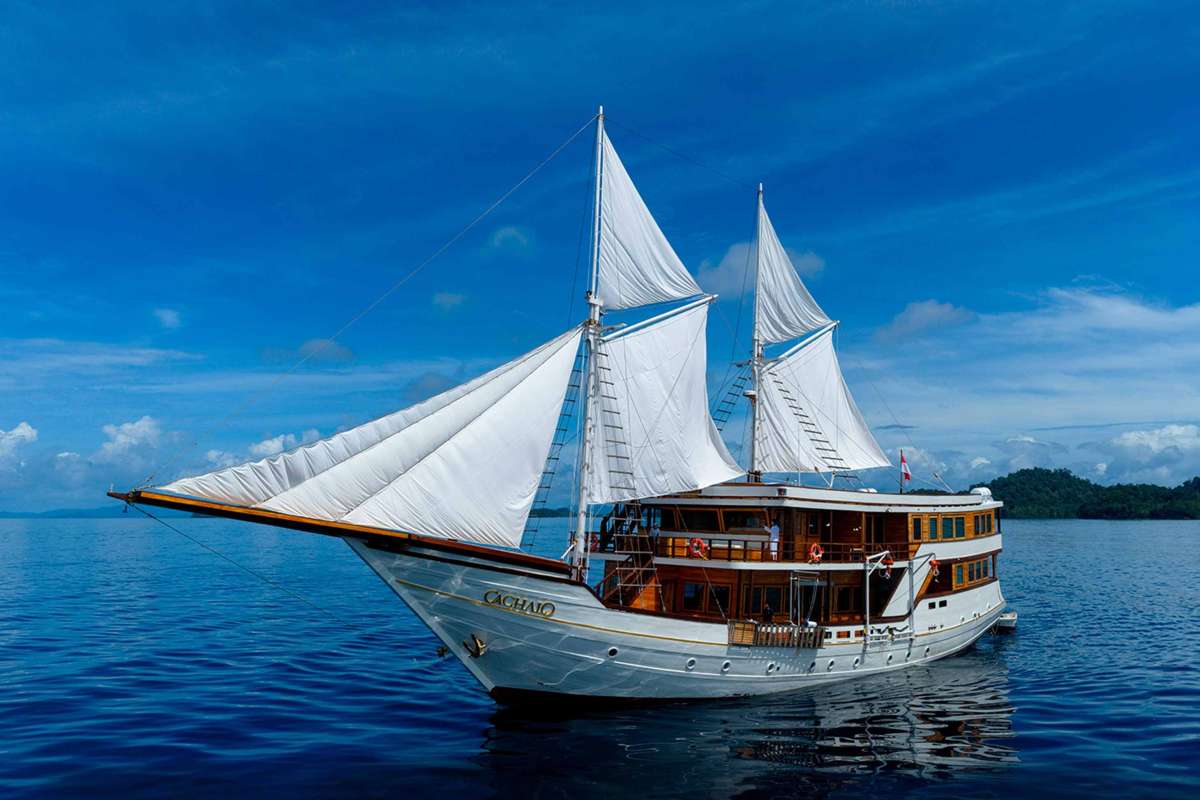
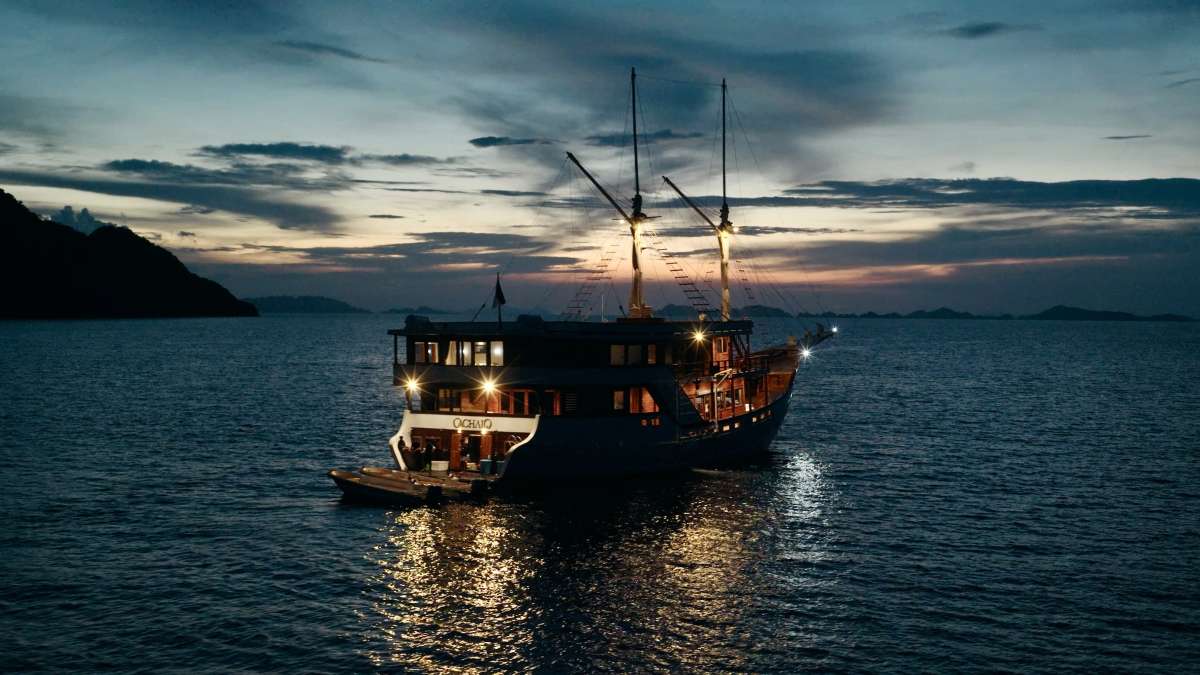
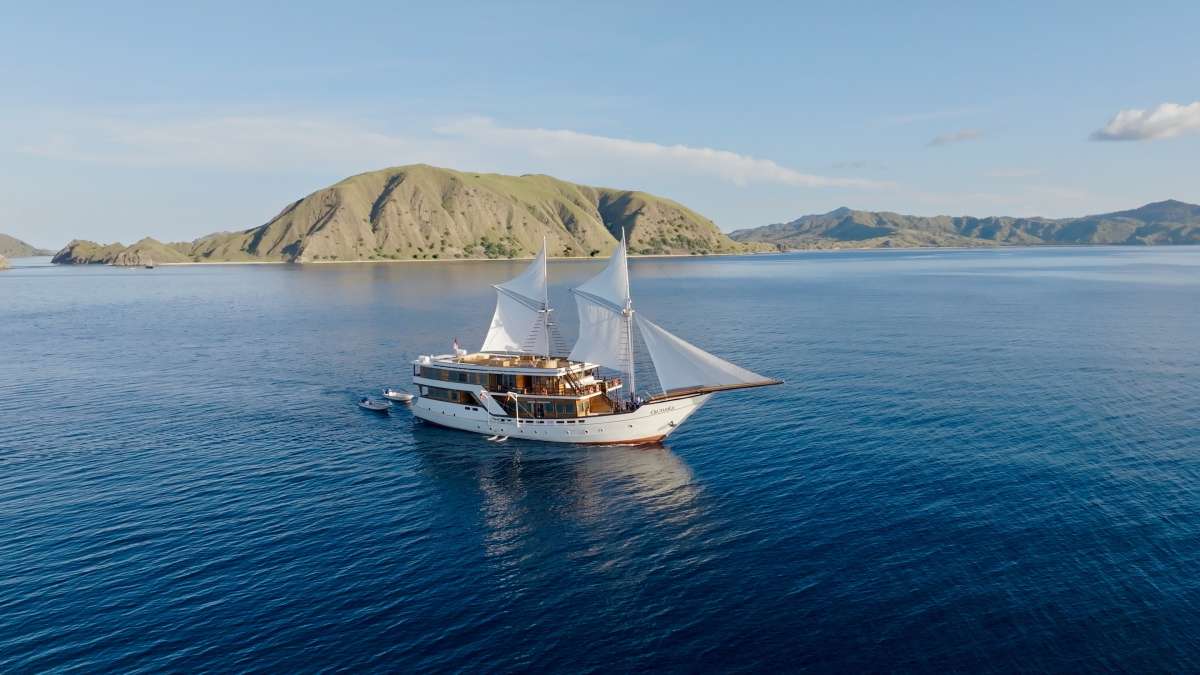
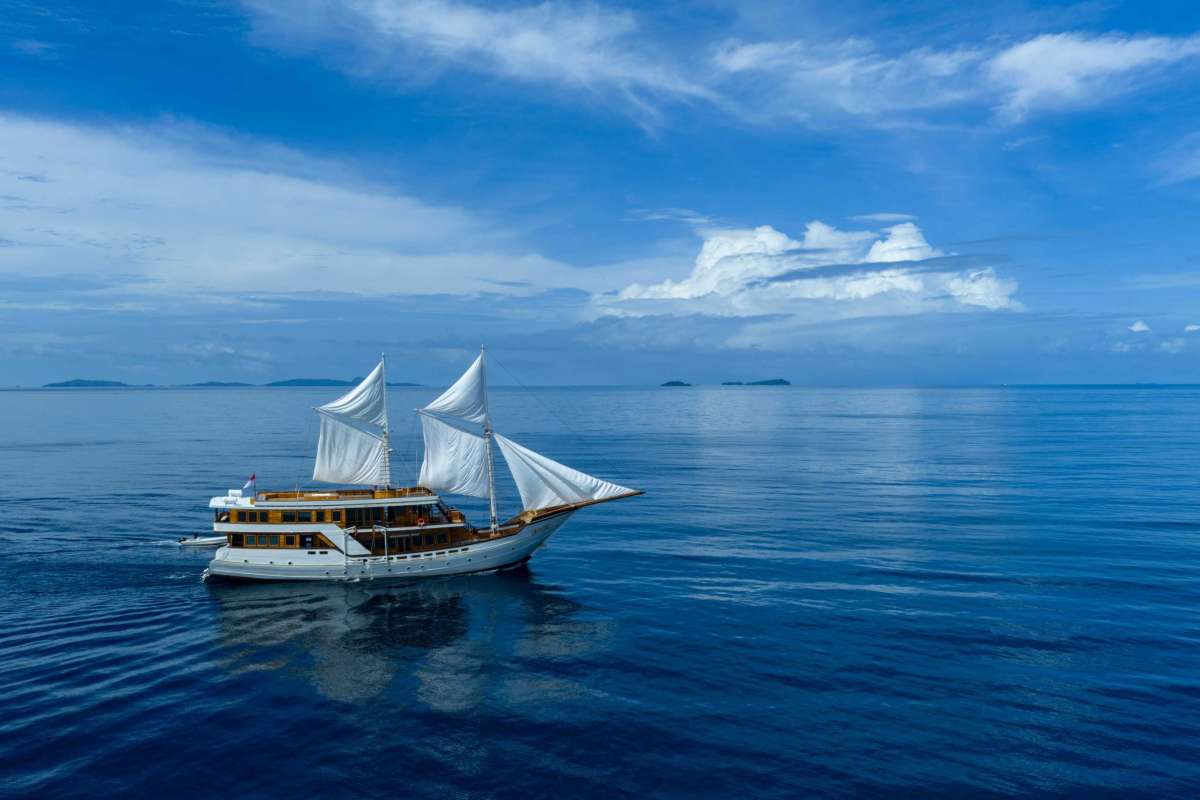
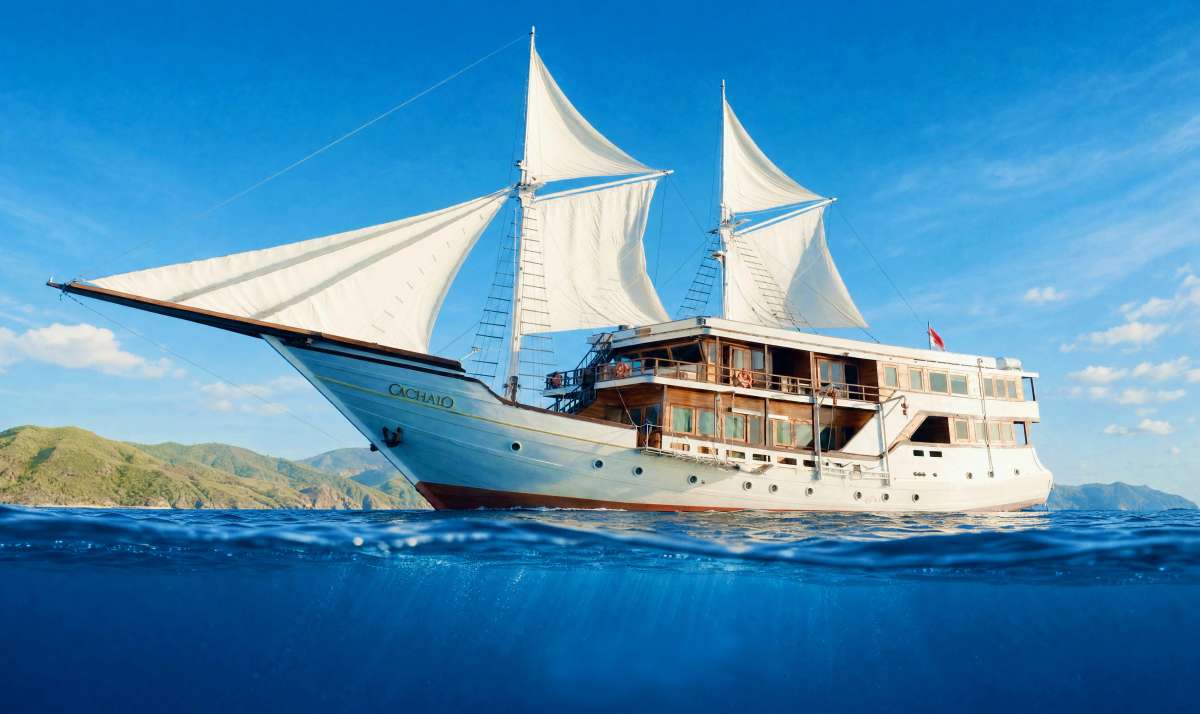
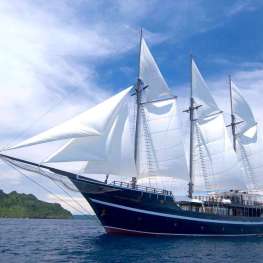
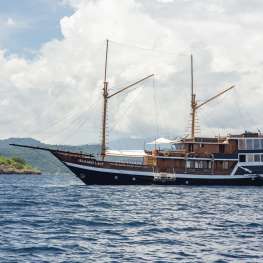
Cachalo is a 51-metre luxury Indonesian Phinisi liveaboard built in 2024 for 18 guests in nine ensuite cabins. With free Nitrox for certified divers, two 115 hp dive tenders, a private camera lounge and seasonal expeditions through Raja Ampat, Komodo, the Banda Sea, Alor and Ambon, she combines serious dive logistics with unusually spacious accommodation.
Description
Boat
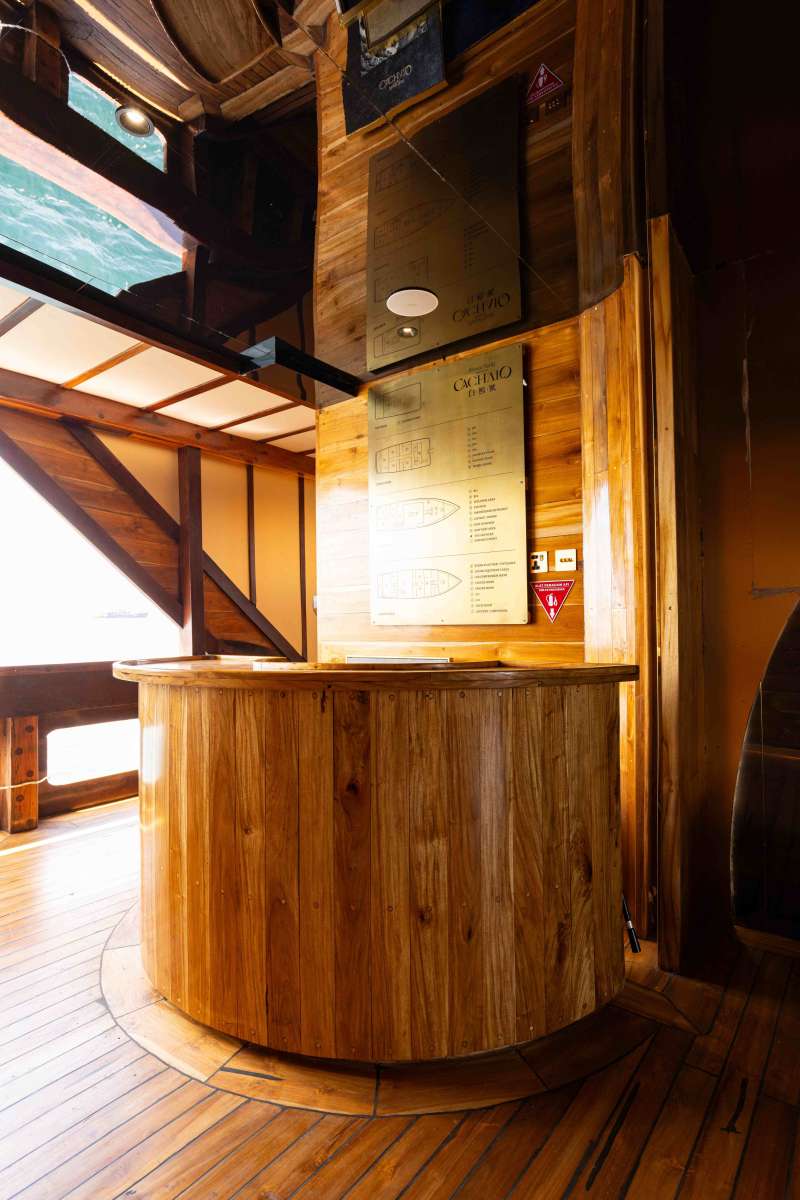
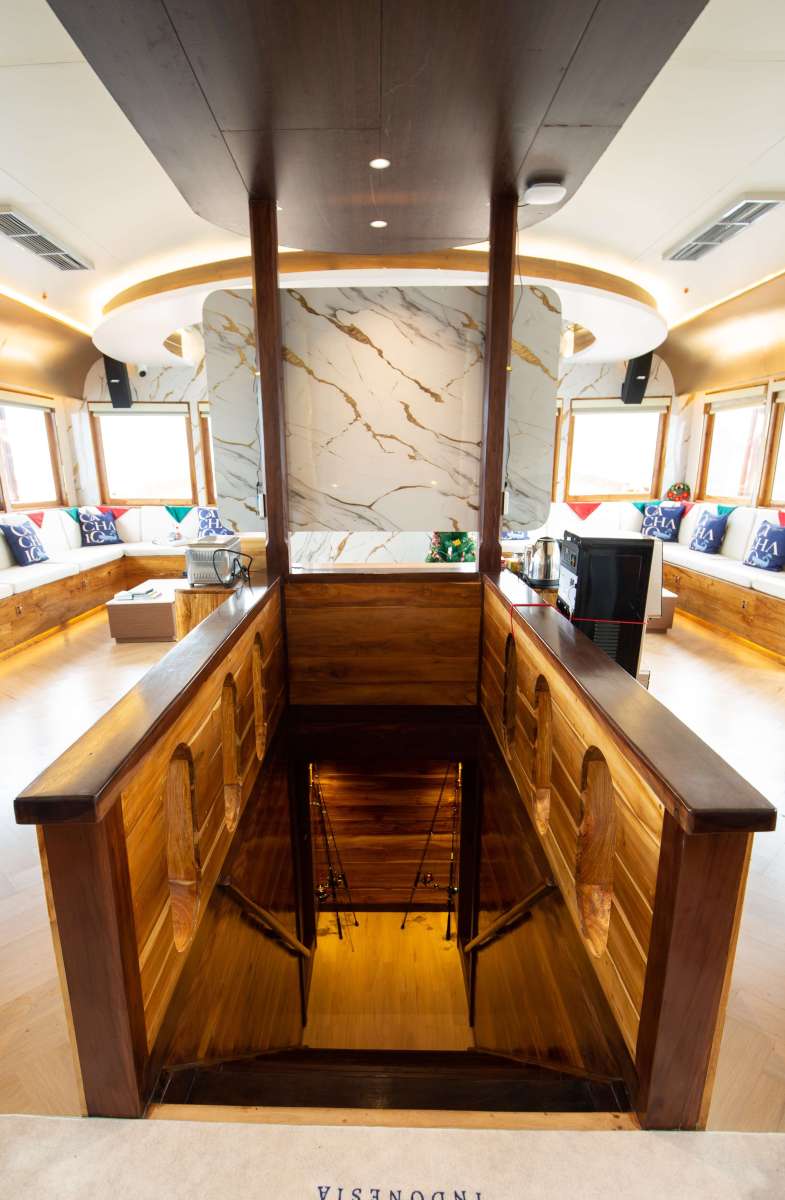
Built in South Sulawesi over a two-year period and launched in 2024, Cachalo is a 51-metre Indonesian Phinisi created for long-range diving across the Coral Triangle. Her published beam is 11 metres and her hull and superstructure use reinforced ironwood with teak detailing. The scale is generous for only 18 guests: nine cabins share the vessel with an indoor lounge, dining room, private camera area, broad exterior decks and a 360-degree sundeck with a jacuzzi.
The technical specification lists two different main engines: one 750 hp Weichai Baudouin 6M33 and one 350 hp Weichai Baudouin WD12. Average cruising speed is published as 10 knots, with a 14-knot maximum and a range of approximately 1,000 nautical miles. A 900 kgf bow thruster supports close manoeuvring. Electrical power comes from two 75 kW and one 45 kW Weichai marine generators. Fuel capacity is 12,000 litres; freshwater capacity is 10,000 litres, supplemented by two watermakers with a combined advertised output of 10 tonnes per day.
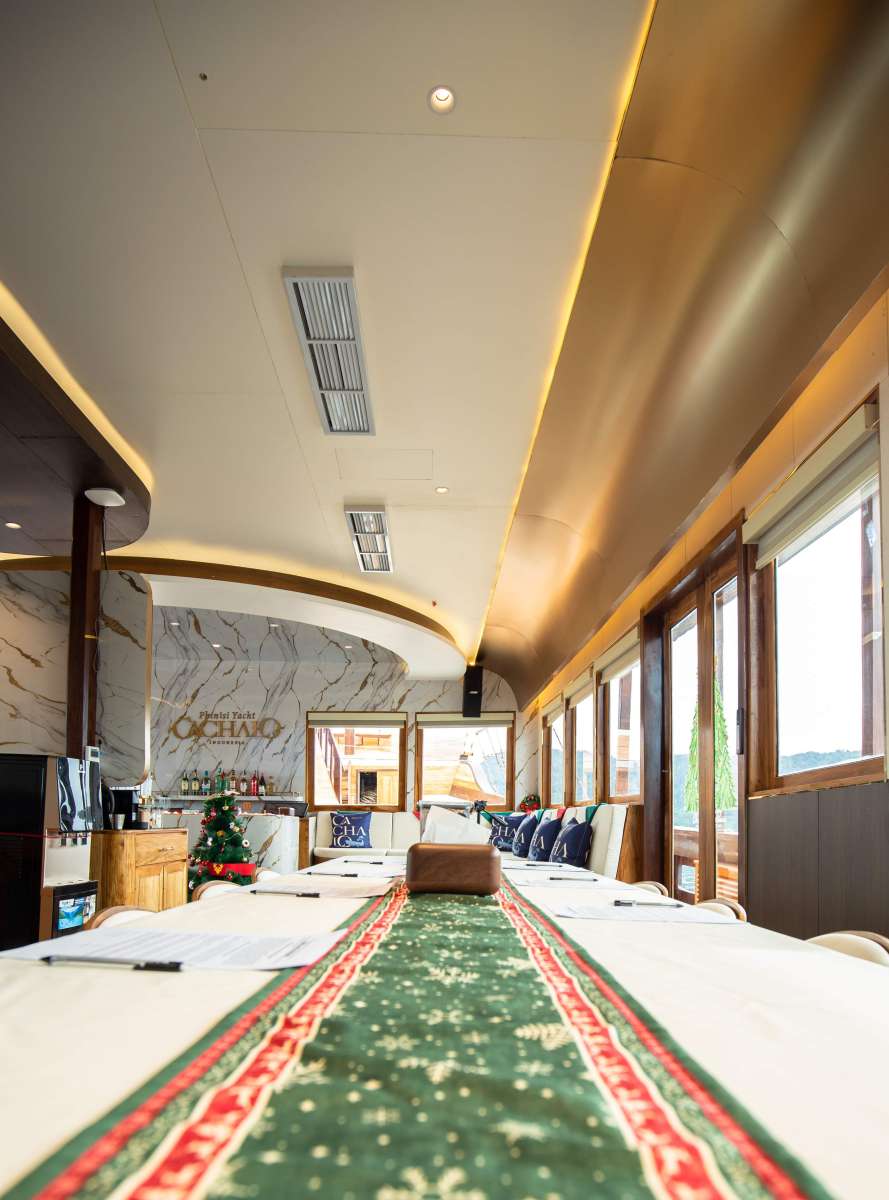
Modern interiors soften the traditional timber construction. Large windows bring daylight into the salon and dining room, while the upper outdoor areas provide space for reading, stretching, sunset drinks and surface-interval relaxation. The operator promotes a mixture of Indonesian, Chinese, Japanese, Thai, Filipino, Western, American and Mexican food, with buffet service, à la carte meals, hotpot and barbecue nights used across longer trips. Dietary requirements depend on supplies available in remote ports and must be declared before departure.
Cachalo is presented as family-friendly and also carries kayaks and supports activities such as snorkelling, island walks, fishing, private-beach barbecues and drone photography. These are possibilities, not a guaranteed daily non-diver programme. Route, anchorage, park rules, sea state and diving operations determine what can safely be offered on each voyage.
The operator's crew information is inconsistent. Its technical table and principal vessel narrative state 18 crew, while another promotional panel says 20. The defensible description is therefore an approximately one-to-one guest-to-crew ratio; an exact staffing number should not be guaranteed without the departure manifest. Published safety equipment includes life rafts and life jackets, smoke detectors, extinguishers, a satellite telephone, first-aid supplies, an AED and two portable oxygen units. Every cabin is described as having an escape plan, two emergency torches, two life jackets, a smoke detector and an ABC fire extinguisher.
Cabin
Cachalo accommodates 18 guests in exactly nine ensuite cabins. The reliable allocation comes from the detailed room inventory and technical specification, which correct two errors elsewhere on the website: one summary repeats the Upper Deck Standard category in place of the Upper Deck Deluxe King category, and one English booking label incorrectly says two VVIP rooms even though all other data show one.
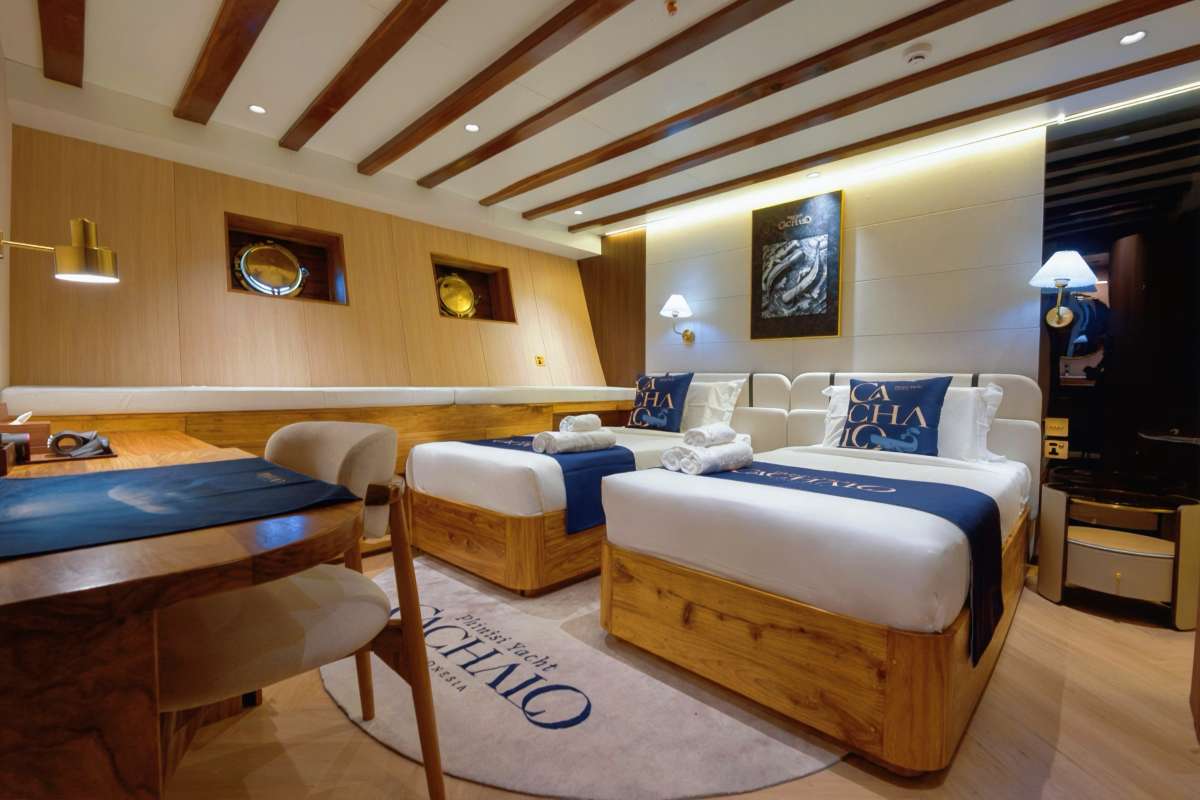
- 2 Lower Deck Standard Rooms: the official category photograph shows two separate single beds, a desk, storage, a minibar and two brass portholes. These are the lowest guest cabins and do not have balconies. The website markets all nine rooms as ocean-view cabins, but the view here is through portholes rather than full-height windows.
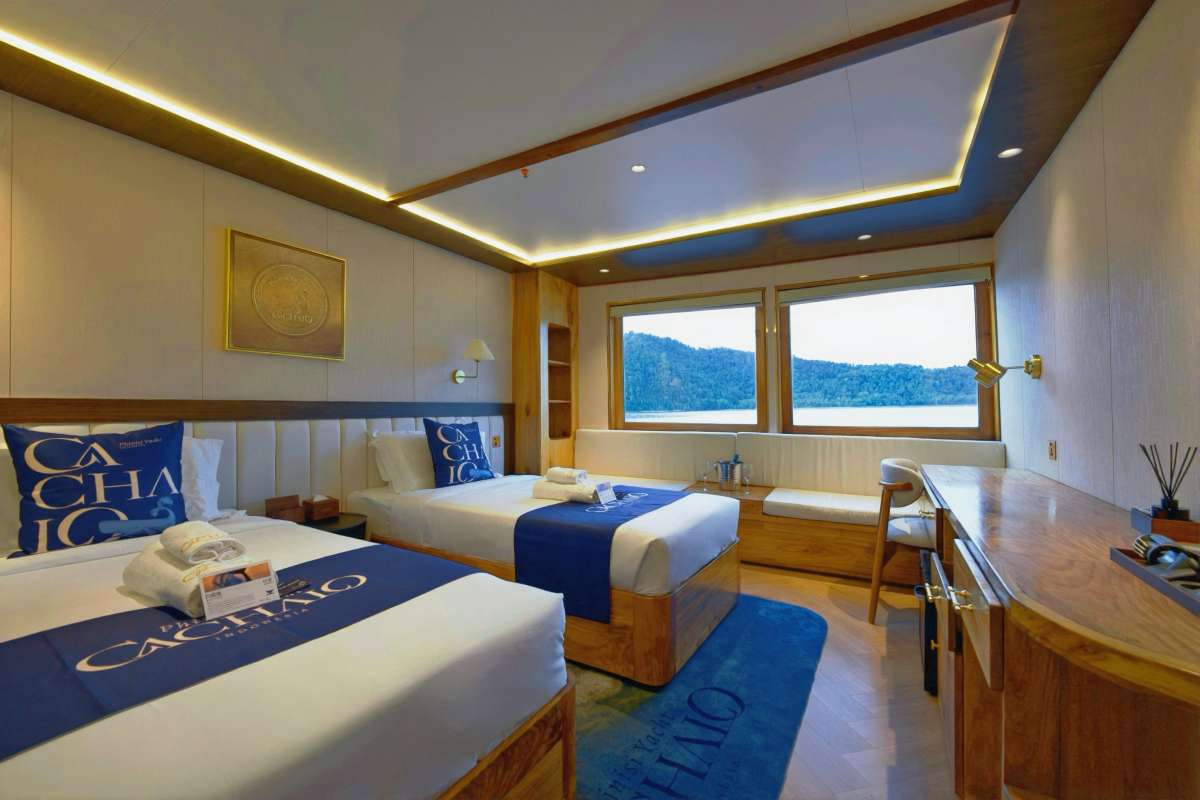
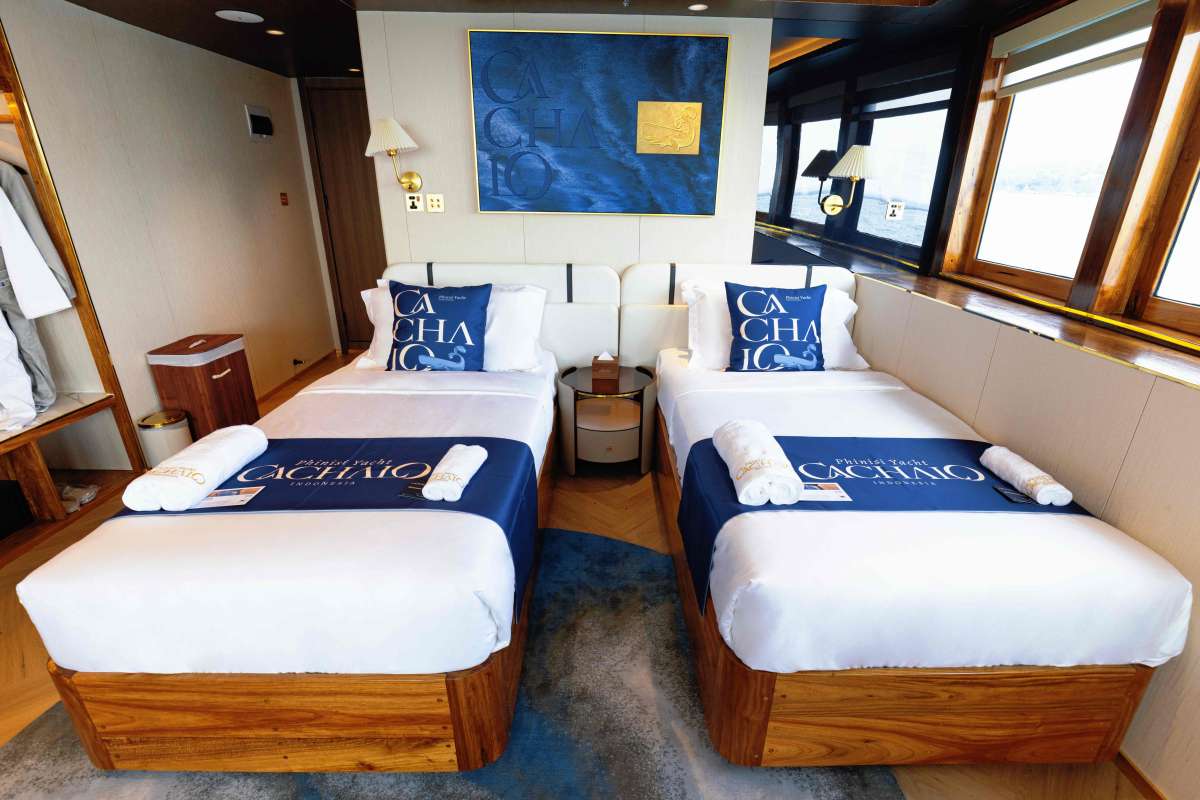
- 2 Main Deck Deluxe Ocean View Balcony Rooms: official imagery shows two separate single beds, a writing desk, lounge bench, large windows and exterior deck access. The category name confirms a balcony, although its dimensions and whether it is fully private are not published.
- 2 Upper Deck Standard Ocean View Rooms: the representative image shows twin single beds, large rectangular windows, a desk and built-in seating. No balcony is stated for this category.
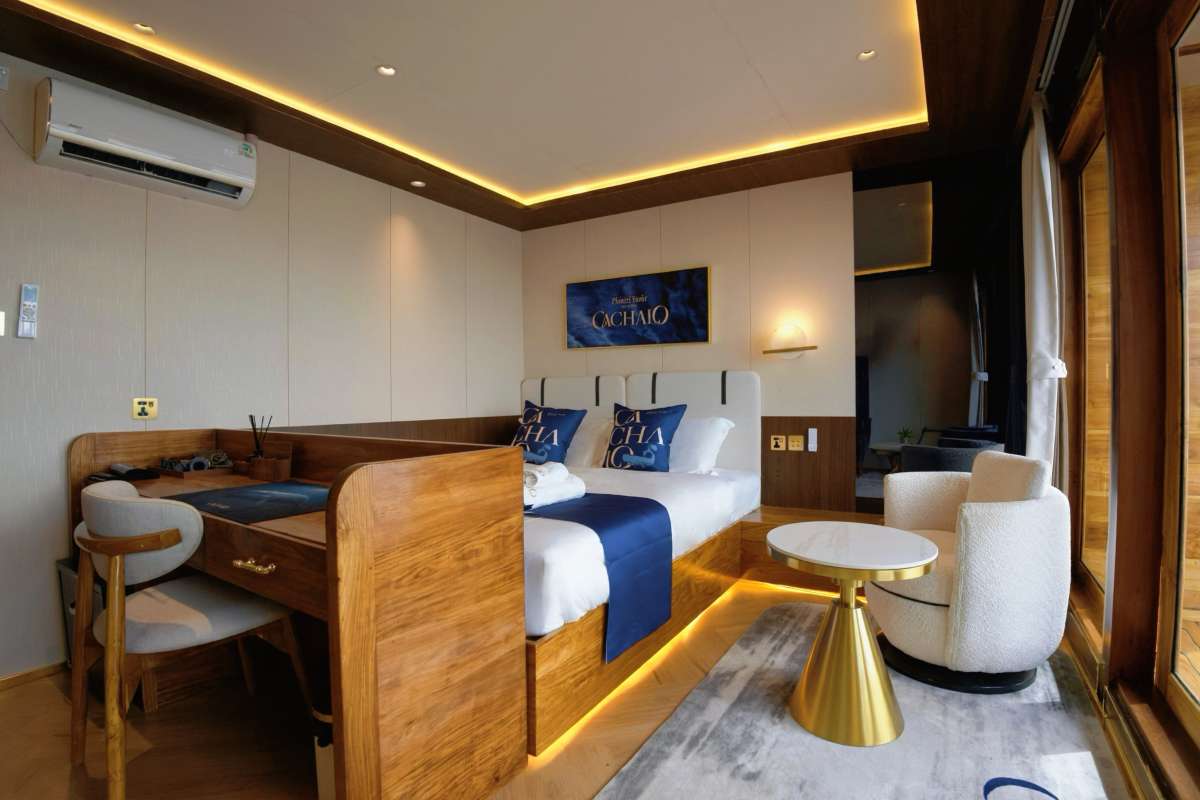
- 2 Upper Deck Deluxe Ocean View King Rooms with Balcony: this is the only category whose published name expressly confirms a king bed. The official photograph also shows a double/king layout, desk, armchairs, large glass doors and balcony access.
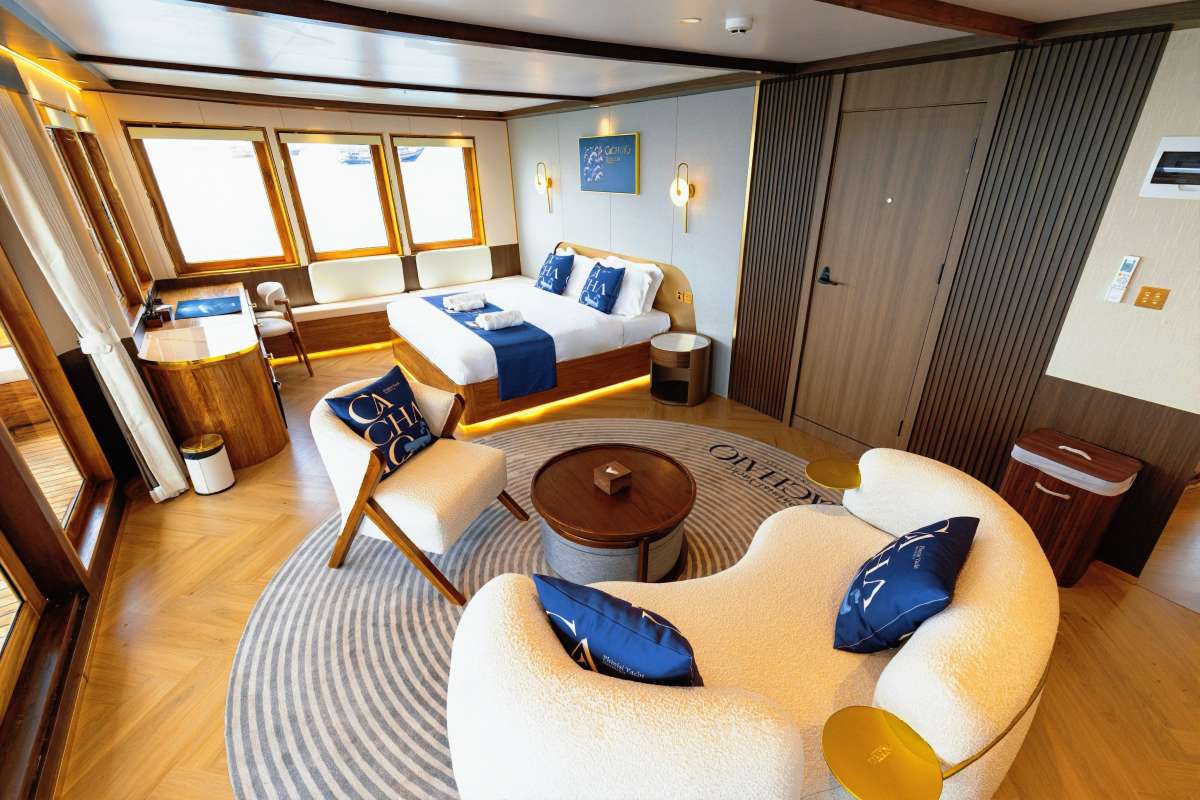
- 1 Upper Deck VVIP Room: the largest-looking category in the operator's gallery, photographed with one double bed, a substantial private sitting area, coffee table, desk, panoramic windows and exterior access. The site does not publish the mattress size or explicitly call it a king bed, so it should be described as a photographed double configuration unless the booking confirmation states otherwise.
Every cabin is marketed with a private lavatory, private shower, air-conditioning, a hair dryer and shower gel. The broader vessel description adds individual climate control, double-layer thermal safety glass, acoustic and moisture insulation, premium cotton linen, a personal minibar, safe, Bose ceiling speakers, Dyson hair dryer, Kohler bathroom fittings and upgraded bath products. The FAQ specifically lists toilet paper, bath and dive towels, body wash, shampoo, toothbrush, toothpaste and indoor slippers.
The photos confirm distinct bed layouts, but the operator does not publish a formal bed-conversion policy. The Lower Deck Standard, Main Deck Deluxe Balcony and Upper Deck Standard Ocean View rooms are photographed as twins; the Upper Deck Deluxe King is explicitly a king; the VVIP is photographed with a double. Couples and twin-share guests should have the room category, exact bed arrangement and cabin number written into their confirmation.
No cabin floor areas, mattress measurements, doorway widths, balcony dimensions, minibar contents, housekeeping schedule or accessibility features are published. Multi-level access is by stairs, and no lift or wheelchair-adapted cabin is advertised. Guests with mobility, CPAP, charging, dietary or medical needs should request a written answer before paying.
Diving
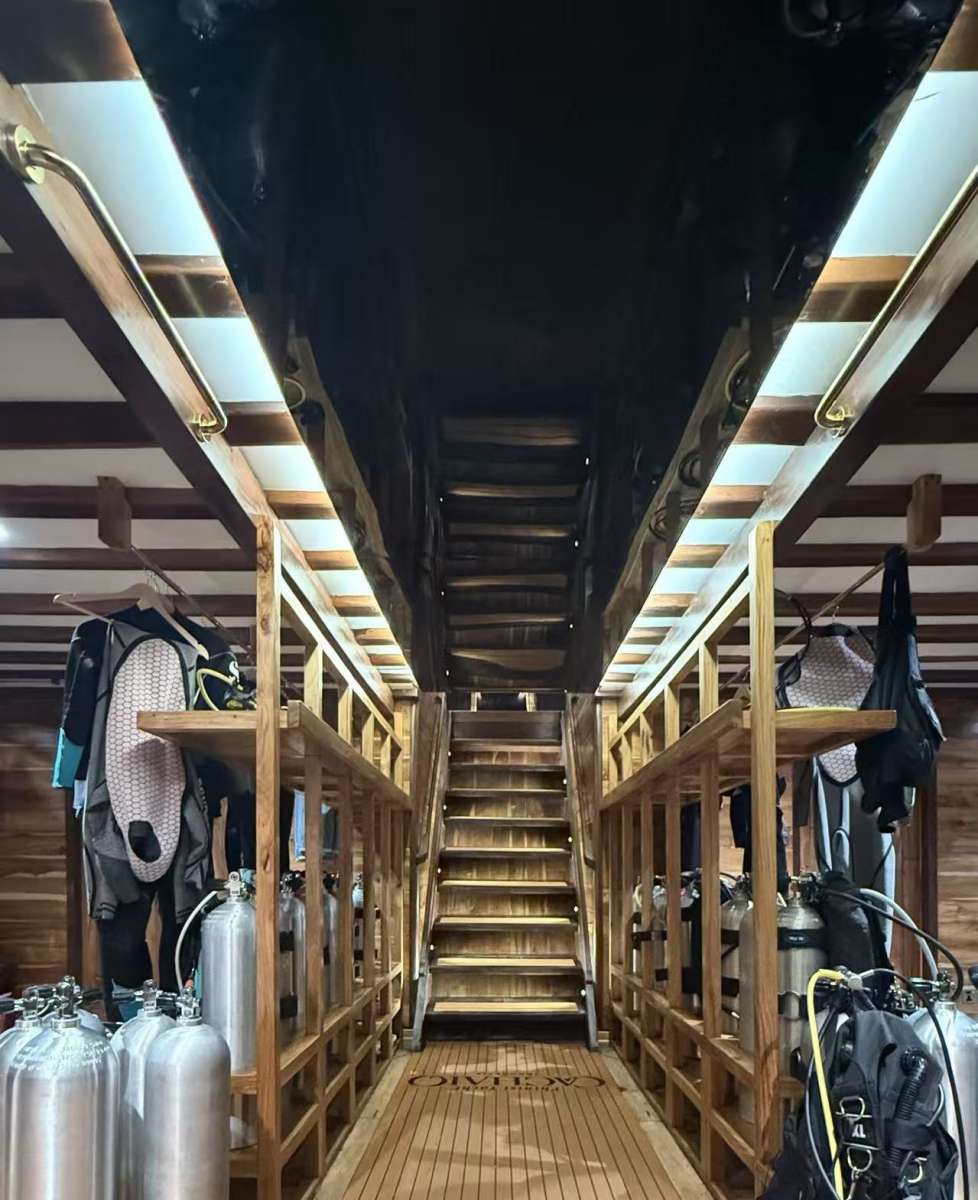
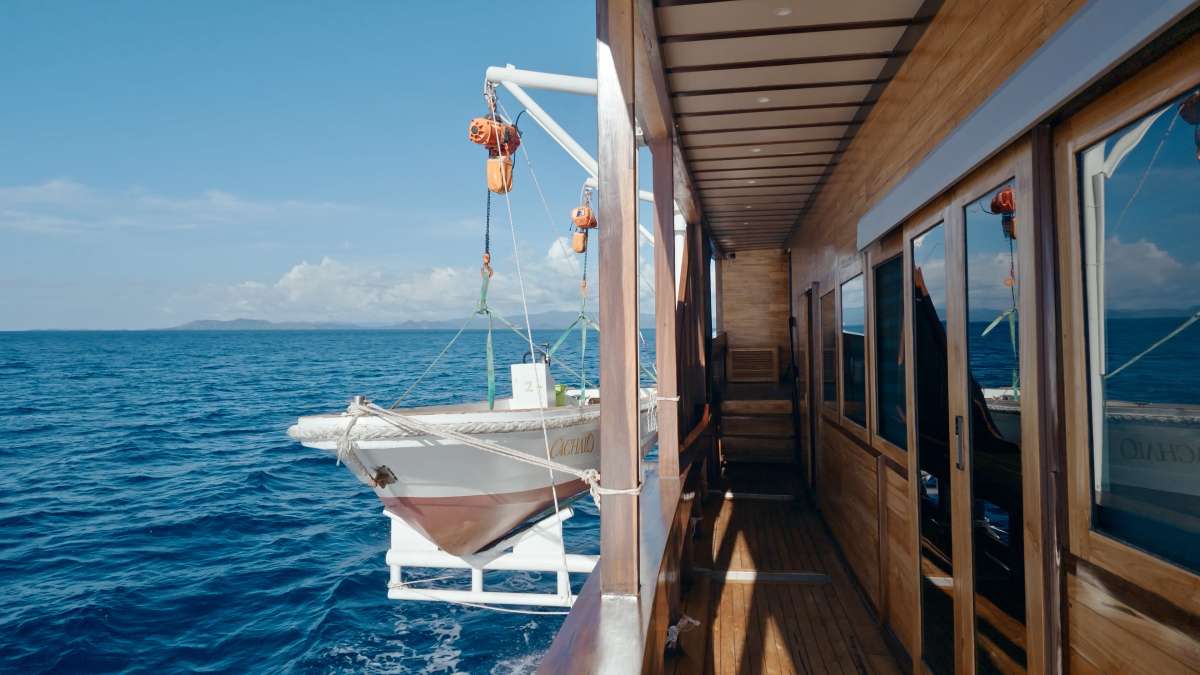
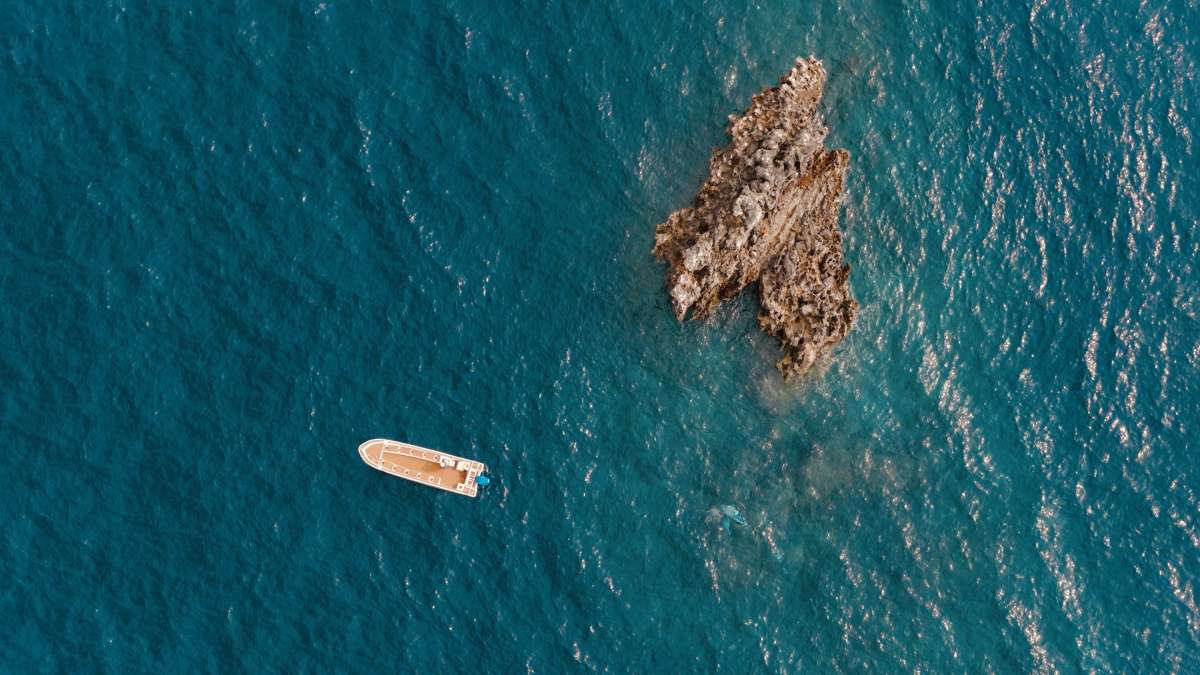
Cachalo is equipped for a maximum of 18 divers. The dive system includes two 7.5-metre reinforced-fibreglass tenders, each powered by a Yamaha 115 hp outboard, two low-noise air compressors rated at 300 litres per minute and a separate 300-litre-per-minute Nitrox system. The website also shows a sheltered equipment area with individual stations and an indoor camera lounge for photographers.
The route pages advertise up to four dives per day, while the detailed operating rhythm describes three to four dives on normal days, two to three during long crossings and no more than two on the final diving day. The destination cards advertise up to 22 dives on an eight-day Raja Ampat or Banda Sea trip and up to 18 on a seven-day Komodo trip. These are ceilings, not entitlements: weather, current, park rules, travel distance, experience and safety briefings determine the actual count.
The operator publishes an inventory of 50 S80 cylinders and five larger S100 cylinders. It also lists five units under an unclear English translation, “backhand bottles”; their exact size and intended sidemount, stage or bailout use must be confirmed. Fifteen-litre cylinders and an additional sidemount cylinder are optional paid items. Standard cylinders, weights and weight belts are listed as included on the route pages.
Nitrox is advertised free of charge for appropriately certified divers. Personal diver GPS beacons are also described as complimentary, and the itinerary inclusion table identifies them as ENOS units. Dive teams are planned at one guide for four to five divers. PADI courses can be arranged for an extra charge, subject to time and instructor availability.
Experience wording conflicts across the operator's pages. The booking interface says Advanced Open Water with at least 25 dives, while the FAQ recommends AOW, more than 50 logged dives and a dive within the previous six months. Until the operator supplies route-specific rules, the safer sales standard is the stricter one: AOW, 50 logged dives and recent experience. Anyone below that level, or inactive for more than six months, should obtain approval before booking and may need a refresher.
Full rental equipment is available and is defined as BCD, regulator, mask, wetsuit, fins, boots and torch only. Dive computer, extra torch, wetsuit or fins can also be rented separately, along with an action camera, 15-litre cylinder or extra sidemount cylinder. A computer should not be assumed to form part of the “full set.” Sizes, brands, prices and loss or damage conditions must be confirmed in advance.
Raja Ampat, Komodo, the Banda Sea and Alor can involve current, negative entries, deep walls and remote surface pickups. Wildlife ranges from macro subjects to mantas, reef sharks and schooling pelagics, but no encounter is guaranteed. Mandatory dive-accident insurance must cover underwater emergencies and evacuation in Indonesia.
Other Information
Cachalo's commercial pages contain real contradictions, so inclusions should be copied from the selected departure's dated invoice rather than from one isolated marketing panel.
Published as included on the detailed route pages:
- Full-board cabin accommodation and five food services per day
- Water, tea and coffee
- Scheduled diving, potentially up to four dives on a full operating day
- Standard cylinders, weights and weight belts
- Multilingual dive guides and cruise director
- Transfers between the embarkation/disembarkation airport or local hotel and the vessel
- Scheduled land excursions
- Personal ENOS/GPS beacon
- Nitrox for certified users
The booking widget gives a narrower promise: accommodation, meals and onboard entertainment, with park and island-landing fees extra and gratuities excluded. Separately, the FAQ says soft drinks, laundry, dive towels and personal diver GPS are free, and that guests may bring alcohol without corkage. An older exclusion table, however, places soft drinks, laundry and onboard telecommunications outside the package. These conflicts must be resolved in writing. Free Starlink is advertised as a vessel feature, but offshore performance and whether unrestricted access is included are not guaranteed.
Published as excluded or additionally charged:
- 15-litre and additional sidemount cylinders
- PADI courses and all rental dive equipment
- Port clearance and harbour tax
- National-park, local and island-landing fees
- Fuel or distance surcharge
- Alcohol, onboard purchases and services not listed on the invoice
- Crew gratuities; the FAQ suggests USD 20 per guest per day
- Dive, travel and medical insurance
- Flights, visas, hotels before or after the cruise and personal expenses
The current FAQ quotes marine-park fees of USD 240 for 7 days/6 nights, USD 260 for 8 days/7 nights, and USD 325 for 9 days/8 nights or 10 days/9 nights. The page does not make clear whether every destination uses the same schedule, and public fees can change. Record the destination, amount and currency on the invoice.
Scheduled departures are described as confirmed once they reach a minimum of ten guests. The operator says complimentary local airport transfers apply to confirmed departures and that direct-booking guests can receive assistance with Indonesian domestic flights and hotels. Assistance is not the same as paying for flights or accommodation.
Underwater insurance is mandatory. Travel and medical cover should also include evacuation, missed connections, cancellation and remote-area treatment. Indonesian domestic schedules can change, and the operator recommends arriving in the embarkation city one day early. Keep a conservative interval between the final dive and flying; the cruise team and insurer should confirm the required minimum for the actual profile.
Onboard voltage is published as 220 V, but the socket types and USB provision are not clearly specified. The site accepts credit cards, WeChat Pay, Alipay and cash; listed cash currencies are USD, EUR, AUD, RMB and IDR, with exchange conversion referenced to XE. Card or processing fees are not disclosed.
Every booking should state the vessel, route, dates, cabin category and number, occupancy, bed setup, package inclusions, planned dive ceiling, Nitrox, transfers, park fee, port charge, fuel surcharge, rental equipment, insurance requirement, payment schedule and cancellation terms. This is especially important because parts of the route section retain copied wording from another vessel and several English labels conflict with the operator's own technical data.
Itineraries
Cachalo follows Indonesia's seasonal diving calendar rather than one permanent circuit. Its live schedule names Raja Ampat Central North, Central South and North–South routes; Komodo National Park; Komodo–Alor; Alor–Ambon; Ambon–Banda Sea–Ambon; and Ambon–Raja Ampat. The operator generally positions Raja Ampat in the cooler-season calendar, Komodo from late spring through summer and Banda Sea crossings around the transition months. One page says Raja Ampat runs December–April while another says October–April, so the live departure calendar is the authority.
The outlines below are original planning descriptions based on the operator's route names, dive ceilings and published operating rhythm. They are not fixed mooring schedules. The captain and cruise director can change order, sites or land visits for current, weather, park regulation, port clearance and diver ability.
Raja Ampat Central North – Typical 8 Days / 7 Nights
Day 1 – Sorong embarkation
Guests transfer from Sorong airport or a named local hotel to Cachalo, settle into their cabins and assemble equipment. Vessel, emergency and diving briefings follow. The operator's standard rhythm normally schedules no dive on embarkation day, allowing the Phinisi to sail toward the Dampier Strait or another suitable first sector.
Days 2–3 – Dampier Strait and central reefs
The first dive checks weighting, equipment and group procedures before progressively more exposed sites. Central Raja Ampat can combine coral gardens, current-fed points, jetties and fish-rich channels around areas such as Cape Kri, Sawandarek and Arborek. Manta cleaning areas may be considered when conditions and local rules allow. Three to four dives are possible on a full day, including a dusk or night dive where permitted.
Days 4–6 – Northern karst and flexible exploration
Cachalo moves north according to the named route and weather window. Limestone scenery, shallow reef plateaus and current-facing points create variety above and below water. A viewpoint or village visit may replace one water session. Named places are intentionally not guaranteed because an eight-day central-north route may not reach the same northern limit on every departure.
Day 7 – Final dives and Sorong return
No more than two dives are normally planned on the final diving day. Equipment is rinsed, rental items are checked and the boat begins the return passage while guests establish their no-fly interval.
Day 8 – Disembarkation
After breakfast, guests leave the vessel in Sorong and use the confirmed local transfer. Same-day flights should be booked only when the operator approves both port timing and the post-dive interval.
Raja Ampat Central South – Typical 8 Days / 7 Nights
The operator publishes a more specific framework for this route, linking Misool's southern reefs with central Raja Ampat. Its route card advertises up to 22 dives, but distance means not every day can carry four sessions.
Day 1 – Sorong welcome and southbound departure
Airport or hotel pickup, check-in, safety presentation and dive briefing take place before the overnight passage toward Misool.
Days 2–4 – Misool and the southern sector
The programme can include wide-angle diving around Magic Mountain and Boo Window, coral pinnacles, caves and sites known for pygmy seahorses. The operator also mentions Four Kings, a jellyfish lake and a viewpoint or lagoon excursion. Oceanic mantas, dolphins or whale sharks are possible natural encounters, never promised. Crossing time, local access and conservation rules decide which elements fit.
Days 5–7 – Central reefs and final diving
The yacht works back through the central area, where the operator names Melissa's Garden, Manta Ridge or Manta Sandy, My Reef, Sawandarek and Cape Kri. Piaynemo may be included as a scenic land stop. The last diving day is reduced to a maximum of two sessions before the cruise toward Sorong.
Day 8 – Sorong disembarkation
Breakfast is followed by check-out and the confirmed transfer. Actual arrival time remains subject to the overnight crossing.
Raja Ampat North–South and Longer Explorations
The live calendar also uses a North–South label, usually for a trip that connects more of the archipelago than the shorter central routes. A longer departure can combine Misool, the Dampier Strait, central gardens and a northern karst sector, but it should not be sold as every famous site in one week. The 1,000-nautical-mile vessel range supports broad repositioning, while safe timing still limits dives on crossing days.
A representative sequence is embarkation in Sorong, an overnight passage, two or three days in the south, central Raja Ampat diving, a northern sector, then final dives and return. The dated schedule determines whether the cruise is Sorong–Sorong or a transition ending elsewhere. Guests should check the number of nights, the published dive ceiling and the exact port rather than relying on the route name alone.
UNESCO recognises Raja Ampat as both a Global Geopark and, since 2025, a biosphere reserve covering a vast marine landscape. Karst islands, mangroves, seagrass and exceptionally diverse reefs make the destination valuable beyond a list of headline species. Conservation fees and guide instructions are part of the experience.
Komodo National Park – Typical 7 Days / 6 Nights
Cachalo's Komodo route card advertises up to 18 dives. Current schedules use Labuan Bajo as the principal gateway and show return voyages as well as transition cruises. A legacy paragraph on the route page mentions another vessel and a Labuan Bajo–Maumere pattern, so the booking calendar—not that copied text—must establish the ports.
Day 1 – Labuan Bajo embarkation
Guests transfer to the yacht, complete documents and prepare gear before the opening safety and dive briefings. Departure is planned around port clearance and the first suitable anchorage.
Days 2–3 – North and central Komodo
Current-fed sites such as Castle Rock, Crystal Rock, Batu Bolong or Tatawa may enter the plan when group experience and conditions fit. Reef sharks, trevally, schooling fish and turtles are possible. Site selection follows tide and current rather than a pre-set checklist.
Days 4–5 – Manta and southern possibilities
The operator names Manta Alley and, when weather allows, the southern Rinca area around Horseshoe Bay, Cannibal Rock and Yellow Wall. Southern water can be significantly colder than the north, so exposure protection should be planned for the route rather than the average temperature. A ranger-led Komodo dragon visit or viewpoint walk may be scheduled as a land excursion.
Day 6 – Final dives and return
Up to two final dives are followed by the cruise back toward the disembarkation port. Wildlife encounters remain unpredictable even at sites named for mantas or sharks.
Day 7 – Labuan Bajo departure
Guests settle onboard charges and transfer according to the written arrangement. UNESCO's World Heritage property includes Komodo, Rinca, Padar and many smaller volcanic islands, so marine and terrestrial regulations can both affect the programme.
Banda Sea and Ambon–Banda Sea–Ambon – Typical 8 Days / 7 Nights
The Banda Sea card advertises up to 22 dives on an eight-day voyage. These trips are remote and crossing-intensive, with deep-water islands, walls, volcanic scenery and historic spice ports. The schedule commonly uses Ambon (AMQ) for a round trip, while transition versions may begin or finish elsewhere.
After embarkation and the opening briefings, early dives may use Ambon's reef or macro environments before Cachalo moves into the Banda Islands. Depending on conditions, the programme can consider reefs around Banda Neira, Pulau Ai, Batu Kapal, Gunung Api or other outer islands. The Indonesian tourism authority identifies Pulau Ai and Batu Kapal among the area's recognised dive locations; the captain decides whether they fit the actual route.
Full operating days can reach three or four dives, but open-sea passages reduce that number. Schooling pelagics, reef sharks and seasonal hammerhead encounters are possible in the broader Banda Sea, never guaranteed. A Banda Neira heritage visit may replace a dive if local access and timing permit. The final day normally carries no more than two dives before the return toward Ambon.
Komodo–Alor and Alor–Ambon Transitions
Transition expeditions reposition Cachalo between seasonal regions and can cover a wider range of underwater environments than a return itinerary. A Komodo–Alor trip may progress east from the volcanic islands of Komodo toward Flores and the Pantar Strait. An Alor–Ambon crossing continues through less-frequented island groups toward the Moluccas. The schedule uses the codes LBJ, ARD and AMQ; ARD refers to Alor's Mali Airport and AMQ to Ambon's Pattimura Airport.
Alor is known for clear reefs, walls, strong current and dramatic temperature changes. Indonesia's official tourism site highlights the Pantar Strait and sites such as Current Alley and Cathedral. These names illustrate the diving character but are not a Cachalo guarantee. Long passages can reduce the daily dive count to two or three, and the departure may require cold-water exposure protection in addition to normal tropical gear.
These one-way routes demand careful flight planning. Confirm both airports, the embarkation hotel-transfer zone, baggage allowance and an arrival at least one day early. There is no automatic return to the starting port.
Ambon–Raja Ampat Transition
This one-way itinerary links the Moluccas with West Papua, combining expedition crossings with a gradual change from Ambon-area macro or reef diving to Raja Ampat's karst seascape and high-biomass reefs. It may include Banda Sea islands or other stepping stones depending on the date and port plan, but the simple route title does not guarantee a Banda Neira stop.
The voyage starts with local pickup, cabin check-in and briefings, then alternates diving days with repositioning. Up to four dives are possible only on full local days; long moves reduce the count. The trip finishes in Sorong, so guests fly out of SOQ rather than returning to Ambon. The precise route, number of dives and fee structure must come from that departure's confirmation.
Non-Divers, Snorkellers and Surface Activities
Cachalo advertises snorkelling, kayaking, island trekking, fishing, beach barbecues and drone photography. Experienced snorkellers may enjoy sheltered Raja Ampat or Komodo locations, but many dive sites are current-exposed and unsuitable for independent swimming. There is no published promise of a separate guide or tender for non-divers on every departure.
Land visits depend on route and regulation: a Piaynemo viewpoint, Komodo ranger walk, Banda heritage stop or village visit may be possible, not simultaneous guarantees. Drone use can require advance permission; the FAQ asks for Komodo applications seven days before departure. Families should confirm minimum age, supervision, life-jacket sizes and whether a specific itinerary can support children.
Schedules & routes

Prices & conditions
Included
- Transfers from airport and/or hotel to the yacht
- Full-board meal plan (including snacks)
- Complimentary beverages (water, tea, coffee)
- Diving activity (incl. tanks, weights, weight belts)
- Dive guide service
- Nitrox fills
- Use of Kayaks or/and SUPs
- Land excursions and activities throughout the trip
- Boat accident insurance
- Cabin towels and complimentary toiletries
- Cabin cleaning service
Not included
- Domestic flights in destination country
- Marine park fees & Port fees
- VAT and local taxes
- Fuel surcharge
- Alcoholic beverage
- Soft drinks
- Dive equipment rentals
- Larger tank (15 L)
- Dive courses on board
- Dive insurance (mandatory requirement)
- Travel insurance (trip cancellation insurance)
- Crew gratuity
Useful information
Alor
Best time for diving
April to November, as this is when both visibility and weather are at their best, while September is the best time to spot Mola Mola. The currents usually are strongest in October and November, making conditions more challenging. From late December until early March, Alor is usually considered as off-season due to the rainy season.
About temperatures
Air : winter months are between 26°C - 29°C, summer months are between 27°C - 32°C.
Sea : between 25°C - 27°C from March to April & October to November, between 27°C - 30°C from May to September. Thermoclines are common year round, the water can drop at times to 22°C or lower.
Wetsuit Recommendation
We recommend a 5 mm full wetsuit. If you get cold easily, we recommend also bring gloves and a hood, or even a 7 mm full wetsuit.
Diver requirement
Suitable for all levels of diver from beginners to experienced. However, in the open blue, the current can be strong at times, so divers should to be comfortable with their skills. While the muck dive sites only have little current. You can find out more information about diving in Alor here : Alor
Embarkation / Disembarkation
Alor liveaboard trips are usually from Maumere to Maumere, guests need to fly to Maumere airport (MOF).
However, some liveaboards often combine Alor with other destinations like Komodo, Banda Sea, Raja Ampat. Then you might only need to arrive or depart from Maumere.
Visa Requirements
Indonesia offers a free visa on arrival service for many nationalities which allows visitors to stay in the country for up to 30 days. A list of countries that are eligible for visa on arrival can be found on the Indonesian Government's Directorate General of Immigration.
Please note: Immigration officials in Indonesia may ask for proof of onward travel (e.g. a return or onward air ticket).
Vaccinations
Yellow fever vaccination certificate is required for travellers over the age of 9 months arriving from countries with risk of yellow fever transmission.
Money Matters
The local currency is Indonesian Rupiah (IDR), all liveaboards accept cash payments in USD.
Rupiah can be purchased from all major banks and exchange outlets. Credit and debit cards are also accepted in major hotels, restaurants & shops.
Drones
There are very few restrictions on the use of drones for photography purposes within Indonesia. Please check Drone laws in Indonesia for details.
Extending your holiday
We offer a range of hotels/resorts, land-based diving packages, and excursions that can be arranged before or after your liveaboard holiday. Just ask us if you need such service.
Komodo
Best time for diving
May to October, the weather in Komodo is at its best between April and November. During the wet season (December to March) the weather can get a bit windy, with heavy quick rains, sometimes can cause rough surface conditions. However, liveaboards run trips here year-round.
The visibility in the North is excellent at 30 meters or even more, while it ranges between 10-15 meters in the South.
Some dive sites can have significant currents, whirlpools and see downdrafts. Sea conditions might change very quickly. Other dive sites are more quiet and rich in macro, especially in the South.
About temperatures
Air : range between 23°C - 32°C year-round.
Sea : in the North Komodo it can be around 26°C -29°C, while it gets colder towards the south where it can drop down to 22° C.
Wetsuit Recommendation
We recommend a 3 - 5 mm full wetsuit throughout the year for Komodo area.
Diver requirement
Intermediate to Advanced level, A good level in diving and some experience in drift diving are recommended to participate to Komodo cruise.
You can find out more information about diving in Komodo here : Komodo
Embarkation / Disembarkation
Most of the embarkation / disembarkation will be in Labuan Bajo (LBJ).
Unless the trip is from Bali - Komodo, then the embarkation can be in Bali (DPS).
Visa Requirements
Indonesia offers a free visa on arrival service for many nationalities which allows visitors to stay in the country for up to 30 days. A list of countries that are eligible for visa on arrival can be found on the Indonesian Government's Directorate General of Immigration.
Please note: Immigration officials in Indonesia may ask for proof of onward travel (e.g. a return or onward air ticket).
Vaccinations
Yellow fever vaccination certificate is required for travellers over the age of 9 months arriving from countries with risk of yellow fever transmission.
Money Matters
The local currency is Indonesian Rupiah (IDR), all liveaboards accept cash payments in USD.
Rupiah can be purchased from all major banks and exchange outlets. Credit and debit cards are also accepted in major hotels, restaurants & shops.
Drones
There are very few restrictions on the use of drones for photography purposes within Indonesia. Please check Drone laws in Indonesia for details.
Extending your holiday
We offer a range of hotels/resorts, land-based diving packages, and excursions that can be arranged before or after your liveaboard holiday. Just ask us if you need such service.
Banda Sea
Best time for diving
October to November & March to April, the seas are generally calmer during these months and in October to November there is higher chance to see hammerhead sharks. From May to August the surface conditions can get quite rough.
The visibility is generally good to excellent in Banda Sea areas, except in Ambon bay and in other bays for critter dives. Currents are low to moderate on most of the sites, however, strong currents may occur at times.
About temperatures
Air : range between 25°C - 31°C year-round.
Sea : range between 26°C - 29°C year-round.
Wetsuit Recommendation
We recommend a 3 - 5 mm full wetsuit throughout the year.
Diver requirement
Most dive sites are suitable for all levels with a few exceptions that are suitable only for advanced divers. You can find out more information about diving in Banda Sea here : Banda Sea
Embarkation / Disembarkation
The embarkation / disembarkation can be in Ambon (AMQ), Kaimana (KNG), Maumere (MOF), Sorong (SOQ), Waisai (RJM), Saumalaki (SXK) etc. As some of the Banda Sea trip will combine with other destinations like Raja Ampat, Halmahera, Triton Bay. So please ask our agent to know the exact port for your trip.
Visa Requirements
Indonesia offers a free visa on arrival service for many nationalities which allows visitors to stay in the country for up to 30 days. A list of countries that are eligible for visa on arrival can be found on the Indonesian Government's Directorate General of Immigration.
Please note: Immigration officials in Indonesia may ask for proof of onward travel (e.g. a return or onward air ticket).
Vaccinations
Yellow fever vaccination certificate is required for travellers over the age of 9 months arriving from countries with risk of yellow fever transmission.
Money Matters
The local currency is Indonesian Rupiah (IDR), all liveaboards accept cash payments in USD.
Rupiah can be purchased from all major banks and exchange outlets. Credit and debit cards are also accepted in major hotels, restaurants & shops.
Drones
There are very few restrictions on the use of drones for photography purposes within Indonesia. Please check Drone laws in Indonesia for details.
Extending your holiday
We offer a range of hotels/resorts, land-based diving packages, and excursions that can be arranged before or after your liveaboard holiday. Just ask us if you need such service.
Raja Ampat
Best time for diving
Mid October to April, the wind then picks up in May until the end of August, causing rougher seas and this means Misool area in the south will be shut from June to September. From July until September the diving in the north still can be enjoyable. The visibility can vary from 10 - 30 meters, current can be from mild to strong at times.
About temperatures
Air : fairly constant between 25°C - 31°C year-round.
Sea : it is warm all year round, about 27°C - 31°C
Wetsuit Recommendation
We recommend a 3 mm full wetsuit throughout the year.
Diver requirement
Intermediate to Advanced level. You can find out more information about diving in Raja Ampat here : Raja Ampat
Embarkation / Disembarkation
Most of the embarkation / disembarkation will be in Sorong (SOQ).
Few liveaboards also departs from Waisai (RJM).
The easiest to fly through to & from Sorong (SOQ) via Jakarta (CGK), Makassar (UPG), Bali (DPS), or Manado (MDC).
Visa Requirements
Indonesia offers a free visa on arrival service for many nationalities which allows visitors to stay in the country for up to 30 days. A list of countries that are eligible for visa on arrival can be found on the Indonesian Government's Directorate General of Immigration.
Please note: Immigration officials in Indonesia may ask for proof of onward travel (e.g. a return or onward air ticket).
Vaccinations
Yellow fever vaccination certificate is required for travellers over the age of 9 months arriving from countries with risk of yellow fever transmission.
Money Matters
The local currency is Indonesian Rupiah (IDR), all liveaboards accept cash payments in USD.
Rupiah can be purchased from all major banks and exchange outlets. Credit and debit cards are also accepted in major hotels, restaurants & shops.
Drones
There are very few restrictions on the use of drones for photography purposes within Indonesia. Please check Drone laws in Indonesia for details.
Extending your holiday
We offer a range of hotels/resorts, land-based diving packages, and excursions that can be arranged before or after your liveaboard holiday. Just ask us if you need such service.
Diver's reviews (0)
Photos