- Best-Price Guarantee
- 24/7 Expert Support
- No Booking Fees
- Direct with Operators
- 500+ Boats Worldwide
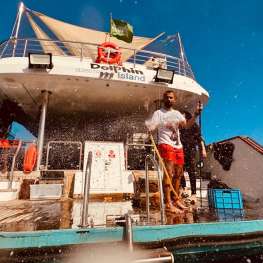
Dolphin Island is a 27-metre Saudi Arabian boutique liveaboard for 12 divers in six air-conditioned ensuite cabins: two main-deck Master Suites with double beds, three lower-deck twins and one lower-deck Master Double. Its Red Sea safari programme focuses on the Farasan Banks in the south and the Five Corals and Seven Sisters reef systems in the north.
Description
Boat
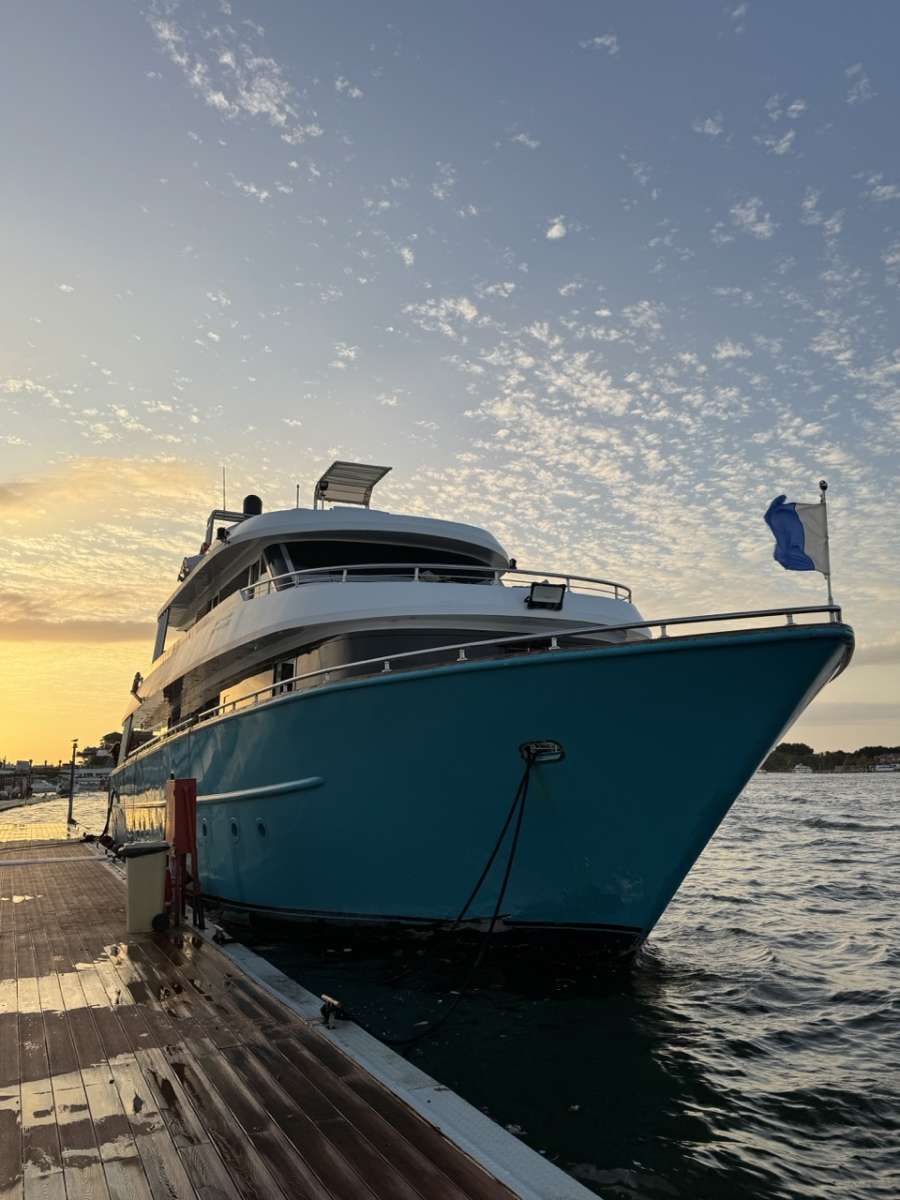
M/Y Dolphin Island is a small-group Saudi Red Sea liveaboard built in 2024 and marketed for no more than 12 diving guests. At 27 metres long and 7.5 metres wide, with a published draft of 2.5 metres, it is considerably more intimate than many 20- to 24-passenger safari vessels. The format is designed around a sociable boutique atmosphere, two dive guides and direct access to remote Saudi reef systems rather than high-volume onboard entertainment.
The Saudi-flagged vessel is powered by two engines rated at 750 hp each. The operator lists two tonnes of fuel capacity and one tonne of fresh water, plus GPS plotter, radar, radio and telephone for navigation and communication. Cruising speed, generator capacity, watermaker output and electrical distribution are not published, so none should be added as a guaranteed specification.
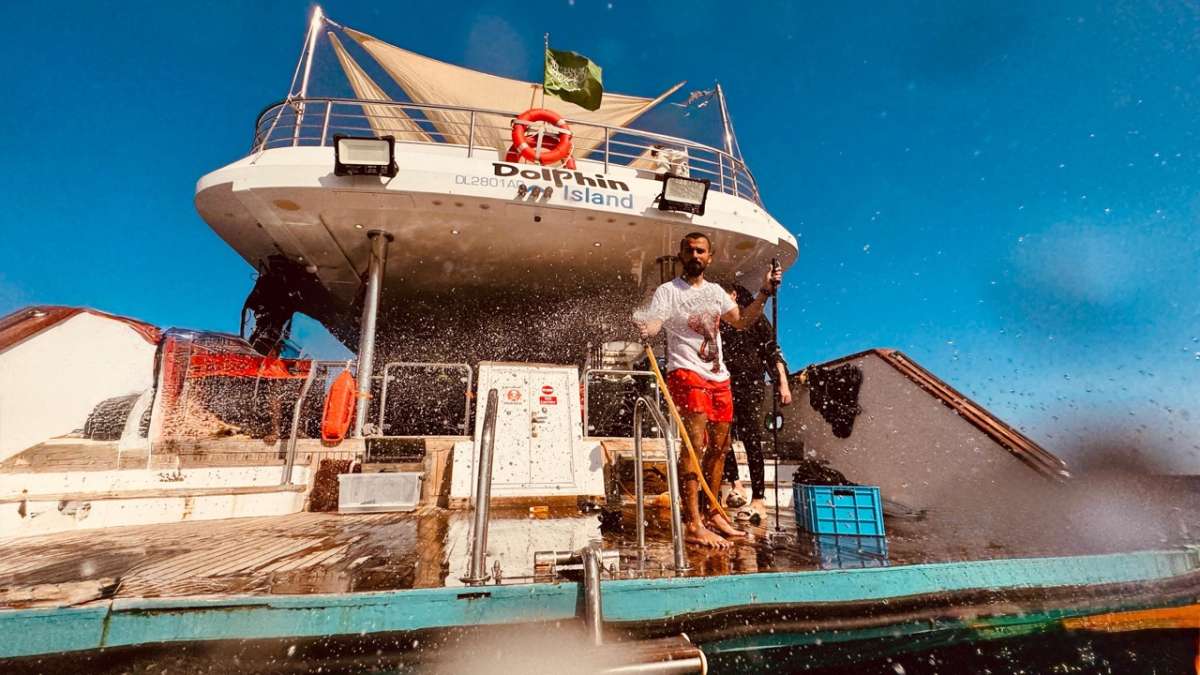
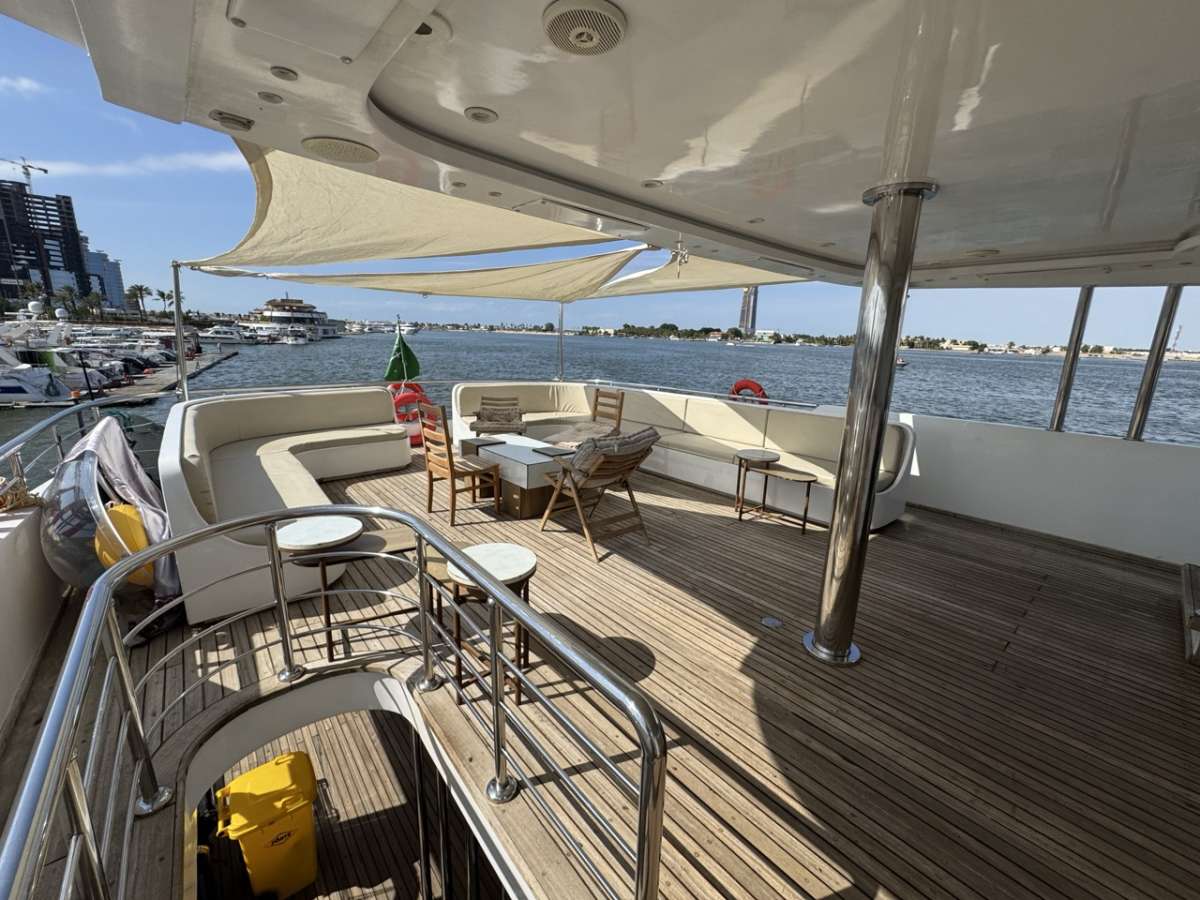
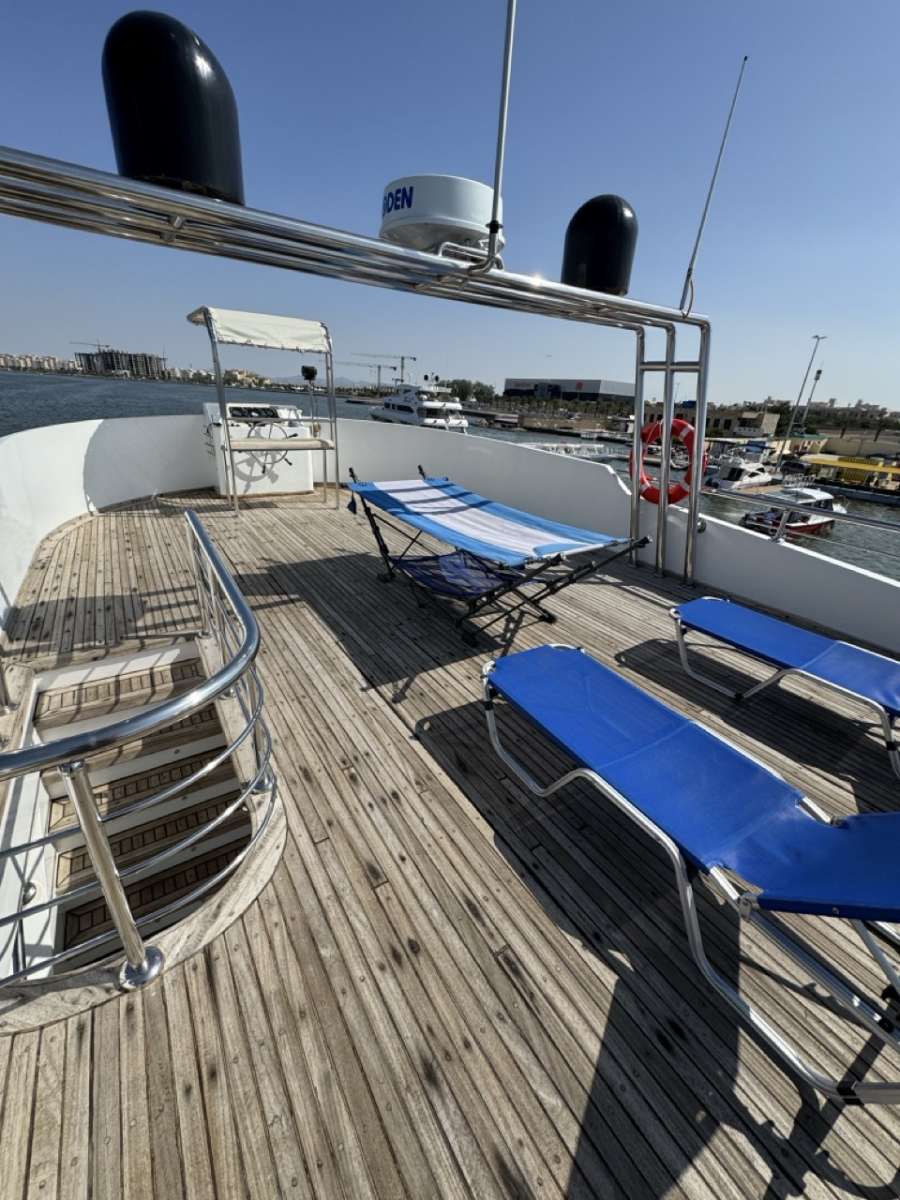
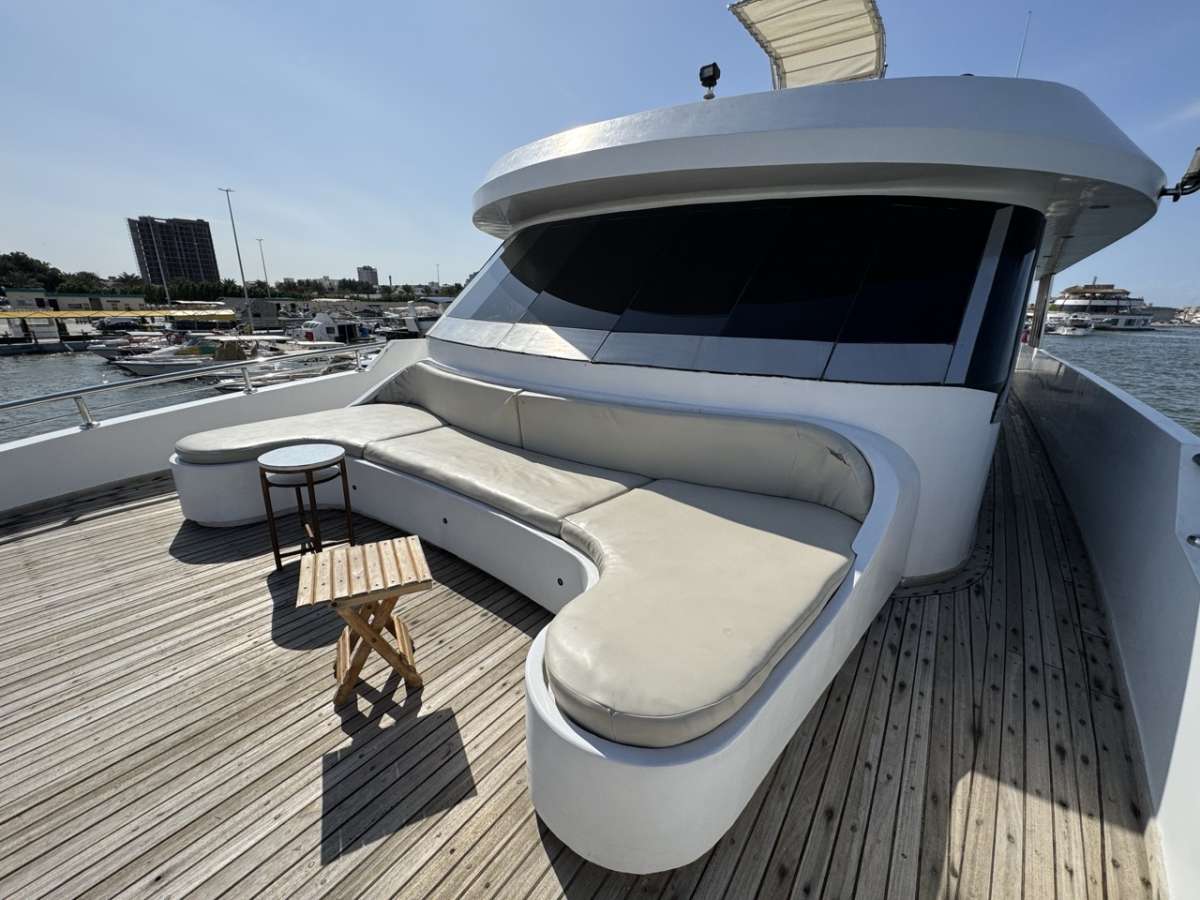
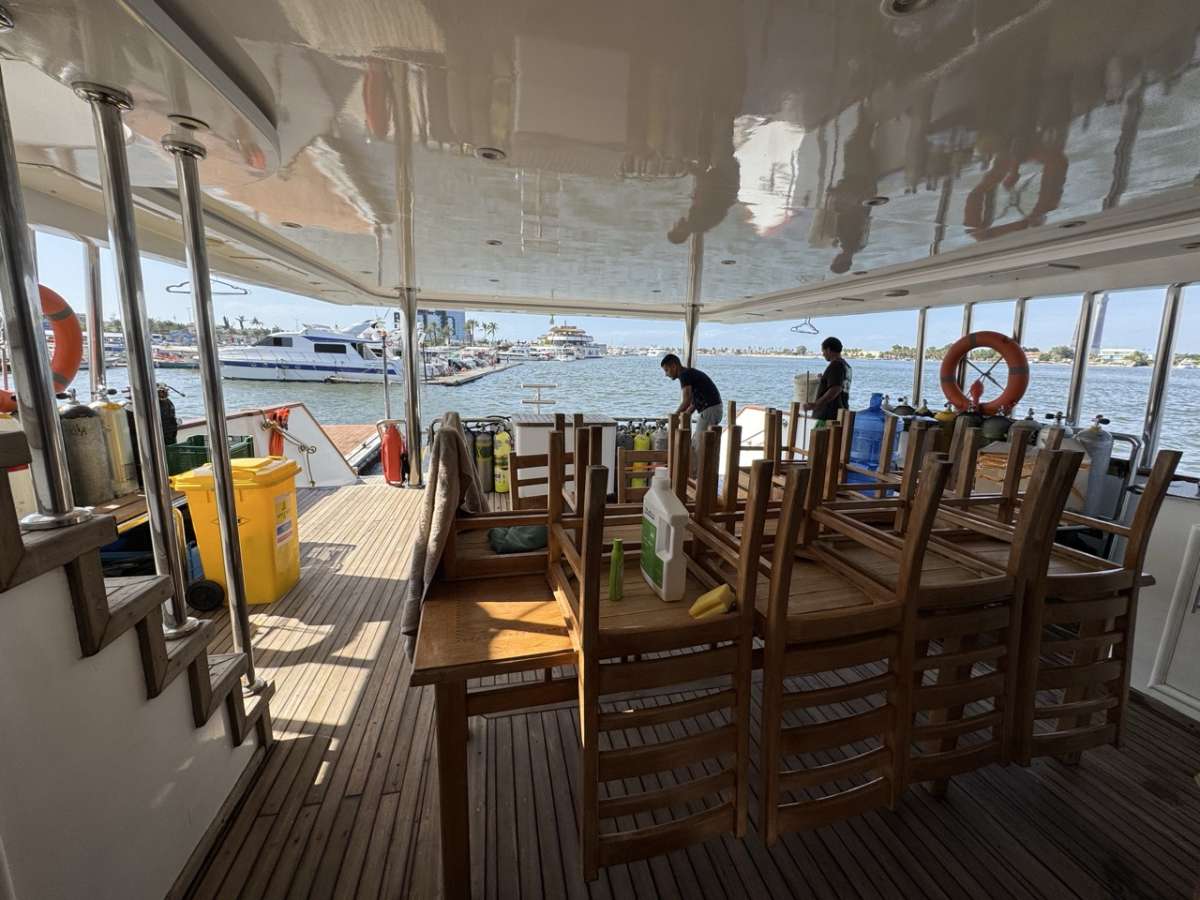
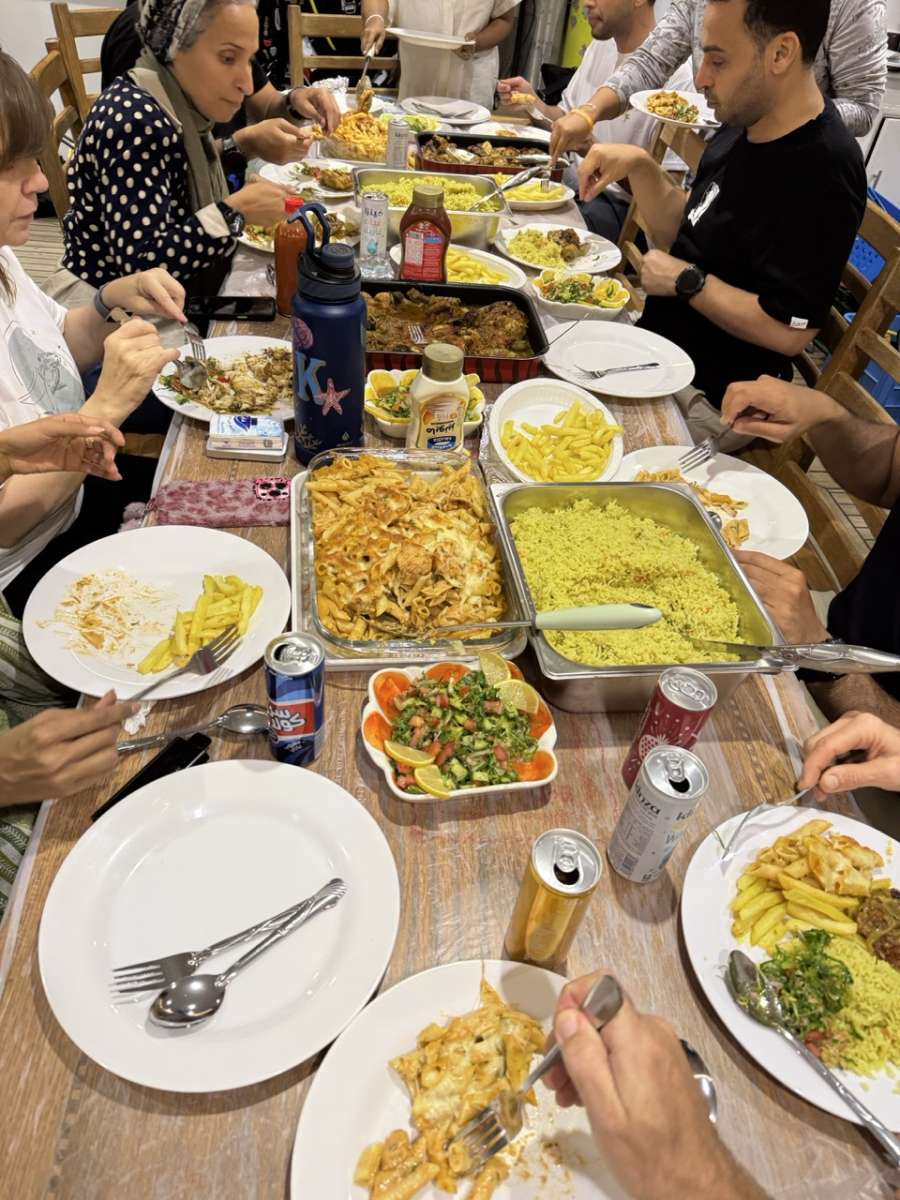
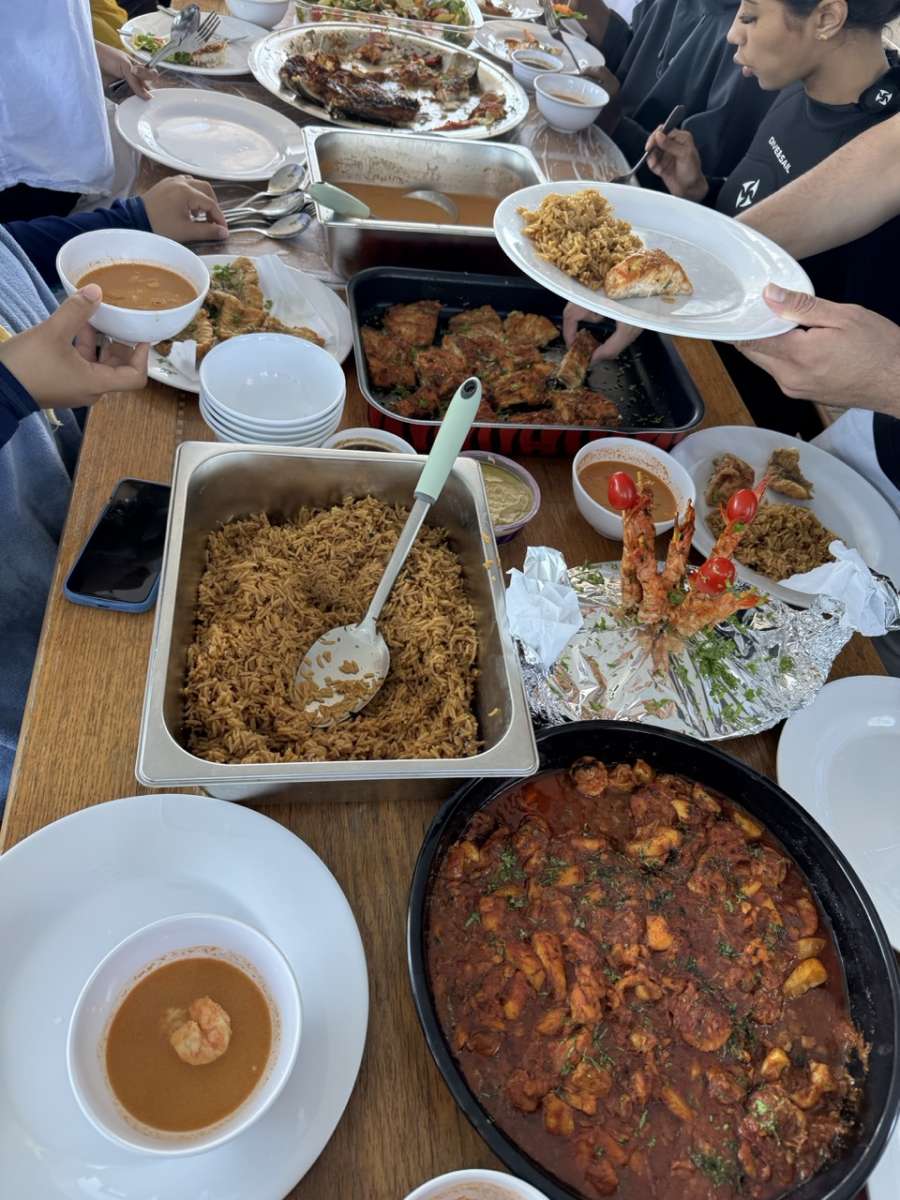
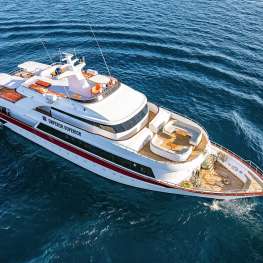
Guest areas include a salon, main deck, dive deck and sun deck. Current operator photographs show open and shaded outdoor seating, a covered dining area and a forward deck lounge. Freshly prepared Arabic cooking is central to the onboard experience, with full board, snacks, soft drinks, tea, coffee and water included under the current package. The menus, service style, dietary capability and exact meal times are not defined in detail; allergies, religious requirements and medically necessary diets should be submitted before confirmation.
Wi-Fi is advertised without charge, but explicitly depends on mobile reception. Remote reefs can therefore have slow or no connectivity. No dedicated office facilities, satellite internet, laundry service, television system, jacuzzi or spa are confirmed for Dolphin Island. References to a whirlpool on older route pages were written for another vessel or a generic programme and should not be transferred to this boat.
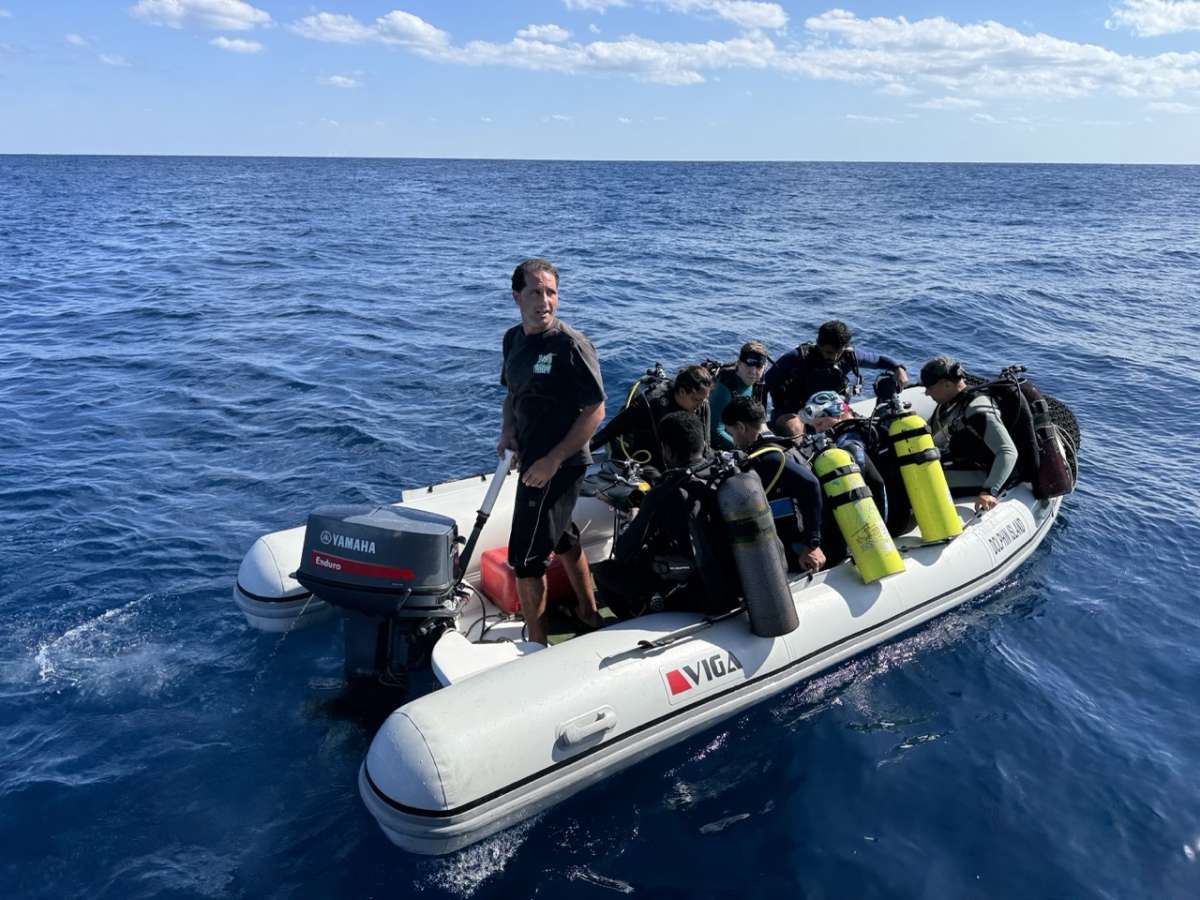
The working dive platform is supported by two Zodiacs, an onboard air compressor and standard 12-litre cylinders. Current gallery photographs show a loaded inflatable tender in open water. Tender size, outboard power, number of compressors, fill rate and exact cylinder inventory are not published. These points should be requested for a technical charter or a group bringing unusual equipment.
The operator describes Dolphin Island as SOLAS-compliant and lists two life rafts and 19 fire extinguishers. Its safety information adds smoke detection, a full firefighting and alarm system, an emergency alarm, life jackets in every cabin and on the main deck, emergency oxygen and a first-aid kit. The dive deck is the stated muster station, while Cabin 1 is identified as an emergency exit. Guests should still attend the onboard drill and locate their own life jacket, exit and assembly route.
No lift or wheelchair-adapted accommodation is advertised, and movement between the lower, main and sun decks involves stairs. Travellers with reduced mobility, refrigerated medication, CPAP equipment or another medical requirement should obtain a written suitability and power-continuity assessment. Dolphin Island is primarily a certified-diver safari; non-diver acceptance, snorkelling supervision and a non-diver price are not published and must be agreed before booking.
Cabin
The detailed deck inventory and current booking form resolve to exactly six cabins for 12 guests:
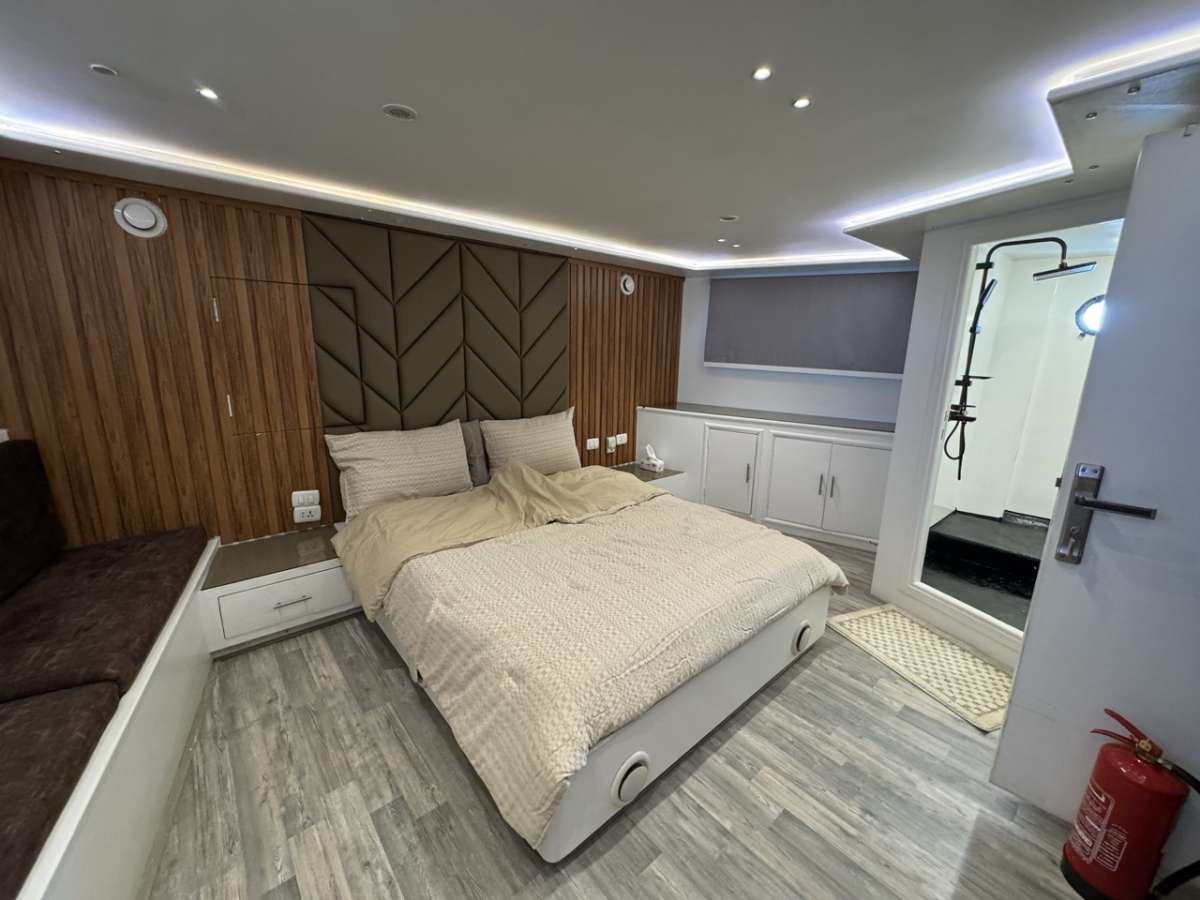
- 2 Main Deck Master Suites — maximum 2 guests each: each is sold as a double-bed cabin on the main deck. These rooms carry the highest published upgrade, currently EUR 250 per person above the base twin-share fare. A Master cabin may be booked only by two people travelling together because the bed does not convert to two singles.
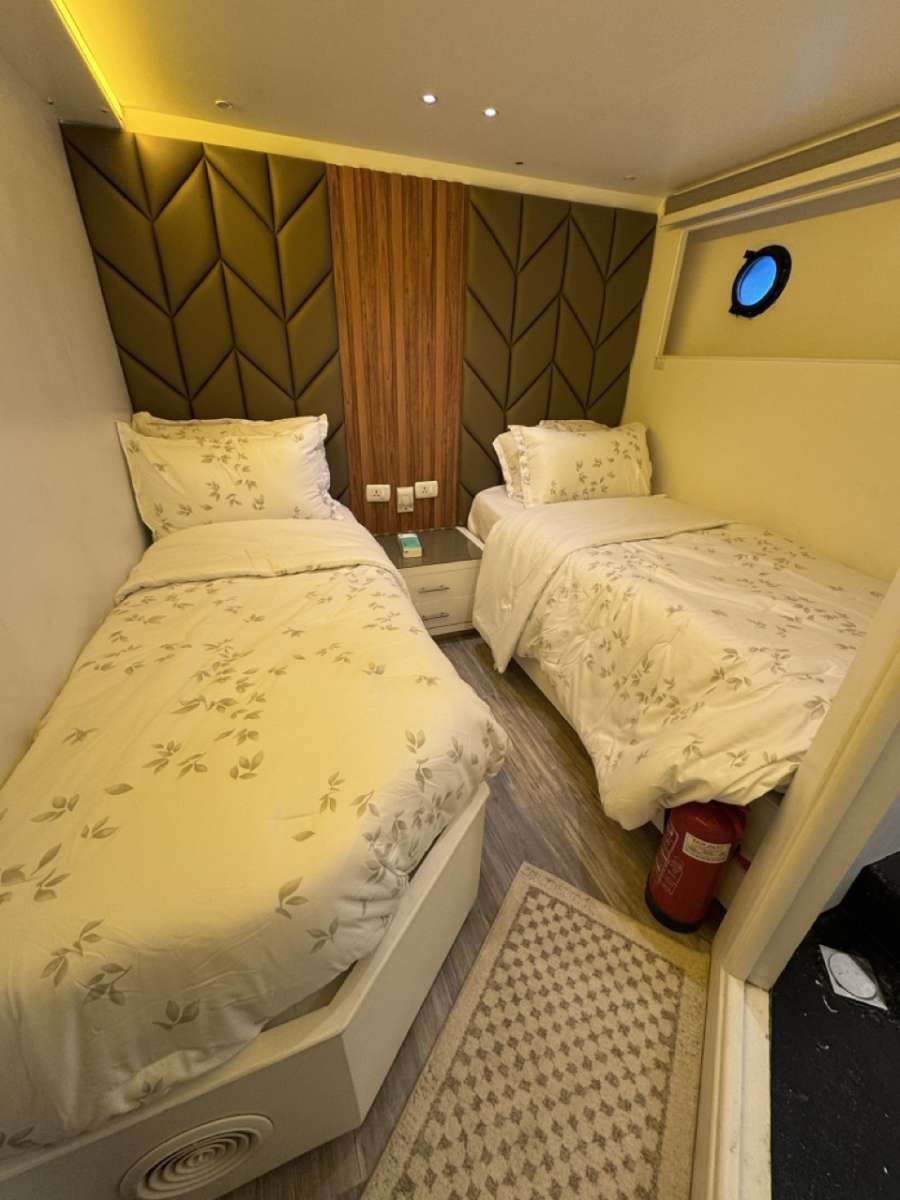
- 3 Lower Deck Twin Cabins — maximum 2 guests each: each contains two separate single beds. A berth in one of these rooms is the base cabin product used for the published per-person safari price and is the appropriate category for two friends or matched share guests.
- 1 Lower Deck Master Suite / Double Cabin — maximum 2 guests: this lower-level room contains one double bed and currently carries a EUR 200 per-person upgrade. Like the main-deck Masters, it must be occupied by two people travelling together and should not be treated as a shareable twin.
The arithmetic is unambiguous: two main-deck doubles, three lower-deck twins and one lower-deck double produce six rooms and 12 berths. The operator's website also contains two contradictory summaries—one says “3 suites, 4 twin rooms,” while another prints “7 cabins” immediately after listing only six. Those lines cannot be reconciled with the detailed deck list, maximum capacity or booking options and should not be copied into sales content.
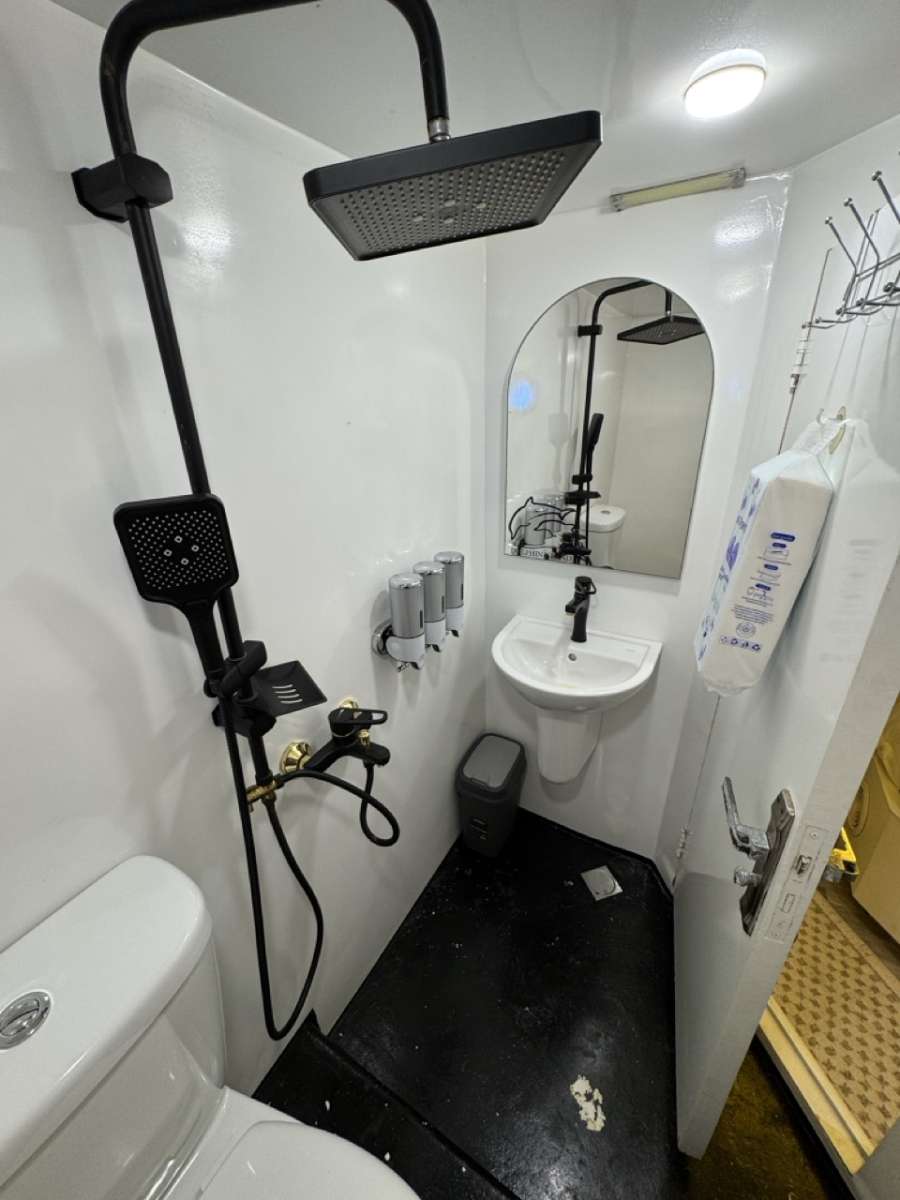
Every cabin is advertised with private ensuite bathroom, air conditioning, cabin and dive towels, shampoo and shower gel. Current official photographs show a compact twin room with two separated beds, a double cabin and a private wet bathroom with shower, toilet and washbasin. The photographs verify those example layouts but do not establish that every room is identical.
No cabin floor areas, bed dimensions, window or porthole types, storage measurements, safe, hairdryer, housekeeping frequency, individual climate controls, sound insulation, USB outlets or cabin-specific socket configuration are published. The word “Suite” identifies the double-bed upgrade category; it should not be interpreted as proof of a separate living room, larger measured floor area or hotel-style suite service.
A sole traveller can request exclusive use of a cabin at a currently published supplement of 80% of the safari price. That supplement is not the same as an automatic single cabin: there is no purpose-built one-person room, and approval depends on availability. The three twins are the only categories with two distinct beds. The three Master Doubles are restricted to two companions booking together.
The current base price is advertised per person sharing half of a lower-deck Twin. Cabin upgrade and sole-use amounts can change and apply in addition to the selected departure fare. Final confirmation should identify the cabin number, deck, bed type, occupants, upgrade, single-use condition and total price rather than relying on the general room name.
Diving
Dolphin Island operates two contrasting Saudi Red Sea programmes: the Farasan Banks south route, normally accessed through Al Lith, and the Five Corals and Seven Sisters north route, associated with Jeddah and Yanbu. Both regions combine coral gardens, walls, plateaus and open-water reef structures. The more exposed sites can involve current, blue-water entries and steep drop-offs, so this is not presented as an entry-level training cruise.
The operator requires a valid diving certification and a medical fitness-to-dive certificate issued within the previous year. Guests must document at least 50 logged dives, and the most recent dive should be no more than one year old. Advanced Open Water or CMAS** and above is recommended. A card alone does not guarantee access to every profile: the guides retain the right to adapt sites, depth and group assignment to current conditions and recent experience.
The published package advertises two dive guides, normally three to four dives on an active day and a reduced two to three around the shortened start or end of operations. The route narratives do not publish a guaranteed weekly total, and embarkation is also described as transfer, check-in and dinner. Treat every number as a maximum shaped by arrival time, navigation, daylight, night-diving permission, weather, current and guest fitness rather than a refund-bearing promise.
Standard diving includes a 12-litre air cylinder, air fills, weights and weight belt. Fifteen-litre cylinders can be requested in advance for a surcharge, but the current boat page does not publish quantity or price. The operator's most recent Dolphin Island inclusion block explicitly states air only and Nitrox currently unavailable. Older Farasan and northern route pages still say Nitrox is included; that legacy wording conflicts with the new vessel page and must not be used unless a dated invoice confirms that a Nitrox system has entered service.
Rental equipment is available only by advance order and is excluded from the base price. The public information does not provide a current itemised rental list or rates for Dolphin Island. The general packing guidance expects the usual personal set, including exposure suit, mask, snorkel, fins, dive computer and BCD; regulator, SMB, signalling devices, torch and personal spares should be clarified with the operator. A computer and suitable surface-signalling equipment are prudent for remote walls and blue-water pickups even where the website does not expressly label them mandatory.
Two Zodiacs support sites away from the mother ship and drift-dive retrieval. Divers should expect briefings on negative entry, current direction, group separation and pickup procedure. Tender access, ladders and the level of assistance for removing equipment are not specified. Anyone with a knee, back or mobility limitation should request recent photographs and an operational explanation rather than assume a platform entry.
Night dives are included where the programme, certification and conditions allow. They are not guaranteed every evening, and offshore exposure or navigation can make a night dive impractical. Training courses, private guides, technical diving, sidemount, rebreathers and decompression profiles are not included or specifically confirmed for Dolphin Island.
The public pages do not state whether dive-accident insurance is contractually mandatory, but the remoteness of the Farasan Banks and offshore northern reefs makes cover for scuba diving, medical treatment, evacuation and recompression strongly advisable, together with travel-cancellation protection. Guests should ask for the nearest chamber and written emergency plan, then ensure their policy matches planned depths and Saudi waters.
Hammerheads, tiger sharks, silky sharks, mantas, dolphins, whale sharks, turtles, tuna, barracuda and schooling reef fish are all described as possible regional encounters. None is guaranteed. Season, current, water temperature, plankton and animal movement decide what appears, and a safe dive plan takes priority over searching in the blue.
Other Information
Currently advertised as included in the standard safari fare:
- Shared transfer from and back to Jeddah King Abdulaziz International Airport for the scheduled north or south programme; the southern Al Lith road journey is advertised at about three hours
- Accommodation in half of a lower-deck Twin for the contracted number of nights
- Full board with freshly prepared Arabic meals, routine snacks, soft drinks, tea, coffee and water
- Planned recreational diving with two guides, including eligible night dives where conditions allow
- Standard 12-litre air cylinder, air fills, weights and weight belt
- Cabin towel, dive towel, shampoo and shower gel
- Marine-park charges, fuel surcharge, harbour fees, taxes and other stated safari levies
- Wi-Fi when mobile reception is available; uninterrupted service is not guaranteed
Not included or payable separately:
- International and domestic flights, airline baggage, hotels and any independent pre- or post-cruise arrangements
- Saudi visa and immigration costs; eligibility and application method depend on nationality and must be checked through an official source
- Main-deck Master upgrade, currently EUR 250 per person, or lower-deck Master upgrade, currently EUR 200 per person
- Sole cabin use, currently an 80% supplement to the safari price and subject to availability
- Fifteen-litre cylinder, rental equipment and any private or special dive service arranged on request
- Nitrox: the current Dolphin Island page says only air is available, despite contradictory legacy route pages
- Land excursions, cultural add-ons, private transfers, personal shopping and other services not expressly listed
- Crew and guide gratuities; no mandatory or recommended amount is published
- Travel, medical, baggage, cancellation and dive-accident insurance
- Meals and drinks not mentioned in the package
Alcohol is excluded and, more importantly, the operator's Saudi travel FAQ states that import and consumption of alcohol are prohibited in the country. It should not be presented as an optional onboard purchase. Travellers must check current Saudi law before arrival and should not pack alcohol.
The published airport transfer promise must be matched to the selected route. South departures use Al Lith, roughly 210 kilometres south of Jeddah; northern programmes may use Jeddah, Yanbu or a one-way port arrangement. Some current departure tables simplify the port field to “from/to Jeddah.” The final joining instructions should state airport meeting time, road vehicle, actual embarkation port, baggage allowance, last safe flight arrival and return-airport timing.
No child policy, minimum guest age, non-diver tariff or dedicated snorkelling programme is published. Families and mixed groups need written approval. Likewise, exact dietary procedures, medication storage, smoking areas and onboard payment methods are not described. Saudi Arabia generally uses Type G electrical sockets; a general FAQ note about European sockets refers specifically to another vessel, not Dolphin Island, so guests should bring an adapter unless the cabin socket is confirmed.
Itineraries
Dolphin Island is marketed for a southern Farasan Banks safari and a northern Five Corals & Seven Sisters safari. Both are week-format expeditions built around five principal diving days, but the operator currently publishes inconsistent accommodation wording: the main package says six nights, while date ranges and individual route pages can indicate seven. The representative plans below therefore avoid promising a fixed night count and use “final contracted day” for departure.
Saudi Red Sea routes remain exploratory in character. Exact reefs, sequence, dive count and night-diving opportunities depend on navigation permission, port allocation, weather, current and the group's experience. Wildlife references describe regional possibilities, never a sighting guarantee.
Farasan Banks South Safari — Representative Week Programme
The Farasan Banks stretch through the southern Saudi Red Sea as a network of islands, submerged reefs, lagoons, walls and plateaus. Dolphin Island's access point is normally Al Lith, approximately 210 kilometres south of Jeddah. The road transfer is advertised at about three hours, followed by roughly two to two and a half hours of sailing to the first dive area.
Day 1 — Jeddah arrival and Al Lith embarkation
Meet the scheduled transfer at King Abdulaziz International Airport and travel south to Al Lith. Board Dolphin Island, take the confirmed cabin, assemble any rented or personal equipment and attend vessel, emergency and diving briefings. Dinner is served onboard. The public itinerary does not reliably establish a same-day dive, so none should be promised before the final flight and port schedule is known.
Day 2 — Outer Al Lith reefs and southern orientation dives
Begin with a controlled check dive so the guides can verify weighting, buoyancy, equipment and recent comfort. Depending on navigation and sea state, the boat may use reefs on the approach to the Farasan Banks. Whale sharks are sometimes associated with plankton-rich water near Al Lith, but an encounter is chance, not an itinerary component. Later dives introduce coral slopes or walls and the Zodiac pickup routine.
Day 3 — Mar Mar, Dohra, Jadir and Malathu sector
The operator names Mar Mar as both a dive area and a useful liveaboard anchorage. Nearby Dohra, Jadir and Malathu add walls, plateaus and coral gardens. The captain chooses a safe overnight position and the guides select up to three or four suitable sessions from the local conditions rather than treating all four island names as guaranteed in one day.
Day 4 — Gorgonia, Bandu, Long Reef and Sha'ab Ammar
This part of the route emphasises hard- and soft-coral scenery and fish-rich reef edges. Gorgonia, Bandu and Long Reef are published possibilities. The large horseshoe-shaped Sha'ab Ammar can provide both diving and a night anchorage. A night dive may be offered in a protected area when navigation, current and guest certification allow it.
Day 5 — Danak, Jabbara, Eagle and central banks
Small islands and reef structures around Danak, Jabbara and Eagle offer varied profiles. Divers may move between coral gardens and open edges where tuna, barracuda, mackerel, rays, turtles or sharks can pass. The team should brief blue-water separation and SMB use before any exposed wall. The precise sites are selected for the day's wind and current.
Day 6 — Mubarak Reef or southern alternatives
Mubarak Reef is one of the operator's preferred places to search for hammerheads, particularly during the southern spring season. The group may spend part of a dive looking into the blue, but depth, gas and no-decompression limits remain decisive even when sharks are seen deeper. Mudarr, Fantasy, Choopy or another suitable reef can replace or complement Mubarak according to distance and conditions.
Final contracted day — Closing dives, Al Lith and Jeddah transfer
One or more shortened closing dives may be possible before Dolphin Island returns to Al Lith. Equipment is rinsed and packed, then the scheduled road transfer returns to Jeddah. The actual final dive time, port arrival and airport drop-off must come from the joining documents. A same-day long-haul flight is risky unless the no-fly interval and road margin are both adequate.
Five Corals & Seven Sisters North Safari — Representative Week Programme
The northern programme links Five Corals near Rabigh with the reef systems off Yanbu. Public pages describe Jeddah or Yanbu as possible ports and note that some Saudi safaris operate one-way. Current Dolphin Island dates can nevertheless show Jeddah as both start and finish. The exact port combination is therefore an essential booking fact, not a minor itinerary detail.
Day 1 — Jeddah meeting and transfer to the assigned northern port
Meet the operator's scheduled vehicle at Jeddah airport and travel to the port named in the final documents. Boarding includes cabin allocation, equipment setup, safety briefing, medical and certification checks and dinner. Sailing time and the possibility of an initial dive depend entirely on the embarkation port and clearance.
Day 2 — Five Corals orientation and Maria Reef
Five Corals is a cluster of five atolls opposite the Rabigh coast, about 75 nautical miles south of Sha'ab Suflani according to the operator. A check dive establishes group pace before further reef exploration. Maria Reef is associated with colourful coral and schooling tuna, barracuda and fusiliers. Animal movement and water conditions determine what is actually seen.
Day 3 — Joey, Noura, Mary Ann and Mary Jane
These named Five Corals reefs are described through coral pillars, steep faces and gorgonian growth. Their exposed geometry creates opportunities for hammerheads, tiger sharks or mantas, but also makes current and entry choice important. The itinerary can sample several structures without guaranteeing every named reef or a particular predator.
Day 4 — Transition north and southern Seven Sisters approaches
Use the safe travel window toward the Seven Sisters area, roughly 18 kilometres offshore from Yanbu. Diving may take place at a suitable transition reef or on one of the southern markers. Long navigation can reduce the daily count. The captain may reverse this entire sequence if weather makes a north-to-south passage safer.
Day 5 — Marker 32, Marker 34, Abu Galawa and Marker 39
These published Seven Sisters options combine plateaus, walls, canyons and coral gardens. The guides choose entry and exit according to current, and the Zodiacs retrieve groups away from the reef when necessary. Divers should remain conservative around deep edges and carry the signalling equipment specified in the final briefing.
Day 6 — Mansi Reef and Sha'ab Suflani
Mansi Reef, also called Marker 42, lies about eight kilometres south of the Seven Sisters and rises as a coral column with gorgonian-covered walls. Hammerheads may be found in the blue. A further 16 kilometres south, Sha'ab Suflani or Marker 44 drops into water deeper than 300 metres and suits experienced blue-water diving. The 50-dive minimum and Advanced recommendation are especially relevant here; no guest is required to make a profile beyond personal competence.
Final contracted day — Last reef, port and airport return
The final sessions are reduced to preserve the return passage and surface interval. Dolphin Island reaches Jeddah or Yanbu according to the contracted route, followed by the scheduled airport transfer. Guests must plan flights around the actual port: the road journey between Yanbu and Jeddah is commonly described by the operator as approximately three hours.
Typical Diving-Day Rhythm
An active day may begin with an early briefing and first dive, followed by breakfast. A second dive precedes lunch, with an afternoon session after the main surface interval. A fourth sunset or night dive is possible on suitable days. Navigation, current windows and rest requirements can change that order. The advertised three-to-four-dive rhythm is a planning model rather than a fixed clock.
The first dive allows the guides to evaluate weight, equipment and buoyancy. With only 12 guests and two guides, the planned guide allocation supports smaller groups, but actual pairing depends on certification, experience and private-guide arrangements. A diver who has not been in the water for close to a year should consider a refresher before travel rather than using a remote wall as a skills check.
Zodiac entries can be negative when current carries divers away from the reef. The briefing should cover the descent point, maximum depth, turn pressure, separation response, surface signal and pickup. Searching for hammerheads in blue water can make depth and position harder to judge, so computer awareness and close team contact matter more than following an animal.
Night diving is offered only at a secure site. Remote offshore walls and long passages may remove that option. Anyone declining a dive can remain aboard, but a missed personal dive does not create a refund. The operator should be asked how it treats schedule reductions caused by weather, permits or technical problems because the public page does not publish that policy.
Choosing Between North and South
The Farasan Banks suit divers seeking a broad island-and-reef expedition with southern spring timing, varied anchorages and a mix of coral gardens, walls and open-water shark potential. The operator considers late February through April the strongest southern period. Mubarak Reef is a highlighted hammerhead area, while the network around Mar Mar, Sha'ab Ammar and the smaller islands creates route flexibility.
Five Corals and Seven Sisters place more emphasis on northern atolls, deep drop-offs, gorgonian walls and blue-water sites. The operator favours May and June and the period from late October through December. Mansi and Sha'ab Suflani are the most exposed examples, while Maria and the other Five Corals offer schooling fish and coral structure.
Seasonal recommendations improve probability, not certainty. Wind and current can be strong in either area, and large animals move independently of the calendar. The better route is the one aligned with the traveller's date, recent experience, comfort in open water and confirmed port logistics.
Route Preparation and Responsible Diving
The airport transfer is part of the safari, but the guest still needs a flight that matches the published meeting window. A delayed arrival can affect the whole vessel because Al Lith and Yanbu are several hours from Jeddah. Ask for the latest acceptable landing time, meeting terminal and emergency contact before buying a non-changeable ticket. On the return, allow for unloading, road traffic, border formalities and a possible change of port.
Remote reefs have limited external support. Bring certification and medical documents, a logbook showing the 50-dive minimum, personal medicines, equipment spares and enough exposure protection for repetitive dives. Rental requests and 15-litre cylinders should be confirmed by size and quantity, not left as a note for embarkation day. If a passenger needs a refresher, arrange it before Saudi Arabia.
Good buoyancy and careful fin technique matter on coral-covered plateaus and narrow structures. Divers should not touch coral, chase sharks, remove marine life or anchor personal camera equipment to the reef. Wildlife observation works best when the group follows one agreed depth and direction; splitting off for a photograph makes Zodiac pickup and blue-water safety harder.
The final day needs two separate margins: the decompression-related no-fly interval and the road journey to Jeddah. The fact that an airport transfer is included does not make a tight flight safe. A post-safari hotel night is the most resilient plan when the contracted port is Yanbu or Al Lith.
Essential Itinerary Notes
- A valid diving certificate, medical certificate no older than one year, at least 50 logged dives and a last dive within one year are published requirements; Advanced or CMAS** and above is recommended.
- The current Dolphin Island page states that only air is available. Do not sell Nitrox as included based on older route copy.
- Three to four dives per active day is an advertised maximum, not a guaranteed trip total.
- Reefs, sequence, wildlife, night dives and ports can change for safety and operational reasons.
- The main package says six nights, while date ranges and route pages can indicate seven. The contract must settle the exact number.
- Airport transfer is included on scheduled programmes, but actual embarkation may be Al Lith, Jeddah or Yanbu.
- Marine-park, fuel and harbour fees are currently included in the published fare.
- Leave a conservative no-fly interval and road-transfer margin after the final dive.
Schedules & routes
Prices & conditions
Included
- Transfers from airport and/or hotel to the yacht
- Marine park fees & Port fees
- VAT and local taxes
- Fuel surcharge
- Full-board meal plan (including snacks)
- Complimentary beverages (water, tea, coffee)
- Soft drinks
- Diving activity (incl. tanks, weights, weight belts)
- Dive guide service
- Cabin towels and complimentary toiletries
- Cabin cleaning service
- Wi-Fi
Not included
- Domestic flights in destination country
- Alcoholic beverage
- Dive equipment rentals
- Larger tank (15 L)
- Nitrox fills
- Dive insurance (mandatory requirement)
- Travel insurance (trip cancellation insurance)
- Crew gratuity
Useful information
Saudi Arabia
Best time for diving
The Farasan Banks : Can be dive all year round, however the best time will be from November until May. From mid-June to mid-September it is very hot and the desert winds also add plenty of sand to the air. Currents usually mild, sometimes can be a little stronger, visibility range from 10m to 35m.
Five Corals and Seven Sisters : best is from June until October. The currents can be medium to strong, visibility range from 15m to 35m.
About temperatures
Air : Very warm year round with desert conditions. In the summer air temperatures can be from 27°C - 43°C, and drop to 10°C - 20°C in the winter.
Sea : winter months are between 23°C - 25°C, summer months are between 28°C - 31°C.
Wetsuit Recommendation
In the winter months, a 5 mm full wetsuit is recommended. In summer months a rash vest or 3 mm shorty wetsuit is recommended.
Diver requirement
Due to local regulations, most of the liveaboard region requrie divers to have AOW level with min. 50 logged dives to join the diving activity. However, OW divers can make thier AOW course onboard. You can find out more information about diving in Saudi Arabia here : Saudi Arabia.
Embarkation / Disembarkation
Depending on which route you are heading to, the embarkation and disembarkation can be from Yanbu (YNB), Al Līth (ABT or TIF).
Visa Requirements
A visa is required to enter Saudi Arabia and can be applied for online or upon arrival for eligible countries. For more information about visa requirements, please, refer to the Saudi Tourist Visa. The eVisa will be a one-year, multiple entry visa, allowing tourists to spend up to 90 days in the country.
Vaccinations
A yellow fever vaccination certificate is required if you travelling to countries with persistent or periodic yellow fever transmission. Certain countries require all travelers to present proof of yellow fever vaccination upon arrival. Country requirements are subject to change at any time. It is important that travelers ensure that they know the requirements of the country to which they are travelling by checking with the relevant consulate or embassy.
Money Matters
The local currency is Saudi Riyal (SAR), all banks in Saudi offer currency exchange services. You can also find exchange bureaus at airports, some shopping centers, and other locations throughout the country. ATMs are widely available, and credit cards including Visa, Mastercard and American Express are accepted at many retailers, restaurants, hotels, transportation providers and other businesses throughout the country. Smaller shops may include a surcharge for card payments, so having cash handy can help you avoid additional fees. Many businesses also accept digital payment methods, such as Apple Pay
Drones
Drone use is allowed in Saudi Arabia, but there are several drone laws that need to be followed when flying in the country. Anyone wishing to import a drone must register the serial number to obtain customs clearance. A registration and import permit is required for recreational drone use in Saudi Arabia. please contact the General Authority of Civil Aviation The direct price of the authority for requesting a recreational permit is $250.00 SR. If the drone is registered, Saudi Customs will allow it into the country.
Extending your holiday
We offer a range of hotels/resorts, land-based diving packages, and excursions that can be arranged before or after your liveaboard holiday. Just ask us if you need such a service.
Diver's reviews (0)
Photos