- Best-Price Guarantee
- 24/7 Expert Support
- No Booking Fees
- Direct with Operators
- 500+ Boats Worldwide
Description
Boat
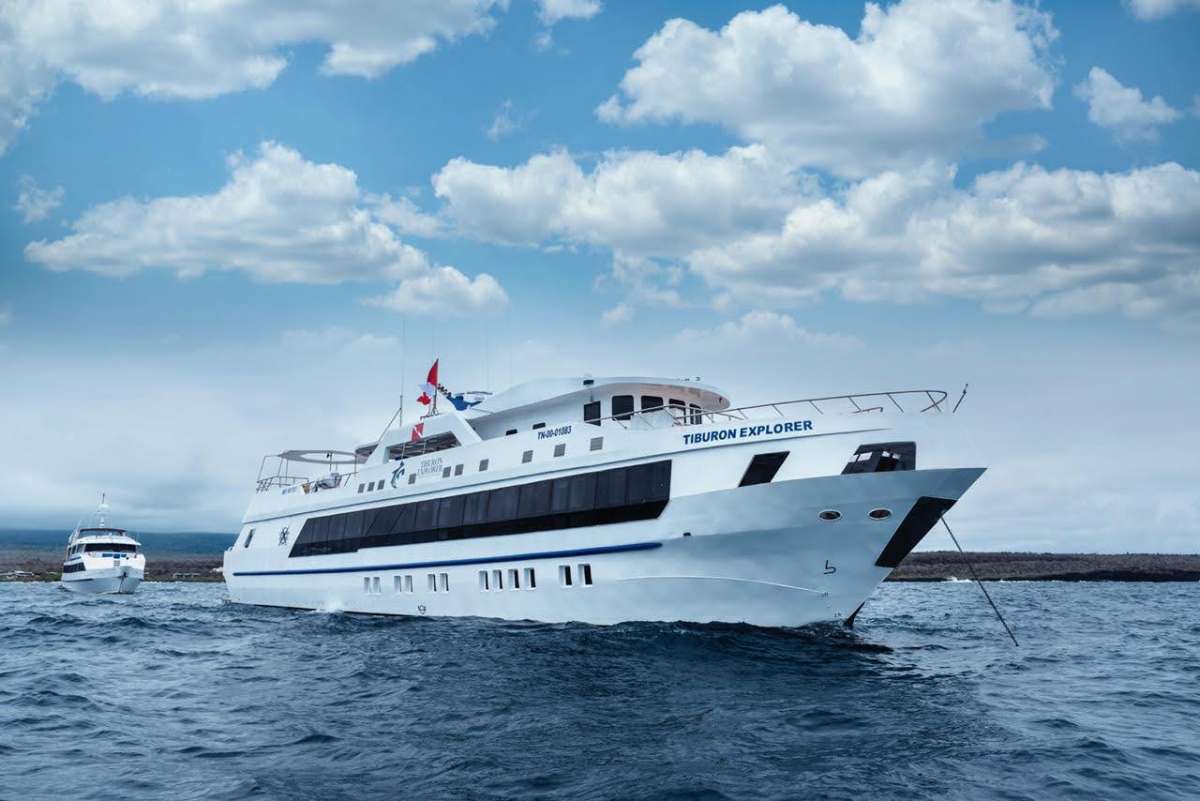
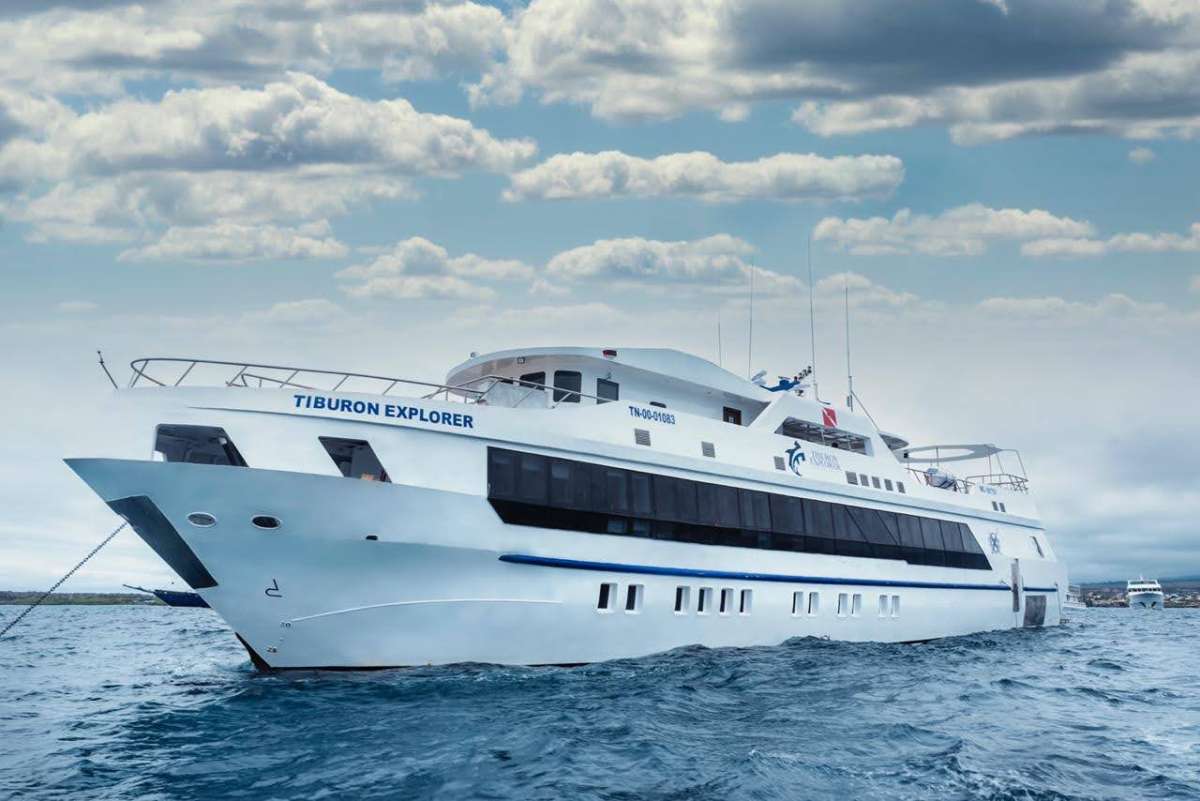
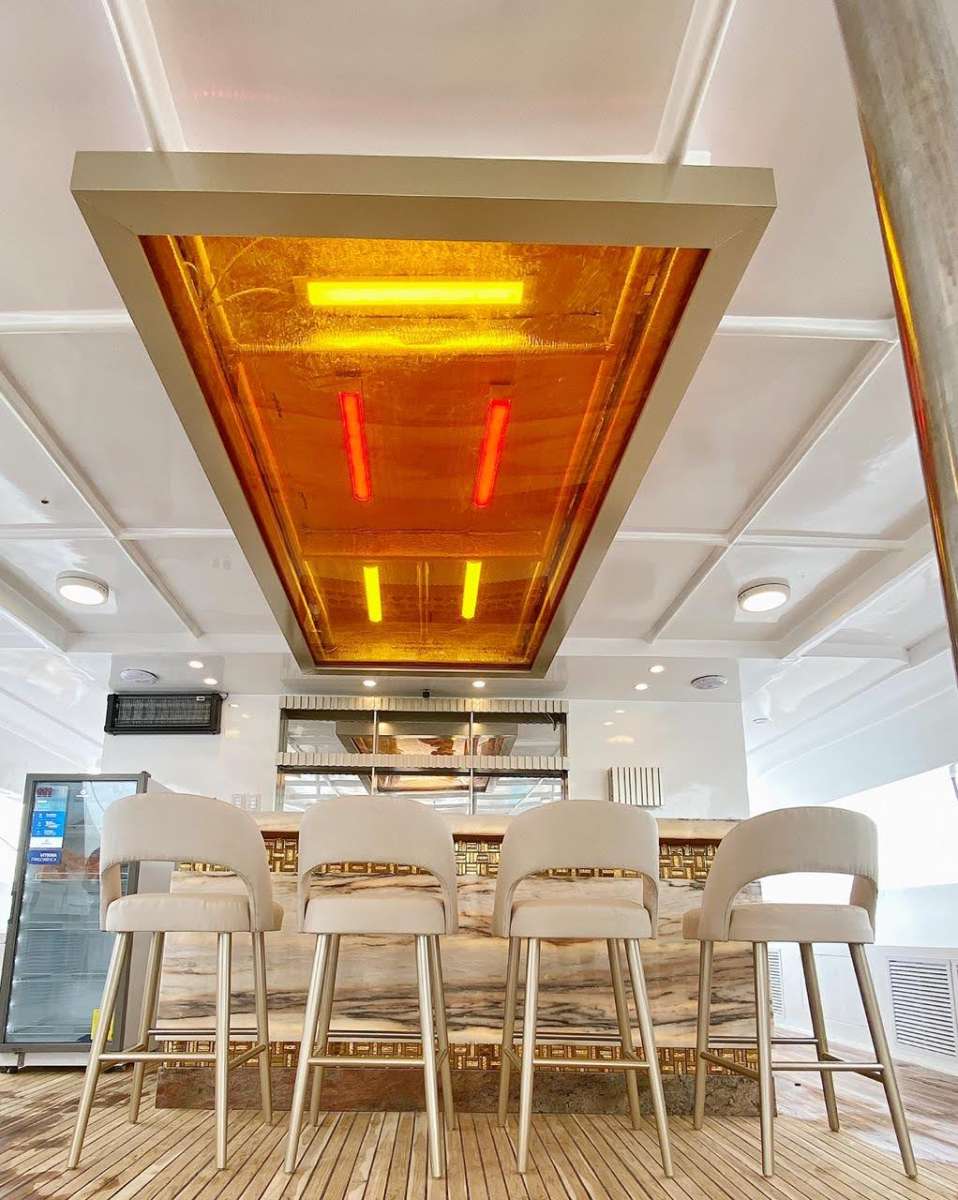
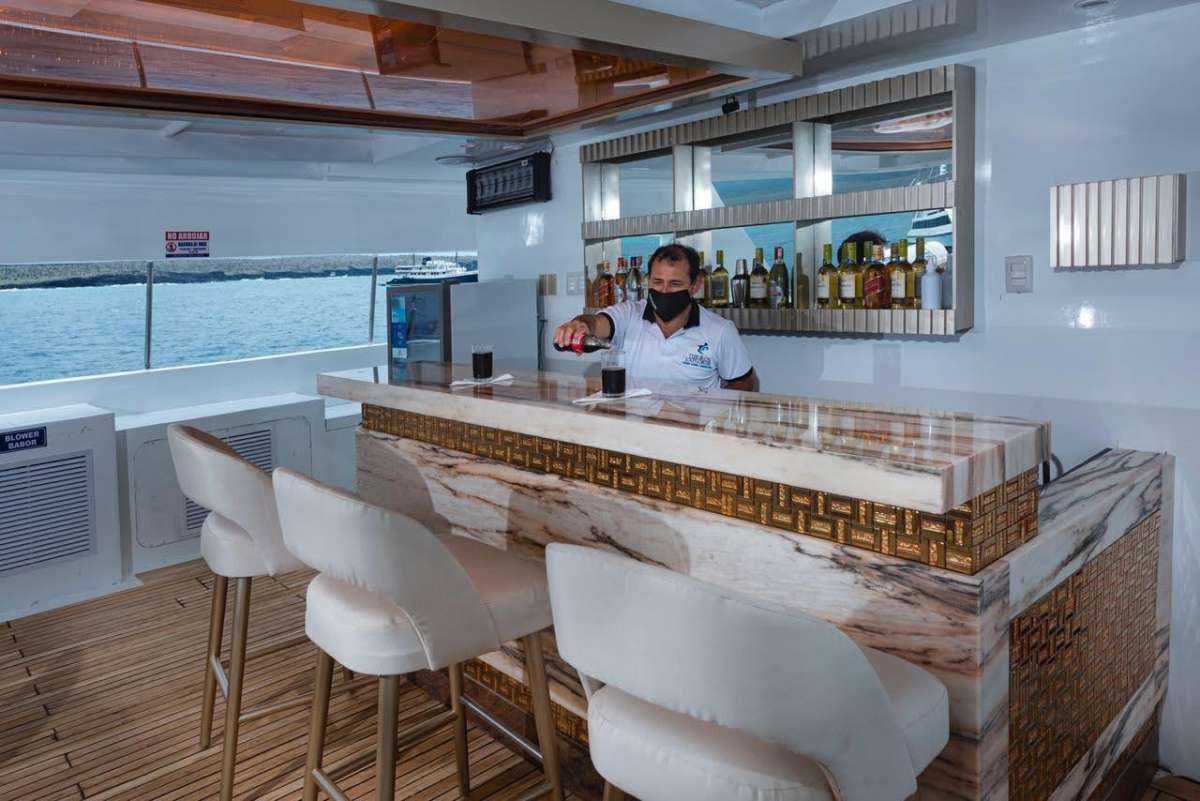
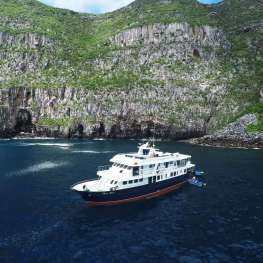
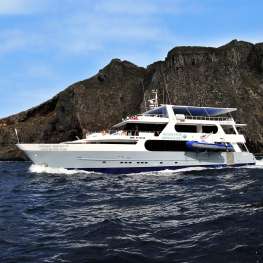
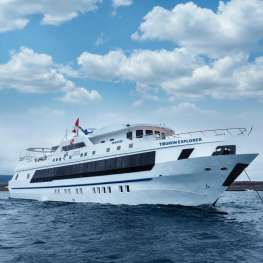
Tiburon Explorer is a premier, purpose-built diving yacht designed specifically to navigate the legendary waters of the Galapagos Islands. Launched in 2020, this 38-meter (125 ft) vessel combines modern luxury with the rugged capability required for one of the world's most demanding dive destinations. With a beam of 7.5 m and a cruising speed of 12 knots, she provides a stable and spacious platform for up to 16 guests to explore Darwin and Wolf in total comfort.
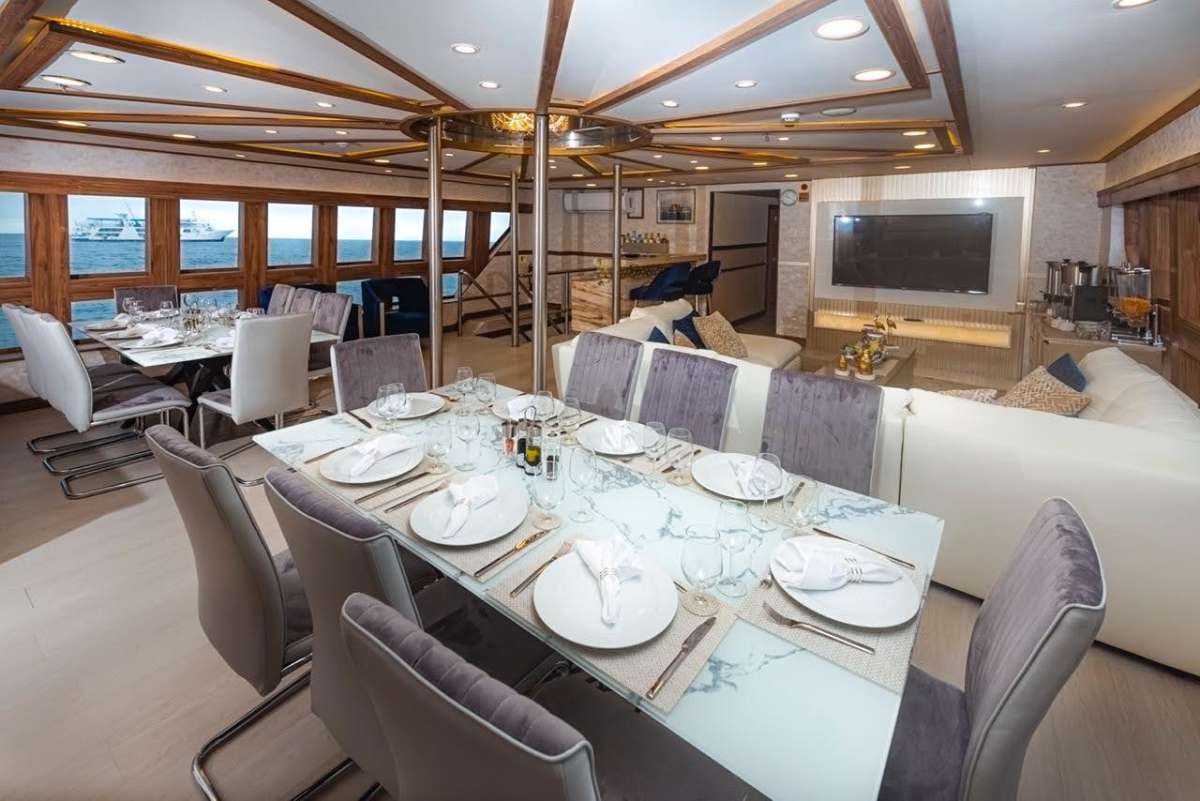
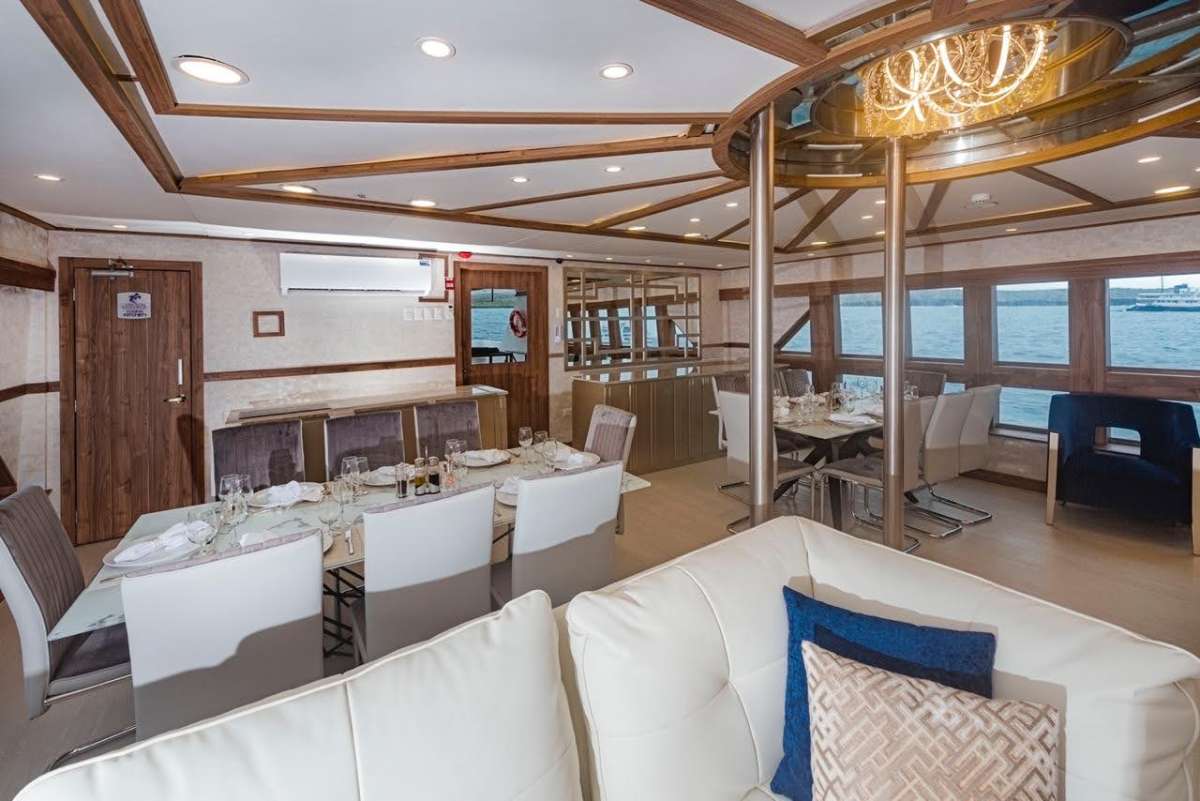
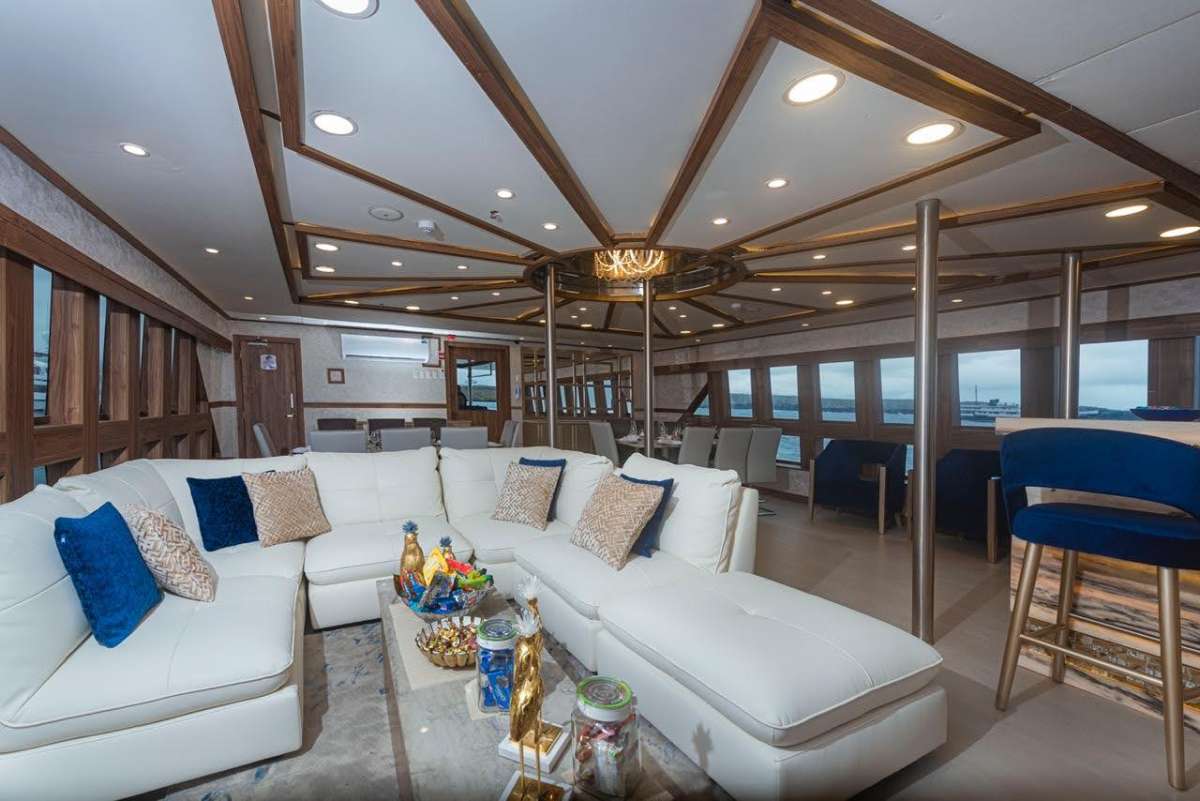
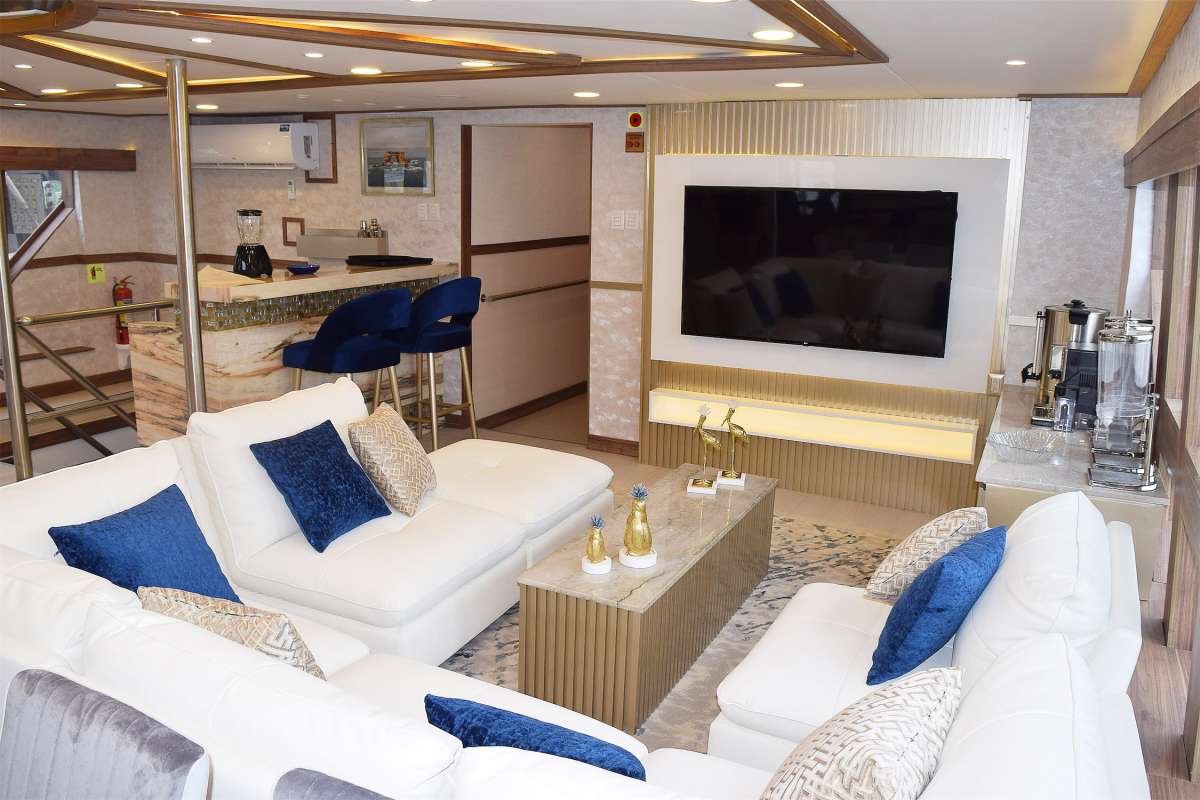
Tiburon Explorer is designed with a contemporary flair, featuring light-filled social areas and high-quality finishes. The main salon is the heart of the boat, offering a comfortable lounge area equipped with a TV/DVD system for briefings or relaxing after a day in the water. Large windows throughout the main deck ensure that you never miss the dramatic volcanic landscapes passing by.
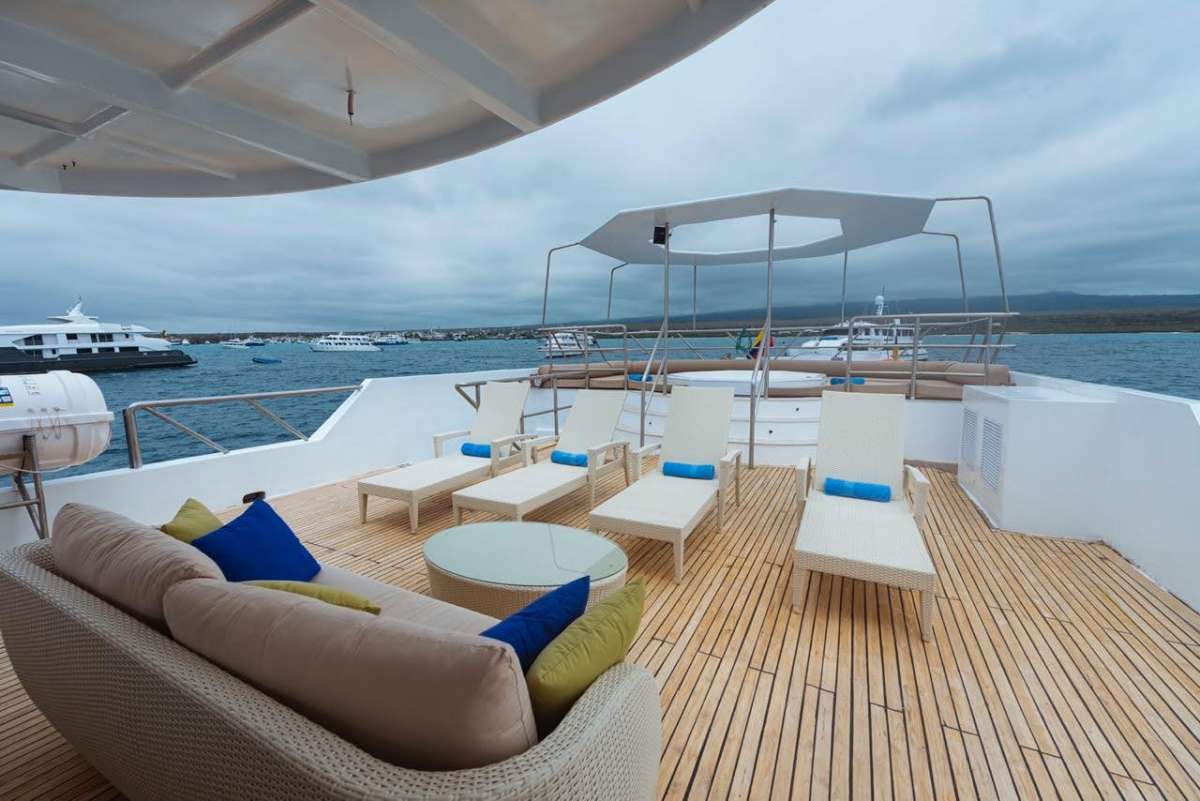
For those who enjoy the sun and sea breeze, the yacht features an expansive sun deck. Here, you’ll find a shaded lounge area, plenty of sunbeds, and a large hot tub—the perfect spot for a soak while watching the sunset over the Pacific.
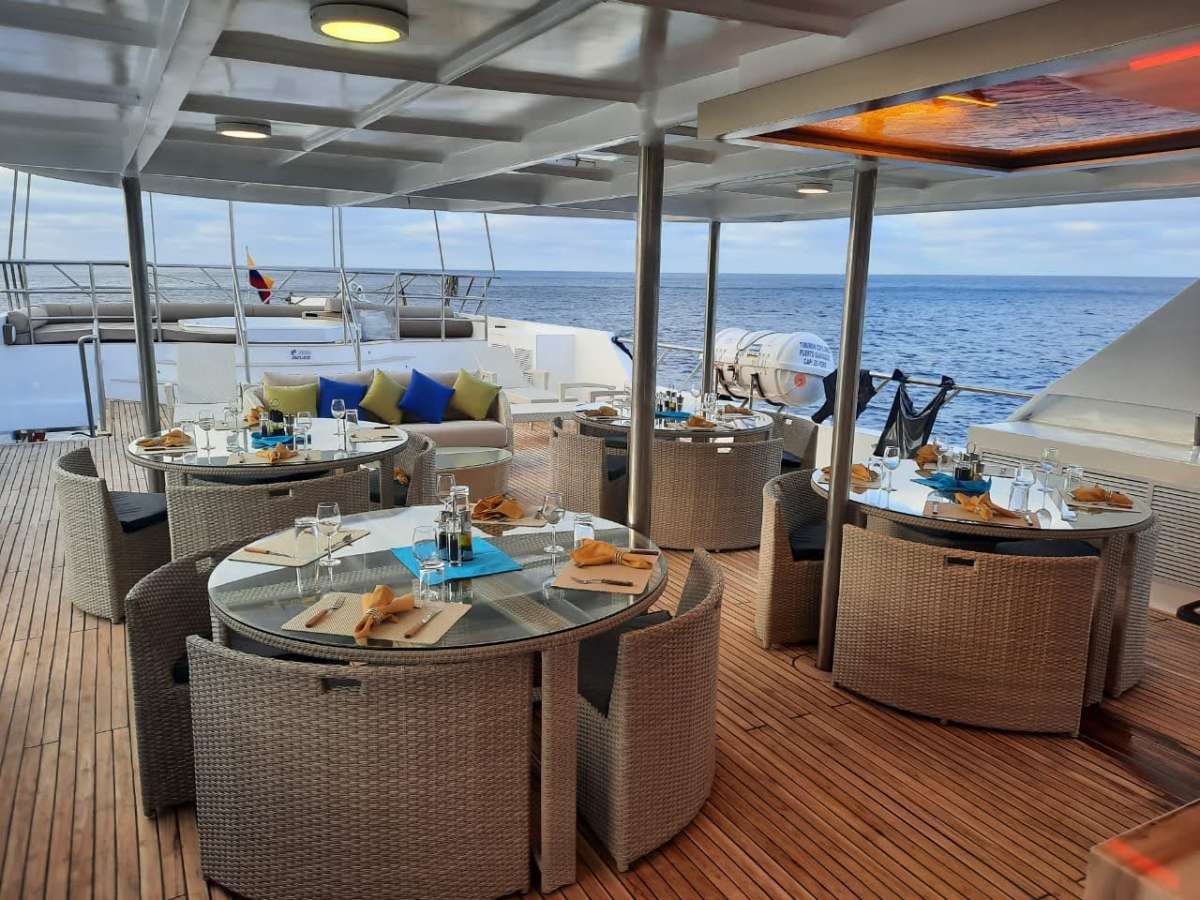
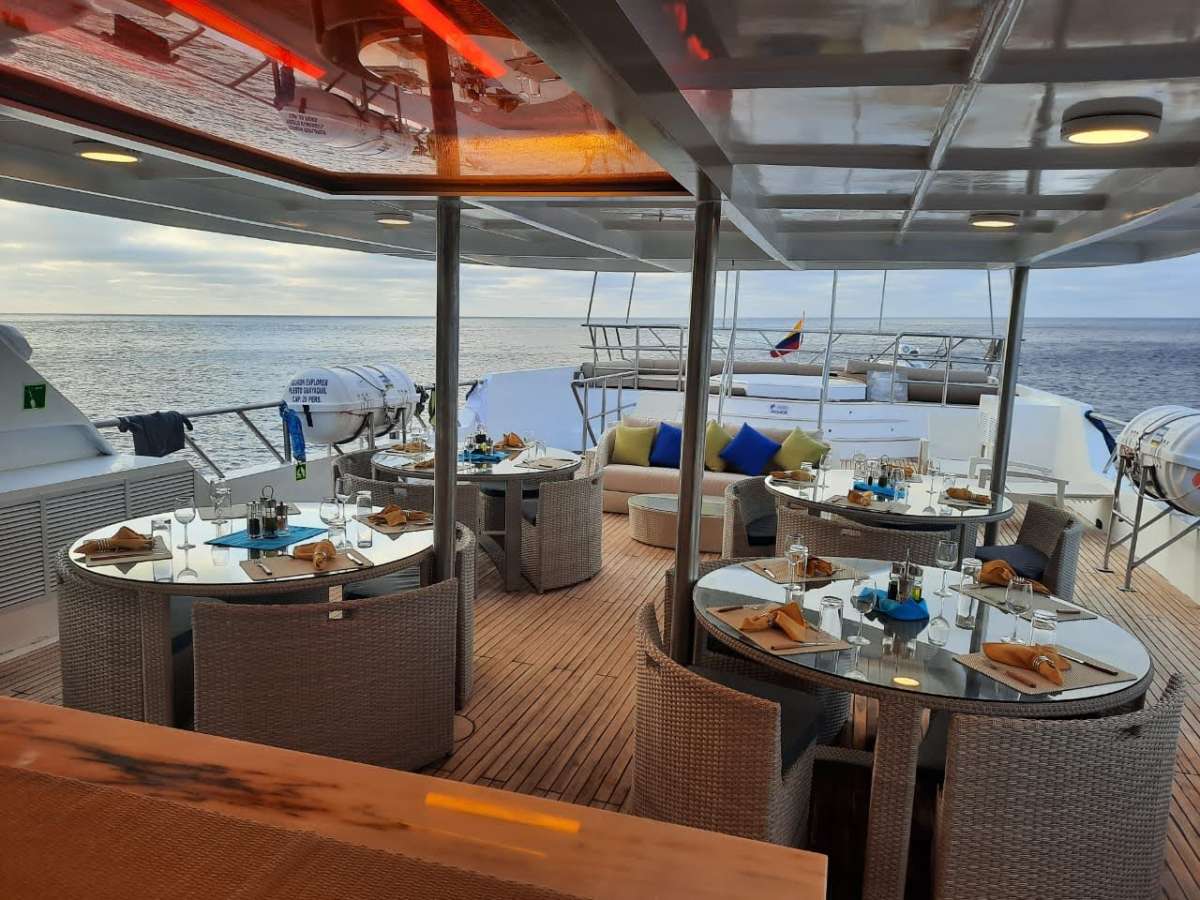
Dining on board is a highlight of the experience. The skilled chef prepares a variety of international and local Ecuadorian cuisine, served in a spacious dining room with panoramic views. Meals are typically served buffet-style, featuring fresh ingredients and catering to various dietary needs. Between dives, guests can enjoy snacks and a selection of local beer and wine, which are often included in the evening.
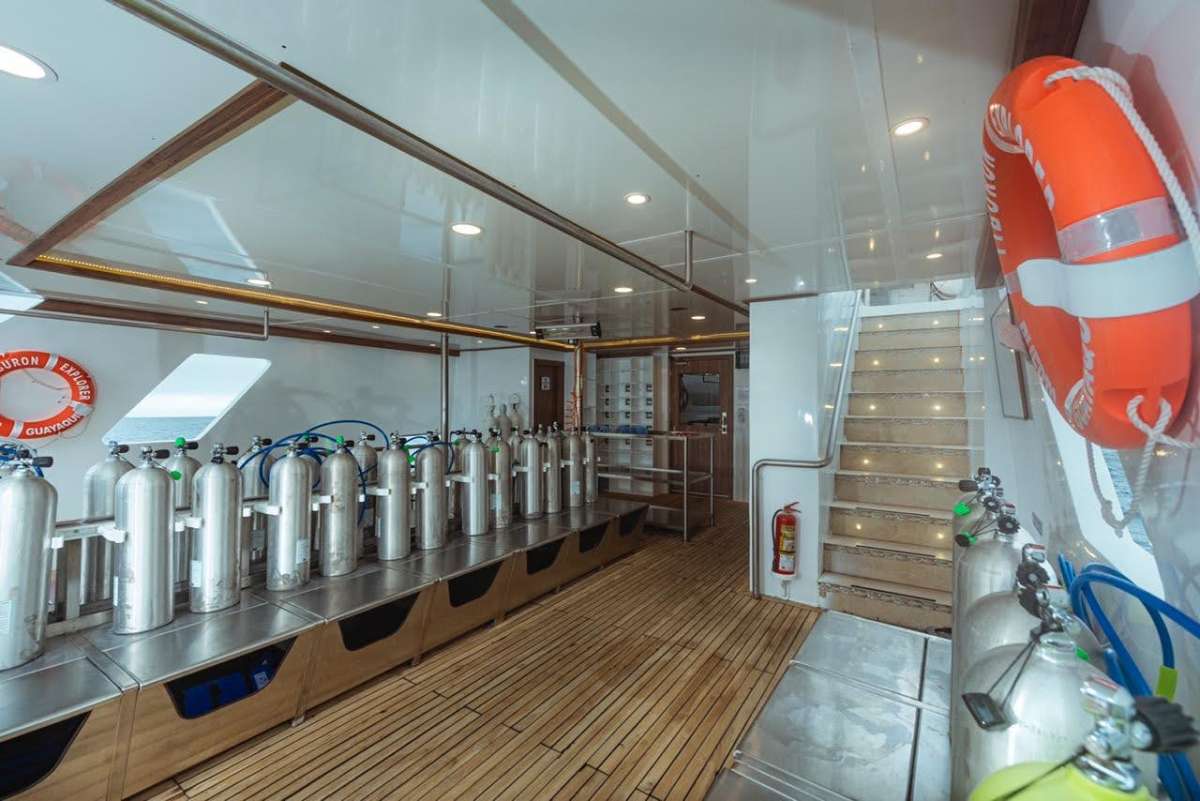
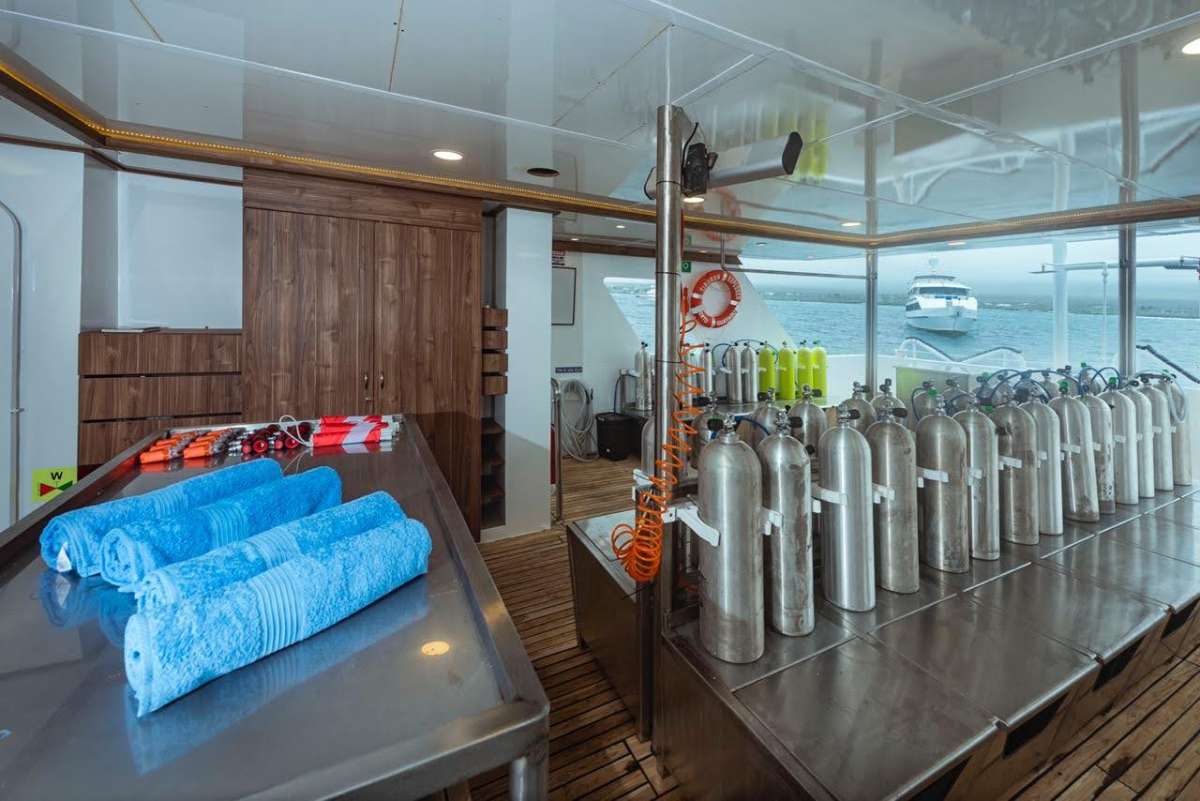
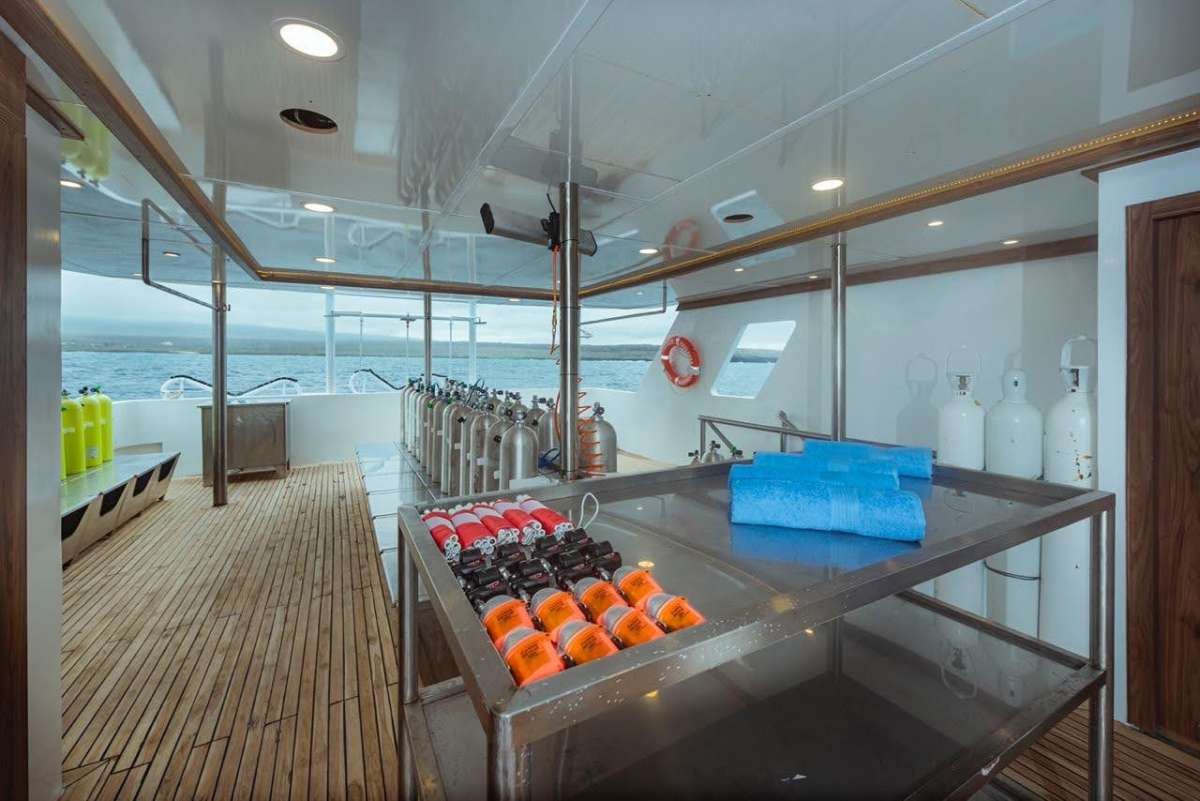
Diving operations are handled from a massive, well-organized dive deck. It is equipped with individual gear bins, a dedicated camera table with charging stations, and a large rinse tank. All diving is conducted from two large pangas (tenders), ensuring easy access to the most remote sites in the archipelago.
Cabin
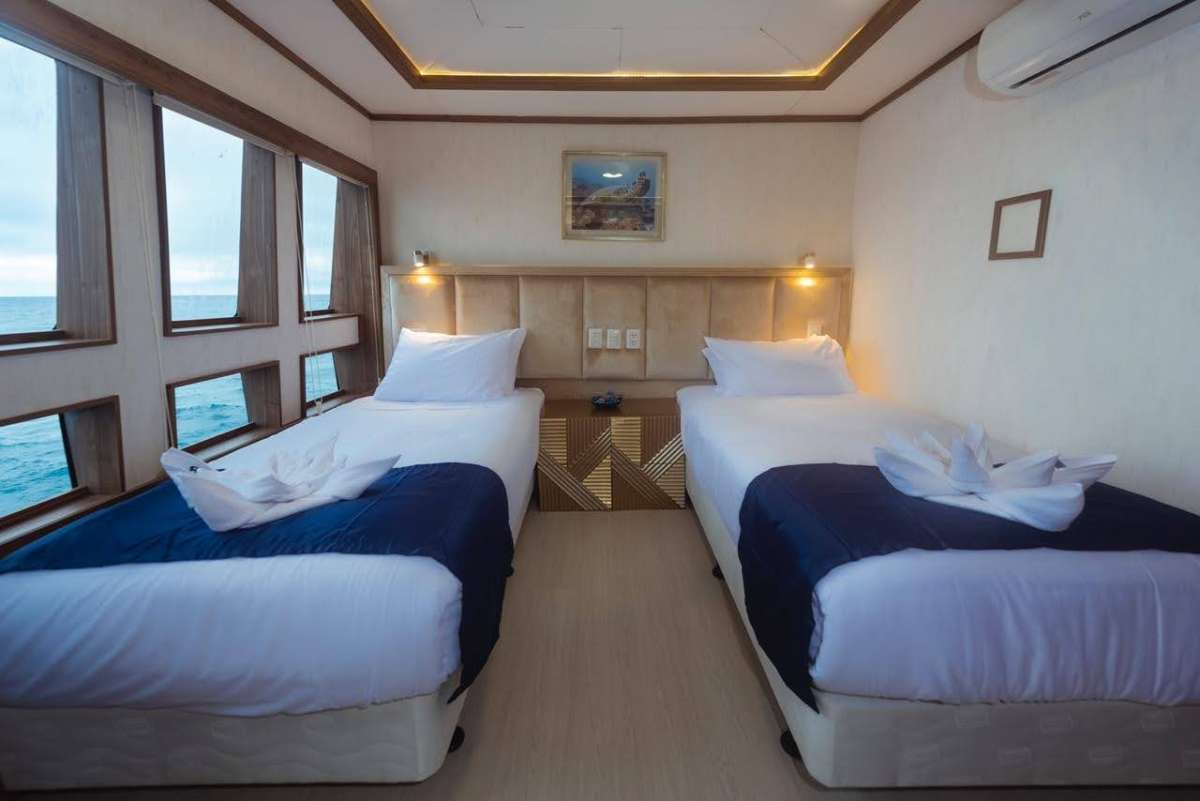
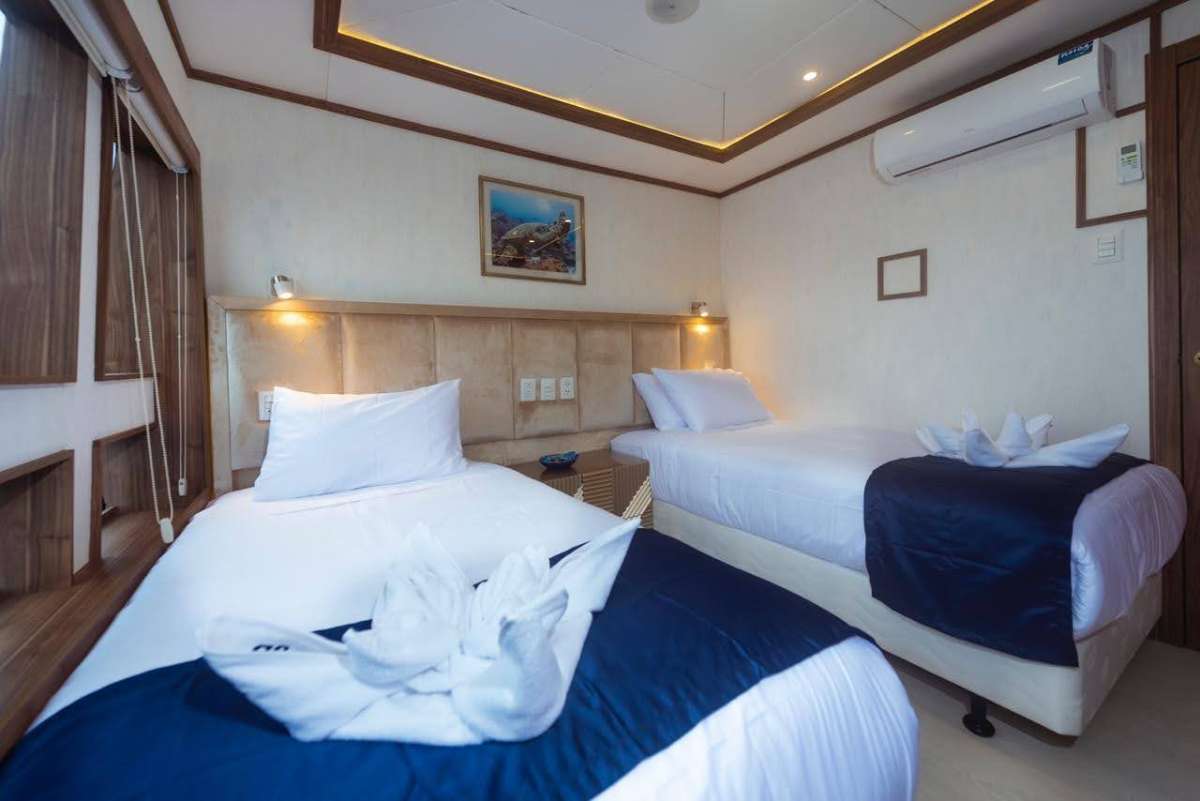
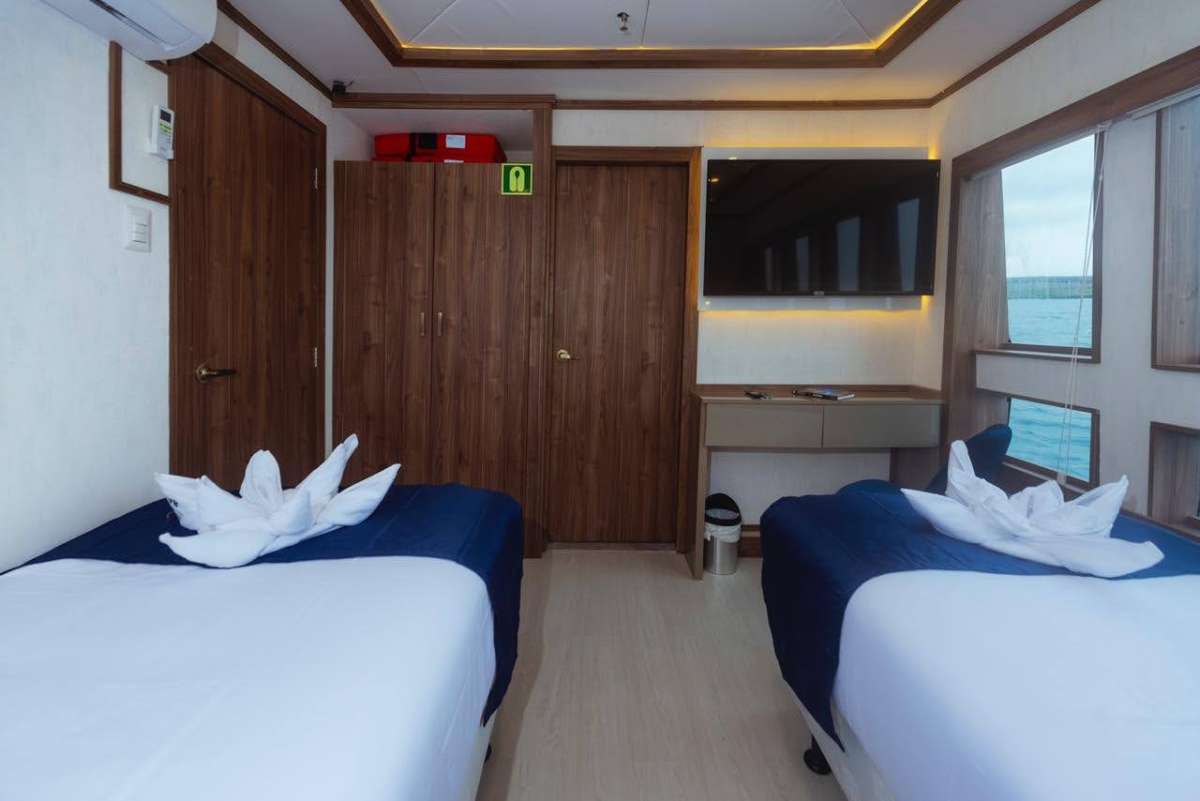
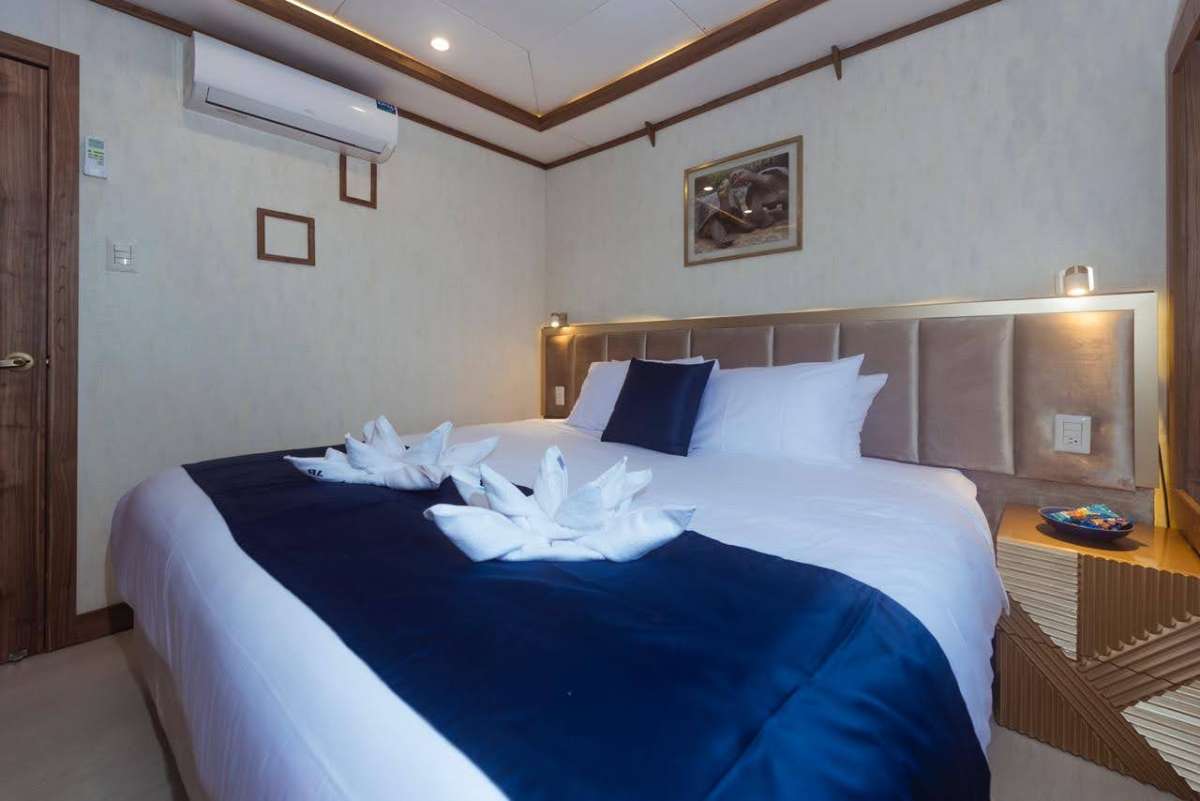
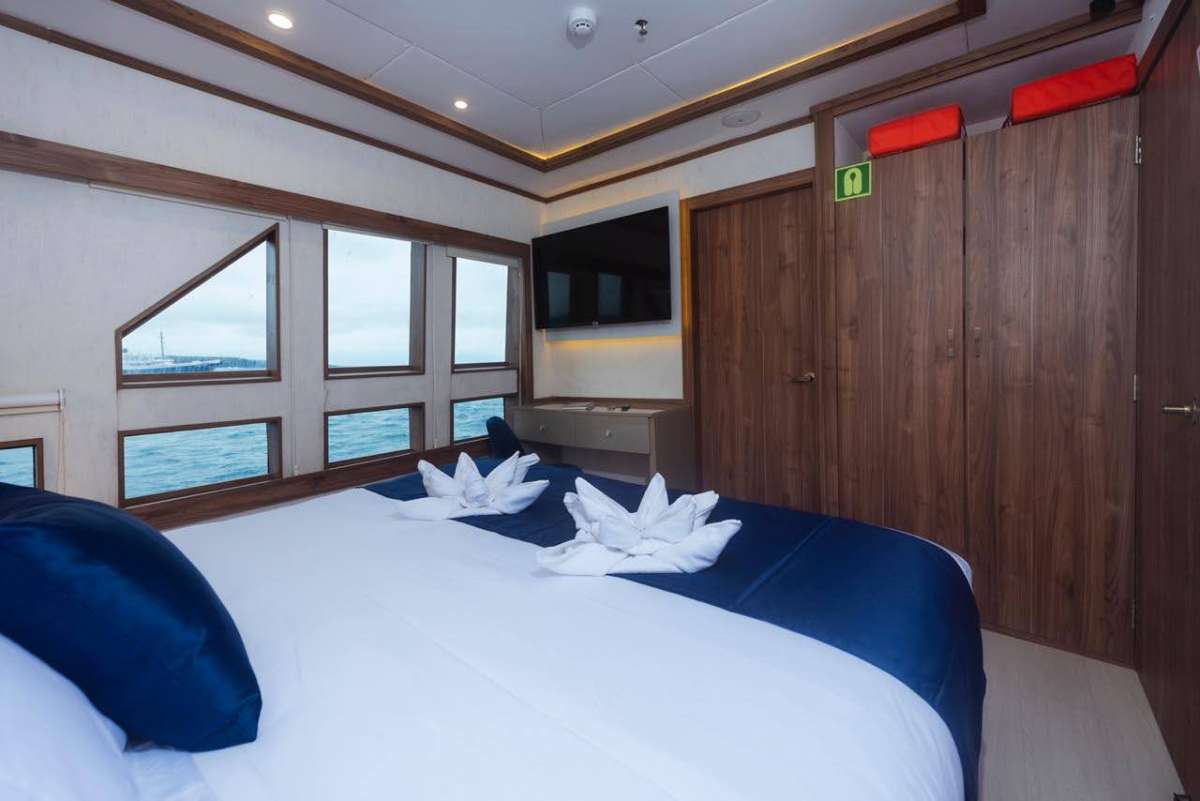
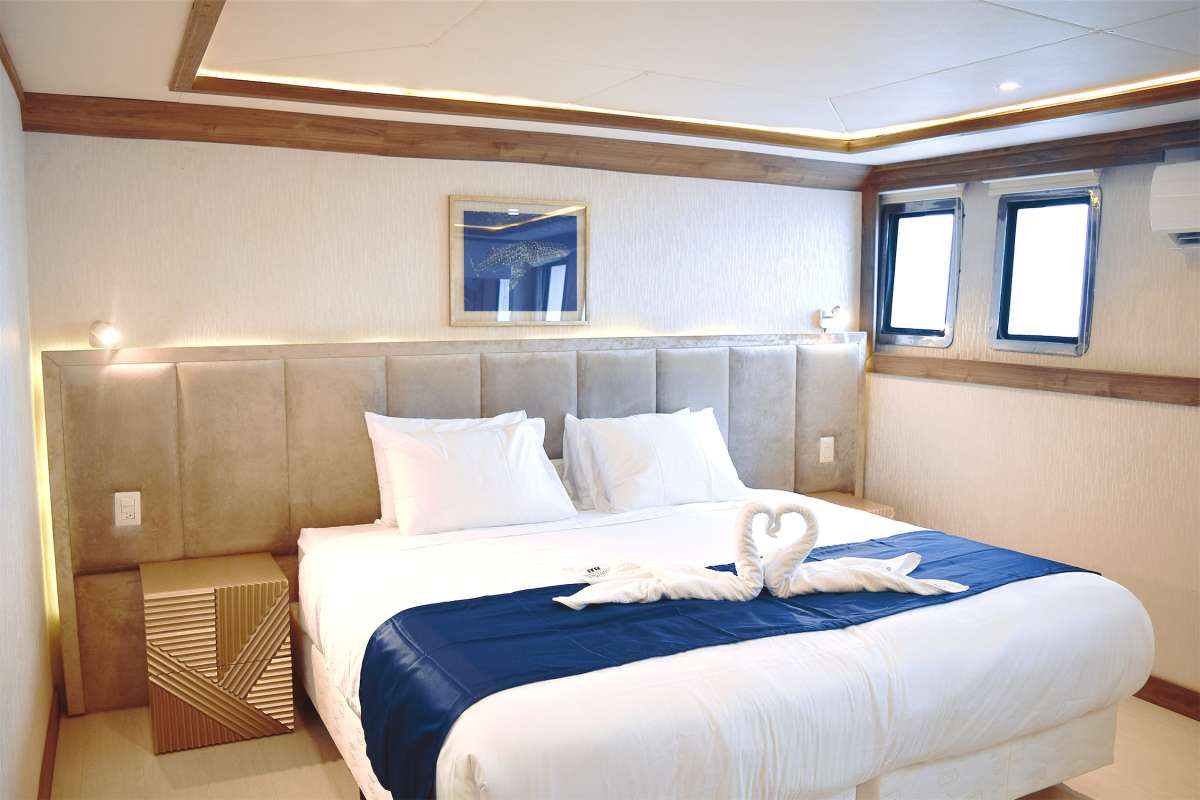
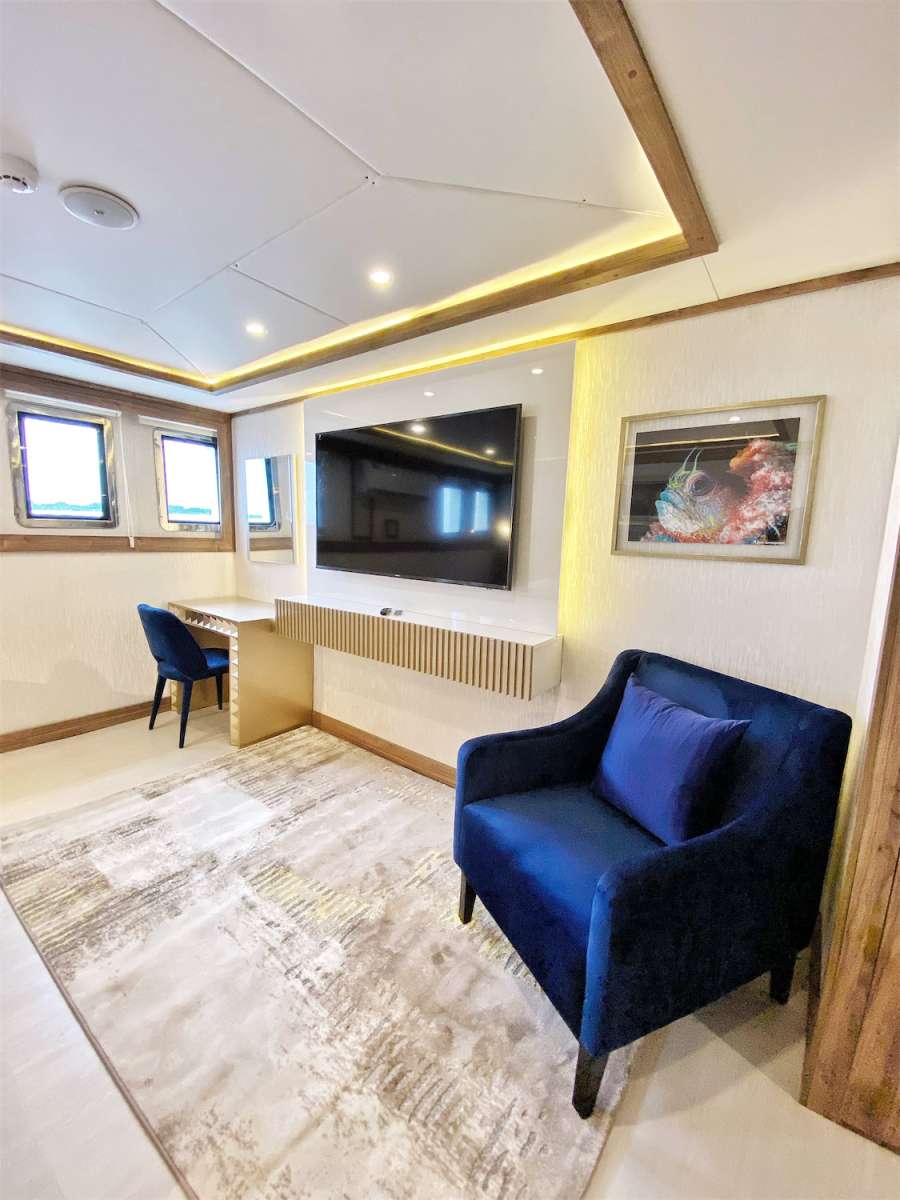
Tiburon Explorer features 8 air-conditioned guest cabins, accommodating up to 16 guests.
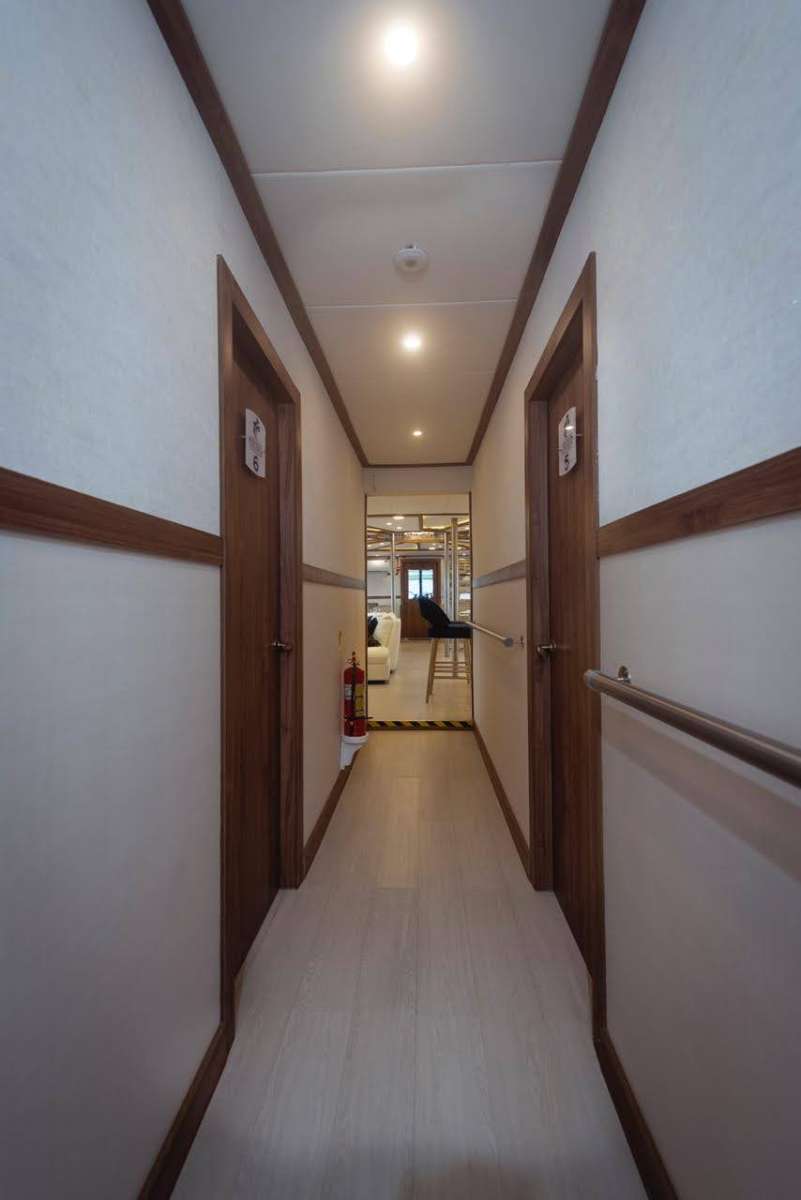
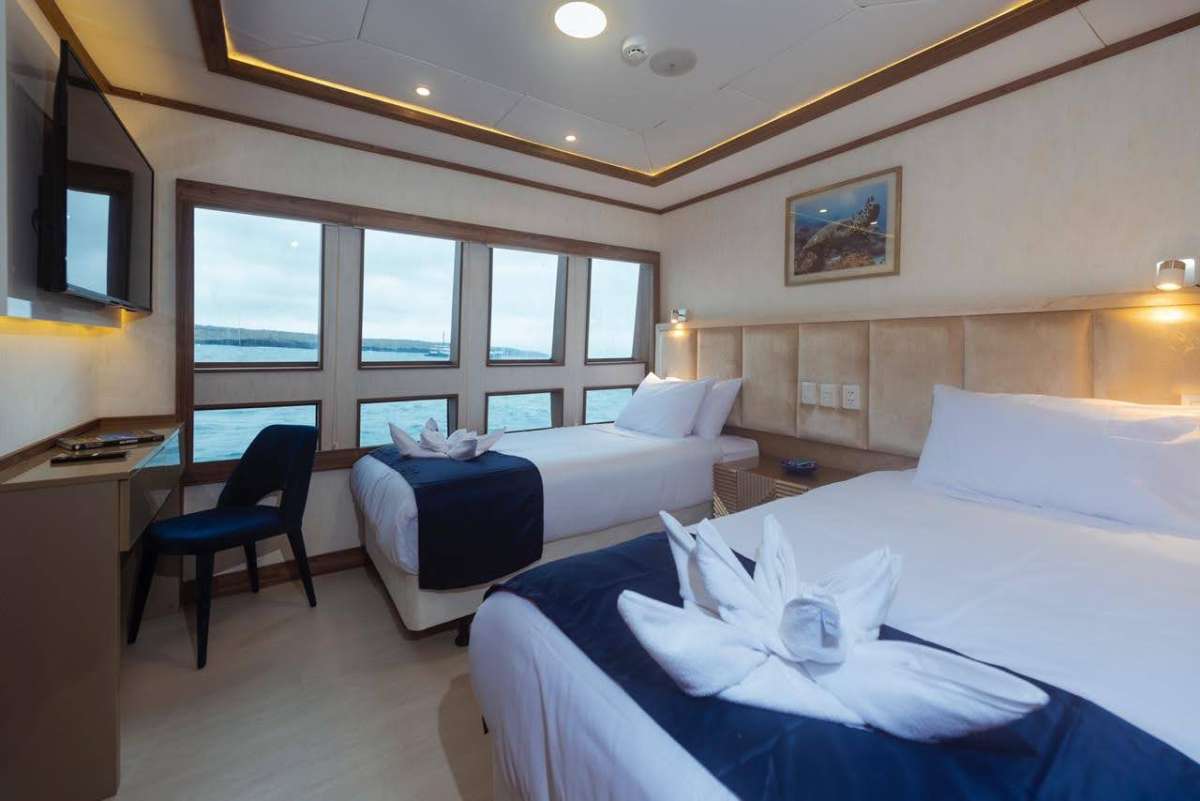
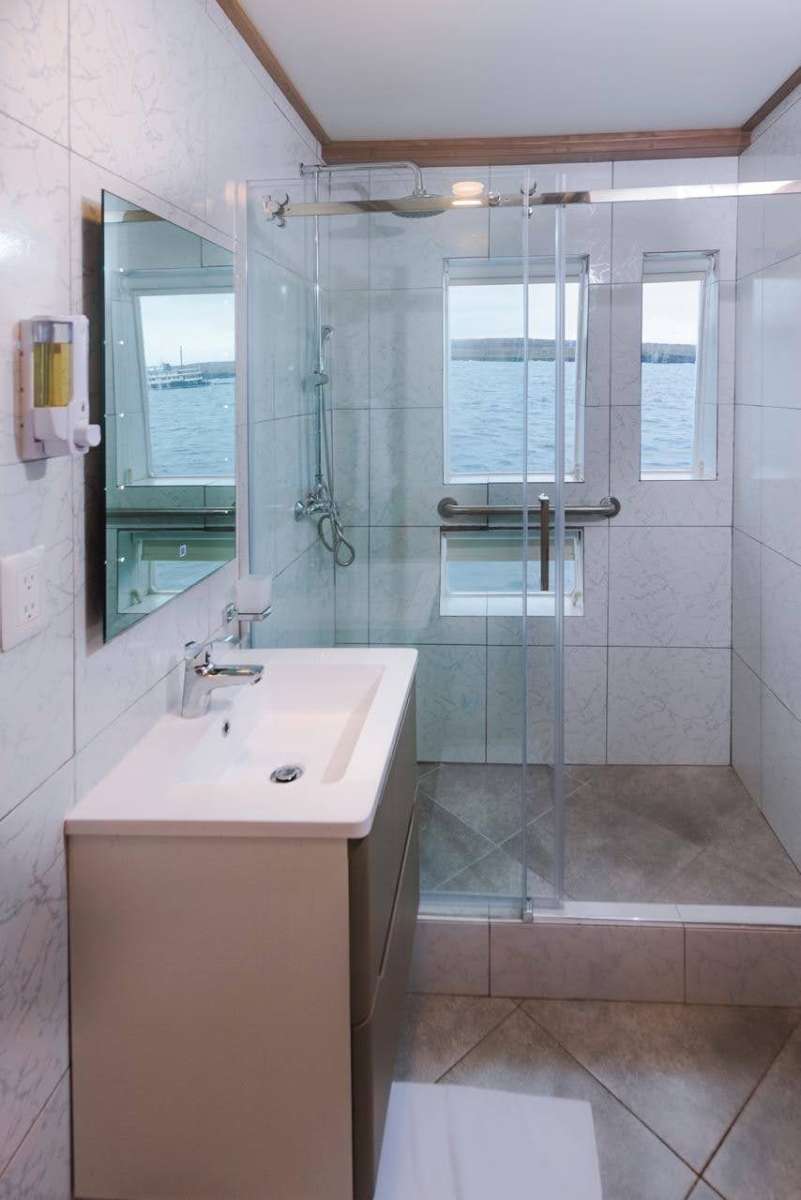
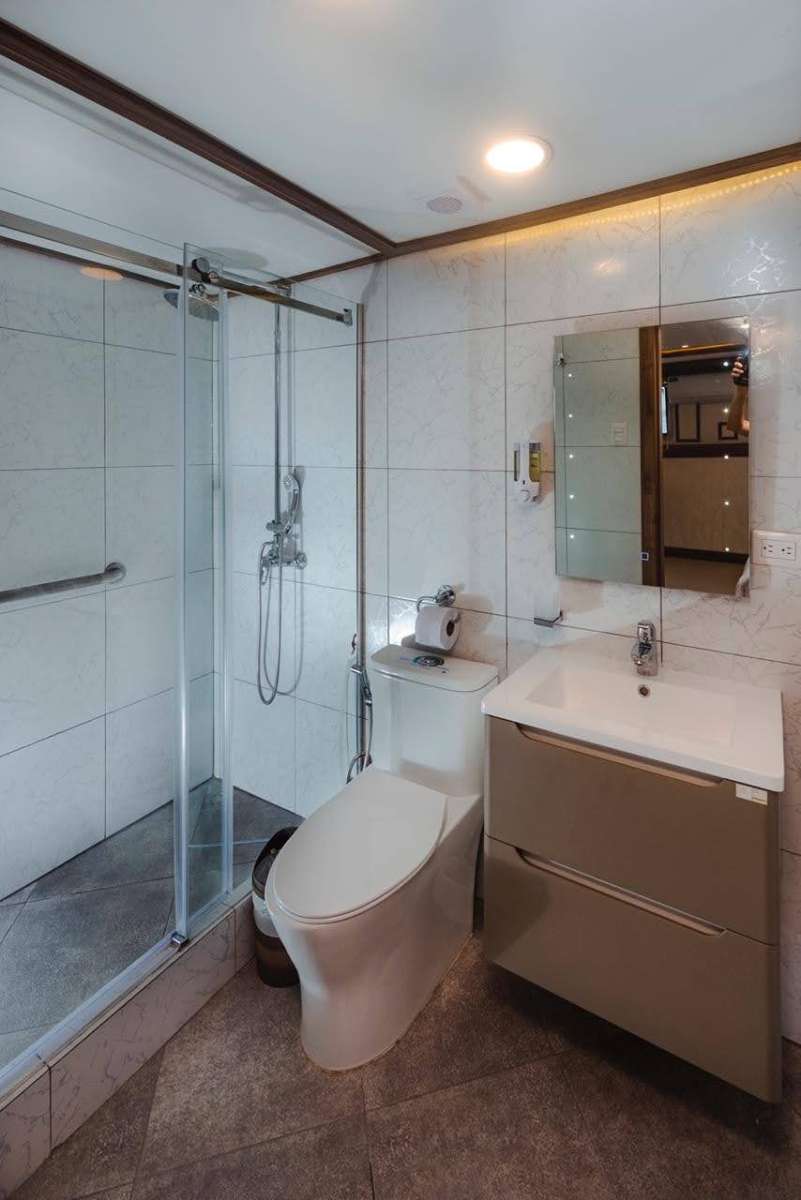
Each cabin is designed for comfort with private en-suite bathrooms, individual climate control, and plenty of storage space for personal belongings.
5 Deluxe Cabins (#2- #6) :
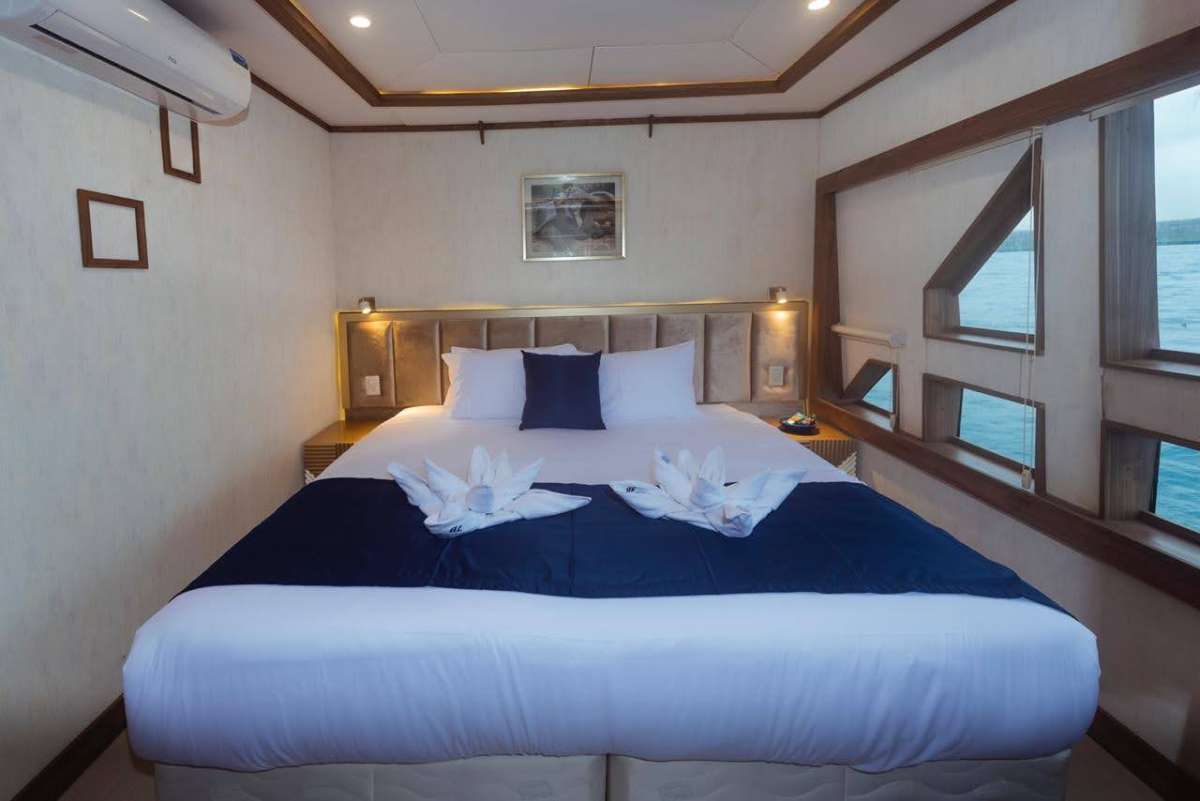
Located on the main deck, each is equipped with two twin beds that can be converted into a king-size bed upon request, seaview windows. (cabin #2 has a queen bed only)
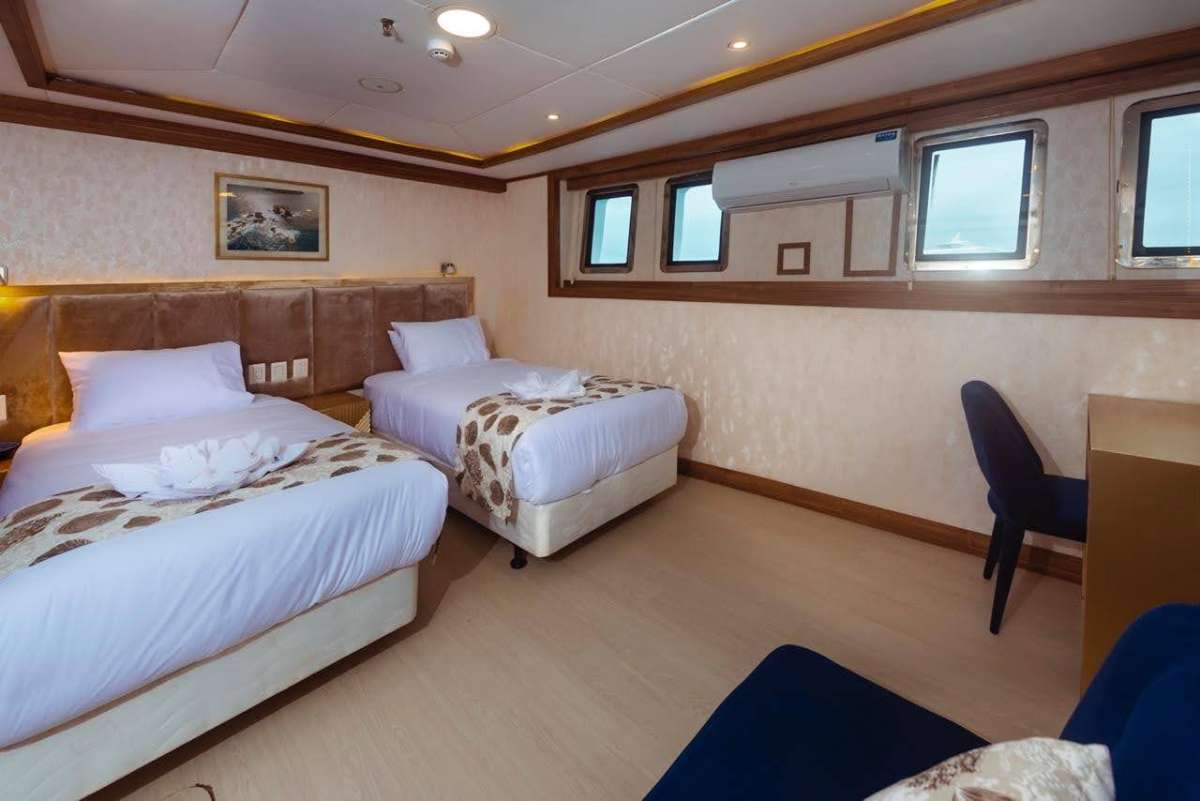
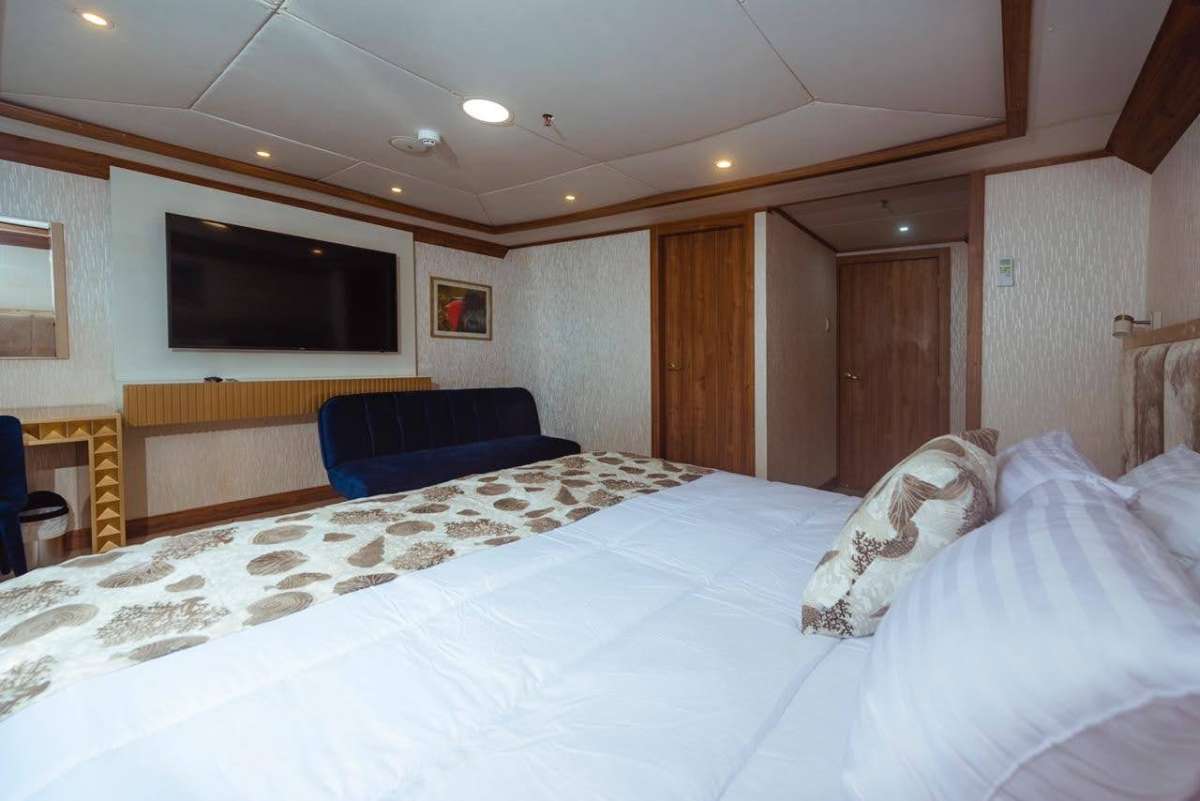
3 Deluxe Cabins (#7 - #9) :
Located on the lower deck, largest cabin type onboard, each cabin comes with two single beds side by side, and can be converted to queen bed, port windows.
Diving
3 dives per day + alternating additional sunset/night dives.
Usually 8D/7N diving trip will offer 18 - 20 dives in total.
Only 1 - 2 dives will be provided on the last diving day.
No dive will be provided on the day of disembarkation.
All diving will provide experienced guide to lead the dive.
Divers must have AOW level with at least 100 logged dives.
Other information
- Nitrox:Available with additional cost
- 15L Tanks:Limited available with additional cost
- Technical Dive: Not available at the moment
- REBREATHER Dive:Not available at the moment
- Dive Equipment Rental:Available with additional cost
- Dive insurance:Divers must have valid dive insurance
- Satellite Wi-Fi :Complimentary for all guests to use
- Laundry Service:Not available at the moment
- Massage Service:Not available at the moment
- Payment on board:By cash (USD) or credit card
- Crew Number:9, include 2 dive guides
Itineraries
Galapagos Sample Itinerary
Day 1: Baltra
Guests fly to the Galapagos Islands from Mainland Ecuador, arriving in the late morning (please make sure to land in Baltra not later than 11:30am). The dive guides will meet the guests at the airport between 11:00 am and 12 pm and escort them to the Galapagos liveaboard, Tiburon Explorer®. Guests will board the vessel, have lunch, organize equipment and listen to the safety briefings.
Day 2: Balta North (2 Dives)
Equipment check, 7:00 and 10:00 dives. Sightings include rays and schools of fish.
Afternoon North Seymour land visit. Walk the path around North Seymour Island to see the large colonies of Blue Footed Boobies and Frigate Birds. Sighting of Sea Lions and Marine Iguanas are also common. Then depart for Cabo Douglas (11 hours).
Day 3: Cabo Douglas (1-2 Dives)
Sightings include marine iguanas.
Transit to Punta Vicente Roca
Punta Vicente Roca (1-2 Dives)
Sightings often include mola mola, turtles and macro life
Transit to Wolf (10 hours)
Day 4: Wolf Island (4 Dives)
6:30, 10:30, 2:00 and 4:30 dives. Sightings often include hammerheads, whale sharks (in season) eagle rays, Galapagos sharks and silky sharks.
Day 5: Darwin Island (4 Dives)
6:30, 10:30, 2:00 and 4:30 dives. Sightings often include hammerheads, whale sharks (in season) eagle rays, Galapagos sharks and silky sharks. Transit to Wolf Island.
Day 6: Wolf Island (3 Dives)
6:30, 10:30 and 1:00 dives
Sightings often include hammerheads, whale sharks (in season), eagle rays, Galapagos sharks and silky sharks.
Transit to Cousin’s Rock (20+ hours)
Day 7: Cousin’s Rock (2 Dives)
6:30 and 9:30 dives. This is a great macro diving with an excellent chance of seeing sea horses, sea lions and eagle rays. Lunch will be served while transiting to Santa Cruz (3 hours). Travel by bus to the Santa Cruz Highlands to visit the giant tortoises in their natural habitat. Transfer to the town of Puerto Ayora. Dinner on your own in Puerto Ayora. Return to the Tiburon Explorer at 8:30pm.
Day 8: Baltra Island
Depart the vessel by 9 am. Transfer to the airport.
About Arrival
Please note: Transfers between airport (Baltra/GPS) and vessel for same day arrivals & departures are included. If you are arriving early and staying on Santa Cruz Island or arriving from another island, please meet the boat representative at the airport arrivals area at 11:30am. Departure from the Baltra airport to the boat is at 12 noon. Please note you must arrive at or before 11:30 am in Baltra airport. If you decide to take a later flight, there will be a charge of $150 per reservation to contract a guide to meet you at the airport and take you to meet the boat. It is not possible to go on your own.
Please note: If you decide to arrive in Galapagos in the days before the cruise and stay in a hotel in Puerto Ayora, there are two ways to meet our guides to go to the boat:
1: You can leave your hotel by 10 am and take taxi( $30 and 40 minutes) ,ferry ( $1 pp and 10 minutes) and Lobito bus ($5 pp and 10 minutes) to Baltra Seymour airport. You can meet our guide in the arrivals area before 11:30 am.
2: We can send a taxi to pick you up at your Puerto Ayora hotel between 11:30 and 11:45 am. Each taxi costs $30 and can be shared by up to 4 people. The drive across the island takes about 40 minutes, directly to meet the zodiacs to go the boat.
Schedules & routes
Prices & conditions
Included
- Transfers from airport and/or hotel to the yacht
- VAT and local taxes
- Full-board meal plan (including snacks)
- Complimentary beverages (water, tea, coffee)
- Alcoholic beverage
- Soft drinks
- Diving activity (incl. tanks, weights, weight belts)
- Dive guide service
- Naturalist guide
- Land excursions and activities throughout the trip
- Boat accident insurance
- Cabin towels and complimentary toiletries
- Cabin cleaning service
- Wi-Fi
Not included
- Marine park fees & Port fees
- Fuel surcharge
- Dinner ashore the night before disembarkation
- Dive equipment rentals
- Larger tank (15 L)
- Nitrox fills
- Dive insurance (mandatory requirement)
- Travel insurance (trip cancellation insurance)
- Crew gratuity
Useful information
Ecuador (Galapagos)
Best time for diving
There is no "wrong time" for Galapagos! There are two seasons in the Galapagos : The Manta season (Wet season, warmer water) - December to May, the Whale shark season (Dry season, cooler water) - June to November. Any time is a good time, as you'll see more species in Galapagos on a bad day than you see in most dive sites around the world on the very best day. However, Dive and Cruise team do recommend to visit Galapagos between mid June and November, as the chances of seeing whale sharks are definitely higher and the schools of hammerheads usually tend to be bigger in this period.
The average visibility is around 10 - 30 meters. Currents can be very strong at times, and the surface conditions can be choppy.
About temperatures
Air : Wet season (Dec - May) is between 23°C - 30°C, Dry season (Jun - Nov) between 21°C - 27°C. Evening temperatures can drop to just 15°C.
Sea : Wet season (Dec - May) is between 18°C - 26°C - with the western part of Galapagos being the coolest at 17°C -19°C. Dry season (Jun - Nov) between 17°C - 25°C - with the western part of Galapagos being the coolest at 15°C -18°C. Wolf and Darwin are usually between 24°C - 25°C all year.
Wetsuit Recommendation
Thermoclines are to be expected throughout the year and divers are advised to bring suitable thermal protection for all expected temperatures. We recommend 5mm - 7mm wetsuit with additional layers (shorty / skin-suit /vest / hood) for cooler waters and gloves for warmth and support in strong currents.
Diver requirement
Diving in Galapagos can be challenging even for experienced divers. Strong currents and tough conditions are not rare. Therefore, all liveaboards require divers to have at least AOW certification with minimum 50 logged dive. In addition, we strongly suggest divers to get some experience in strong currents and reduced visibility! You can find out more information about diving in the Galapagos Islands here : Galapagos
Embarkation / Disembarkation
Depends on the liveaboard you pick, the embarkation and disembarkation is either San Cristobal (SCY) or Baltra (GPS) in the Galápagos islands.
Guests need to take their international flights to Quito (UIO) or Guayaquil (GYE), in mainland Ecuador at least one day before the embarkation.
Flights to the Galápagos Islands originate in Quito, making a quick stop at Guayaquil, then carrying on to the islands and do the reverse on the way back.
One the day of embarkation, please at the airport in Quito or Guayaquil one and a half hours (90 minutes) prior to departure for check-in. A Transit Control Card (also referred to as TCT card) is required for travel from mainland Ecuador to the Galápagos Islands. The cards are obtainable from the INGALA booths at Quito and Guayaquil Airports before checking in for your flight to the Galapagos, and cost 20 USD.
Upon arrival in Galápagos, passengers form a line to process passenger Passports and Park entrance fees in cash. Then you will meet the pickup crew outside of the airport door with a sign.
Visa Requirements
There is no visa requirement for most foreign visitors who carry passports with at least six months’ validity from their entry date. Please contact your nearest Ecuadorian embassy / consulate for the latest requirements.
Vaccinations
Proof of yellow fever vaccination is mandatory for anyone arriving from regions where the disease is prevalent, such as Brazil, the Democratic Republic of Congo and Uganda (including airport transit).
Insurance Requirements
In addition to the mandatory Dive insurance, a Travel health insurance is a mandatory requirement for entry into Ecuador. All foreign tourists are required to have travel health insurance which covers the entire duration of their intended stay in the country. Traveller who are unable to provide proof of insurance may be denied entry.
Ban on plastic
Since 2018, single use, non-recyclable and non-biodegradable plastics have been banned in Galapagos. Before travelling, please ensure that plastic packaging is removed from any items you are bringing with you.
Money Matters
The local currency in Ecuador is the US Dollar (USD). Larger hotels, resorts, shops and restaurants will normally accept Visa and Mastercard for which a charge of 4 – 10% may be levied.
Drones
Tourists are NOT permitted to fly camera drones anywhere in the Galapagos Islands. Please refer to Drone Laws in the Galapagos Islands for more details.
Extending your holiday
We offer a range of hotels/resorts, land-based diving packages, and excursions that can be arranged before or after your liveaboard holiday. Just ask us if you need such service.
Diver's reviews (3)
Photos