- Best-Price Guarantee
- 24/7 Expert Support
- No Booking Fees
- Direct with Operators
- 500+ Boats Worldwide
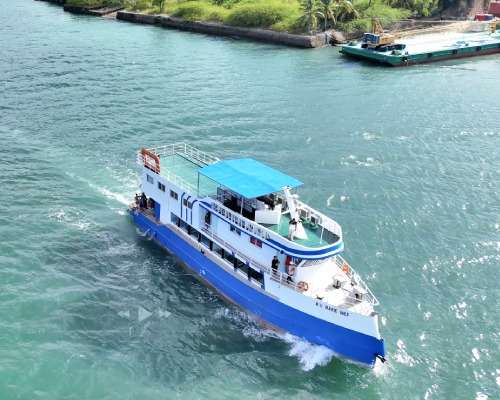
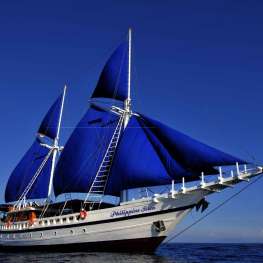
Marie-Inès is a 25-metre Philippines diving liveaboard for a maximum of 16 guests in eight main-deck, ensuite and individually air-conditioned cabins. Two cabins have one queen-size bed and six are two-berth rooms. A 1:4 guide ratio, Nitrox system, dedicated camera-rinse tank, shaded social decks and routes including Tubbataha, Coron, Southern Leyte, Bohol, Apo Island and Siquijor make her a compact base for multi-day diving and snorkelling cruises.
Description
Boat
MV Marie-Inès is a purpose-arranged liveaboard for scuba diving and snorkelling expeditions in the Philippines. Launched in June 2019, she measures 25 metres long, 6.5 metres wide and has a published draft of 1 metre. Her normal cruising speed is approximately 10 knots, and the operator caps accommodation at 16 passengers. The public page says the vessel has been refurbished, but it gives no completion date or detailed scope; a future listing should not turn that statement into a dated “latest refit” claim without written confirmation.
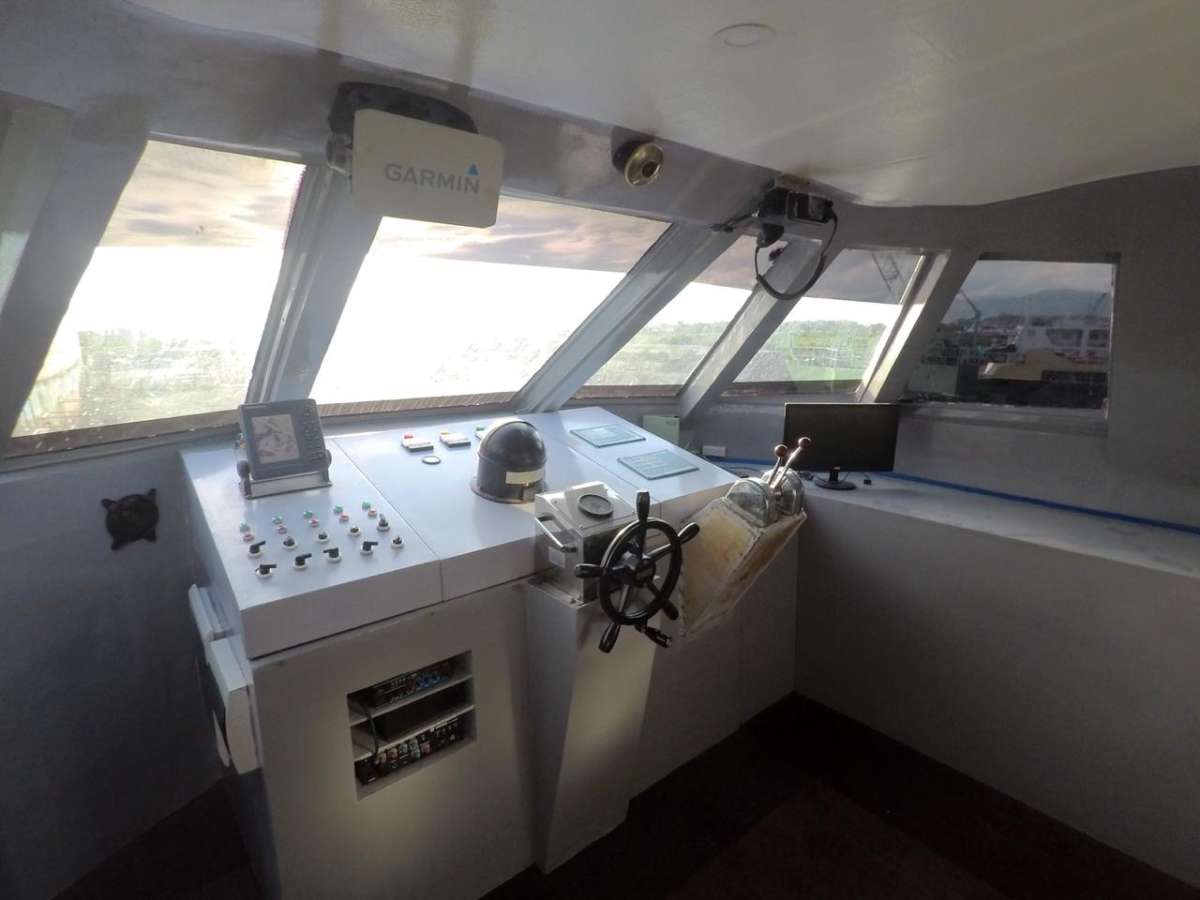
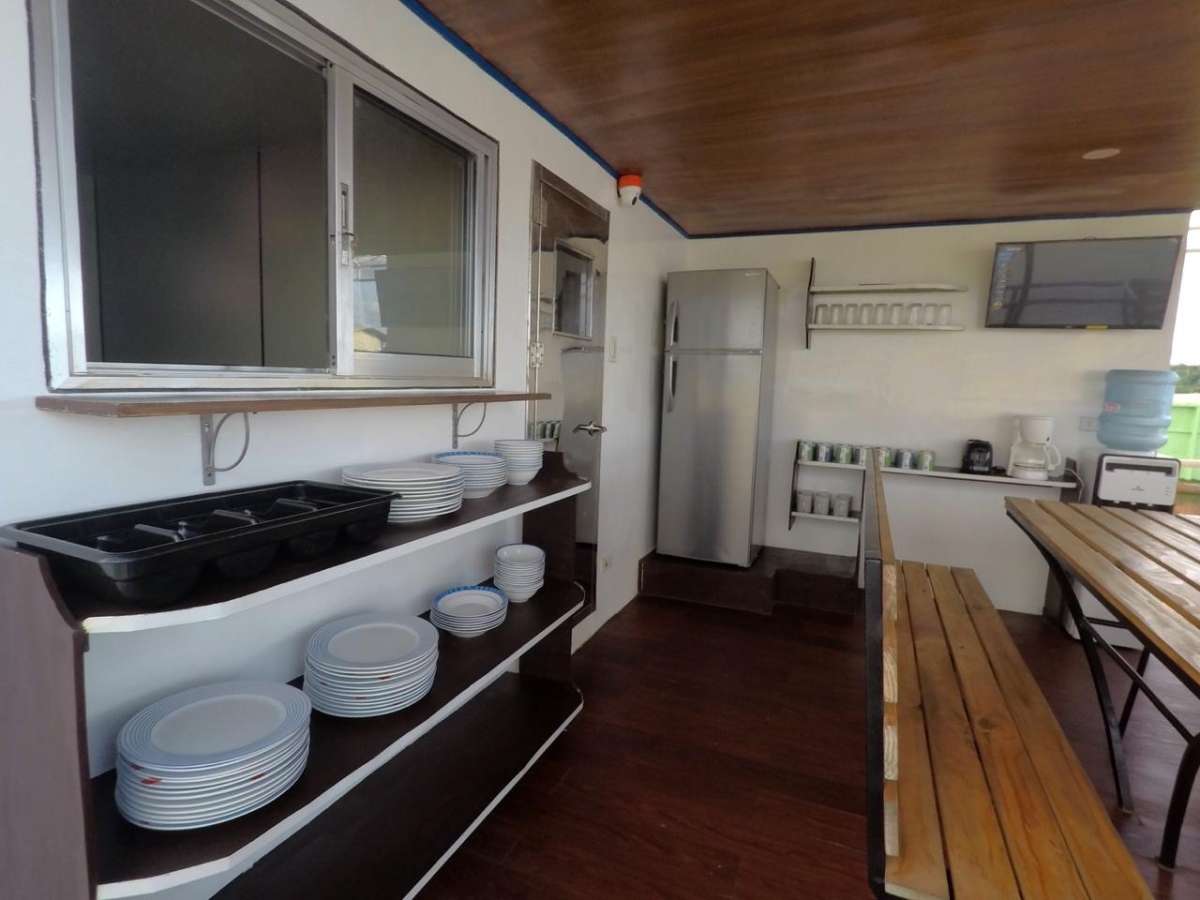
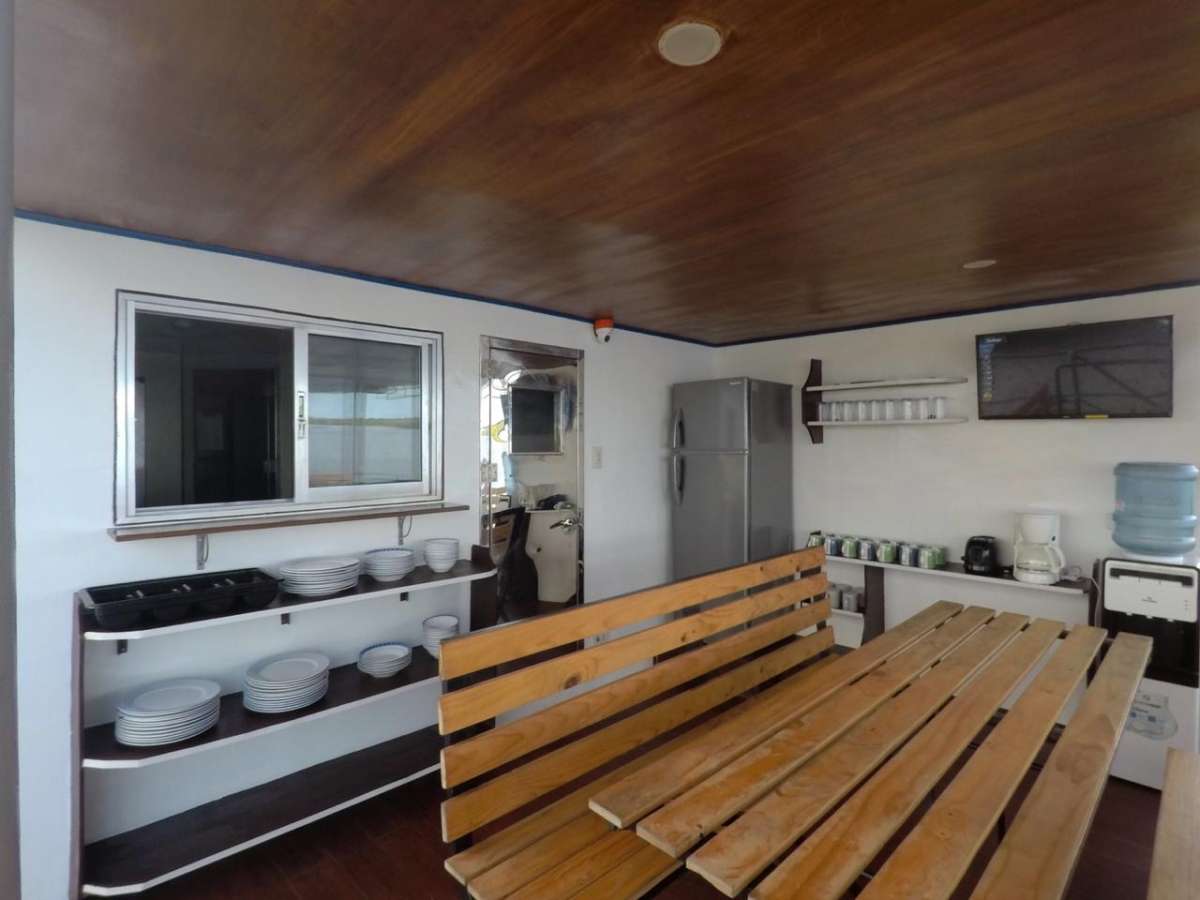
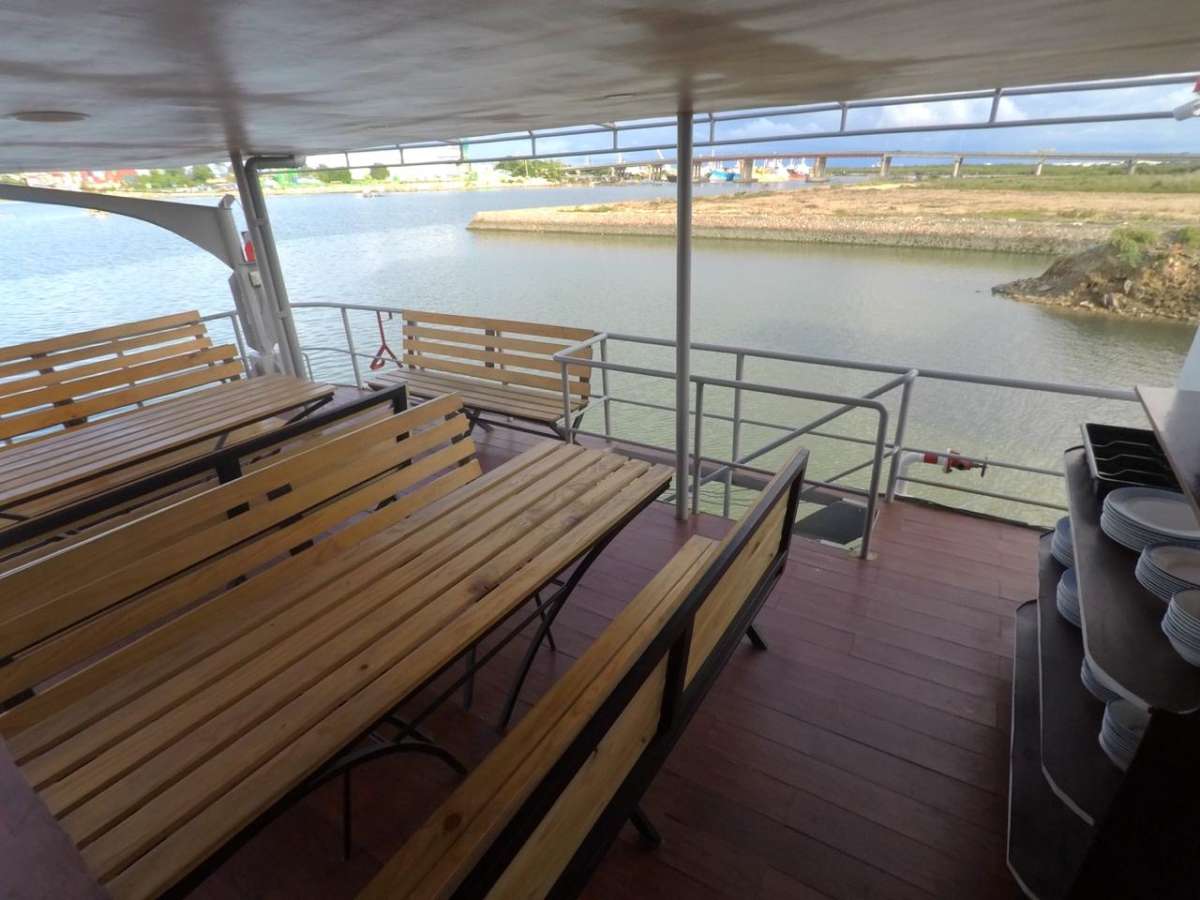
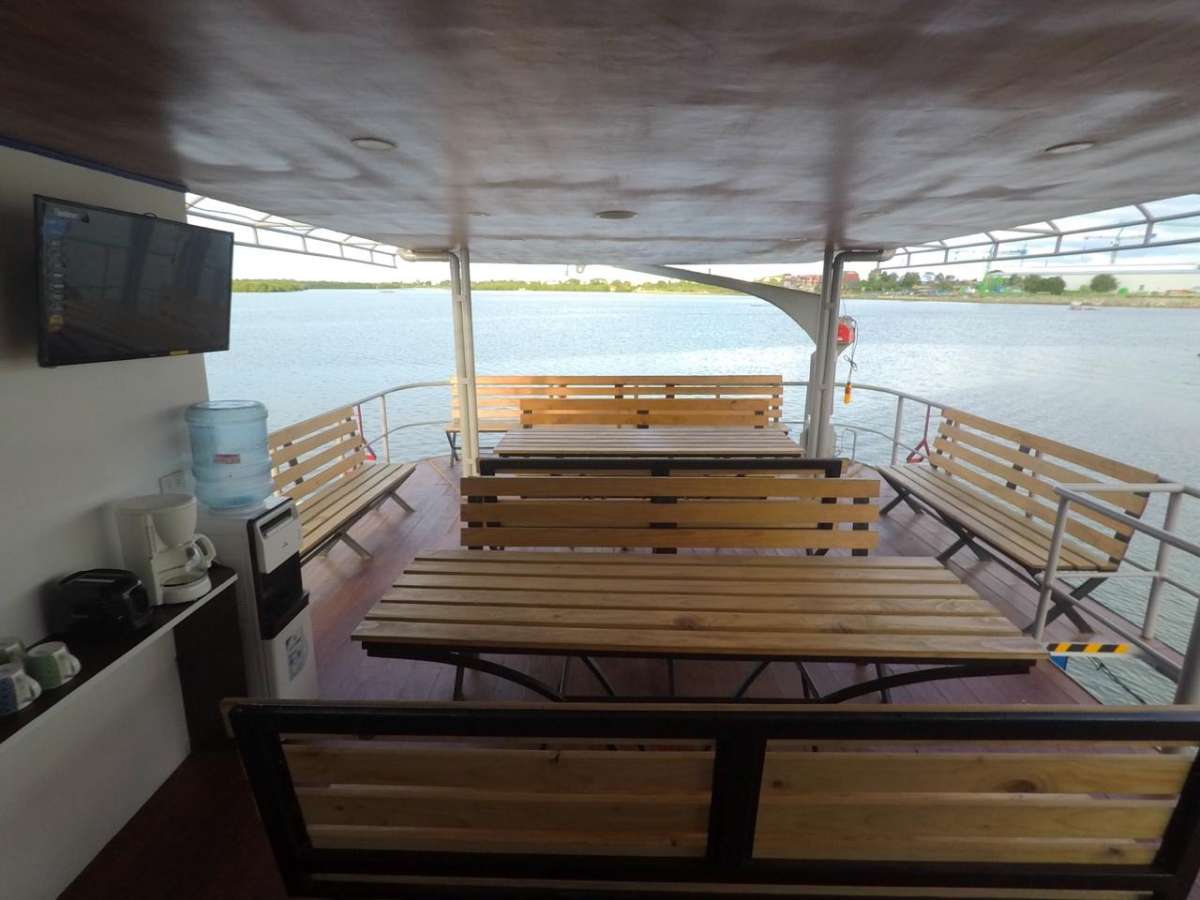
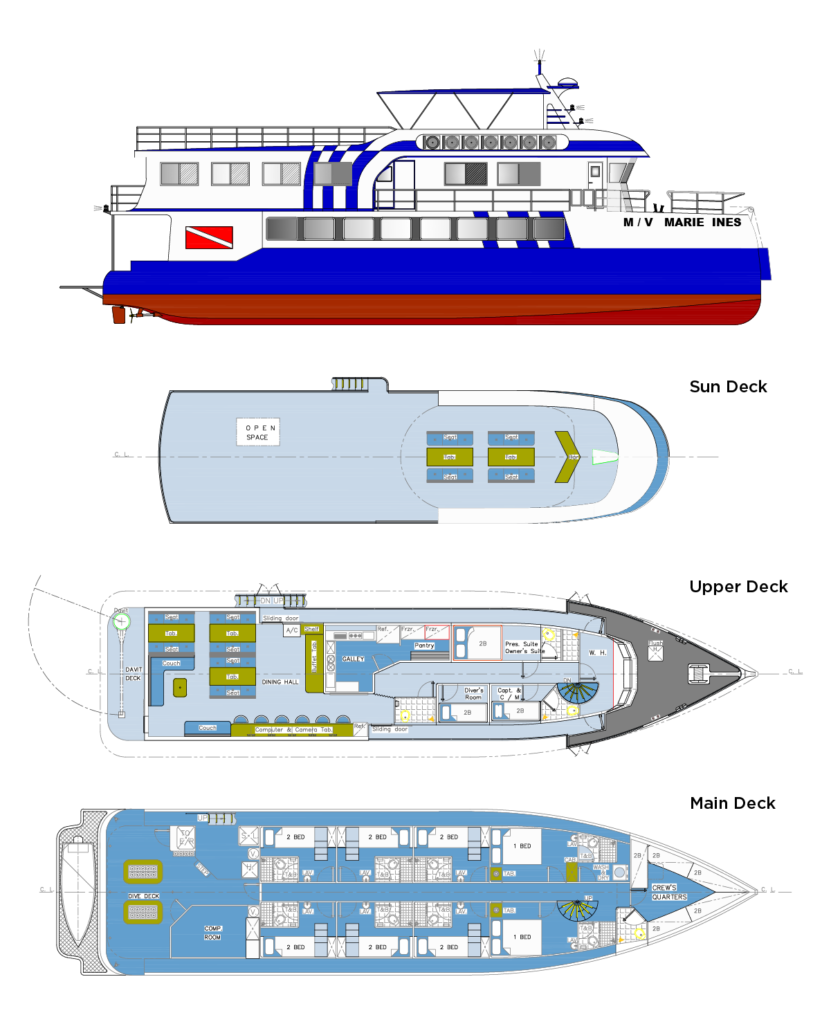
All eight guest cabins occupy the main deck. The upper deck is organised around an air-conditioned restaurant, adjoining galley, lounge, bridge and aft working area. Meals are presented as self-service buffets, while the lounge provides seating, a television and numerous charging points. Above, a broad sun deck extends over most of the vessel, with canvas shade, benches and tables for surface intervals and open views. No lift, accessible cabin or step-free route is published, so guests with limited mobility should ask about stairs, thresholds, deck surfaces and tender boarding before booking.
The technical sheet lists two 185 hp marine diesel engines, two 30 kVA generators, a 1,300-litre diesel capacity and 24-hour 240-volt electricity. Universal adaptors are provided in each cabin according to the operator's FAQ. Power remains a marine service, so high-draw personal appliances should only be used with crew approval and batteries should never be charged unattended.
The operator's freshwater figures conflict. The descriptive page states two 10,000-litre tanks, whereas its technical table states 10,000 litres plus an Alfa Laval desalination unit. Both establish onboard watermaking, but they do not establish one reliable total tank capacity. The correct figure should be confirmed directly, and guests should still follow the crew's freshwater-conservation guidance.
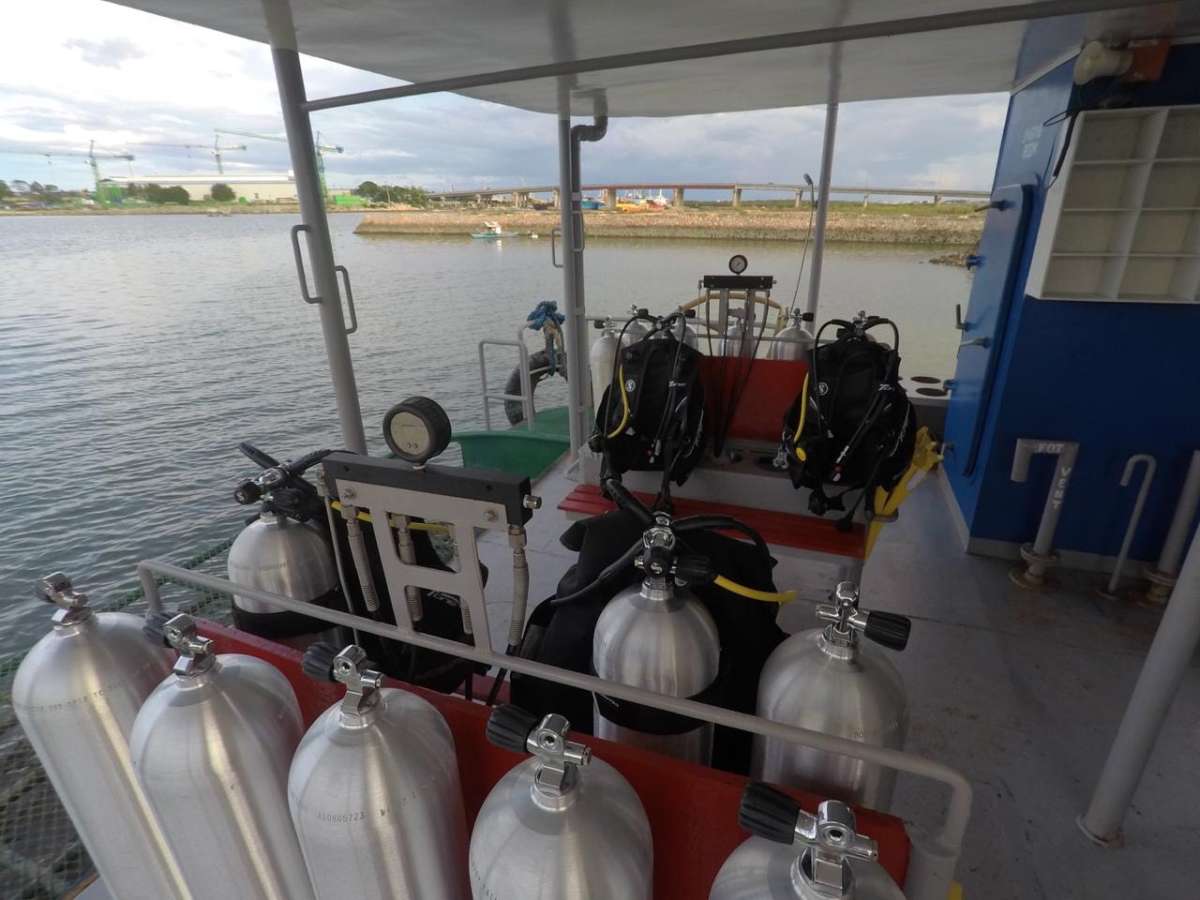
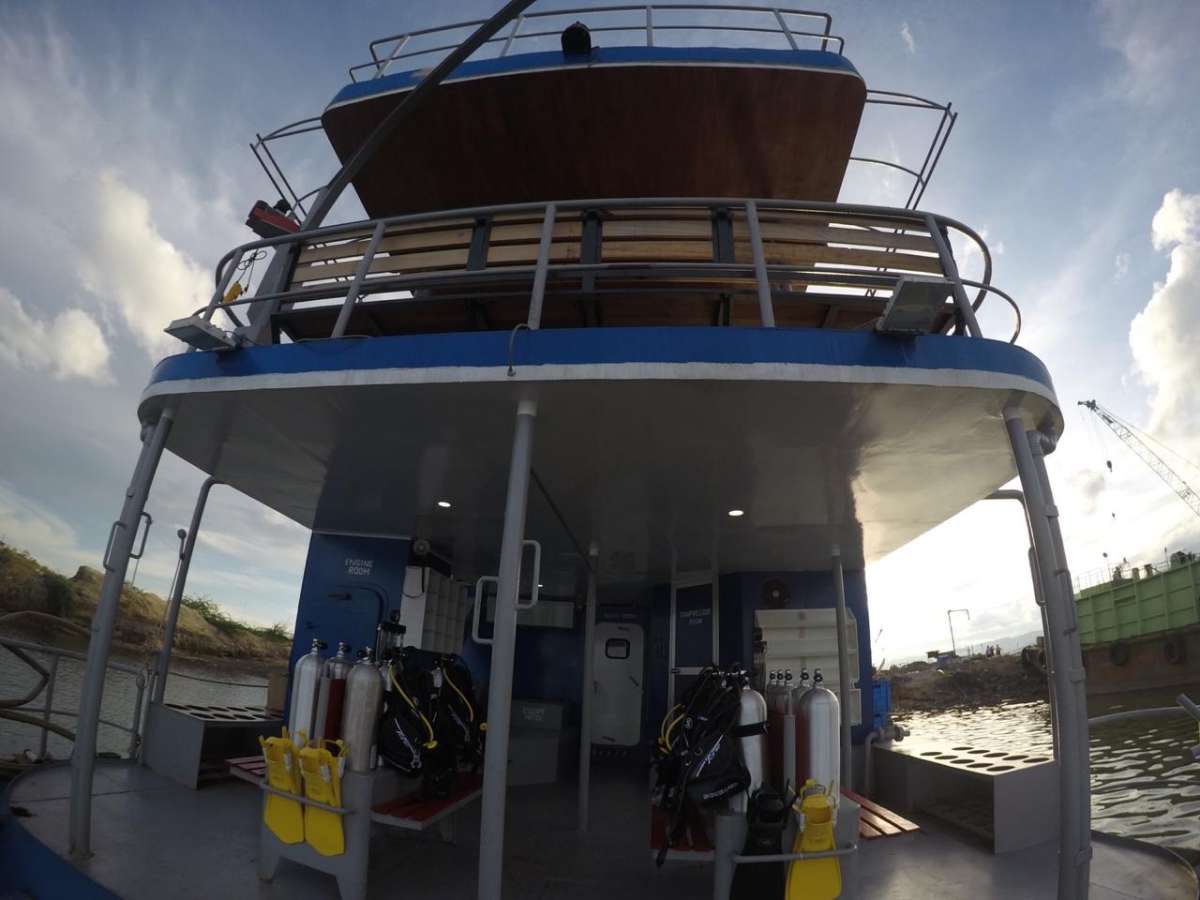
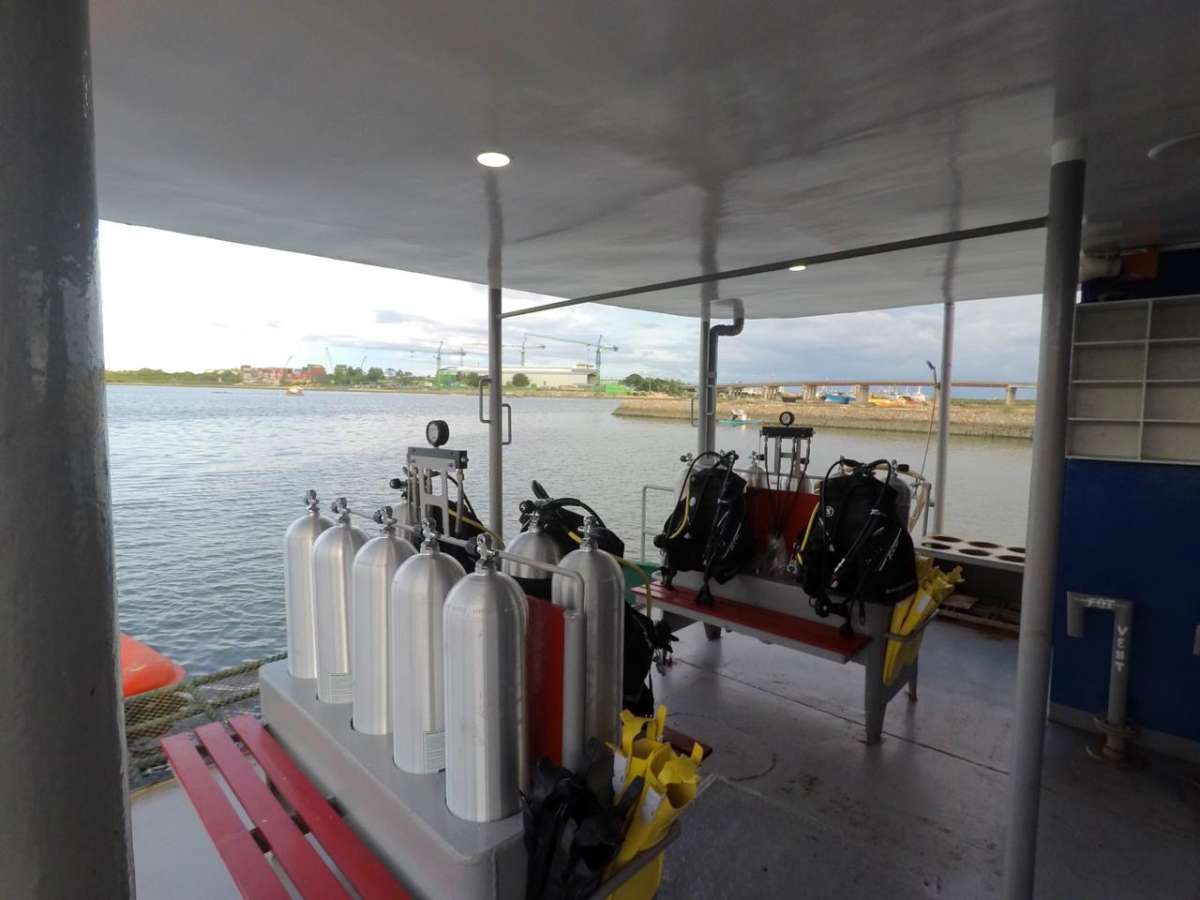
The stern dive platform has individual equipment positions, lockers, two outdoor showers, towels and a separate rinse tank intended for cameras. A low platform near water level supports direct entries when the site is suitable. For sites that the mothership cannot approach, the boat carries a published 5-metre fibreglass tender with a 25 hp Yamaha four-stroke outboard and stated capacity of 14 people. The crew decides whether diving begins from the main platform, by tender or in more than one shuttle.
Published emergency equipment includes two liferafts, lifejackets, lifebuoys, marine and satellite radios, AIS, visual and audible signals, emergency oxygen and first-aid supplies. The bridge also carries the navigation systems required by the operator. Equipment lists can change and do not replace the embarkation briefing; every guest should learn the muster station, alarm signals, oxygen location, tender procedure and lost-diver protocol onboard.
The public boat page describes 11 team members, while the technical table breaks this down as 10 crew plus one course director. A separate tipping FAQ refers to 12 people because it includes an office secretary in the tip pool. The clean operational description is therefore 11 people assigned to the vessel, with final staffing dependent on the departure.
Food combines Filipino and international dishes prepared from locally sourced ingredients where available. A typical diving day starts with tea, coffee and fruit, followed by breakfast after the first dive, lunch, an afternoon snack and dinner. Water, coffee, fruit juice and other non-alcoholic drinks are included; alcoholic drinks are sold separately. Vegetarian, vegan, gluten-free and dairy-free diets can be supported with sufficient advance notice. Severe allergies and medical diets require a written discussion because an offshore galley cannot guarantee a completely separate preparation environment.
Wi-Fi is advertised as included, and a guest refrigerator is available. Remote reef itineraries may spend days outside dependable mobile coverage, so neither speed nor continuous connection should be promised. The operator also mentions refrigeration for medication requiring approximately +4°C; a guest relying on temperature-controlled storage should confirm space, backup power and monitoring before travel.
Cabin
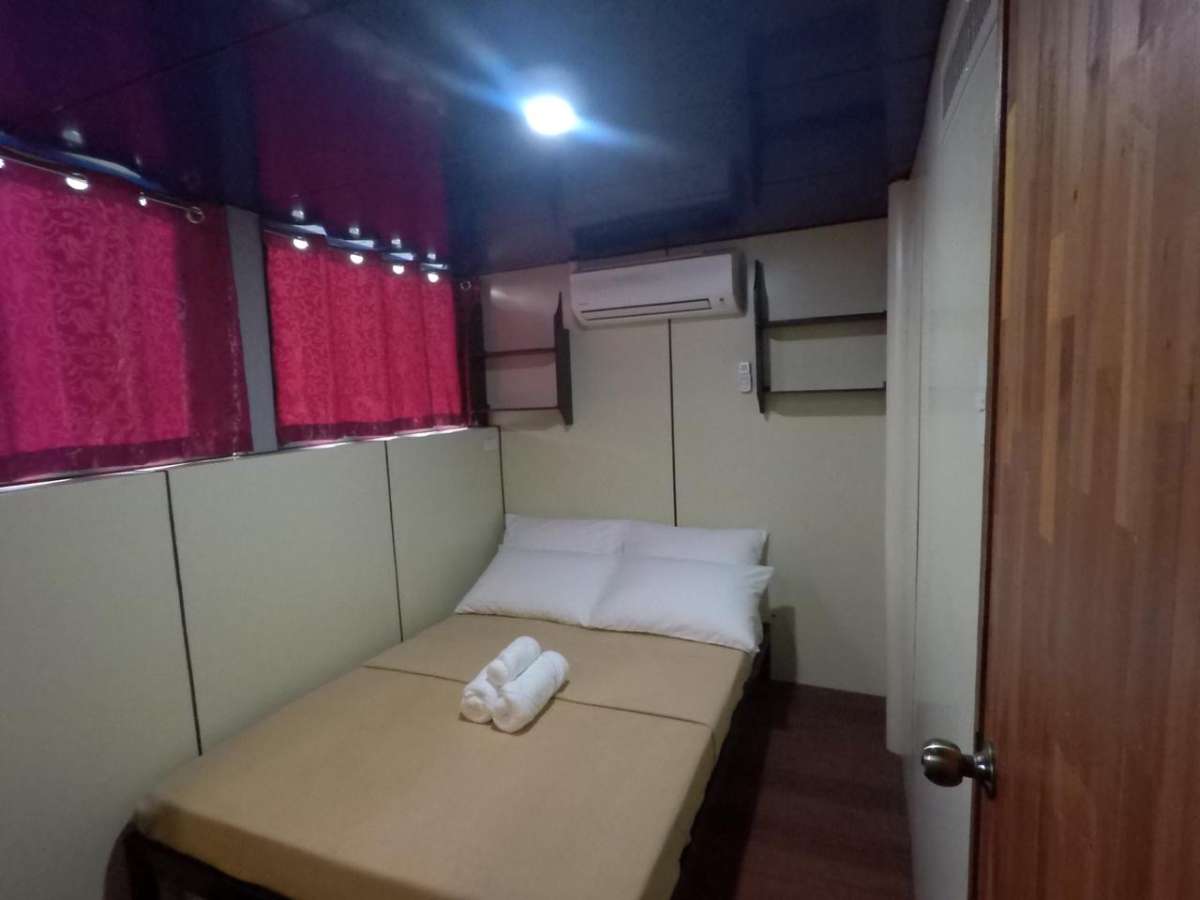
The most defensible inventory is eight main-deck cabins for up to 16 guests. Every cabin is described by the operator as having a private toilet, hot shower and individually controlled air conditioning. The current deck plan resolves a confusing sentence in the technical table and supports the following layout:
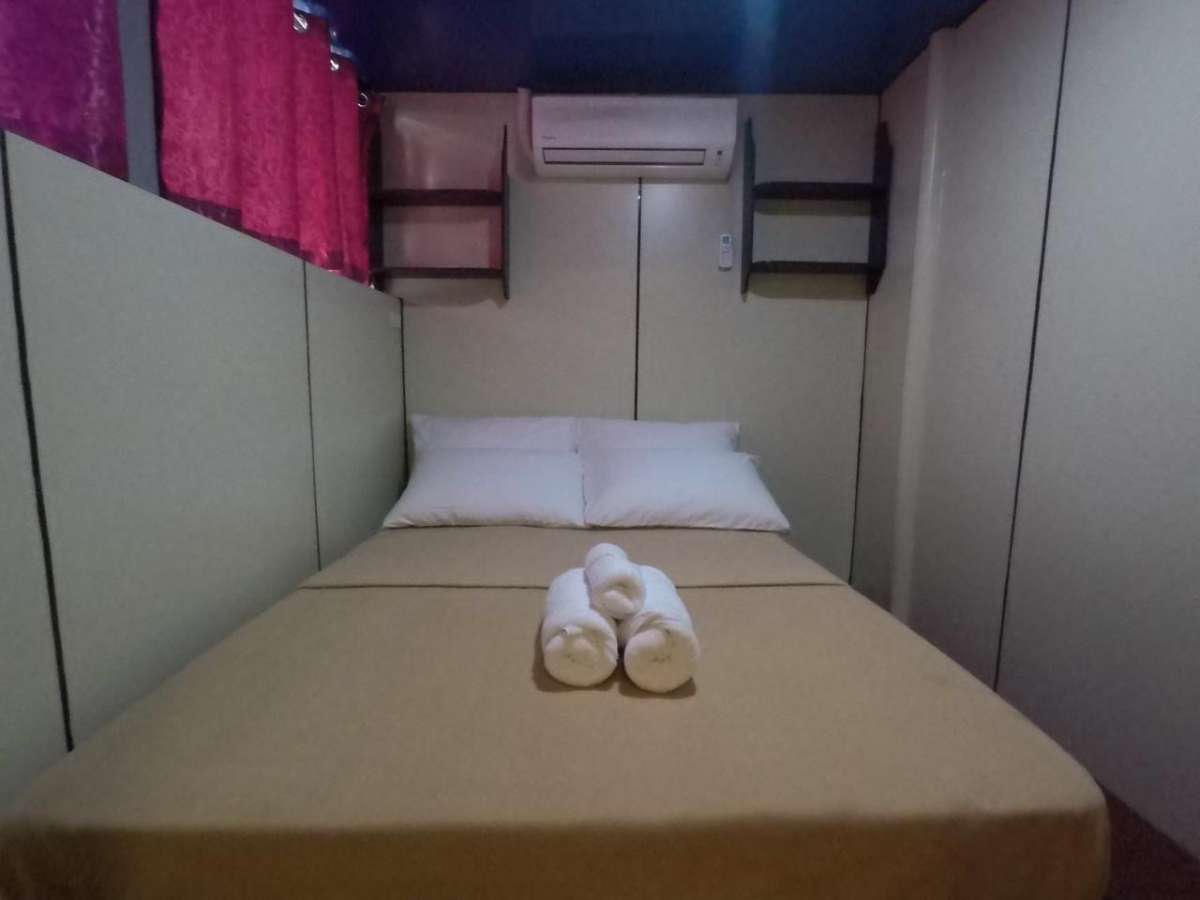
- 2 Main Deck One-Bed Cabins — maximum 2 guests each: one queen-size bed shared by two occupants, private ensuite bathroom with hot shower, individual air conditioning and access to cabin charging points with a universal adaptor. These two rooms sit forward, one to port and one to starboard.
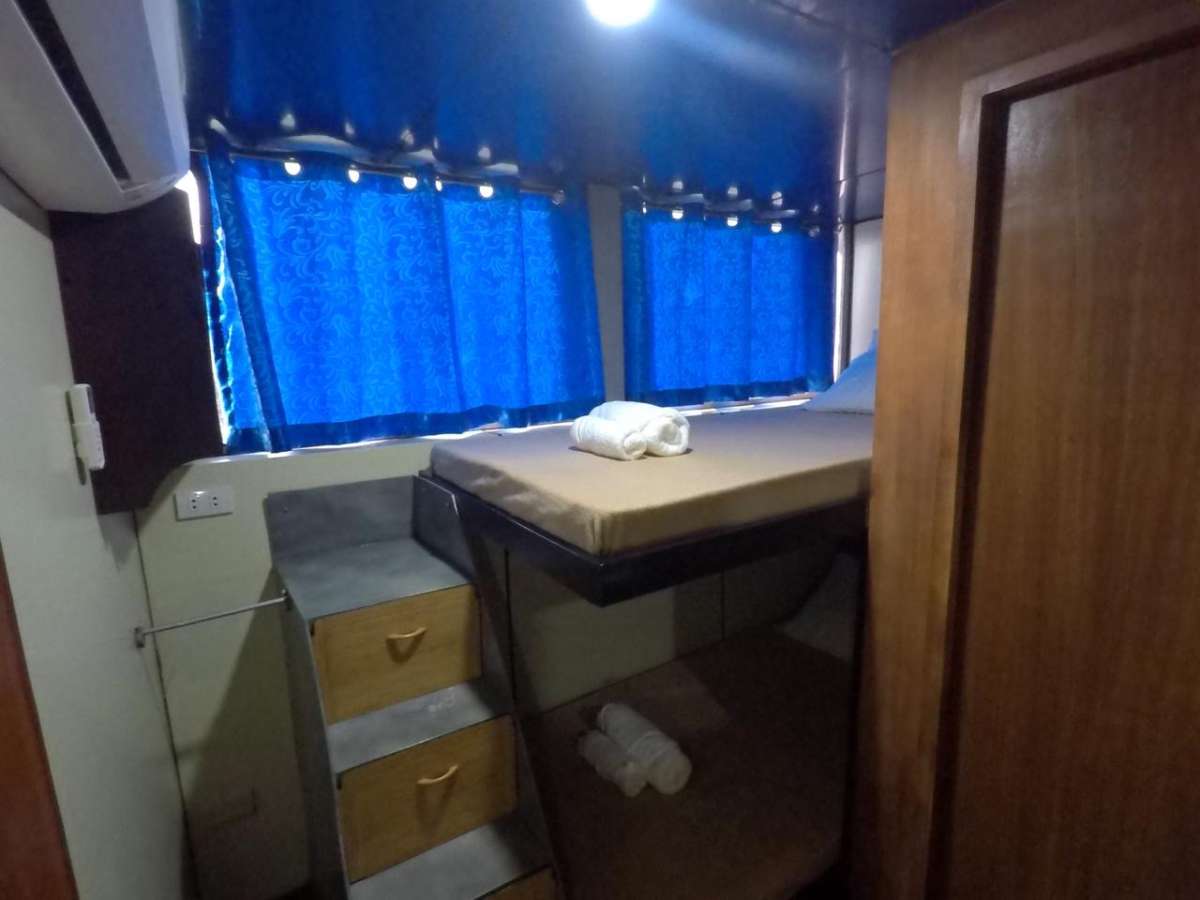
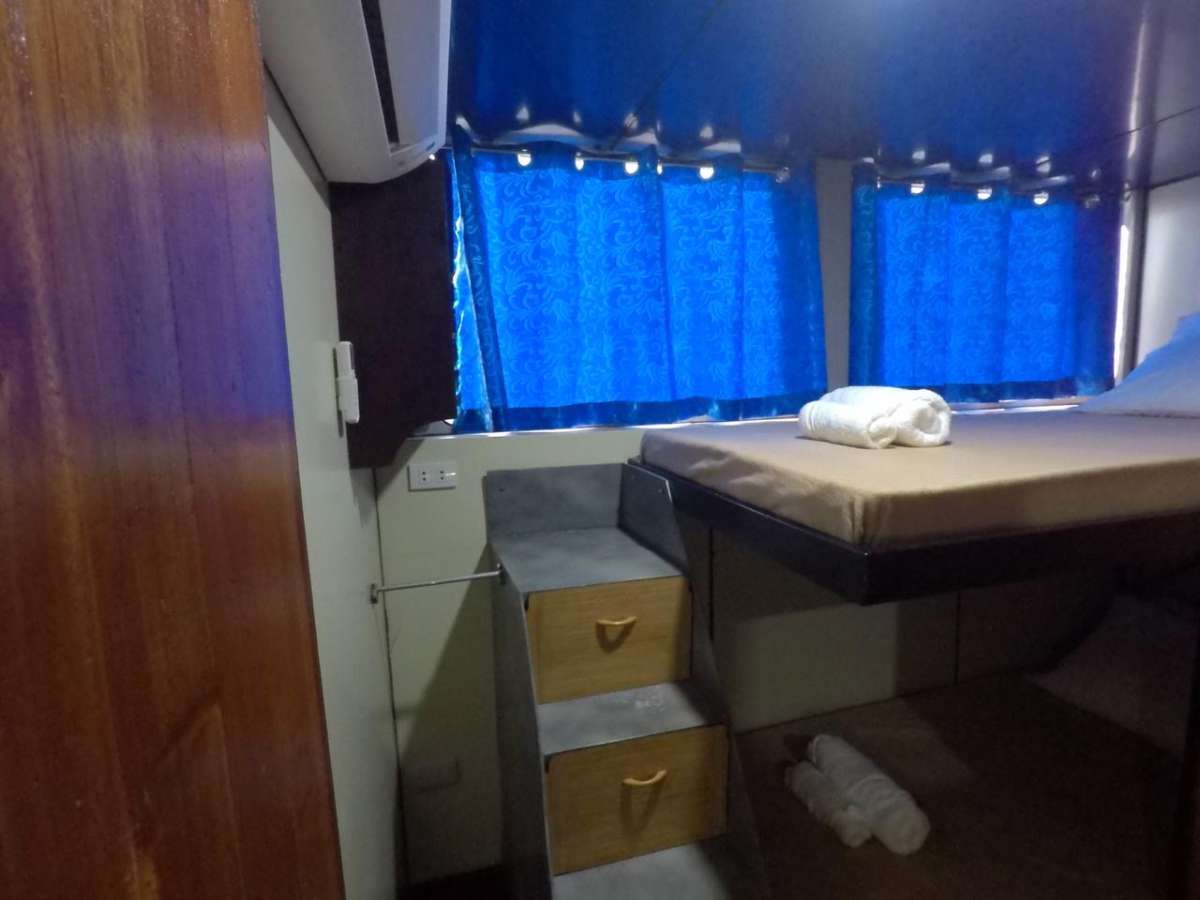
- 6 Main Deck Two-Berth Cabins — maximum 2 guests each: two separate sleeping berths, private ensuite bathroom with hot shower, individual air conditioning and access to cabin charging points with a universal adaptor. The current plan marks each room “2 BED,” and the operator's archive photos show a compact staggered/tiered arrangement rather than a conventional side-by-side hotel twin. The exact upper/lower orientation and mattress dimensions should be confirmed for the selected room.
This interpretation reconciles three pieces of evidence. The technical page says “2 queen size bed & 6 double bed,” wording that could incorrectly suggest six double-bed cabins. The deck plan instead shows six rooms labelled 2 BED and two labelled 1 BED. Operator-hosted cabin photographs show one shared queen-style layout and one separate two-berth layout. The website should therefore sell two queen cabins plus six two-berth cabins, not eight double rooms and not an invented mix of twins and doubles.
The two labels above are functional descriptions, not official fare categories. Some sellers call the six two-berth rooms “Deluxe” or “bunk-style,” but Napoleon Divers does not publish those category names on its primary boat page. Use the cabin name and bed arrangement printed on the passenger's actual confirmation.
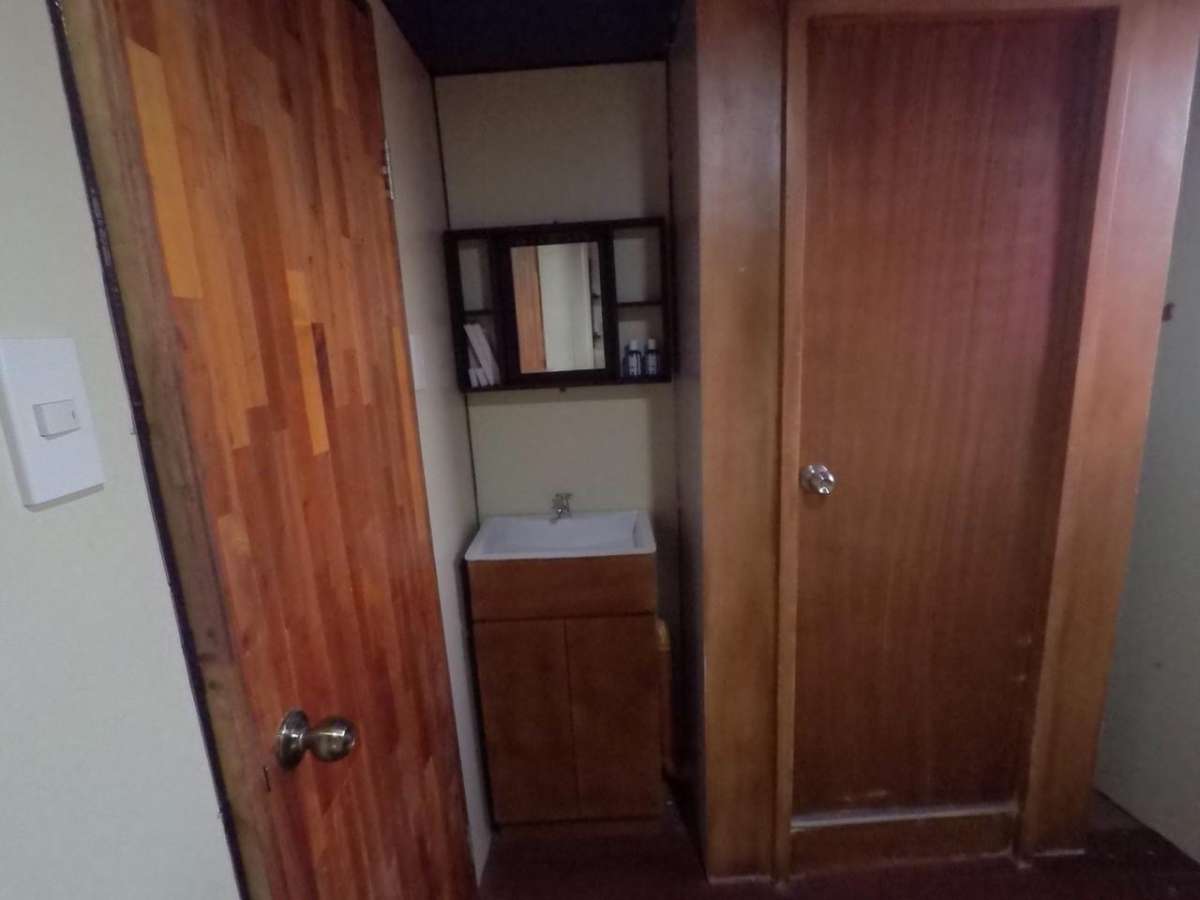
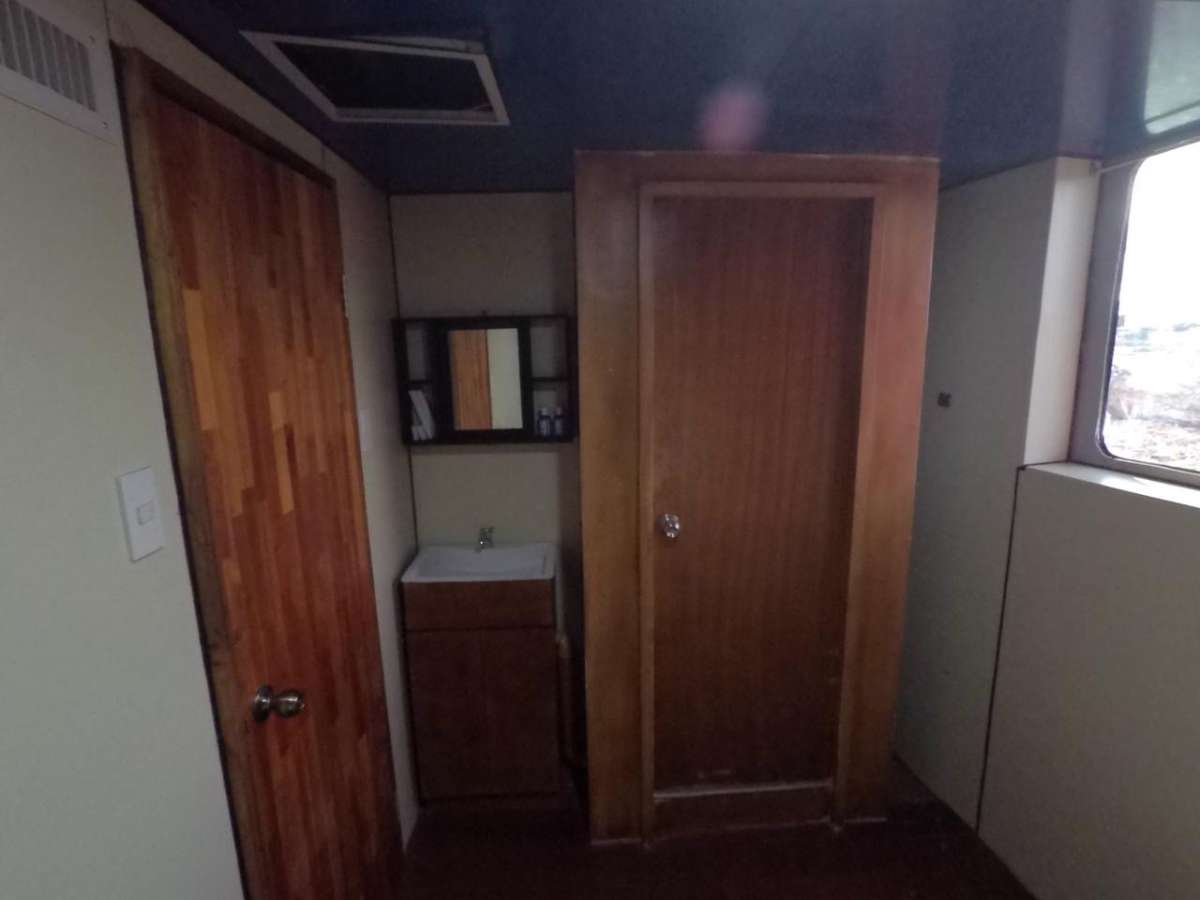
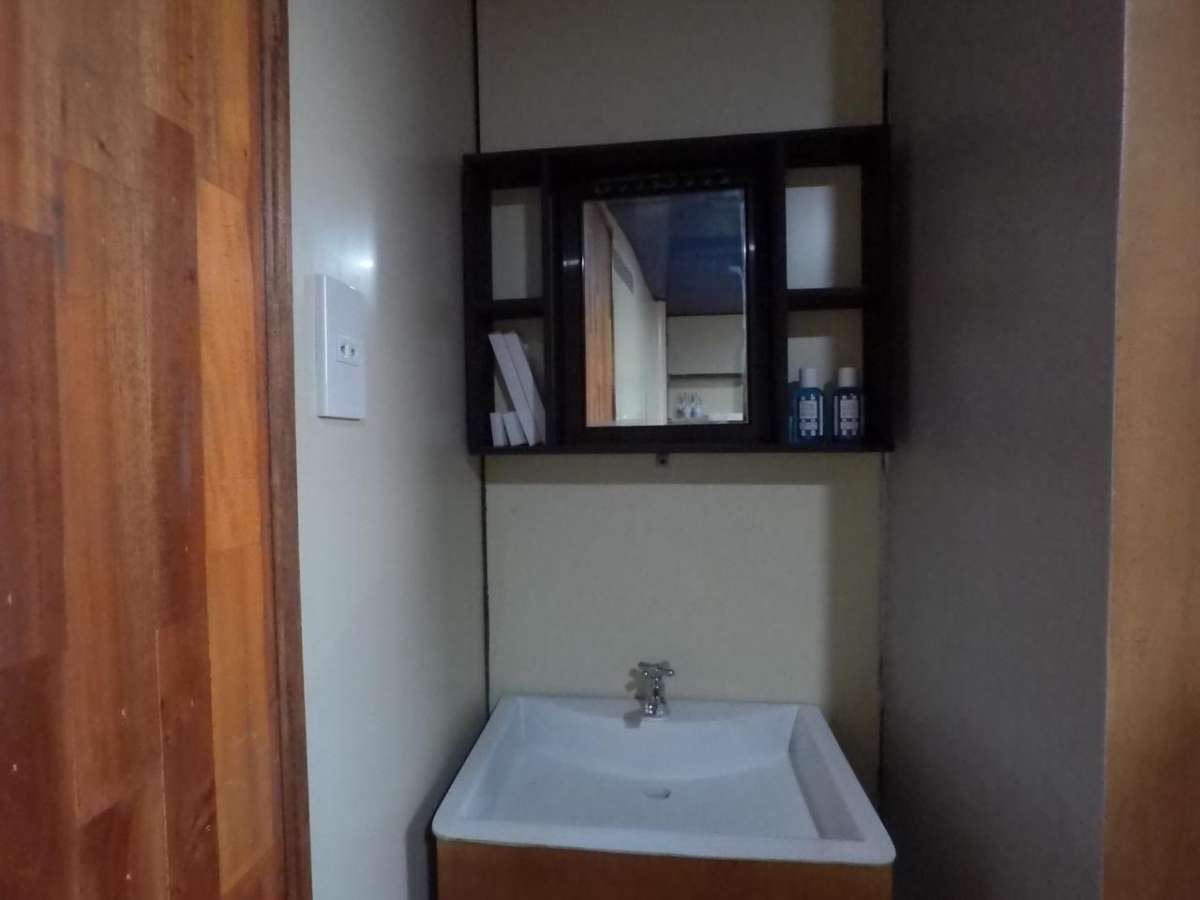
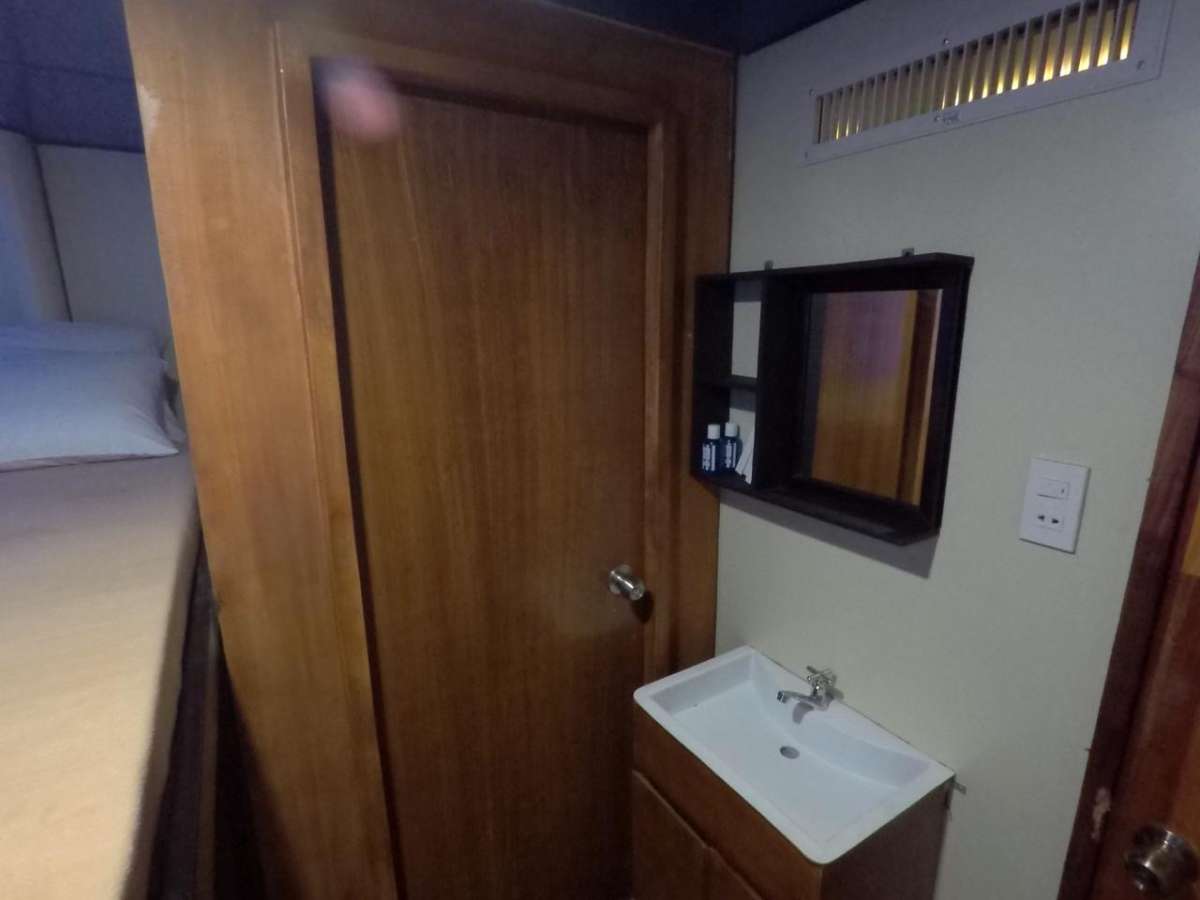
No public source provides cabin numbers, floor areas, mattress widths, storage measurements or a guaranteed window specification. Operator archive images show compact rooms with shelving, curtained glazing and a washbasin near the bathroom door, but those photographs date from 2019 and the operator now says the vessel has been refurbished. They verify the vessel and original arrangement, not the exact colour scheme or soft furnishings on every current sailing.
The ensuite statement is clear: all eight cabins have their own WC and hot shower, rather than shared bathrooms. Towels are mentioned in the dive-platform description, but the public pages do not define the number of cabin towels, replacement schedule, toiletries or hairdryer. A safe, USB socket, minibar and daily linen change are also not published and should not be added as standard amenities.
One-bed cabins suit couples or two people comfortable sharing one mattress. They should not be assigned to friends requesting separate beds. The two-berth rooms are the appropriate sharing option for friends and matched solo travellers, but a guest unable to use a raised or staggered berth should obtain a room-specific photograph and written allocation before payment.
Maximum capacity is straightforward: two queen cabins at two guests each plus six two-berth cabins at two guests each equals 16 guests. No third berth, sofa bed, family cabin or triple occupancy is published. Rates are commonly sold per person on shared departures, but the operator's public pages do not state a universal single supplement or cabin-sharing policy. Sole use, roommate matching, child acceptance and minimum age must be confirmed for the exact cruise.
All cabins are on the main deck, but reaching the restaurant, lounge, sun deck and dive area still involves marine stairs and exterior passages. No accessible bathroom or adapted berth is documented. Guests should disclose mobility, balance, sleep-apnoea power or medication needs before booking so the operator can assess them rather than relying on a generic cabin description.
Diving
Marie-Inès is configured for repetitive recreational diving. The operator plans routes around up to four dives per day, adapting depth and site choice to the group. Its FAQ describes the first dive as the deepest, around 30 metres maximum, followed by progressively shallower profiles. Four dives is a planning target, not a guarantee: crossings, weather, currents, marine-park rules, diver experience, medical issues and the pre-flight interval can reduce the total.
Divers are divided at a published ratio of one guide to four guests. The general recommendation is Open Water certification with at least 30 logged dives. For Tubbataha, the operator recommends Advanced Open Water with 50 logged dives. An Open Water diver remains within the certification depth limit, and any upgrade course must be arranged in advance; its published example price is time-sensitive and should not be embedded in a package without reconfirmation.
The stern station keeps each diver's equipment assembled at an allocated place, with nearby lockers, two deck showers and a camera-only rinse tank. Camera users should still bring protective caps and follow the boat's rinse etiquette; a rinse tank does not guarantee a padded camera room, dry charging bench or individual editing station.
The fill system consists of two Bauer Poseidon compressors and a Nitrox membrane. Standard cylinders and weights are included according to the FAQ, while Nitrox is optional. The public information does not specify cylinder material, standard capacity, valve type, maximum Nitrox percentage or whether Nitrox is sold per fill or per trip. Certified enriched-air divers should have those points and the price written on the booking.
A personal dive computer is mandatory. Rental equipment is available, but the operator's public “essential package” contains an unclear translated item (“holder”) and must not be paraphrased into a regulator unless the operator confirms it. The same page lists regulator, BCD, 3 mm wetsuit, boots/fins and computer as individual rentals. Sizes, mask, torch, SMB, reef hook, 15-litre cylinder and full-set composition must be checked before arrival; public prices are examples, not permanent rates.
Direct entries are possible from the low stern platform when the site allows. The 14-person tender supports more distant drops and pickups, although the vessel can host 16 guests; exact group sequencing belongs to the crew's daily plan. Negative entries, current dives, wreck penetration and blue-water ascents require the relevant experience and guide approval. A route name never authorises a diver to exceed certification or enter an overhead environment.
Non-divers are welcome. Supervised snorkelling, kayaks and paddles are promoted, while Discover Scuba Diving and refresher training can be arranged. These programmes depend on medical screening, conditions, instructor availability and additional charges. Snorkelling access may be limited at deep walls, high-current sites or locations reserved for scuba operations.
Specific dive-injury insurance is mandatory. The operator strongly recommends coverage for hyperbaric treatment and also advises comprehensive travel insurance covering medical expenses, hospitalisation, evacuation, repatriation, cancellation and electronics. Guests sign a Philippine liability waiver. Insurance should explicitly cover the planned maximum depth, liveaboard evacuation and any wreck or technical activity; ordinary travel cover is not automatically sufficient.
Other Information
Marie-Inès is sold through direct schedules, shared-space agents and private charters. Inclusions can differ by route and sales channel, especially for Tubbataha permits and domestic transfers. The dated confirmation and invoice always override a general website summary.
The operator's public information supports these standard inclusions:
- Accommodation in the booked cabin for the stated cruise nights
- Buffet-style full-board meals, morning fruit/tea/coffee and an afternoon snack
- Water, coffee, fruit juice and other routine non-alcoholic drinks throughout the cruise
- Standard air cylinders, weights and weight belts
- Planned guided recreational dives, normally designed around up to four per active day, subject to itinerary and conditions
- Dive-guide service at the published ratio of one guide to four divers
- Use of the fixed dive stations, lockers, deck showers, towels and camera rinse tank
- Included onboard Wi-Fi, with no guarantee of offshore speed or continuity
- Kayaks and paddles; supervised snorkelling opportunities for non-divers where conditions allow
- Dietary adaptation with sufficient notice, within the limits of an offshore galley
The following are extra, conditional or not confirmed as part of one universal base price:
- Beer, wine and other alcoholic drinks
- Nitrox fills
- BCD, regulator, wetsuit, boots, fins, mask, dive computer and other rental equipment unless specifically bundled
- Discover Scuba Diving, refresher, Advanced Open Water or other training and certification fees
- International and domestic flights, excess baggage and hotels before or after the cruise
- Passport, visa, vaccination, medical-certificate and insurance costs
- Tubbataha or other marine-park/conservation fees, port charges, fuel surcharges and local government fees unless the invoice expressly says they are included
- Private guide, special cylinder size, technical/rebreather support and speciality gases unless contracted
- Crew gratuities, souvenirs, personal purchases and land excursions
- Guaranteed mobile signal, streaming-quality internet or private workspace
Itineraries
Marie-Inès operates seasonal and charter programmes across the Philippines. Current published sales material associates the vessel with Tubbataha Reef, Coron, Southern Leyte, and a Bohol–Apo Island–Siquijor circuit. Tubbataha appears on the operator's direct schedule; the other route families are shown by current specialist listings and should be matched to a live departure before publication or sale.
Most examples run seven days/six nights, but duration, ports and dive totals vary. The captain may reverse or replace sites for weather, current, park regulation, mooring availability and group experience. The descriptions below are original planning copy, not contractual schedules.
Tubbataha Reefs — Puerto Princesa Return
The remote Tubbataha Reefs Natural Park is Marie-Inès's flagship seasonal expedition. Trips normally run during the limited calm-water window from Puerto Princesa and combine North Atoll, South Atoll and Jessie Beazley Reef. Current listings describe around 20 dives over six nights, while the operator recommends Advanced Open Water and 50 logged dives.
Day 1 — Puerto Princesa embarkation: airport or hotel pickup as confirmed, vessel check-in, cabin allocation, equipment assembly and safety briefing. The boat departs on the overnight crossing when port and weather clearance allow. No dive should be promised on embarkation day.
Day 2 — North Atoll orientation: the first sites can include the Ranger Station area, Shark Airport and Washing Machine. Check-diving procedures establish weighting, team order and current-entry technique before the programme builds. Sloping reef gives way to walls, with possible reef sharks, turtles, jacks and schooling fish.
Day 3 — North Atoll walls and wreck: Malayan Wreck, Seafan Alley and Terraces are representative published names. Large fans and coral-covered drop-offs reward wide-angle photography, while the wreck area adds structure and fish aggregation. Site order depends on tide and exposure.
Day 4 — South Atoll: Black Rock may start the day, followed by T Wreck, Ko-Ok or Delsan Wreck according to conditions. Current-facing corners can attract pelagic life, but shark, ray and schooling-fish sightings remain natural events rather than guarantees.
Day 5 — South Atoll continuation: Delsan Wreck, Triggerfish City, Southwest Wall and Staghorn Point illustrate the mix of wall dives and healthier shallow coral. Divers must control depth and gas because the reef often drops beyond recreational limits.
Day 6 — Jessie Beazley and return: eastern and western sides of Jessie Beazley can provide the final dives before the overnight navigation to Palawan. The crew limits the day around sea conditions, equipment stowage and the required pre-flight surface interval.
Day 7 — Puerto Princesa disembarkation: breakfast and port return as scheduled, followed by the confirmed airport or hotel transfer. Guests should leave ample margin for navigation delays and avoid a tight same-day flight.
Tubbataha is exposed, remote and reached by a substantial open-sea crossing. Conditions can require negative entries, blue-water pickups and rapid changes in plan. Park fees, permit rules and required experience must appear on the dated booking. Whale sharks, tiger sharks, hammerheads, manta rays and other pelagics are possible, never promised.
Coron Wreck Expedition — Coron Return
Coron's sheltered archipelago is known for Japanese Second World War shipwrecks, reef dives and distinctive inland-water sites. A current specialist listing presents a six-night Marie-Inès programme with approximately 24 dives, covering a selection of roughly ten wrecks together with reefs and Barracuda Lake. Exact wreck access changes with permissions, weather and group qualifications.
Day 1 — Coron boarding: transfer according to the confirmation, check-in, equipment setup, safety briefing and route introduction. The guide reviews wreck experience, overhead training, gas limits and team composition before assigning any penetration plan.
Day 2 — Check dives and outer wrecks: a reef or easier exterior profile lets the team adjust weighting and buoyancy. The vessel can then move to one of Coron's larger wreck sites for an external tour, with penetration reserved for properly trained and equipped divers.
Days 3–4 — Central wreck programme: days may combine two or three substantial wreck profiles with a shallower reef or night dive where permitted. Cargo holds, engine areas and superstructure create very different routes, but silt, sharp metal, depth and enclosed spaces demand conservative choices. A guide's route is not a substitute for wreck certification.
Day 5 — Barracuda Lake and reef contrast: the lake is famous for dramatic thermoclines and unusual underwater geology. Access, equipment transport and water temperature differ from a normal sea dive. A reef or shallower wreck can complete the day if time and conditions permit.
Day 6 — Final wrecks and protected reefs: remaining sites are selected around the group's interests, safe no-decompression limits and the return schedule. The final dives become progressively shallower before equipment rinsing and stowage.
Day 7 — Disembarkation: breakfast, account settlement and transfer under the booking's stated arrangements. Maintain an appropriate no-fly interval after the final dive.
Coron can suit Open Water divers on exterior and reef profiles, but deeper wrecks and penetration require higher training and recent experience. Never market “ten wrecks” or 24 dives as guaranteed; it is a programme indication, not an entitlement.
Southern Leyte and Sogod Bay — Mactan/Cebu Programme
Southern Leyte offers coral walls, slopes, black-sand or mixed-substrate macro sites and quieter coastal scenery. Current Marie-Inès sales material describes a six-night itinerary beginning from the Mactan/Cebu area with approximately 22 dives. Port and transfer details must be checked because repositioning routes can use different endpoints.
Day 1 — Cebu-area embarkation: boarding, cabin allocation, equipment setup and an overnight or staged passage toward Southern Leyte.
Day 2 — Orientation reefs: protected sites are used to establish groups and buoyancy before exploring steeper walls. Hard corals, reef fish and small subjects make a useful opening contrast to Tubbataha's open-ocean character.
Days 3–4 — Sogod Bay walls and macro: the route can alternate current-washed drop-offs with slopes suited to patient macro searches. Guides select sites according to visibility, wind and local information. Four dives may be planned, with night diving only where safe and permitted.
Day 5 — Seasonal big-animal search and reef diving: whale sharks may occur in the region during part of the year, but sightings and in-water access are not guaranteed. Responsible distances and local regulations control any encounter. The day's reliable product is guided reef diving, not a promised animal.
Day 6 — Final coastal sites and return passage: progressively shallower dives allow a conservative finish before the vessel begins its return or repositioning navigation.
Day 7 — Disembarkation: arrival and transfer at the contracted port, with adequate flight margin.
This route can be appropriate for a wider experience range than Tubbataha, but current, depth and daily workload still vary. Open Water plus 30 logged dives is the operator's general recommendation; the actual departure may set a higher standard.
Bohol, Apo Island and Siquijor — Central Visayas Circuit
The Central Visayas programme links coral gardens, walls and island passages around Bohol, Apo Island and Siquijor. Current specialist material describes a six-night Mactan/Cebu departure with around 20 dives and a recommendation of Open Water plus 30 logged dives. Exact island order depends on sea state and port logistics.
Day 1 — Mactan/Cebu arrival: meet the vessel, settle into the main-deck cabin, assemble equipment and complete boat and dive-safety briefings.
Day 2 — Bohol-area check dives: reef slopes and walls provide a measured start. Divers review current entries, SMB use and group separation while looking for schooling reef fish, turtles and macro life.
Day 3 — Bohol walls or neighbouring reefs: the captain selects protected or exposed sides according to wind. Several profiles can be made around the same island without repeating the same topography.
Day 4 — Siquijor: coral gardens, walls and smaller subjects give the route a relaxed island character. A night dive may be considered in a sheltered location, subject to the plan and guest experience.
Day 5 — Apo Island: strong reef conservation, dense fish life and current-influenced walls make Apo a highlight. Local access rules and carrying capacity control where and when the boat dives.
Day 6 — Final Visayas sites: the last two or three shallower dives are chosen around the return passage and no-fly interval. Equipment is washed and accounts prepared during navigation.
Day 7 — Cebu-area disembarkation: transfer under the contracted arrangement and onward travel with suitable contingency time.
The route offers varied reef scenery rather than a single trophy site. Turtles, schooling fish and rich coral are possible across the circuit, but each encounter depends on season and conditions. A current departure may substitute another Visayas island without changing the overall reef-diving character.
Typical Day Aboard Marie-Inès
On a full diving day, tea, coffee and fruit may be served before an early briefing and first dive. Breakfast follows, then a second dive before lunch. The afternoon includes a third dive and snack, with a fourth sunset or night dive where the route allows. Dinner closes the active schedule. Navigation days, exposed sites and the last diving day can reduce this rhythm.
Guides organise a maximum published ratio of one to four, but every diver remains responsible for computer limits, gas, depth, buddy contact and surface signalling. The tender and main platform are used according to site access. Cameras have a dedicated rinse tank; charging takes place only in authorised dry areas.
Non-divers can join selected snorkelling sessions under supervision and use the kayaks or paddles when the crew opens those activities. Deep walls, current and park rules may leave fewer suitable sessions than on a resort holiday. A non-diver package should list meals, cabin sharing, transfers and any park fees separately.
Choosing the Right Marie-Inès Route
Choose Tubbataha for remote oceanic walls, dense reef life and the strongest expedition character. It also brings the longest open-water crossing, the narrowest season and the highest published experience recommendation. A diver who has not recently practised negative entries, SMB deployment and blue-water separation should complete suitable preparation before this trip rather than treating the first day as training.
Choose Coron when wreck history is the priority. The route can provide rewarding exterior tours for a broader group, but meaningful penetration is a separate activity requiring wreck training, correct equipment and a conservative gas plan. Friends travelling together can follow different profiles if this is agreed with the guides before departure.
Southern Leyte is the better match for travellers who enjoy a mixture of walls, reef scenery and patient macro observation. Seasonal whale-shark potential adds excitement, but the trip should still be attractive without that encounter. The Bohol–Apo–Siquijor circuit offers the broadest island-to-island reef variety and can suit divers who prefer changing coral landscapes over repeated deep wrecks or exposed offshore walls.
Season matters, but no calendar eliminates weather risk. Tubbataha's published season concentrates voyages into the calmer part of the year. Visayas and Coron programmes may be offered more broadly, with wind direction influencing the usable side of each island. Southern Leyte's large-animal possibilities are seasonal and biologically unpredictable. Ask for the operator's most recent route note rather than copying a generic “best month” claim.
For mixed diver/non-diver groups, compare suitable snorkelling access as carefully as scuba highlights. A deep offshore wall may be outstanding for divers but unsuitable for a surface swimmer. Coron and central-island routes may offer more protected alternatives, yet the final decision still belongs to the crew. Children, beginners and non-swimmers need written acceptance and supervision arrangements.
Whichever route is selected, compare the complete cost rather than the headline fare. A lower base price can change after park fees, Nitrox, rental equipment, domestic flights, hotel nights and transfers are added. Request one dated total showing every mandatory and optional item in the same currency.
Embarkation and Preparation Checklist
Before travel, confirm the exact start and finish port, pickup arrangement, park fees, cabin bed layout and route-specific qualification. Submit certification cards, recent logbook information, rental sizes, Nitrox request, dietary needs and insurance evidence early. Tubbataha guests should be ready to demonstrate Advanced-level skills and the operator's recommended 50 logged dives.
Bring the mandatory personal dive computer, certification proof, appropriate exposure protection, SMB and reel, surface whistle, torch when required, reef-safe sun protection, chargers and simple spares. Ask whether any item is supplied rather than inferring it from a photograph. Keep medication and prescriptions accessible and discuss refrigerated storage before embarkation.
Allow a conservative no-fly interval and additional buffer for overnight navigation, port clearance and road traffic. The advertised return time cannot make a tight connection risk-free. If the operator changes the itinerary for safety, the captain's decision takes priority over the sample programme.
Schedules & routes
Prices & conditions
Included
- Transfers from airport and/or hotel to the yacht
- VAT and local taxes
- Full-board meal plan (including snacks)
- Complimentary beverages (water, tea, coffee)
- Soft drinks
- Diving activity (incl. tanks, weights, weight belts)
- Dive guide service
- Land excursions and activities throughout the trip
- Boat accident insurance
- Cabin towels and complimentary toiletries
- Cabin cleaning service
- Wi-Fi
Not included
- Domestic flights in destination country
- Marine park fees & Port fees
- Fuel surcharge
- Alcoholic beverage
- Dive equipment rentals
- Larger tank (15 L)
- Nitrox fills
- Dive courses on board
- Dive insurance (mandatory requirement)
- Travel insurance (trip cancellation insurance)
- Crew gratuity
Useful information
Coron and Apo Reef
Best time for diving
November to May is considered the best diving season, with generally calm seas and optimal visibility. The dry season runs from October to June, offering the most stable weather conditions. Diving is possible year-round, but July to September may experience stronger winds and rougher seas due to the southwest monsoon. Visibility typically ranges between 15 – 30 meters, and currents are usually mild, especially in Coron, while Apo Reef can experience moderate currents.
About temperatures
Air: generally ranges between 26°C – 32°C year-round.
Sea: warm throughout the year, usually between 26°C – 29°C.
Wetsuit Recommendation
A 3 mm wetsuit is recommended year-round. Some divers may prefer a shorty during the warmer months.
Diver requirement
Suitable for all levels in Coron, especially for wreck diving with calm conditions and shallow depths. Apo Reef is better suited for Advanced Open Water due to depth and currents. You can find out more information about diving in this area here: Coron & Apo Reef
Embarkation / Disembarkation
Most liveaboards embark and disembark in Busuanga / Coron (USU). Some itineraries may start or end in Batangas or Puerto Galera, especially when combined with other destinations. Please ask our agent to confirm the exact port for your selected trip.
Visa Requirements
The Philippines offers visa-free entry for many nationalities, allowing stays of up to 30 days, with possible extensions available locally. For the latest visa information, please consult the Philippine Bureau of Immigration. Immigration authorities may request proof of onward or return travel upon arrival.
Vaccinations
No mandatory vaccinations are required for travelers arriving from non-risk countries. A yellow fever vaccination certificate is required only for travelers coming from countries with risk of yellow fever transmission.
Money Matters
The local currency is the Philippine Peso (PHP). Cash is recommended for small purchases, while USD, credit and debit cards are accepted in major hotels and liveaboards.
Drones
Drone use is generally allowed in the Philippines, but restrictions may apply in marine protected areas and near airports. For details, visit Drone laws in the Philippines
Extending your holiday
We offer a range of hotels/resorts, land-based diving packages, and excursions that can be arranged before or after your liveaboard holiday. Just ask us if you need such service.
Visayas
Best time for diving
November to May is generally considered the best period for diving in the Visayas, during the dry season, when sea conditions are calmer and visibility is at its best. Diving is possible year-round, especially in protected areas such as Cebu, Bohol, and Negros. The rainy season usually runs from June to October, with occasional typhoons, mainly affecting the northern Visayas. Visibility typically ranges between 15 – 30 meters, with mild to moderate currents depending on the site.
About temperatures
Air: generally ranges between 26°C – 32°C year-round.
Sea: warm throughout the year, usually between 26°C – 30°C.
Wetsuit Recommendation
A 3 mm wetsuit is suitable year-round. Some divers may prefer a 5 mm during longer dives between December and February.
Diver requirement
Suitable for all levels, from beginners to advanced divers. Calm reefs, abundant macro life, whale shark encounters (seasonal), and occasional stronger currents make the Visayas ideal for both training dives and advanced drift diving. You can find out more information about diving in this area here: Visayas
Embarkation / Disembarkation
Liveaboards in the Visayas usually embark and disembark in Cebu City (CEB). Depending on the itinerary (North or South Visayas), alternative ports such as Dumaguete (DGT), Tagbilaran (TAG), or Malapascua (CEB) may be used. Please check with our agent to confirm the exact port for your selected cruise.
Visa Requirements
The Philippines offers visa-free entry for many nationalities, allowing stays of up to 30 days, with possible extensions available locally. For the latest visa information, please consult the Philippine Bureau of Immigration. Immigration authorities may request proof of onward or return travel upon arrival.
Vaccinations
No mandatory vaccinations are required for travelers arriving from non-risk countries. A yellow fever vaccination certificate is required only for travelers coming from countries with risk of yellow fever transmission.
Money Matters
The local currency is the Philippine Peso (PHP). Cash is recommended for small purchases, while USD, credit and debit cards are accepted in major hotels and liveaboards.
Drones
Drone use is generally allowed in the Philippines, but restrictions may apply in marine protected areas and near airports. For details, visit Drone laws in the Philippines
Extending your holiday
We offer a range of hotels/resorts, land-based diving packages, and excursions that can be arranged before or after your liveaboard holiday. Just ask us if you need such service.
Tubbataha Reef
Best time for diving
March to June is considered the best season for diving in Tubbataha, as the seas are calm and visibility is excellent, often between 20 – 40 meters. Currents can be moderate to strong, making some sites more suitable for experienced divers. The park is closed from mid-June to mid-March due to rough seas during the rainy season.
About temperatures
Air: generally ranges between 28°C - 34°C during the diving season.
Sea: warm all year round, around 27°C - 30°C.
Wetsuit Recommendation
A 3 mm wetsuit is usually sufficient, although some divers prefer a 5 mm for longer dives or early-season trips.
Diver requirement
Due to strong currents at some sites, advanced open water or equivalent experience is recommended, although there are calmer sites suitable for less experienced divers. You can find out more information about diving in this area here: Tubbataha
Embarkation / Disembarkation
Liveaboards usually depart from Puerto Princesa (PPS), Palawan. For the 1st and last trip during the dive season, itineraries include a return to Puerto Princesa or an alternate port, please check with our agent for exact details.
Visa Requirements
The Philippines offers visa-free entry for many nationalities, allowing stays of up to 30 days, with possible extensions available locally. For the latest visa information, please consult the Philippine Bureau of Immigration. Immigration authorities may request proof of onward or return travel upon arrival.
Vaccinations
No mandatory vaccinations are required for travelers arriving from non-risk countries. A yellow fever vaccination certificate is required only for travelers coming from countries with risk of yellow fever transmission.
Money Matters
The local currency is the Philippine Peso (PHP). Cash is recommended for small purchases, while USD, credit and debit cards are accepted in major hotels and liveaboards.
Drones
Drone use is generally allowed in the Philippines, but restrictions may apply in marine protected areas and near airports. For details, visit Drone laws in the Philippines
Extending your holiday
We offer a range of hotels/resorts, land-based diving packages, and excursions that can be arranged before or after your liveaboard holiday. Just ask us if you need such service.
Diver's reviews (0)
Photos