- Best-Price Guarantee
- 24/7 Expert Support
- No Booking Fees
- Direct with Operators
- 500+ Boats Worldwide
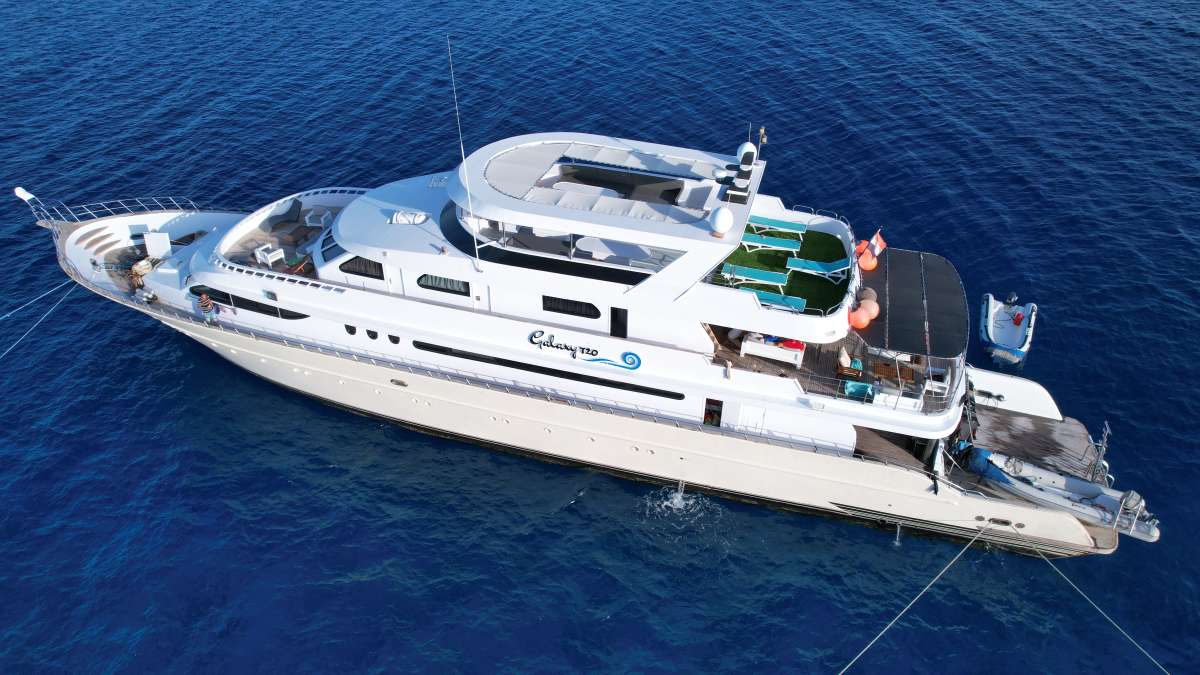
Galaxy 720 is a 42-metre Red Sea liveaboard for 24 guests in 12 ensuite, air-conditioned cabins: one lower-deck Grand Suite, eight lower-deck twins, two upper-deck Sea View Suites and one upper-deck twin. With two tenders, Nitrox capability, generous lounges and itineraries from northern wrecks to the Brothers, Daedalus, Elphinstone and Deep South reefs, it is designed for week-long Egyptian diving safaris.
Description
Boat
M/Y Galaxy 720 is a large wooden-hulled Egyptian Red Sea liveaboard with a published length of 42 metres, beam of 9 metres and draft of 2.5 metres. Its confirmed guest inventory is 12 cabins and 24 berths. A separate triple guide cabin appears in the technical list and deck plan; it is working accommodation and must not be counted as a thirteenth guest cabin or used to advertise capacity above 24.
Two MAN engines rated at 1,150 hp each are listed by the operator. The technical page also identifies Perkins/Caterpillar generators, 10 tonnes of fuel capacity, 13 tonnes of fresh water and two watermakers producing 3,000 litres per day each. Cruising speed, generator output, build year and the date or scope of the latest refit are not stated consistently by the operator, so they should not be turned into guaranteed sales specifications.
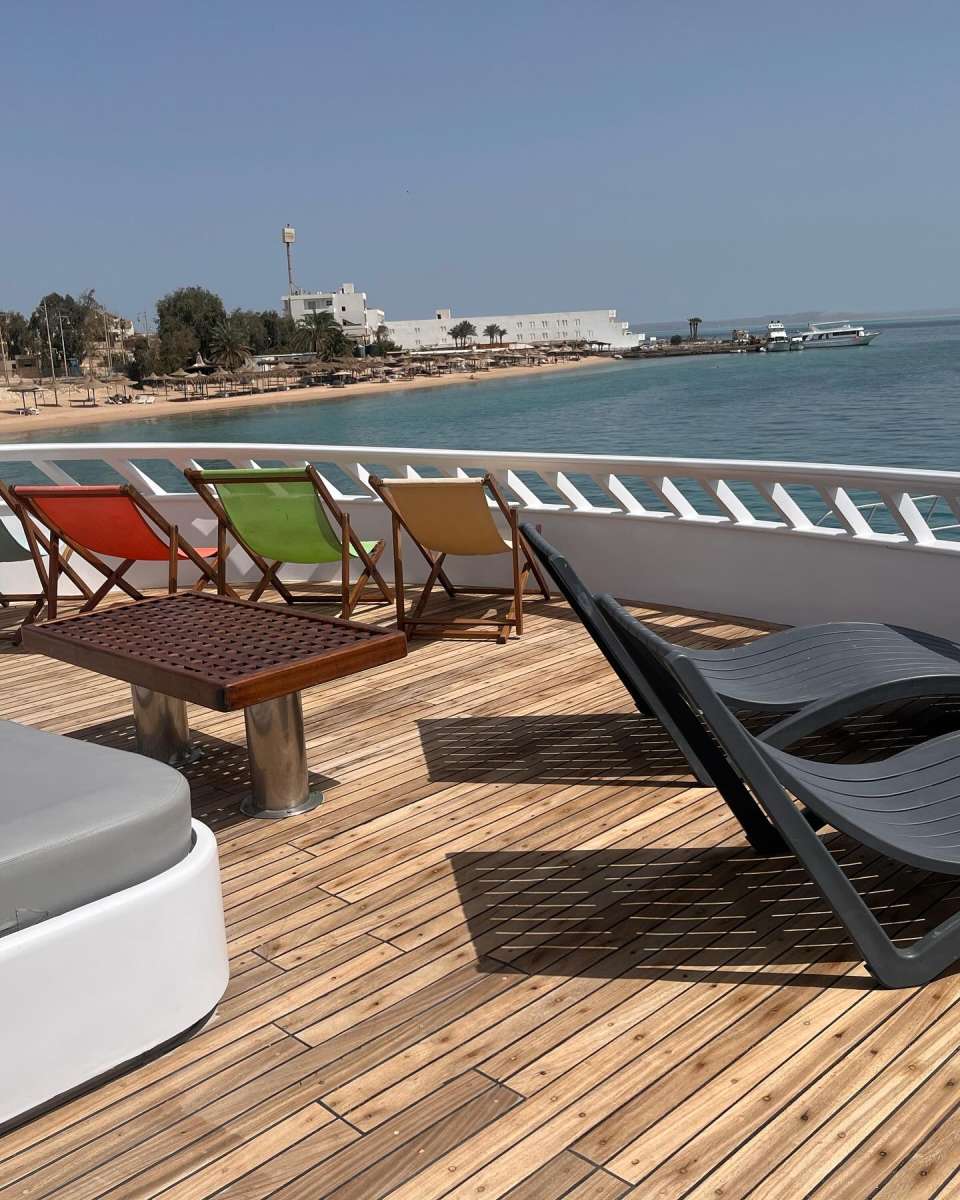
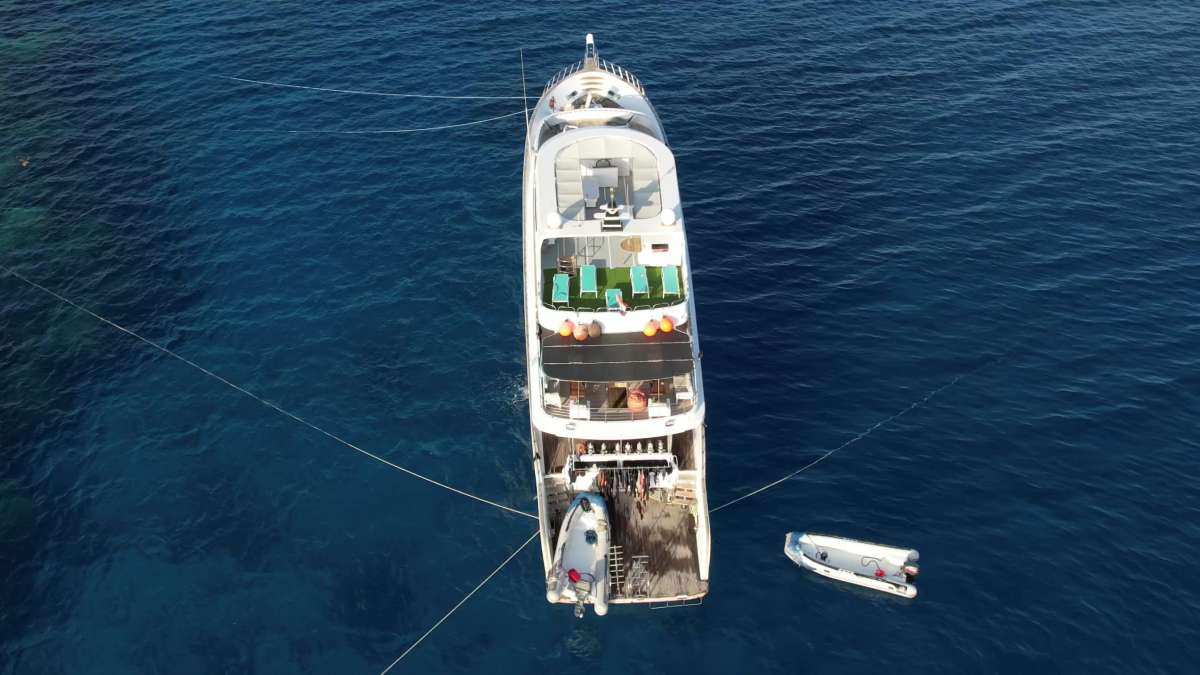
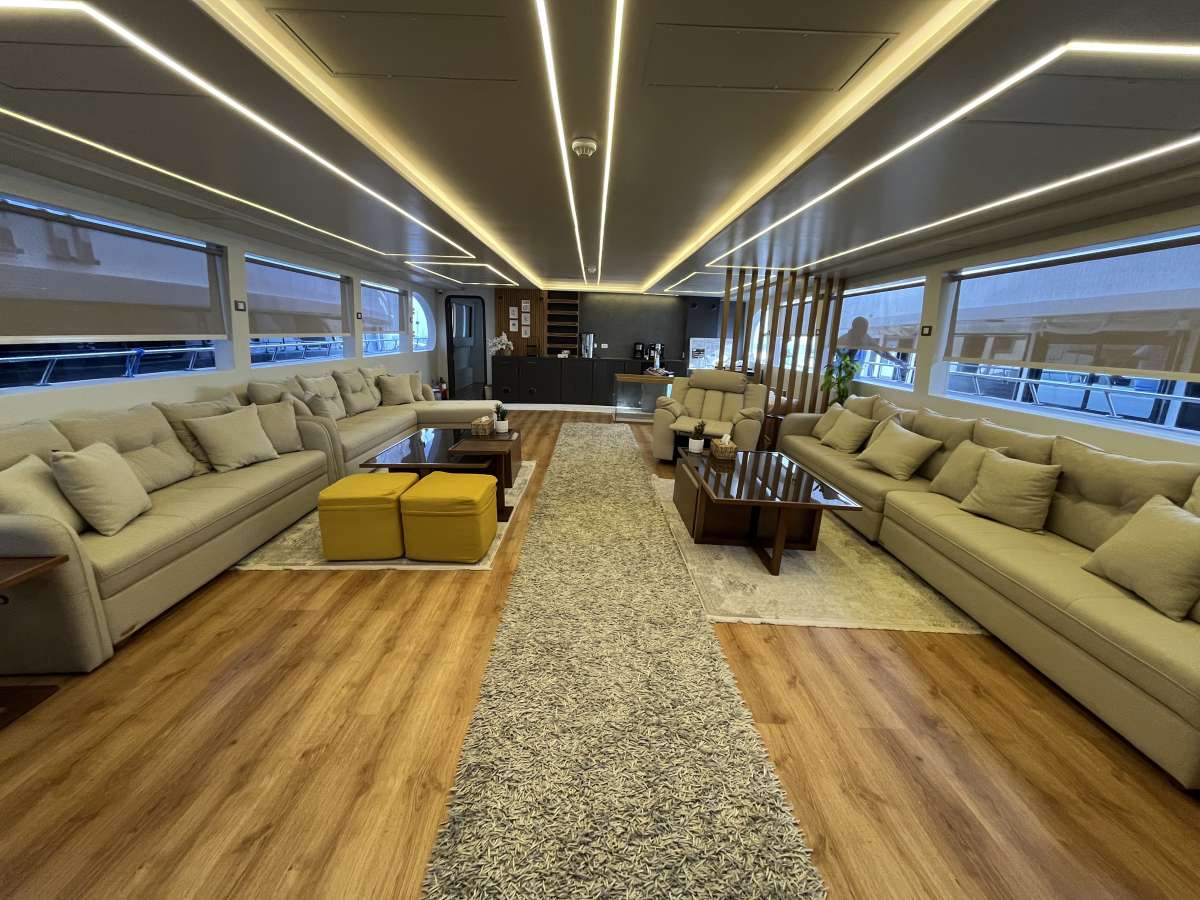
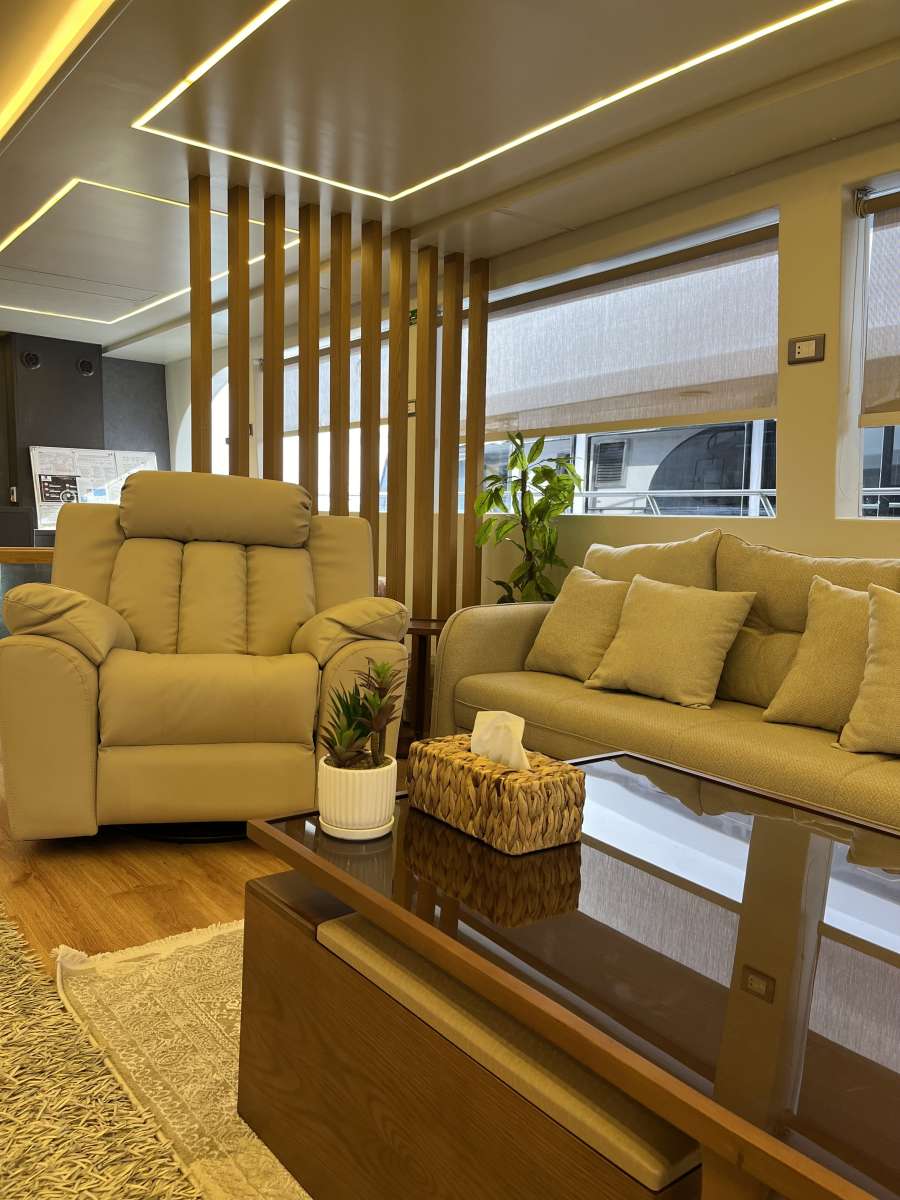
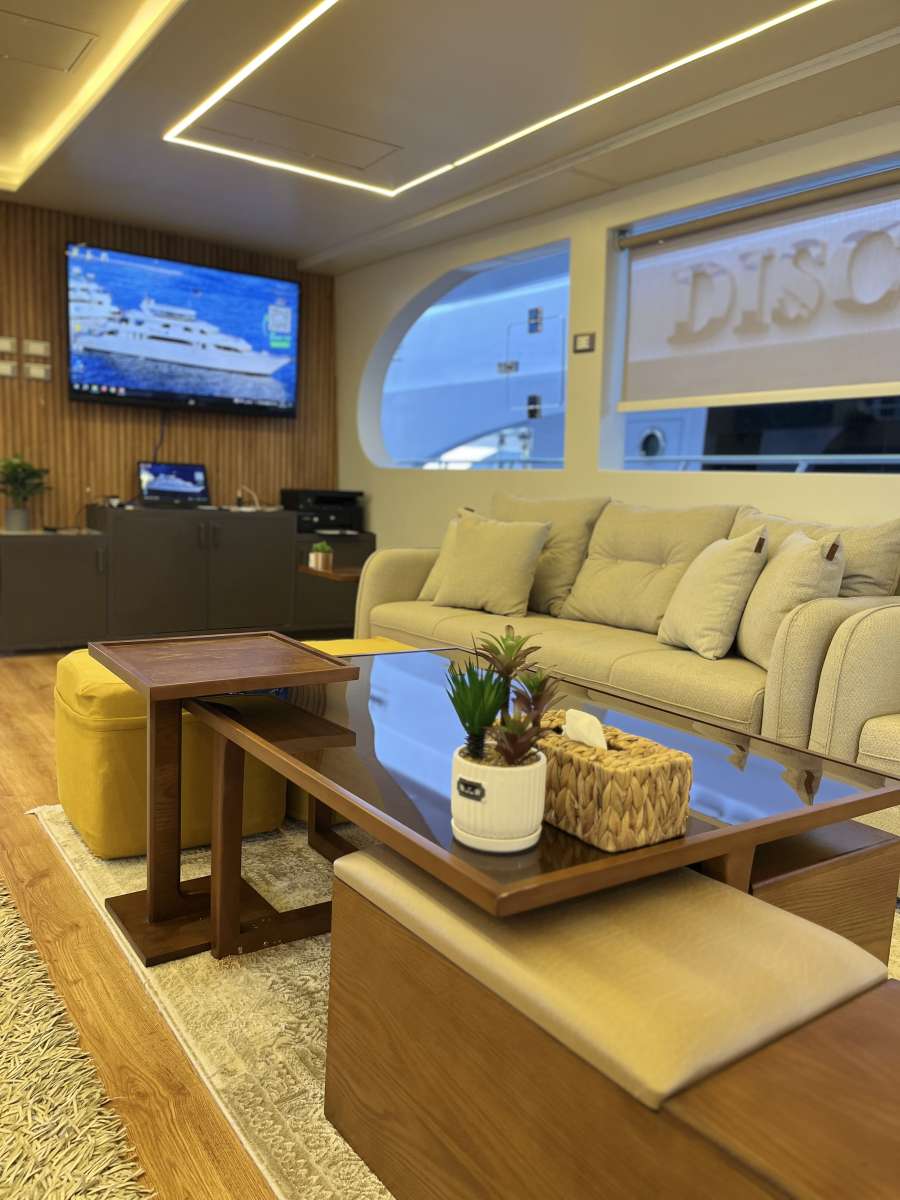
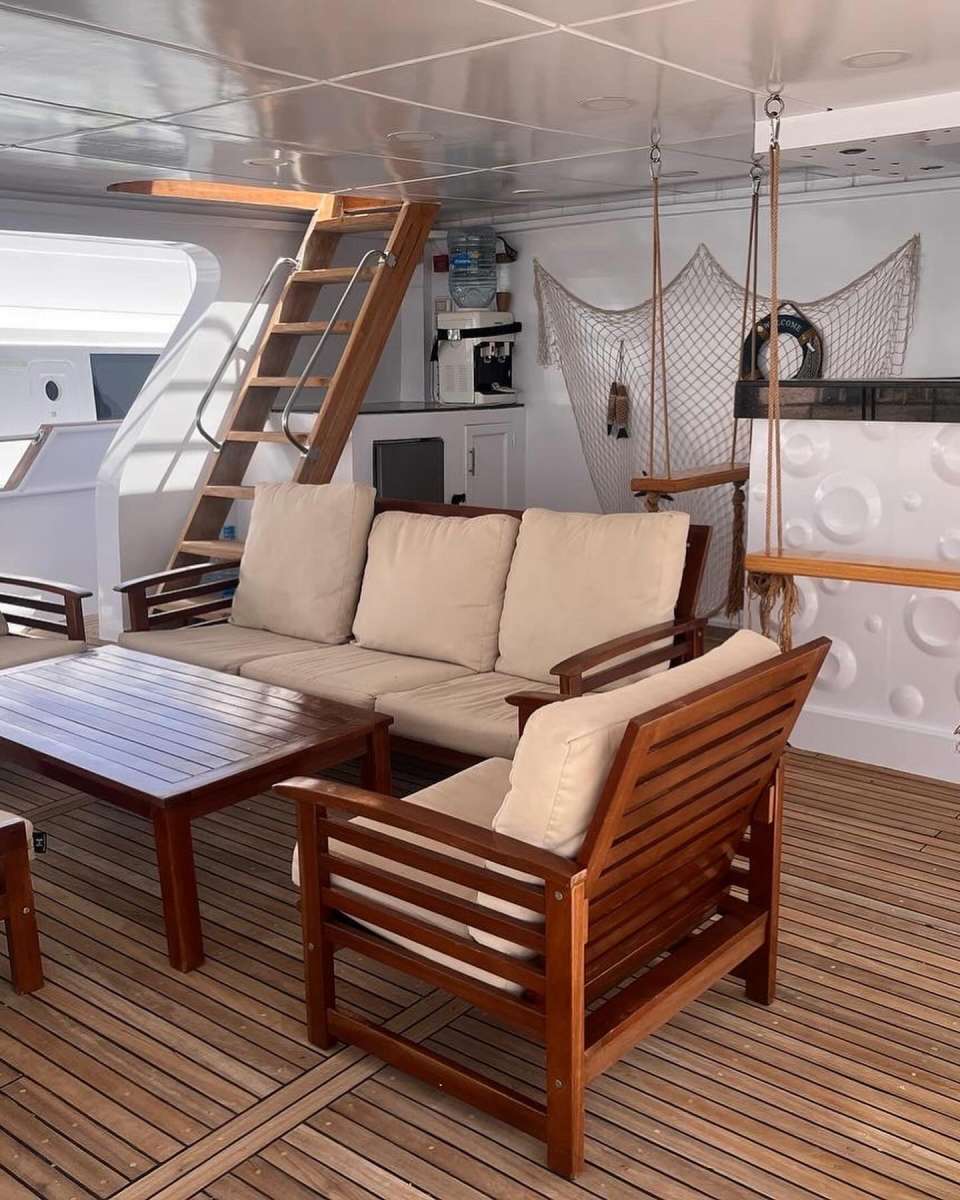
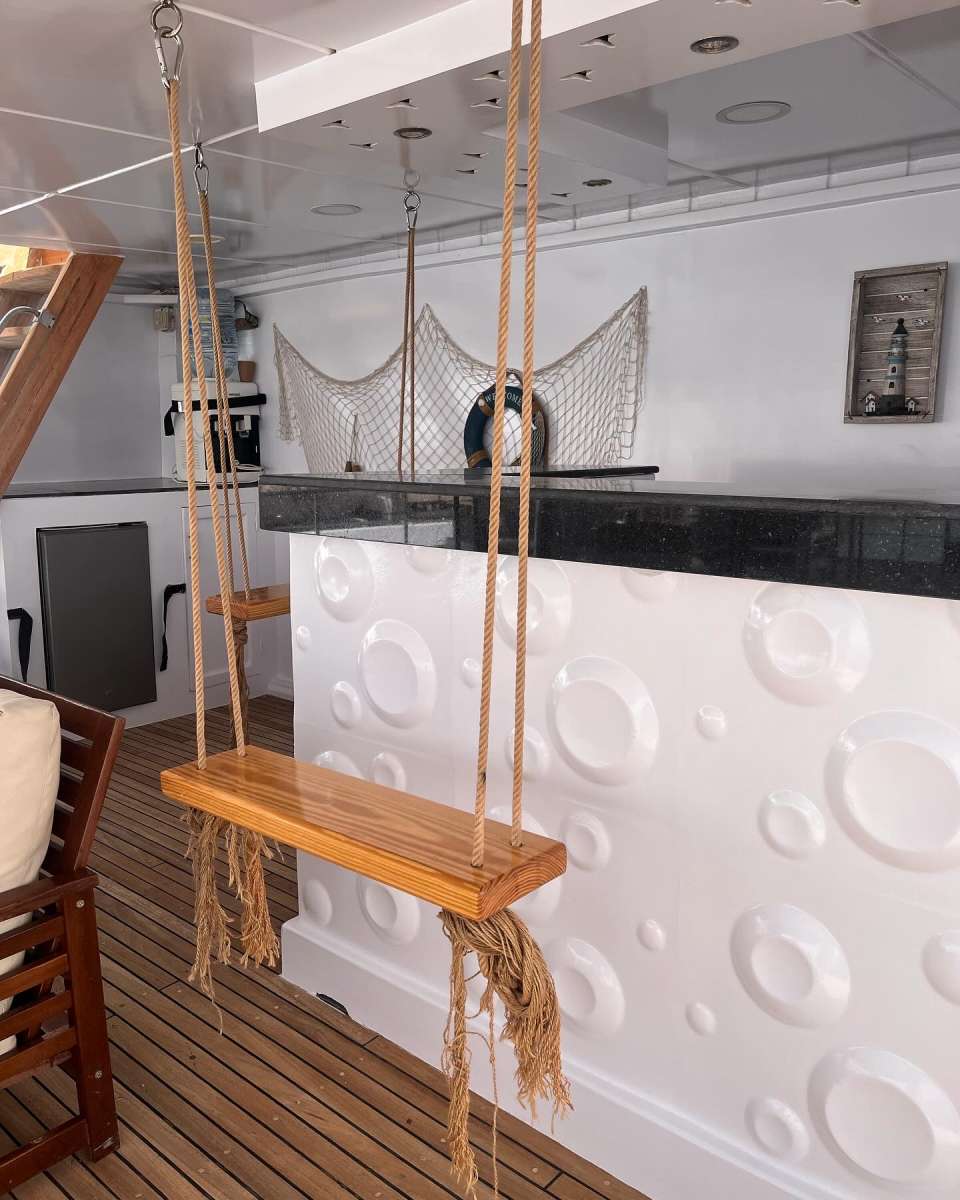
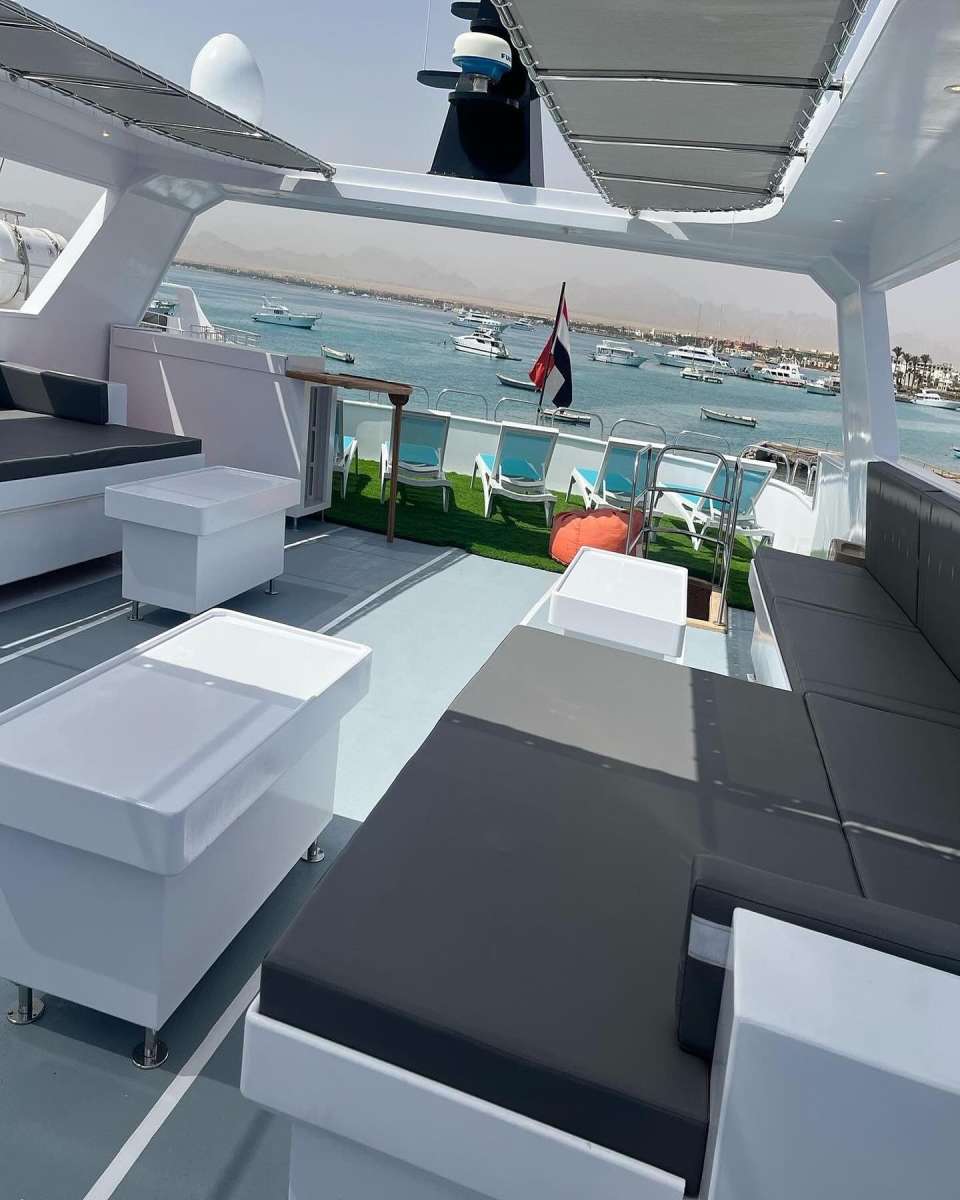
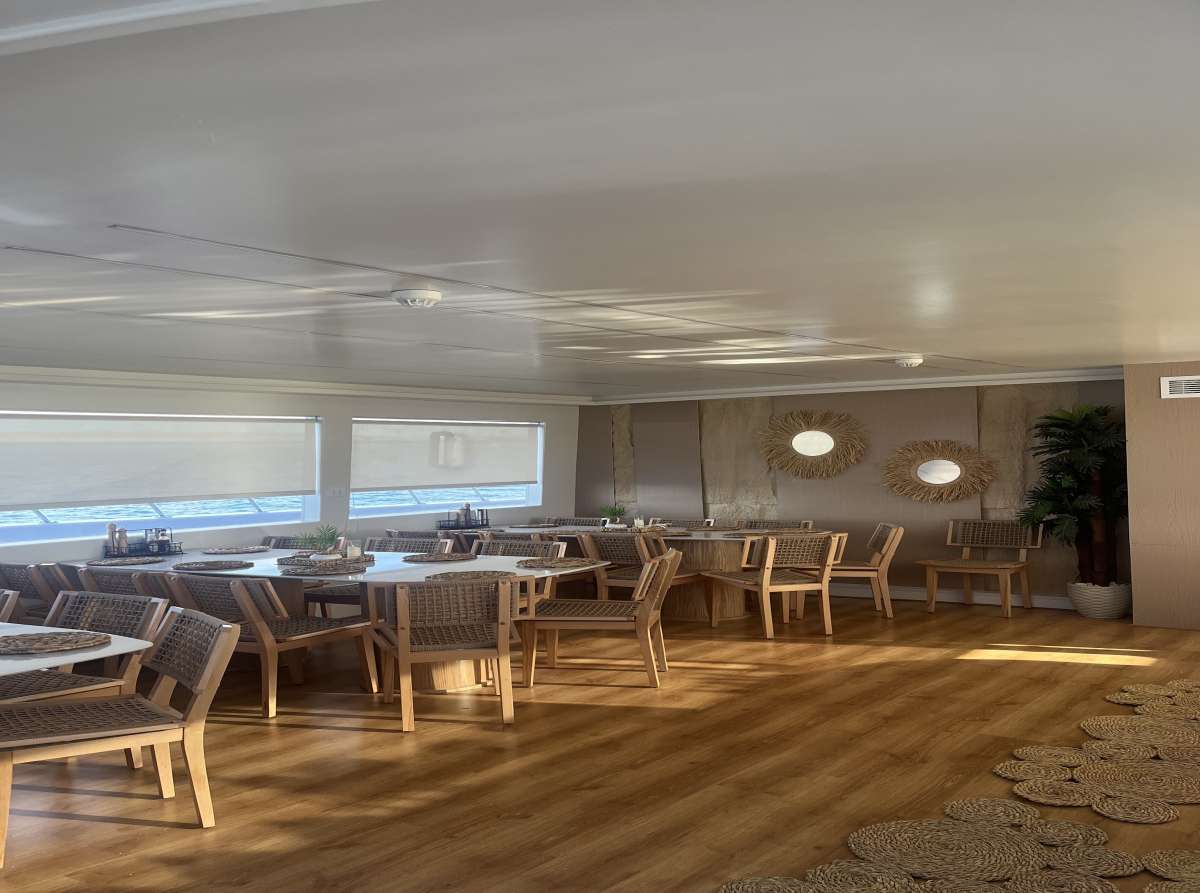
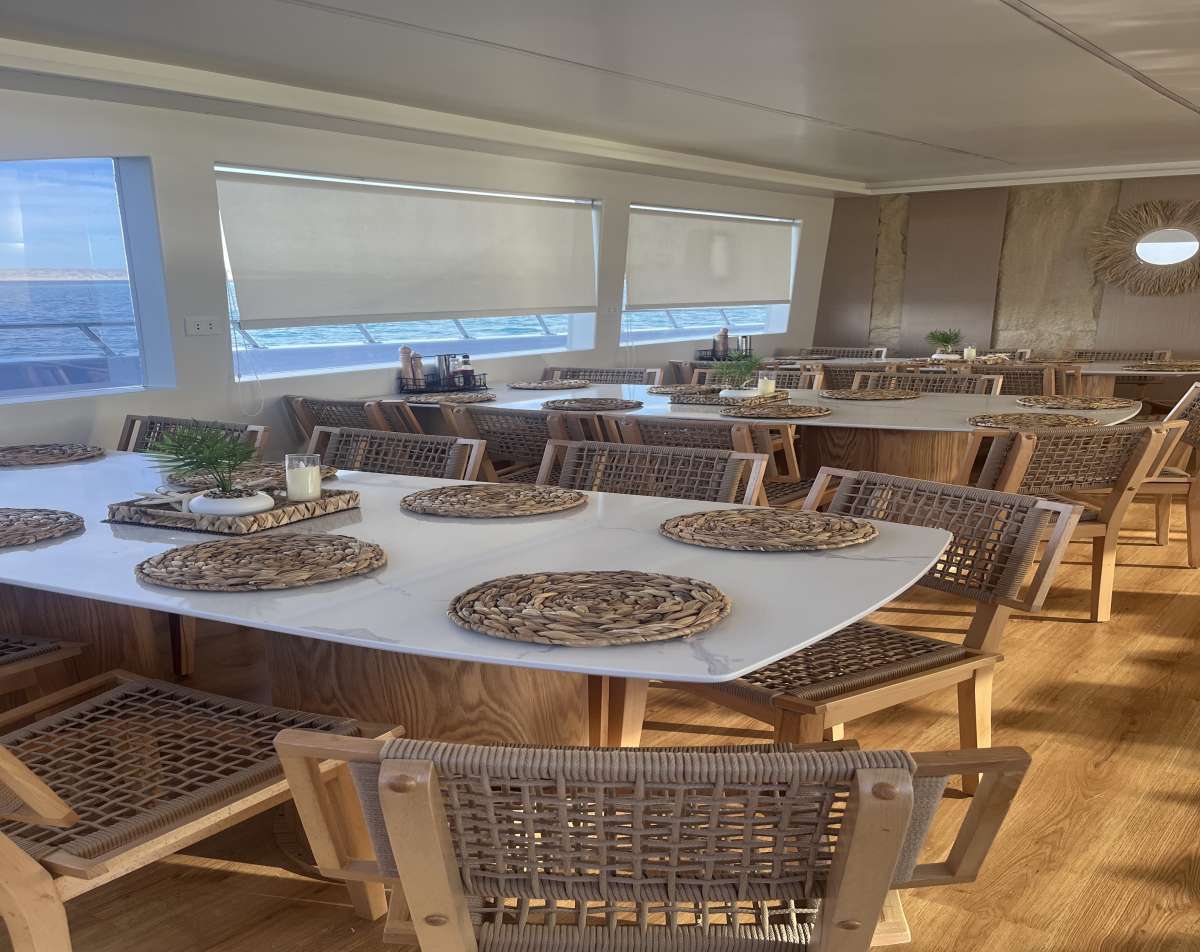
The current official gallery shows a contemporary interior with a broad air-conditioned salon, television area, separate restaurant, coffee-and-snack station and several outdoor spaces. These include a forward lounge, upper-deck seating and swing bar, sun loungers, and an open-air dining/grill area on the high deck. The plan labels three principal guest decks—lower, main/middle and upper—with an additional open high-bridge level. This does not alter the operator's published “three decks” specification.
Meals are normally served on a full-board basis, and current booking listings include snacks, drinking water and soft drinks. Exact menus, espresso, alcohol and special-diet procedures depend on the selected departure. Vegetarian, allergy, halal or medical requests should be submitted before payment and repeated in the final guest form. The public operator pages do not promise laundry, a spa, a cabin minibar or satellite internet.
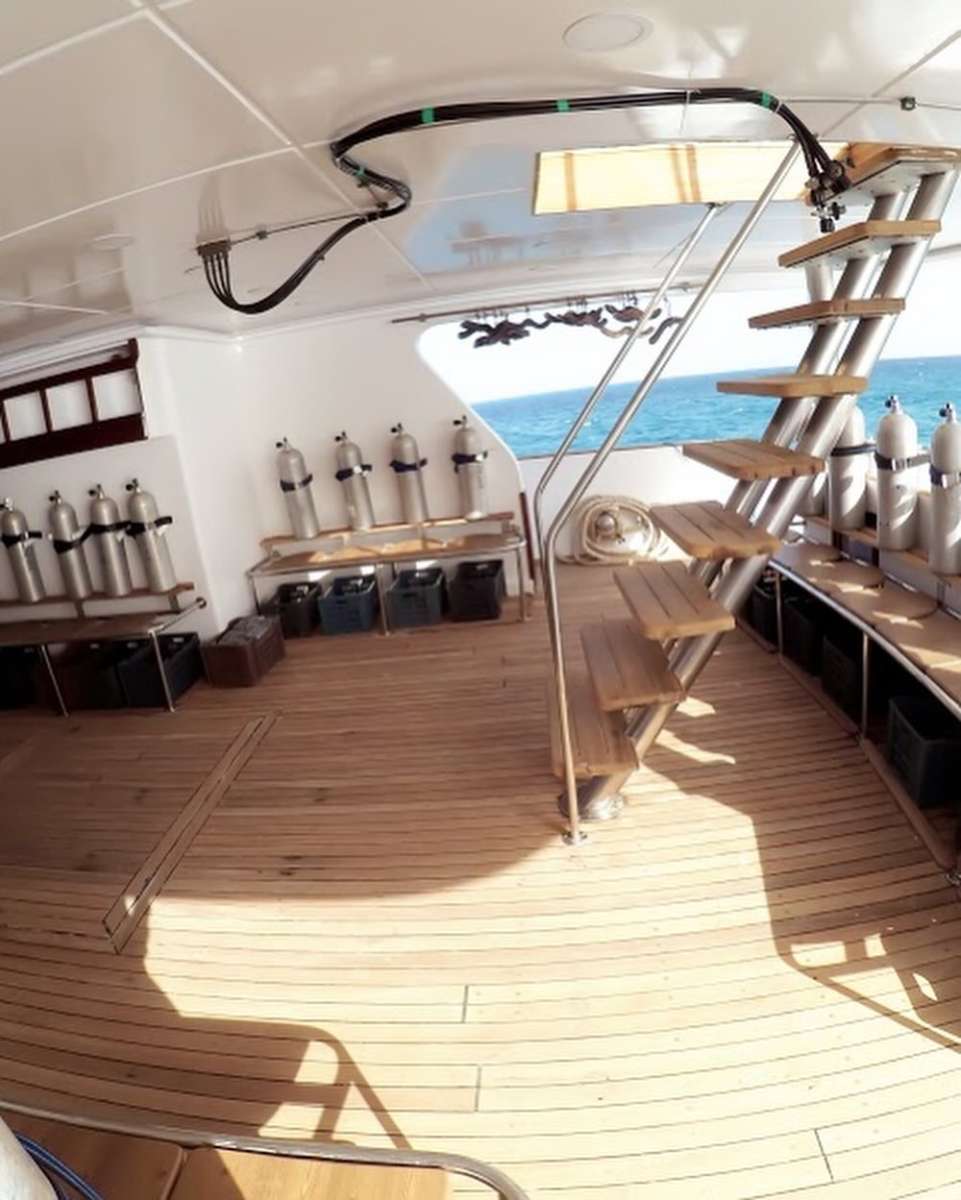
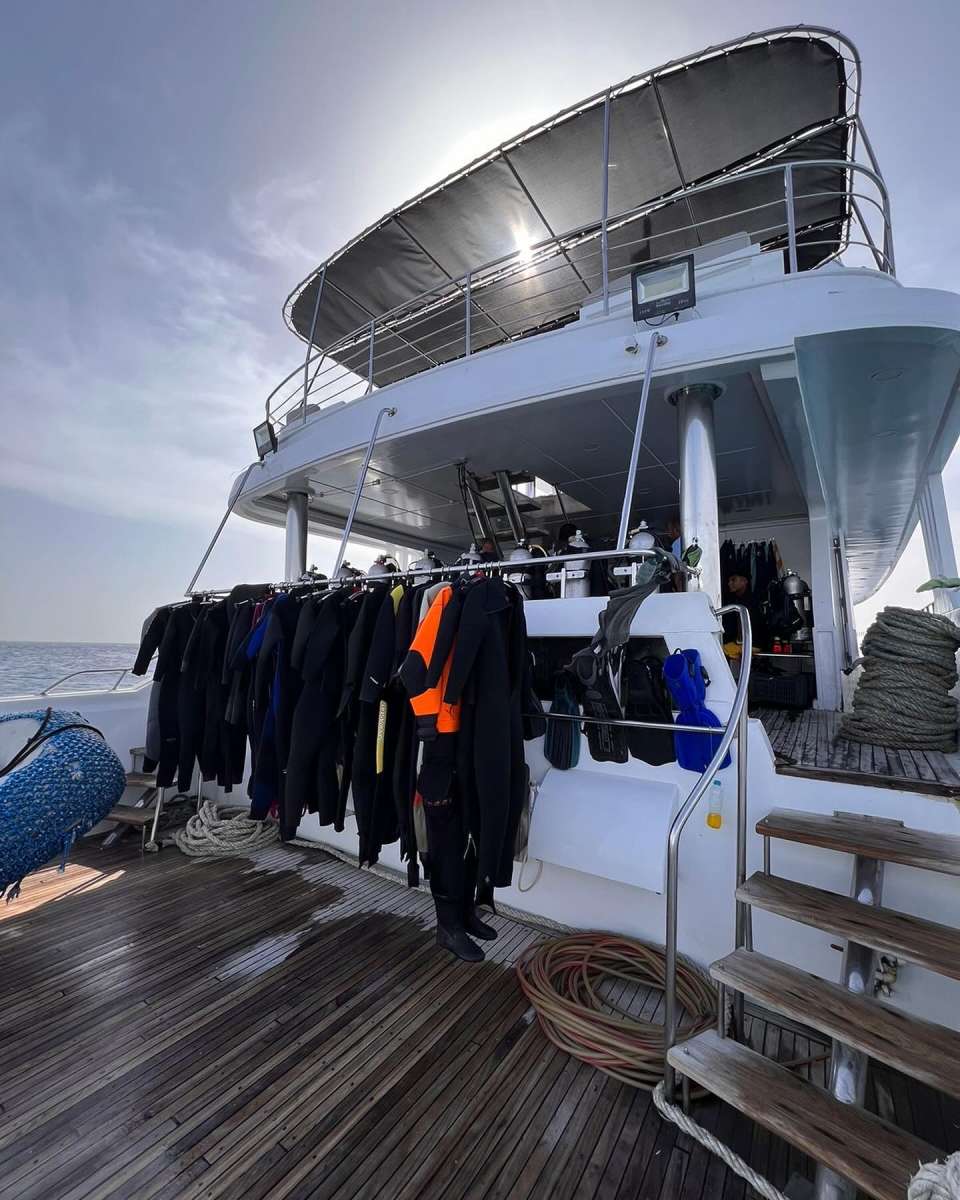
The aft working area includes a spacious dive deck, individual preparation stations, tank racks and a low platform. Two motorised tenders are widely listed and appear in official imagery, although their current dimensions, engines and passenger limits should be confirmed for a charter. Outdoor hot-water shower facilities are advertised by current booking partners. No lift or adapted cabin is published; stairs, tender transfers and wet-deck movement make a written mobility assessment advisable.
Navigation and diver-recovery equipment includes GPS/GPA information, ENOS electronic locating capability and the usual navigation systems shown in current sales material. The operator lists a 50-litre emergency-oxygen cylinder and a medical first-aid box. These features support, but do not replace, the safety briefing, personal signalling equipment, suitable insurance and the captain's authority.
Galaxy 720 is primarily marketed as a scuba liveaboard, but the operator also offers kite-surfing and leisure safaris. Those are separate charter products. A standard diving departure should not be sold as including kite instruction or a leisure-only programme, and a non-diver or snorkeller should obtain written confirmation of acceptance, supervision, activities and price.
Cabin
The operator's technical list and detailed deck plan reconcile to 12 guest cabins for 24 people:
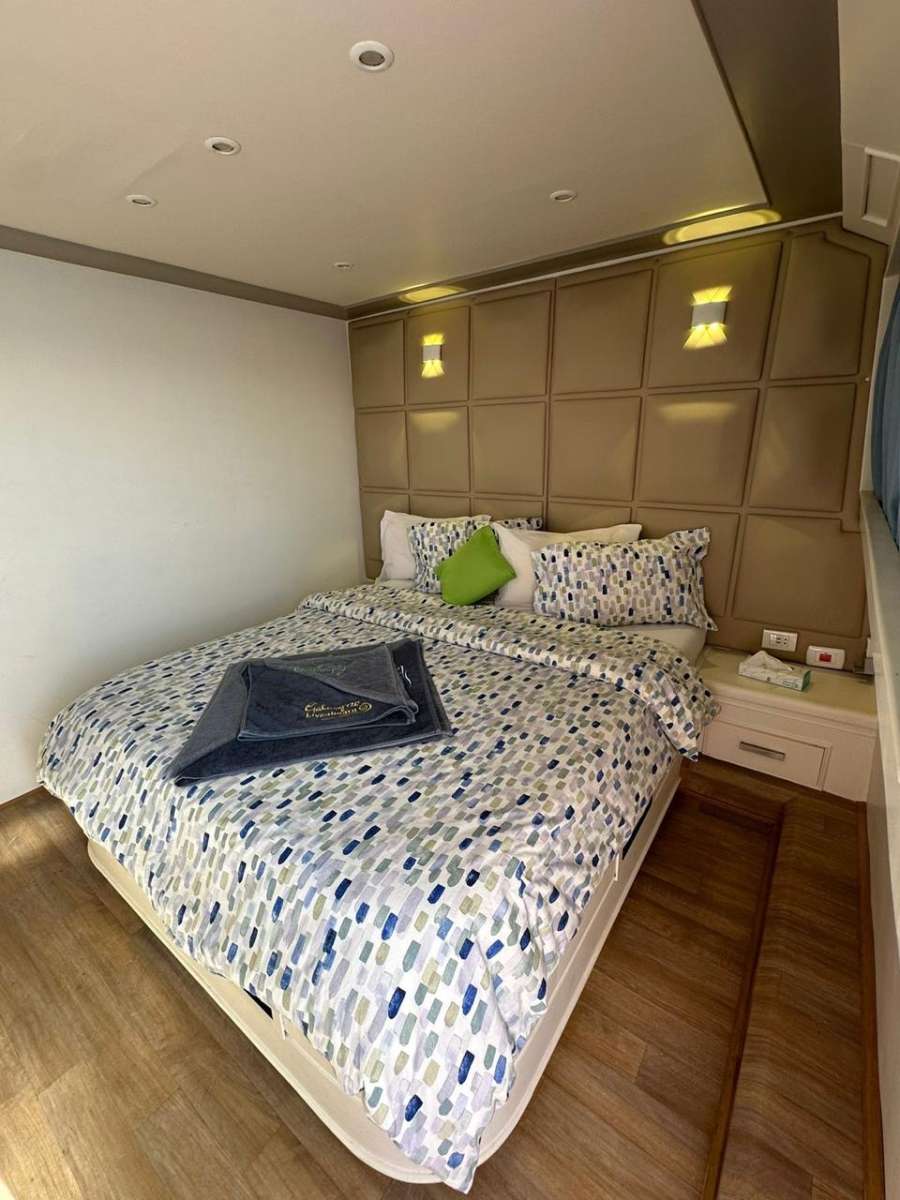
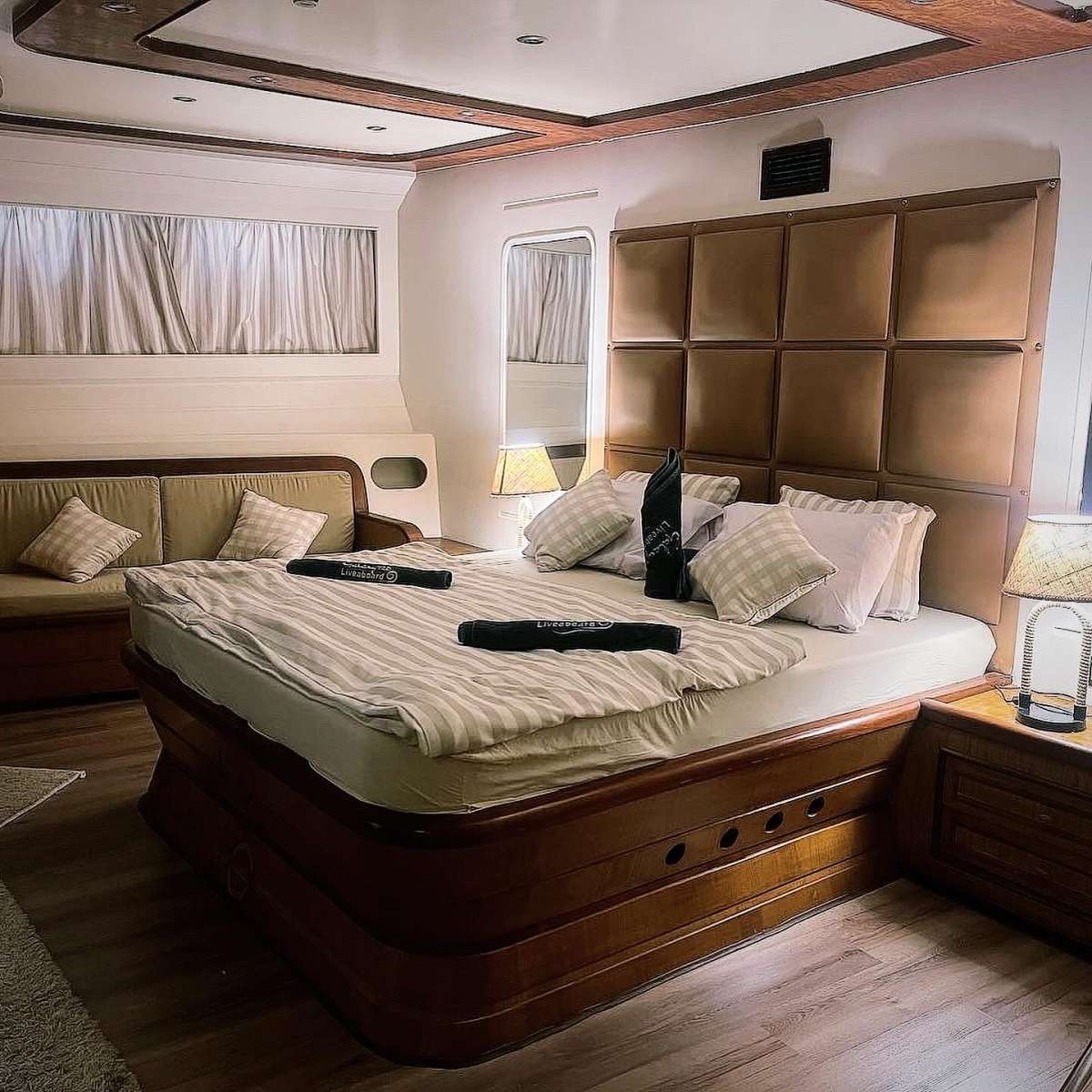
- 1 Lower Deck Grand Suite / Royal Suite — Cabin 1, maximum 2 guests: a forward suite with one double-bed arrangement. The official gallery shows a full double bed, while current partner descriptions add two sofas, a television/DVD and a larger ensuite with a separate walk-in shower. Bed dimensions and measured floor area are not published.
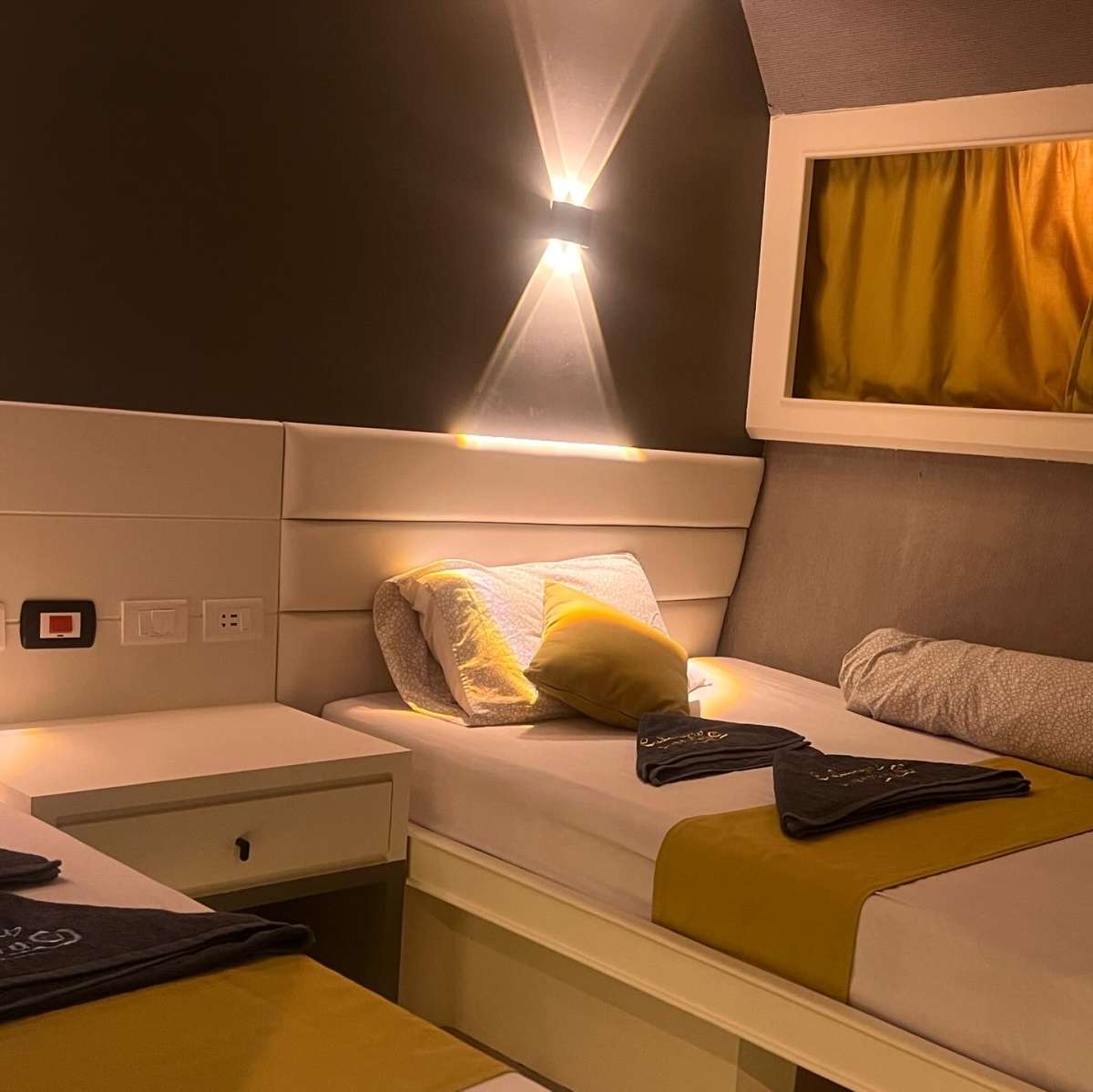
- 8 Lower Deck Standard Twin Cabins — Cabins 2–9, maximum 2 guests each: each plan shows two separate single beds and a private bathroom. This is the principal share category for friends or matched solo travellers. The official gallery image confirms an example twin layout but does not prove that every cabin has identical dimensions.
- 2 Upper Deck Sea View Suites — Cabins 10–11, maximum 2 guests each: each is sold as a double/king-style suite. Large outward-facing windows are visible in the official photographs and current listings describe a king-size bed. No exact mattress size or square-metre measurement is published.
- 1 Upper Deck Standard Twin Cabin — Cabin 12, maximum 2 guests: two separate single beds on the upper deck, with private ensuite and exterior outlook. It is the only standard guest cabin on this deck.
The arithmetic is precise: one lower suite + eight lower twins + two upper suites + one upper twin = 12 rooms and 24 berths. Cabin 13 is a triple guide cabin and belongs to the onboard team. It is excluded from the guest inventory even though it appears under “cabins” on the technical page.
All guest cabins are advertised with private shower/toilet facilities and air conditioning. The operator's FAQ says every cabin has opening scuttles and advises ventilating when appropriate; upper-deck suites also have the larger panoramic windows shown in the gallery. Bathroom towels are provided, and the current FAQ states that bed linen and bathroom towels are changed every three days. Guests are asked to conserve fresh water and not place toilet paper or sanitary items in the marine toilets.
The lower standard rooms are twins, not double rooms, despite the technical page's English label “standard double cabin.” The deck plan and a current specialist listing resolve the ambiguity as nine cabins with separate beds and three cabins with double beds. The word “Suite” should not be expanded into an unverified separate lounge, balcony or hotel service. Only the lower Grand/Royal Suite is specifically described with sofas; the two upper suites are distinguished mainly by their double-bed configuration, deck position and sea-view windows.
No reliable source publishes cabin floor areas, exact bed measurements, safe availability, hairdryer provision, bathrobes, USB ports, individual refrigerator, soundproofing or a cabin-by-cabin socket map. Some reseller amenity tables apply generic icons to every category; those have not been converted into promises. The confirmed electrical supply is 220 V, and the operator recommends bringing a suitable international adapter.
Single occupancy is not a dedicated cabin category. A solo traveller normally books one berth in a twin or requests sole use subject to availability and supplement. The quotation should state the cabin number, deck, bed type, occupancy, supplement and whether matching with another guest is permitted. Couples wanting one shared bed should book one of the three suites rather than assume that a twin can be converted.
Diving
Galaxy 720 supports recreational Red Sea liveaboard diving from the northern wrecks and Strait of Tiran to exposed offshore marine parks and the Deep South. The equipment list includes 30 twelve-litre cylinders, 12 fifteen-litre cylinders, two compressors rated at 240 litres and a membrane Nitrox system producing mixes up to 32%. Fifteen-litre cylinders are limited and must be reserved; valves, current surcharge and requested gas mix should appear in writing.
Nitrox capability does not by itself mean that every fare includes Nitrox. The operator asks guests to pre-book Nitrox and other gases. One current sales channel includes 27–30% Nitrox for certified users, while other contracts may price it separately. Certification, availability and the final package wording control. Courses, decompression gases, rebreather support, sidemount and technical profiles are not confirmed as standard services.
A typical seven-night programme is sold with around 18 dives, including night dives where permitted, but the operator does not guarantee a universal total. Boarding time, check dive, long crossings, weather, coastguard clearance, daylight and the final no-fly interval all affect the schedule. The first and last diving days are normally shortened. Site choice and sequence remain at the captain's and dive guides' discretion.
The operator's experience guidance varies by route: 50 logged dives for marine parks such as Brothers, Daedalus, Rocky and Zabargad; 50 for wreck programmes; 40 for South/St John's; and 30 for Fury Shoal and Safaga. Some retail departures additionally require Advanced Open Water or equivalent. A diver who meets the number but lacks recent current, wall, wreck or negative-entry experience may still be restricted to a safer profile.
The FAQ requires guests to bring a dive computer, decompression table, depth gauge/watch, surface marker buoy, snorkel, mask, fins, regulator with alternate air source and torch. Certification card, passport and the requested medical/waiver documents are also checked. Rental equipment, 15-litre cylinders, private guide and courses must be arranged in advance; the operator asks for rental requests at least one week before arrival.
The published insurance wording is inconsistent: one FAQ answer calls dive insurance highly recommended rather than mandatory, but the documents list later includes diving insurance. Until a dated confirmation says otherwise, guests should carry proof of cover for scuba activity, recompression treatment, medical evacuation and repatriation. Standard travel insurance may exclude deeper diving or offshore marine parks.
Two tenders support entries and pickups away from the mother ship. Offshore sites such as the Brothers, Daedalus and Rocky can involve current, negative entries, open-water ascents and blue-water animal searches. Each diver should follow the briefing, stay with the assigned team, carry the specified surface signal and understand lost-diver procedure. ENOS is a valuable secondary locator, not a substitute for an SMB or disciplined group practice.
Likely encounters vary with route and season: reef fish, turtles, rays, tuna, barracuda and dolphins are possible across the region, while thresher, hammerhead, grey reef and oceanic whitetip sharks may appear at offshore reefs. No animal, visibility range or current strength is guaranteed. Responsible buoyancy, no-touch wreck and coral practice, and conservative depth and gas limits take priority over photographs.
Other Information
Galaxy 720 is usually sold as a seven-night shared-cabin safari, but the precise package changes by route, booking channel and special departure. The operator currently advertises selected 2026 Brothers–Daedalus–Elphinstone departures as “all inclusive” without defining that term on the offer card. The itemised confirmation, not the headline, must decide what is included.
Commonly included in a current standard diving package when expressly written in the quotation:
- Seven nights of accommodation in the booked shared cabin category
- Full board, routine snacks, drinking water and soft drinks
- Planned guided recreational dives and dive-guide service
- Standard 12-litre air cylinder, air fills, weights and weight belt
- Nitrox for certified divers on some current packages; pre-booking remains required
- Bathroom towels and bed linen, with the FAQ stating a three-day change cycle
- VAT where the selected retailer specifically lists it
- Short-term DAN cover on request on one current sales channel; this must not be treated as a substitute for personal insurance without reviewing its terms
Normally excluded, optional or rate-dependent unless the contract says otherwise:
- International/domestic flights, excess baggage, hotels and independent travel
- Egyptian entry visa; the operator's FAQ currently quotes USD 25 on arrival for eligible nationalities and USD 35 for Meet & Assist including visa, but eligibility and fees can change
- Airport/hotel/port transfers; the operator can arrange them on request, while current retail packages may price them separately
- Marine-park, environmental, port and fuel charges where not bundled; a current third-party listing applies a separate southern-route fuel surcharge, illustrating why the route-specific invoice matters
- Equipment rental, 15-litre cylinder, private guide, courses, speciality training and non-standard gases
- Alcohol, espresso or premium drinks not listed in the meal plan
- Land excursions, extra hotel day, personal purchases and services not named as included
- Crew and guide gratuities; the operator currently suggests EUR 70–120 per person for a seven-night trip, but gratuity remains discretionary
- Travel cancellation, baggage, medical evacuation and comprehensive dive-accident insurance
Current retail prices for equipment or surcharges are not reproduced as permanent boat facts because they can change independently of the vessel. If needed, the final invoice should itemise the 15-litre tank, complete or partial rental set, computer, torch, private guide, park fee, port fee and fuel surcharge in the currency of payment.
Hurghada is the normal gateway for northern itineraries. Southern departures commonly use Port Ghalib near Marsa Alam; some offshore combinations may start in one port and finish in another. The final joining instructions must name the actual marina, airport meeting point, transfer inclusion, latest safe arrival, earliest safe departure and emergency contact. “Hurghada office” is not proof that every cruise boards there.
The vessel uses 220 V power. Guests should bring the right adapter and should not leave electronics charging unattended in a cabin. Cabins and salon are dry areas, and dive equipment is kept out of both. Wi-Fi appears on current sales listings, but no operator promise of uninterrupted offshore connectivity was found; remote reefs can have little or no mobile signal.
The public site does not publish a complete deposit, balance, cancellation, vessel-substitution, minimum-passenger or compensation policy. Obtain the booking terms before payment. The same contract should resolve cabin assignment, Nitrox inclusion, fees, transfer, route, expected dive count, insurance evidence and the remedy if weather, authority instructions or a technical issue changes the programme.
Before travel, reconfirm passport/visa requirements from an official source, send rental and gas requests at least one week ahead, and allow a conservative no-fly interval after the final dive. A tight same-day flight is particularly unsuitable when the boat must sail back from an offshore reef or transfer between Port Ghalib and Hurghada.
Itineraries
Galaxy 720's programme spans six established Egyptian Red Sea route families: Classic North, North–Tiran, North–Brothers, Brothers–Daedalus–Elphinstone, St John's & Elphinstone, and Daedalus–Rocky–Zabargad. Northern cruises normally use Hurghada; southern programmes use Port Ghalib or another port stated in the contract. The following plans are representative, not fixed schedules.
Every route is weather- and permission-dependent. The captain and dive team may reverse the sequence, replace a site, reduce a dive or change port for safety. Around 18 dives is common on a seven-night safari, but crossings, check-in and the no-fly interval limit the first and last days. Wildlife references are possibilities rather than promises.
Classic North — Wrecks, Reefs and a Week from Hurghada
Classic North concentrates on the Gulf of Suez wreck corridor and nearby coral systems. It is geographically less remote than the offshore marine-park routes, but the operator still recommends 50 logged dives for wreck programmes. Penetration is never automatic; certification, recent experience, gas, light and guide approval decide whether a guest remains outside or enters an accessible section.
Day 1 — Hurghada embarkation: board, complete paperwork, allocate cabins, prepare equipment and attend vessel and emergency briefings. Departure depends on port clearance. A same-evening dive should not be promised.
Day 2 — Check dive and northern reefs: use a sheltered reef for weighting and equipment checks before moving toward Shaab El Erg, Shag Rock or a comparable site. The team confirms buddy groups and tender procedure.
Day 3 — Abu Nuhas: weather permitting, dive selected wrecks on the reef's north side. Giannis D, Carnatic, the tile carrier and the lentil cargo wreck offer different profiles; the protected southern anchorage and Yellow Fish Reef can provide an alternative.
Day 4 — Gubal and Shaab Mahmoud: possible dives include Ulysses, Bluff Point, the Barge and Small Crack. The Barge is well known for night diving, but current and anchorage control the choice.
Day 5 — SS Thistlegorm: explore the 129-metre British freighter resting at a maximum depth of about 32 metres. Its vehicles and wartime cargo make it a signature wreck, while current, crowds and interior hazards require disciplined teams. One or more dives may be planned if conditions allow.
Day 6 — Ras Mohammed or return reefs: Shark Reef and Yolanda Reef combine walls, coral-covered plateaus, schooling fish and remains of Yolanda's cargo. The captain may substitute Shag Rock or another northern reef if navigation demands it.
Day 7/8 — Closing dives and Hurghada: complete one or two shallower dives, rinse equipment and return to port. The contracted itinerary determines whether guests remain aboard for the final night or disembark after breakfast.
North–Tiran — Thistlegorm, Ras Mohammed and the Strait
This route extends the northern wreck programme to the four celebrated reefs at the entrance to the Gulf of Aqaba. It starts and ends in Hurghada according to the operator's route page. Long navigation and strong currents mean the number of named sites reached in one week can vary.
After an orientation dive, Galaxy 720 can work through Abu Nuhas, Small Crack, Shag Rock and SS Thistlegorm before crossing toward Ras Mohammed. Shark Reef and Yolanda Reef are classic drift sites where wall scenery, coral heads and schooling fish meet the scattered sanitary cargo of the Yolanda wreck.
At Tiran, Jackson Reef offers wall diving and gorgonian fans, Woodhouse Reef a long current-swept wall and canyon, Thomas Reef a smaller and often faster site with a southeastern plateau, and Gordon Reef a shallower plateau beside drop-offs. Laguna Reef's exposed Kormoran and Million Hope wrecks are only realistic in suitable weather.
A representative week gives two to three days to the northern wrecks, one day around Ras Mohammed and up to two days in Tiran, with final dives on the return toward Hurghada. The sequence may be reversed to use the best crossing window.
North–Brothers — Historic Wrecks and Offshore Walls
North–Brothers combines Abu Nuhas and Thistlegorm-area wrecks with the two remote Brothers Islands. It suits divers who want both metal and pelagic action and who meet the operator's 50-dive guidance for wrecks and marine parks.
The northern part can include Giannis D, Carnatic, SS Thistlegorm, Small Crack and Gubal. The offshore passage then reaches Big Brother, where Numidia descends along the northern reef and Aida rests on the northwest side, and Little Brother, known for steep walls, fan corals and open-water shark potential.
Currents, waves and limited shelter can restrict the Brothers programme. Entries may be negative and the tender can collect divers away from the reef. The captain decides whether both islands, both wrecks and repeated wall dives are practical before returning toward Hurghada or the contracted port.
Brothers–Daedalus–Elphinstone — The Golden Triangle
The BDE route is the most recognisable central offshore circuit. It is intended for experienced divers comfortable with current, deep walls, negative entries and blue-water ascents. The operator groups it under the 50-logged-dive marine-park recommendation, and individual departures may add Advanced certification.
A representative seven-night flow begins with check dives after embarkation, followed by two days around Big and Little Brother. Numidia and Aida add wreck scenery to Big Brother, while Little Brother's walls are searched for thresher, grey reef and other pelagic sharks.
The boat then crosses to Daedalus Reef, an isolated lighthouse reef with sheer walls and current-exposed plateaus. Early dives may look into the blue for hammerheads, but the group stays within the agreed depth and gas plan. Elphinstone completes the triangle with north and south plateaus, coral-covered walls and possible oceanic whitetip encounters.
Departure and return can involve Hurghada and/or Port Ghalib depending on the scheduled week. Long overnight navigation is part of the route, and a site may be omitted if sea state or park rules make the crossing unsuitable.
St John's & Elphinstone — Tunnels, Coral Gardens and Southern Walls
The southern itinerary focuses on the St John's reef system near the Tropic of Cancer and normally uses Port Ghalib-area logistics. The operator recommends at least 40 logged dives for South/St John's, with 30 stated for Fury Shoal and Safaga. Overheads and current still require appropriate experience.
St John's brings closely spaced reefs with drop-offs, hard-coral formations and shallow passages. St John's Caves/Umm Kharalim is known for tunnels, pinnacles and shafts of sunlight. Divers enter only routes that remain suitable for their training and the day's surge; a picturesque swim-through should never be treated as permission for unsupported cave diving.
Farther north, Fury Shoal offers coral gardens, plateaus and channels. Abu Galawa adds the small tugboat wreck, while Sataya and neighbouring reefs broaden the options. Elphinstone may be scheduled at the beginning or end, subject to sea conditions and port timing.
A typical week moves south after check dives, spends several days between St John's and Fury Shoal, then works north for Elphinstone and the final no-fly-friendly dives. The public route page does not guarantee a fixed port or daily order, so both belong in the final confirmation.
Daedalus–Rocky–Zabargad — Deep South Expedition
This route links central and deep-southern offshore reefs and requires the strongest experience profile in the programme. The operator advises 50 logged dives for Daedalus, Rocky and Zabargad. Long crossings, blue-water entries and exposed drop-offs reduce its suitability for recently certified or current-anxious divers.
After orientation and, when practical, Elphinstone, Galaxy 720 can continue to Daedalus for lighthouse walls and pelagic searching. It then moves south to Zabargad, a large island ringed by reef, lagoons, coral scenery and wreck possibilities, and Rocky Island, whose fringing reef drops steeply into deep water. Rocky's most colourful upper reef can still experience substantial current.
Several nights may be spent navigating. The captain can reverse the route, shorten an offshore stay or substitute a protected reef. Hammerheads, oceanic whitetips, mantas, tuna and other pelagics are possible but never form a contractual part of the safari.
Choosing the Right Galaxy 720 Route
Classic North is the most wreck-centred choice and offers the shortest offshore exposure, while North–Tiran adds stronger drift potential and a longer geographic range. North–Brothers is the bridge between both styles: historic wrecks first, then remote walls and pelagic life. These three programmes normally make the most sense for a Hurghada arrival.
BDE is for divers whose priority is exposed offshore reef diving and sharks rather than a large number of different wrecks. St John's & Elphinstone trades the northern metal for coral passages, hard-coral gardens and southern scenery. Daedalus–Rocky–Zabargad has the longest expedition character and the least shelter; it should be selected for proven open-water confidence, not only because the logbook reaches the numerical minimum.
Date, port and recent experience matter more than a wish list. A diver interested in Thistlegorm should not assume it appears on BDE, while a guest seeking St John's caves should not book a generic southern week without seeing the named route. Before paying, compare the departure title, start/end ports, minimum certification, logged-dive threshold, cabin category and all route surcharges on the same written confirmation.
Typical Diving-Day Rhythm
An active day commonly starts with an early briefing and dive followed by breakfast. A second dive precedes lunch, then an afternoon session follows the main surface interval. A sunset or night dive may be offered at a safe mooring. Offshore crossings, exposed walls and marine-park rules can remove the fourth dive.
The check dive is used to settle weights, equipment and group organisation. Later tender dives may require a negative entry, immediate descent and open-water pickup. Briefings should state maximum depth, turn pressure, current direction, separation procedure, required SMB and where ENOS units are carried or issued.
Final-day diving ends early enough for navigation and a safe pre-flight surface interval. Guests should follow the longest interval required by the operator, training agency and insurer and should not assume that an advertised airport transfer makes a tight flight safe.
Essential Itinerary Notes
- Around 18 dives is a common seven-night plan, not a guaranteed number.
- Logged-dive guidance is route-specific: 50 for wrecks and exposed marine parks, 40 for South/St John's, and 30 for Fury Shoal/Safaga; a retailer may require more.
- Hurghada usually serves northern routes; Port Ghalib commonly serves southern ones. Confirm the exact start and finish ports.
- Nitrox up to 32% is technically available, but inclusion and mix depend on the contract and certification.
- Fifteen-litre cylinders, rental equipment, private guides and courses require advance reservation.
- Weather, currents, permits and captain's judgement control the final sites, sequence and dive count.
- Shark, dolphin, ray and other wildlife encounters are never guaranteed.
- Allow a conservative no-fly interval and travel margin after the last dive.
Schedules & routes
Prices & conditions
Included
- Transfers from airport and/or hotel to the yacht
- VAT and local taxes
- Full-board meal plan (including snacks)
- Complimentary beverages (water, tea, coffee)
- Soft drinks
- Diving activity (incl. tanks, weights, weight belts)
- Dive guide service
- Nitrox fills
- Cabin towels and complimentary toiletries
- Cabin cleaning service
Not included
- Domestic flights in destination country
- Marine park fees & Port fees
- Fuel surcharge
- Alcoholic beverage
- Dive equipment rentals
- Larger tank (15 L)
- Dive courses on board
- Land excursions and activities throughout the trip
- Dive insurance (mandatory requirement)
- Travel insurance (trip cancellation insurance)
- Crew gratuity
Useful information
Northern Egypt
Best time for diving
The best diving conditions are usually from March to May and from September to November, when water temperatures are comfortable and visibility is excellent. During the summer months from June to August, the water becomes warmer and marine life is very active. In winter months, divers can still enjoy great visibility with fewer crowds. Dolphins, turtles, reef sharks, napoleon wrasse, and large schools of barracuda and jacks are commonly seen throughout the year. Wreck diving is one of the main highlights in this region, including the famous SS Thistlegorm, Dunraven, and Abu Nuhas wrecks.
About temperatures
Air : winter months are between 18°C - 24°C, summer months are between 30°C - 38°C.
Sea : winter months are between 21°C - 24°C, summer months are between 26°C - 30°C.
Wetsuit Recommendation
For the Northern Red Sea liveaboard, we recommend a 5mm full wetsuit during the cooler months (Dec – Apr) and a 3mm full wetsuit during the warmer months (May – Nov). Some divers may also prefer a hooded vest during winter dives, especially on repetitive dives and night dives.
Diver requirement
The Northern Routes are suitable for all levels of divers, including beginners on many itineraries. However, some wreck dives and drift dives may require better buoyancy control and experience with currents. Certain wreck penetration dives may require Advanced Open Water certification and previous wreck diving experience. Most liveaboards provide dive guides and detailed dive briefings before every dive. You can find out more information here : Northern Egypt.
Embarkation / Disembarkation
Depending on which route you are heading to, the embarkation and disembarkation can be from Hurghada (HRG), Marsa Alam (RMF), or Sharm El Sheikh (SSH).
Visa Requirements
Most nationalities can obtain a visa on arrival at Egypt’s international airports. If you opt for a visa on arrival, you’ll need a passport that’s valid for at least six months from your arrival date, a travel itinerary, and documentation to prove accommodation or any booked tours.
Vaccinations
A yellow fever vaccination certificate is required if traveling from a country with a risk of YF virus transmission and ≥9 months of age, including transit >12 hours in an airport located in a country with a risk of YF virus transmission. This includes Eritrea, Rwanda, Somalia, Tanzania, and Zambia.1 In the absence of a vaccination certificate, the person will be detained in quarantine for up to 6 days after departure from an area at risk of YF virus transmission. An overview of the countries to which this applies can be downloaded here: Yellow Fever Risk Countries.
Money Matters
The local currency is the Egyptian Pound (EGP), and ATMs are common, especially in the main tourist areas. Major hotels will usually accept payment by credit card. However, smaller hotels may expect cash and hard currency payments (USD/EUR).
Drones
To bring a drone to Egypt and fly it, you need to receive permission from the country’s Civil Aviation Authority (CAA). If you do not have documentation of authorization, your drone will be confiscated at customs. However, getting permission to fly a drone from the CAA is difficult. Should you somehow manage to get your drone in, the onboarding screening will detect your drone and one of two things will happen: 1. your drone will be confiscated at the point of arrival and stored at the airport. 2. the drone will be detected and confiscated when you are leaving the country and you’ll be sanctioned for bringing an illegal commodity to Egypt. - So don't risk it, and leave your drone at home if you’re planning to travel to Egypt.
Extending your holiday
We offer a range of hotels/resorts, land-based diving packages, and excursions that can be arranged before or after your liveaboard holiday. Just ask us if you need such a service.
Southern Egypt
Best time for diving
The Southern Red Sea in Egypt offers excellent diving conditions year round, with warm water, good visibility, and rich marine life throughout the seasons.
Daedalus, Elphinstone & Brothers : The best time is from March to November when sea conditions are calmer and pelagic encounters are more frequent. Oceanic whitetip sharks are commonly seen from October to December, while hammerhead sharks are most frequently encountered from June to September around Daedalus Reef. Thresher sharks can occasionally be spotted early in the morning at Brothers Islands.
St. Johns & Fury Shoals : Best diving conditions are generally from April to November with warm water and excellent visibility. These southern reefs are famous for colorful coral gardens, reef sharks, dolphins, turtles, and abundant macro life. Encounters with manta rays are possible during spring and autumn seasons.
About temperatures
Air : winter months are between 20°C - 26°C, summer months are between 30°C - 40°C.
Sea : winter months are between 22°C - 24°C, summer months are between 27°C - 30°C.
Wetsuit Recommendation
For the Southern Red Sea liveaboards, we recommend a 5mm full wetsuit during the cooler months (Dec – Apr) and a 3mm full wetsuit or shorty during the warmer months (May – Nov).
Diver requirement
The Southern Red Sea routes are generally recommended for Advanced Open Water divers or experienced Open Water divers due to strong currents, deep dives, and blue water drift diving conditions around offshore reefs such as Daedalus, Elphinstone, and Brothers Islands. For St. Johns and Fury Shoals, some itineraries may be suitable for less experienced divers when sea conditions are calm, however good buoyancy control and comfortable drift diving skills are still recommended.
You can find out more information here : Southern Egypt.
Embarkation / Disembarkation
Most Southern Red Sea liveaboard trips depart from either Hurghada, Port Ghalib, or Marsa Alam. Guests usually need to fly into Hurghada International Airport (HRG) or Marsa Alam International Airport (RMF), depending on the itinerary and liveaboard selected.
Visa Requirements
Most nationalities can obtain a visa on arrival at Egypt’s international airports. If you opt for a visa on arrival, you’ll need a passport that’s valid for at least six months from your arrival date, a travel itinerary, and documentation to prove accommodation or any booked tours.
Vaccinations
A yellow fever vaccination certificate is required if traveling from a country with a risk of YF virus transmission and ≥9 months of age, including transit >12 hours in an airport located in a country with a risk of YF virus transmission. This includes Eritrea, Rwanda, Somalia, Tanzania, and Zambia.1 In the absence of a vaccination certificate, the person will be detained in quarantine for up to 6 days after departure from an area at risk of YF virus transmission. An overview of the countries to which this applies can be downloaded here: Yellow Fever Risk Countries.
Money Matters
The local currency is the Egyptian Pound (EGP), and ATMs are common, especially in the main tourist areas. Major hotels will usually accept payment by credit card. However, smaller hotels may expect cash and hard currency payments (USD/EUR).
Drones
To bring a drone to Egypt and fly it, you need to receive permission from the country’s Civil Aviation Authority (CAA). If you do not have documentation of authorization, your drone will be confiscated at customs. However, getting permission to fly a drone from the CAA is difficult. Should you somehow manage to get your drone in, the onboarding screening will detect your drone and one of two things will happen: 1. your drone will be confiscated at the point of arrival and stored at the airport. 2. the drone will be detected and confiscated when you are leaving the country and you’ll be sanctioned for bringing an illegal commodity to Egypt. - So don't risk it, and leave your drone at home if you’re planning to travel to Egypt.
Extending your holiday
We offer a range of hotels/resorts, land-based diving packages, and excursions that can be arranged before or after your liveaboard holiday. Just ask us if you need such a service.
Diver's reviews (0)
Photos