

Why Manta Rays Are the World’s Most Fun Dive Buddy
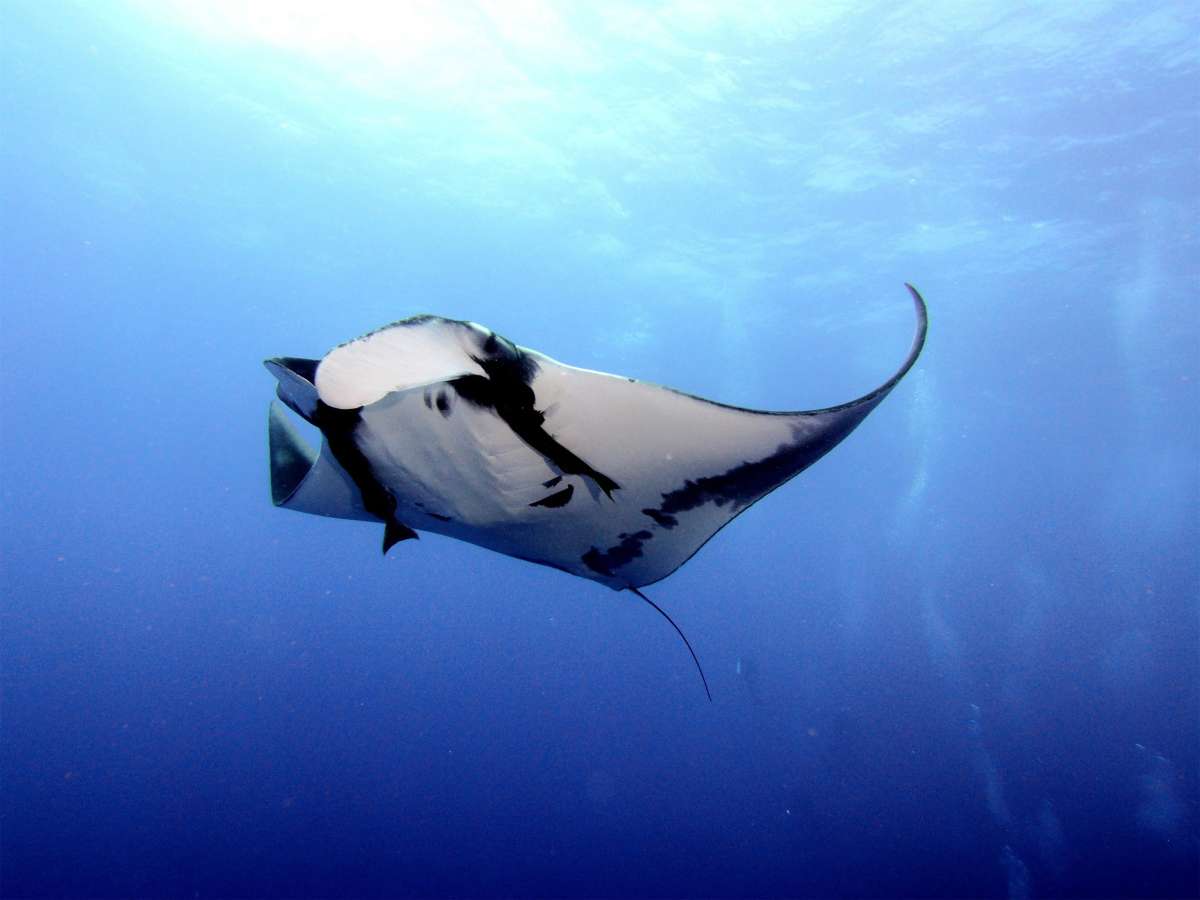
There is a moment in every diver’s life that changes them forever. You are hovering over a reef, checking your air or fiddling with your buoyancy, when suddenly the sunlight dims. You look up, and there it is: a silhouette resembling a stealth bomber, gliding effortlessly overhead.
Manta rays are the undisputed royalty of the ocean. They are big, they are beautiful, and unlike many of the ocean’s heavy hitters, they are completely harmless (no stingers here!). But beyond their majestic gliding, mantas are also some of the most fascinating, intelligent, and frankly entertaining creatures to encounter underwater.
Whether you are a seasoned pro or a newly certified Open Water diver, here is everything you need to know about the ocean’s gentle giants—from their surprisingly funny habits to the best places on Earth to find them.
1. Meet the Giants: Brains and Brawn
Before we get to the funny stuff, let’s clear up the biology. There are two main species of manta you might encounter:
Reef Manta (Mobula alfredi): The "smaller" ones, growing up to 5 meters (16 feet) wide. These are the homebodies, usually staying close to residential coasts and reefs.
Oceanic Manta (Mobula birostris): The true travelers. These leviathans can reach a wingspan of 7 meters (23 feet) and weigh up to 2 tons.
The Einstein of the Sea
Here is a fun fact to drop at the dive bar: Manta rays have the largest brain-to-body size ratio of any fish. They aren't just swimming filters; they are thinking, processing, and socializing. Scientists have even conducted "mirror tests" with mantas, and the results suggest they might possess self-awareness—a trait usually reserved for dolphins, apes, and humans. When you look a manta in the eye, there is a distinct feeling that they are looking right back at you, checking you out.
Fingerprints on their Bellies
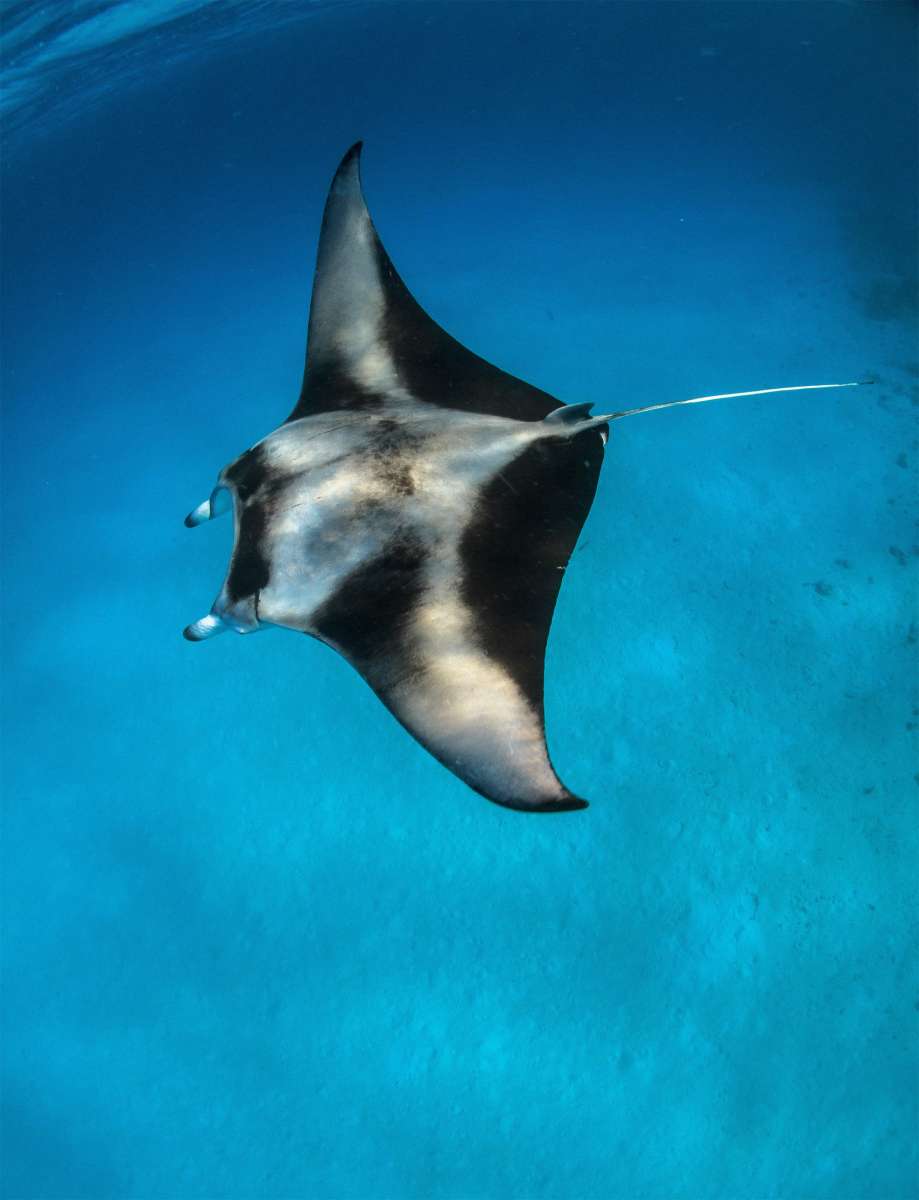
Every manta ray has a unique pattern of spots on its ventral side (belly). Just like a human fingerprint, no two are alike. Researchers use these spots to track individuals over decades. If you snap a photo of a manta’s belly, you can often upload it to global databases (like Manta Matcher) to see if that manta has a name, or—even cooler—get to name it yourself if it's a new discovery!
2. The Comedians of the Reef: Funny Manta Behaviors
While they look graceful in photos, mantas can be surprisingly goofy. If you spend enough time with them, you’ll witness behaviors that range from awe-inspiring to downright hilarious.
The "Somersault" Snack
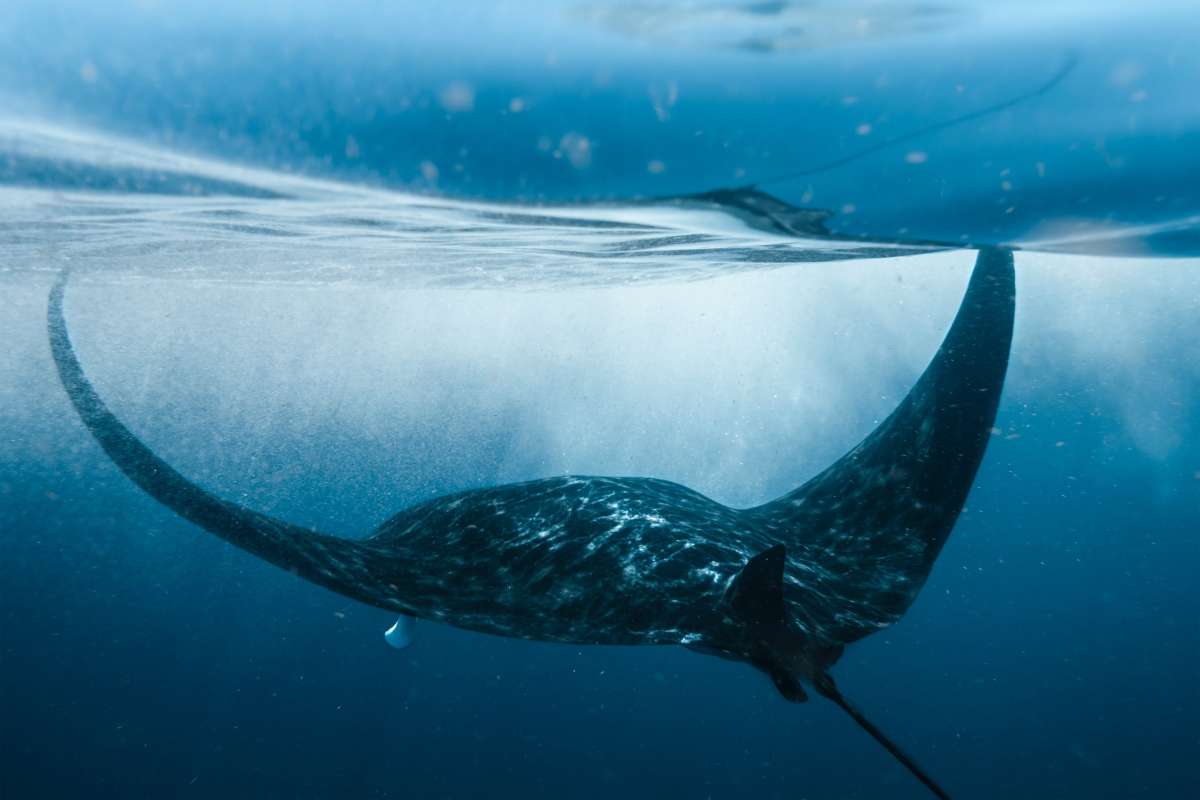
Mantas are filter feeders, eating zooplankton. When they find a dense patch of food, they don’t just swim through it once; they want all of it. To do this, they perform backward somersaults (barrel rolls), spinning in tight vertical loops with their mouths wide open. It looks like a dog chasing its tail, but in slow motion.
The "Cyclone" Feeding Frenzy
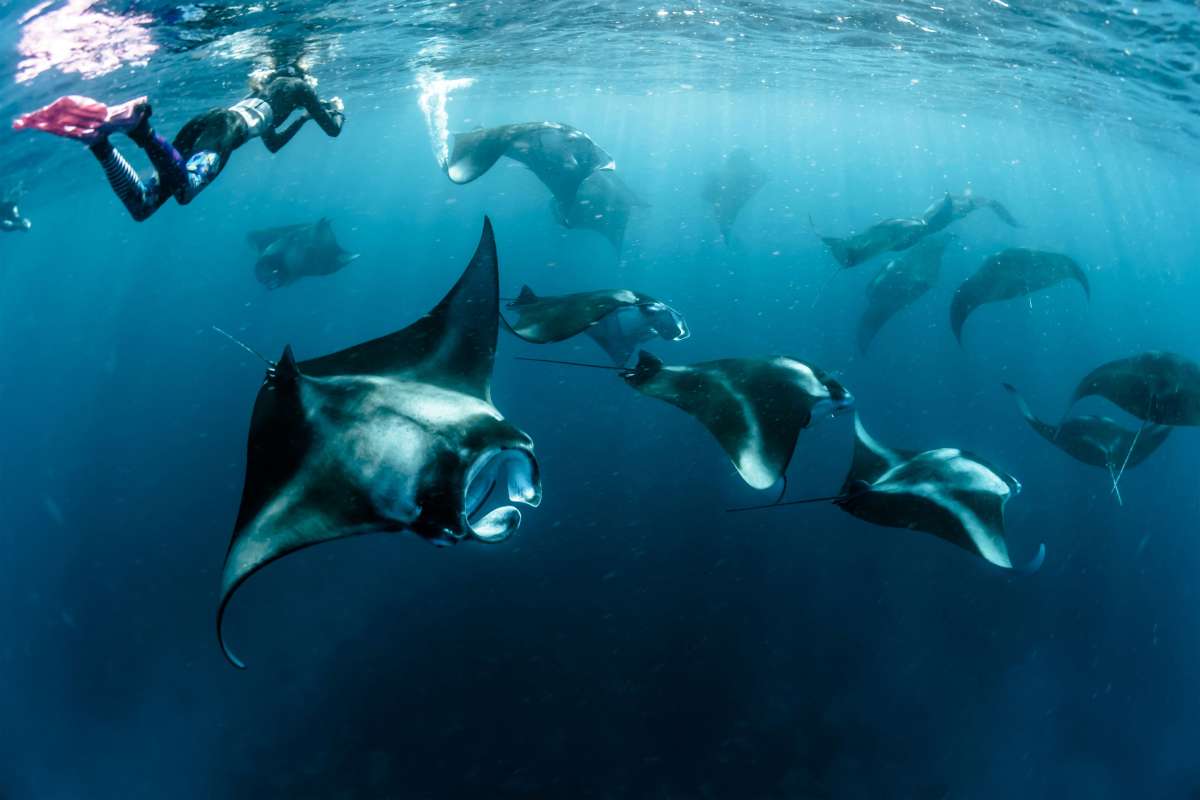
This is the holy grail of manta behaviors. When the plankton is trapped in a bay and hundreds of mantas gather, they form a cyclone. They swim in a spiraling column, nose-to-tail, creating a vortex that sucks the plankton into the center for a feast. It is organized chaos—a tornado of fins and mouths that is dizzying to watch.
The "Manta Train" (The Love Chase)
If you see a female manta swimming fast with a conga line of 10 to 20 smaller mantas trailing directly behind her, mimicking her every turn, you are witnessing the "Mating Train."
It’s an endurance test. The female leads the males on a high-speed chase to test their fitness. Eventually, the winning male will bite onto her left wing tip (the manta version of holding hands) to secure himself for mating. It’s romantic, in a chaotic, high-speed sort of way.
The "Bubble Tickle"
This is anecdotal, but many dive guides swear by it. Manta rays love the feeling of scuba bubbles on their bellies. It is not uncommon for a manta to hover directly over a diver’s exhaust bubbles, seemingly enjoying the tickling sensation. Note: Please don’t purge your regulator to annoy them, but if they hover over you, enjoy the shower!
3. The Manta Bucket List: Where & When to Go
You can’t just jump in the ocean and expect a manta to fly by. You need to be in the right place at the right time. Here is your definitive calendar for the world’s best manta encounters.
Top 5 Manta Destinations
Hanifaru Bay, Maldives - Best Season : May – Nov
Cyclone Feeding. Snorkeling only (no tanks allowed), but you may see 50-100 mantas in a feeding frenzy.
Socorro (Revillagigedo), Mexico - Best Season : Nov – May
The Friendly Giants. Famous for Oceanic mantas that actively seek out interaction with divers.
Raja Ampat, Indonesia - Best Season : Oct – Apr
The Magic Mix. incredible reefs + both Reef and Oceanic mantas. High chance of seeing the rare "Black Morph" manta.
Kona, Hawaii - Best Season : Year-round
The Night Ballet. One of the only places where you do an organized night dive to watch mantas feed on plankton attracted by dive lights.
Komodo National Park, Indonesia - Best Season : Dec – Feb
Current Junkies. Mantas flock here during the rainy season for the plankton blooms. Manta Alley is the hot spot.
Spotlight: The "Black Manta" of Raja Ampat
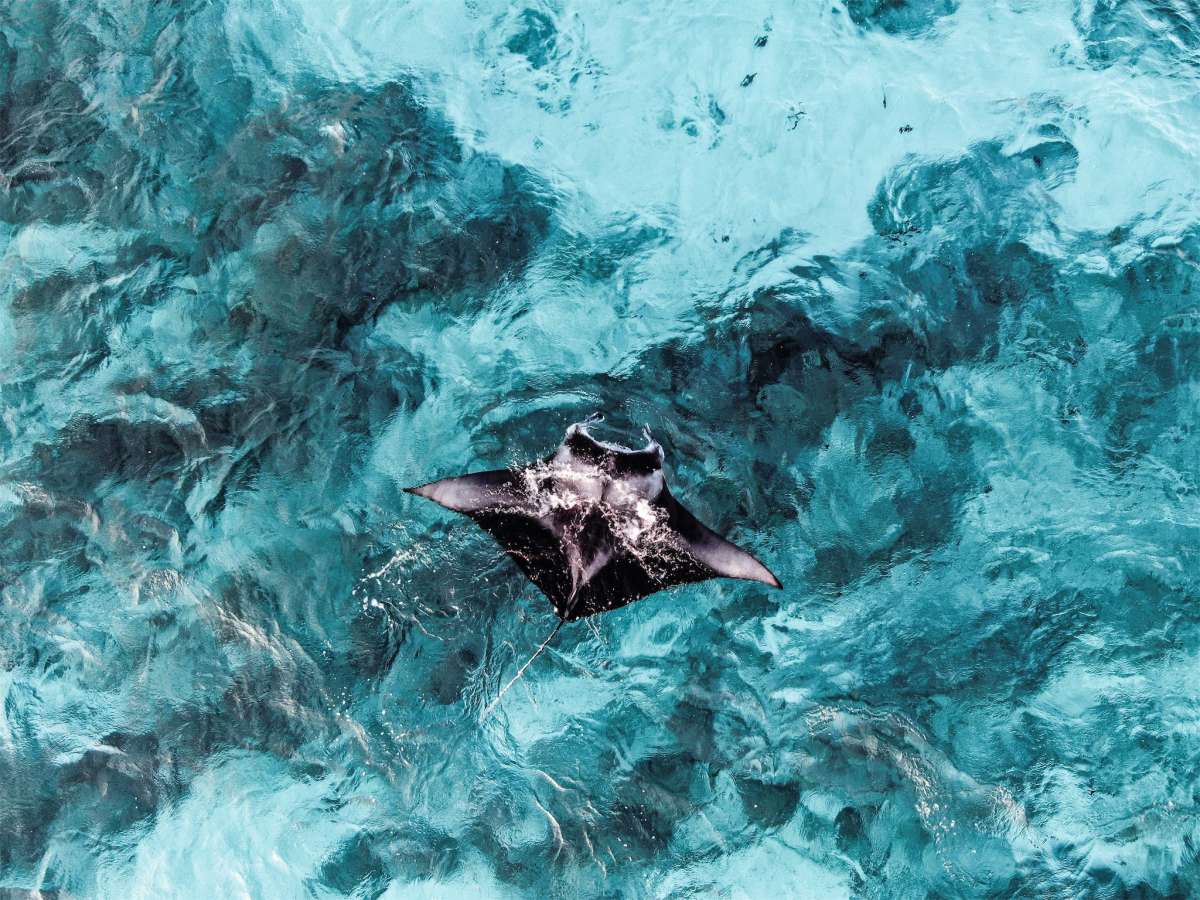
In most of the world, mantas are black on top and white on the bottom. But in Raja Ampat (and occasionally elsewhere), you can find Melanistic Mantas—completely black all over. They look like stealth shadows and are incredibly photogenic against the colorful corals of Indonesia.
Spotlight: The "Boiler" at Socorro
Socorro Island is unique because the mantas there are famous for their curiosity. At a site called "The Boiler," Oceanic mantas frequently hover inches above divers' heads, soaking in the bubbles and making eye contact. It is widely considered the best place on earth for intimate big-animal interactions.
4. How to Speak "Manta": A Diver’s Code of Conduct
Getting a manta to come close to you isn't about chasing it; it's about inviting it. Mantas are sensitive to body language. If you swim at them, they will leave. If you are chill, they will stay.
The Golden Rules:
Never Touch: This is rule #1. Mantas have a protective mucous coating on their skin that prevents infection. Touching them removes this layer and can make them sick.
Stay Low: Mantas feel safer when they are above you. If you are on a reef, stay close to the bottom (kneeling on sand or hovering low). Let them pass overhead.
No Chasing: You cannot out-swim a manta. If you try to fin after them, you’ll just see their tail fading into the blue.
Control Your Bubbles: While some mantas like bubbles, a sudden loud purge or splash can startle them. Breathe rhythmically and calmly.
Final Thoughts: The Manta Effect
There is a phenomenon known among dive travelers: once you dive with a manta, everything else feels a little smaller. There is something humbling about a 1,000-pound animal gliding past you with the grace of a ballerina, checking you out with a visibly intelligent eye, and deciding that you are welcome in their space.
So, pack your fins and check your calendar. The giants are waiting.
This article above was written by @Shueri (Dive and Cruise Team member), please respect their copyright!
Photos
Comments