- Best-Price Guarantee
- 24/7 Expert Support
- No Booking Fees
- Direct with Operators
- 500+ Boats Worldwide
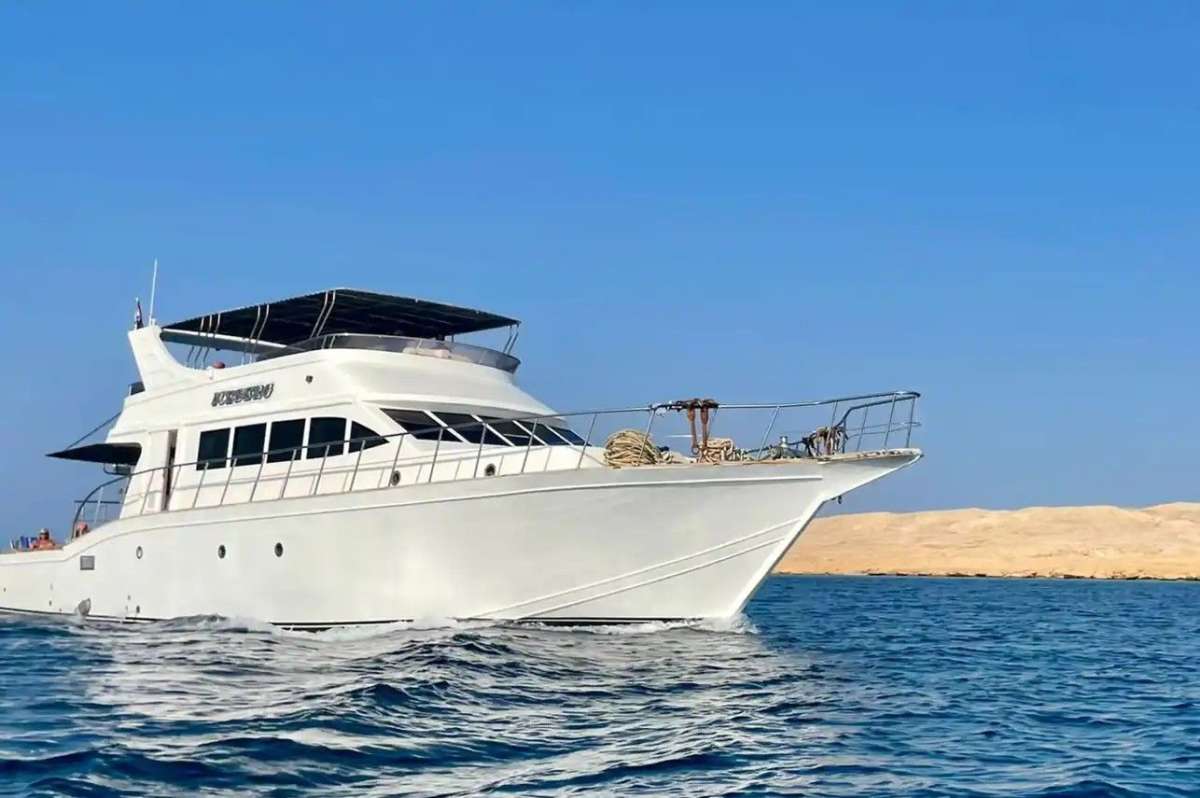
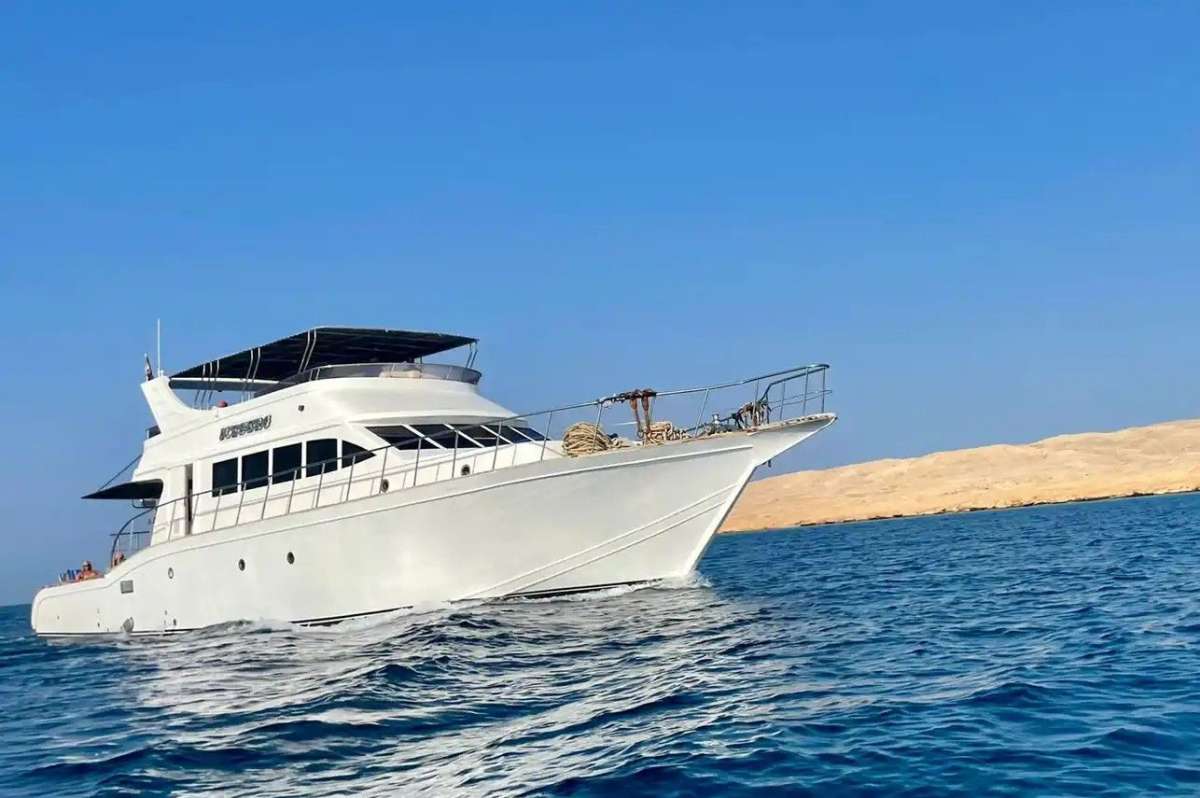
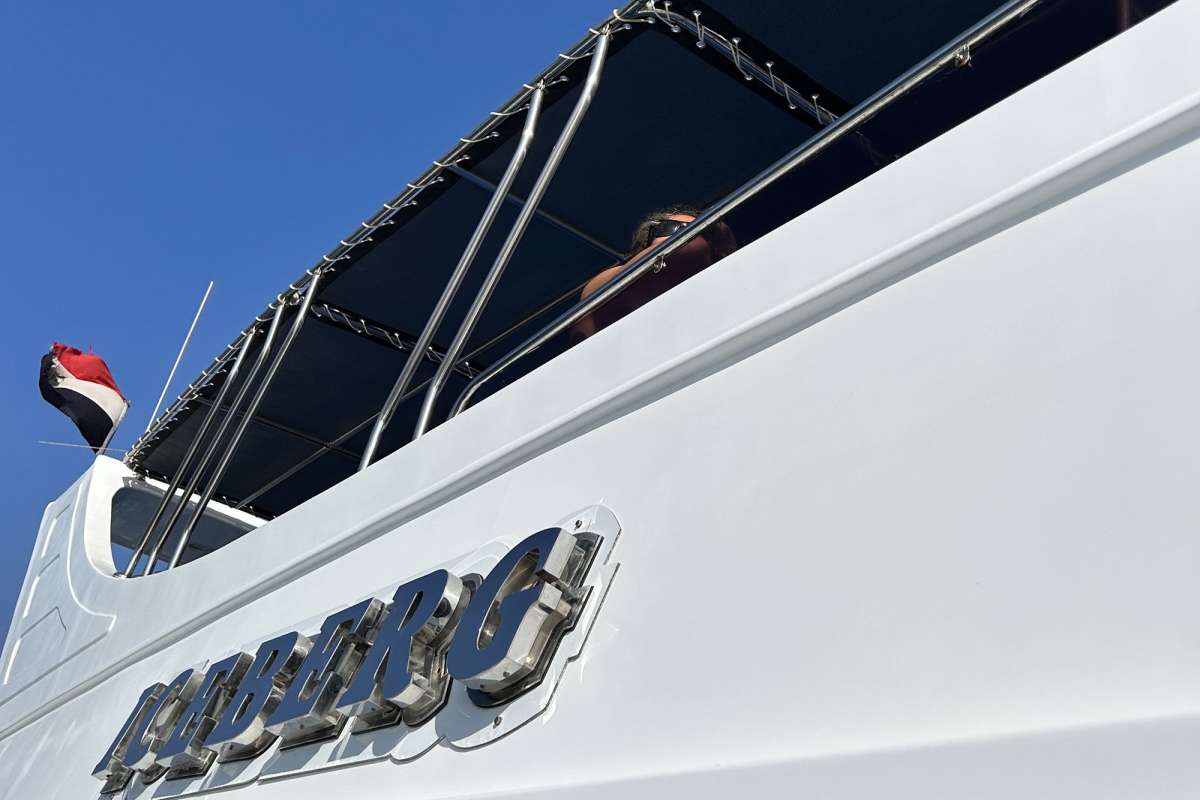
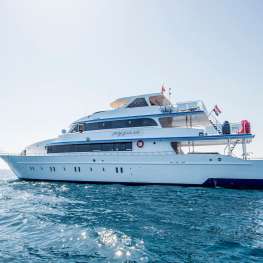
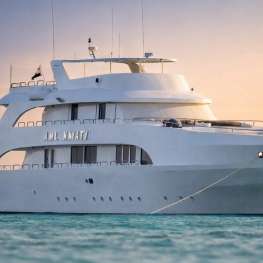
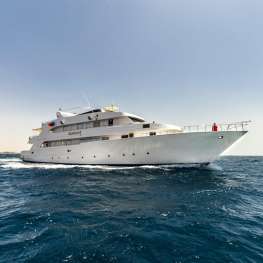
Iceberg is a 24-metre boutique Red Sea liveaboard created for just eight guests. One 13 m² double Suite and three precisely documented bunk cabins make her especially appealing to families, friends and private groups, while a broad stern platform, shaded upper deck and warm wood-panelled salon support an unusually personal five-day safari through Sha’ab El Erg, Gubal, Abu Nuhas, Umm Gamar and Carless Reef.
Description
Boat
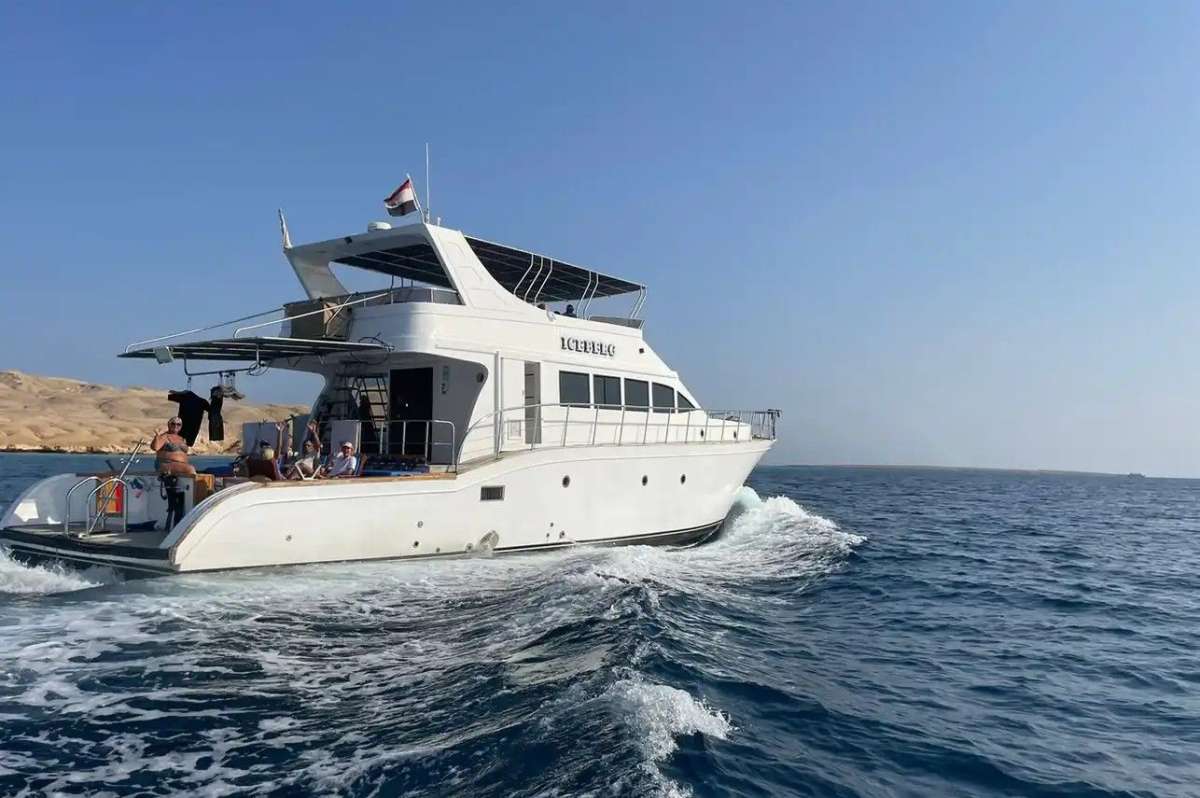
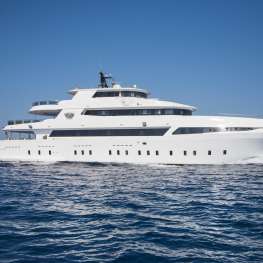
M/Y Iceberg offers something increasingly rare in the Red Sea: the range of a liveaboard without the scale of a floating hotel. The current operator presents her as a 24-metre mini safari yacht for no more than eight guests. A detailed exact-vessel record measures 22.85 metres by 6.15 metres, identifies a 2012 build and 2023 renovation, and confirms four cabins, three bathrooms and three working decks. The result feels closer to a private expedition yacht than a conventional 20- or 30-diver safari boat.
That small capacity changes the experience. Briefings happen around one group rather than several simultaneous teams; meal preferences are easier to understand; and the captain can organise the working deck without long queues at each entry. Iceberg is particularly well suited to a family, a circle of friends or a club seeking a full charter. Individual bookings remain possible, but the intimate layout means cabin choice and compatibility matter more than they would aboard a larger vessel.
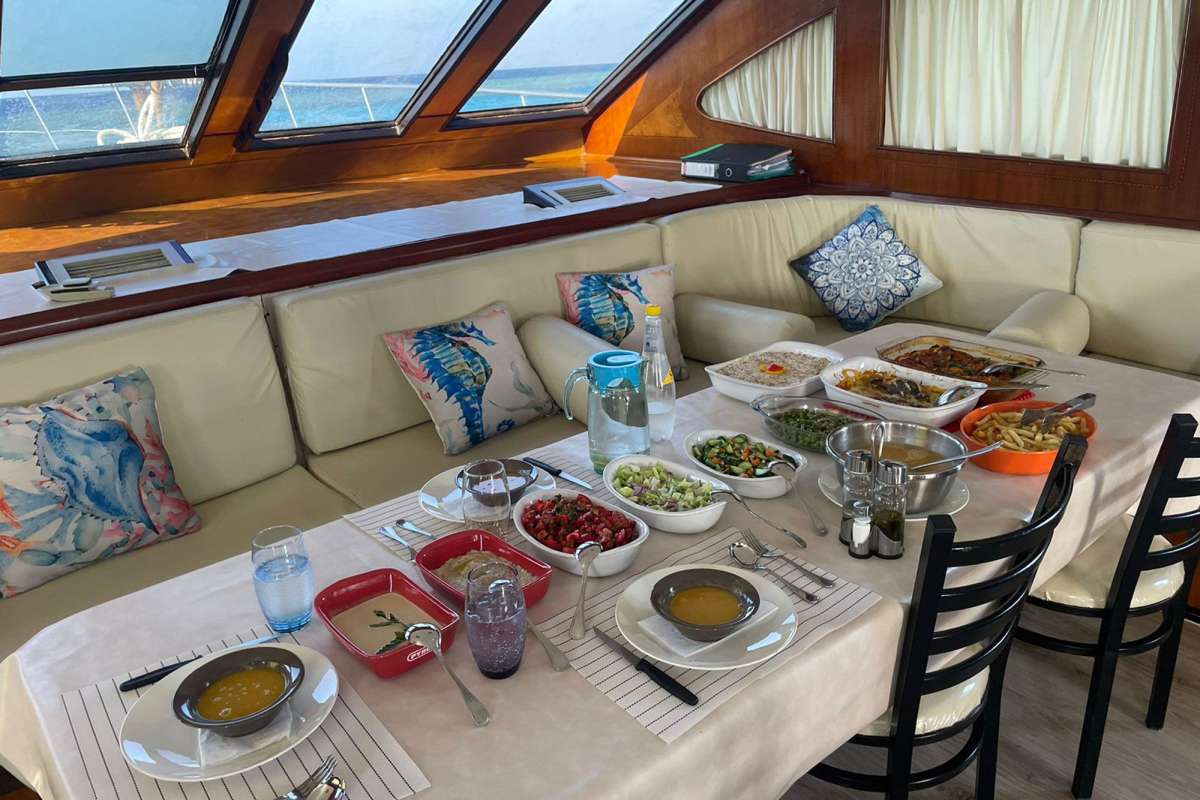
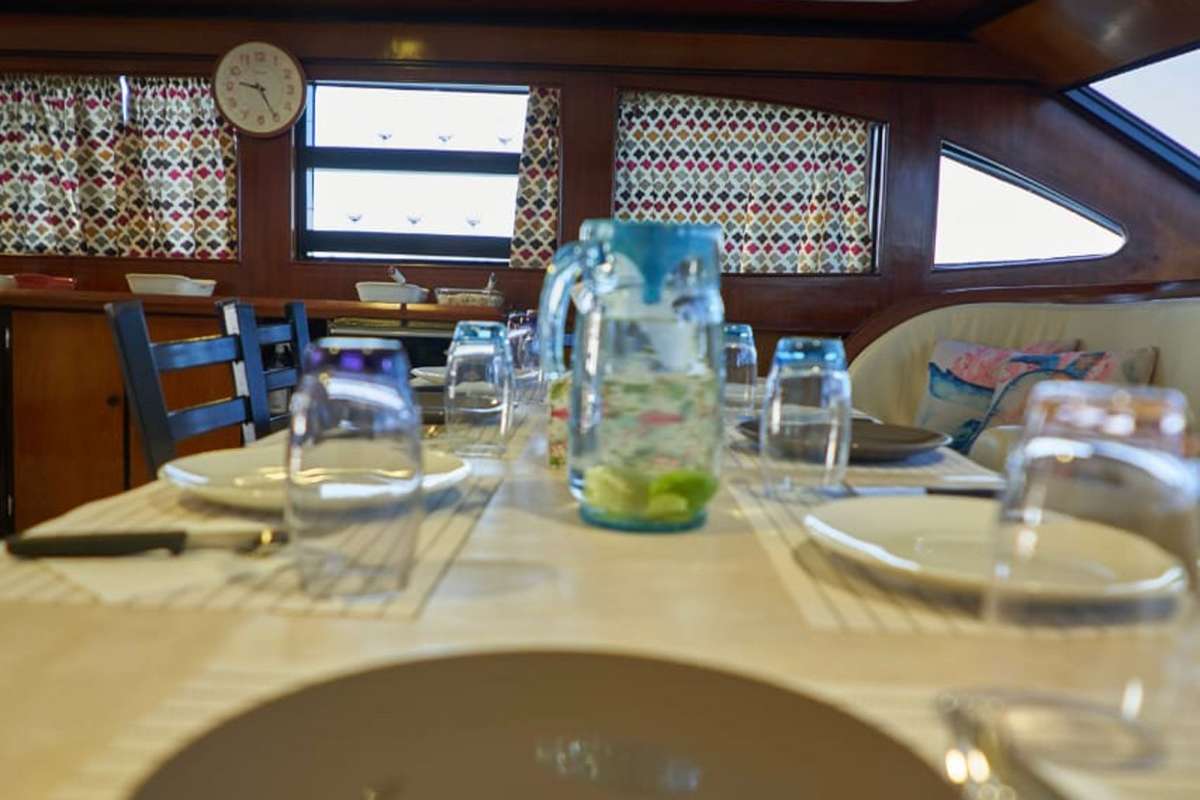
The interior is finished in warm timber, with a joined air-conditioned salon and dining area surrounded by angled windows. Buffet-style meals combine Egyptian and international cooking, and current seller information confirms vegetarian and vegan options when requested in advance. Water, soft drinks, tea, coffee and between-dive snacks are included on the featured safari. The room also provides a library, entertainment equipment and Wi-Fi when the offshore connection allows.
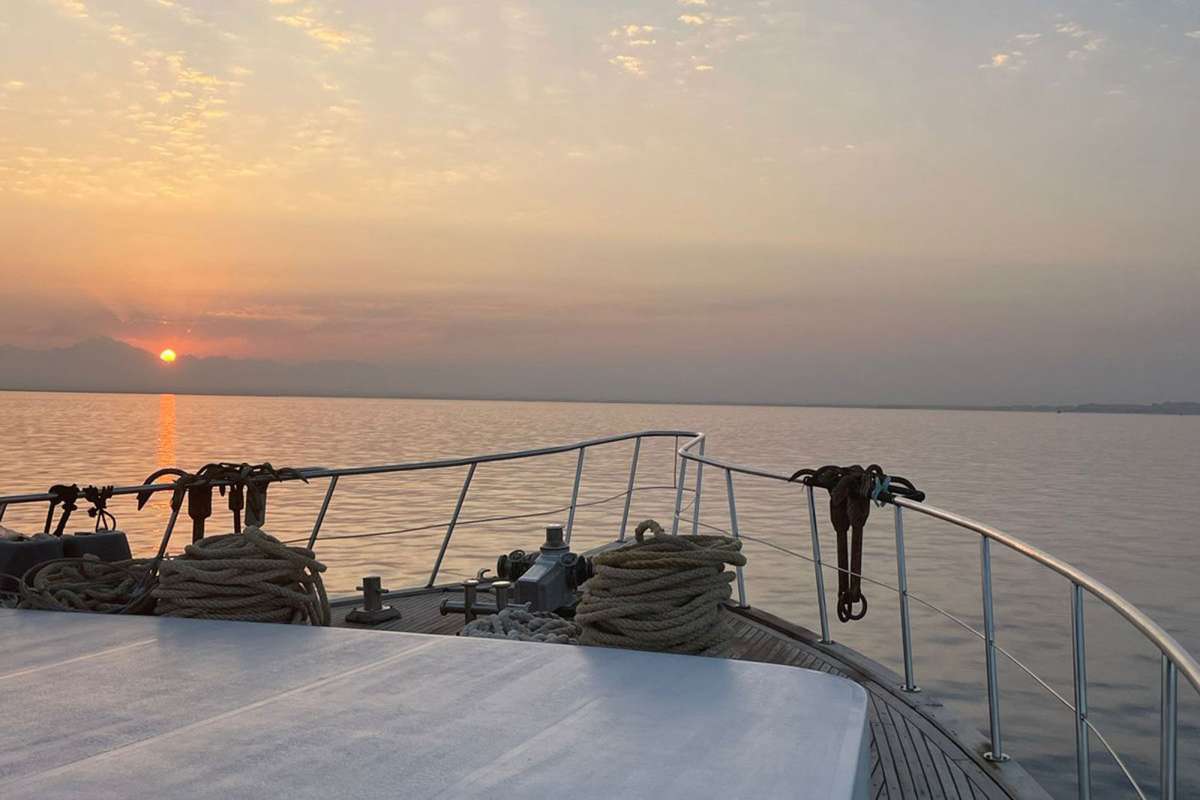
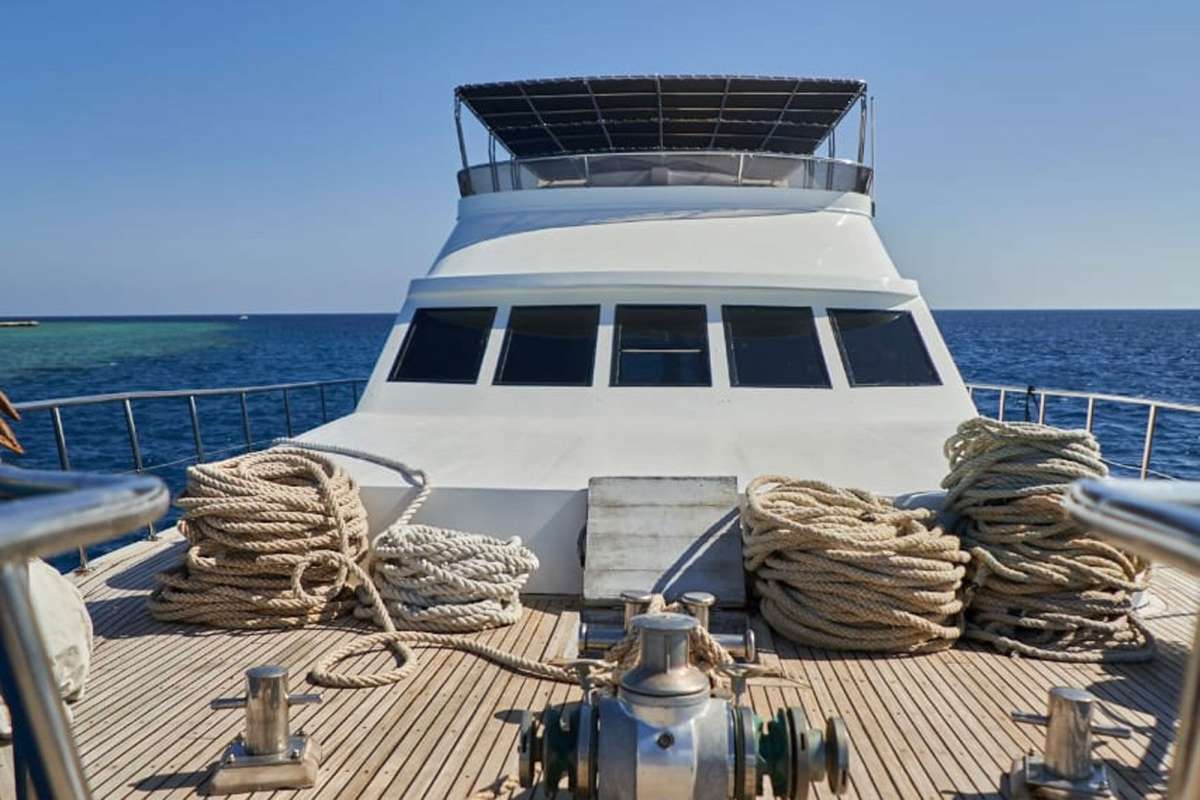
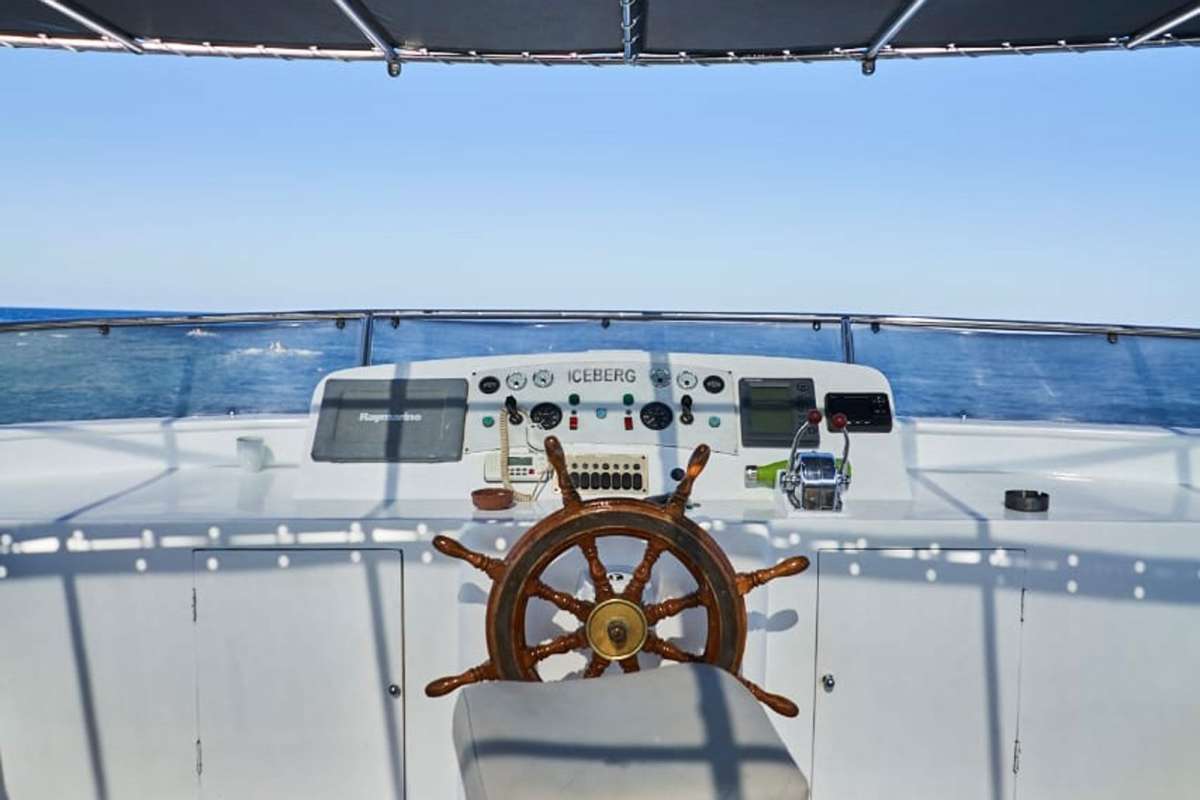
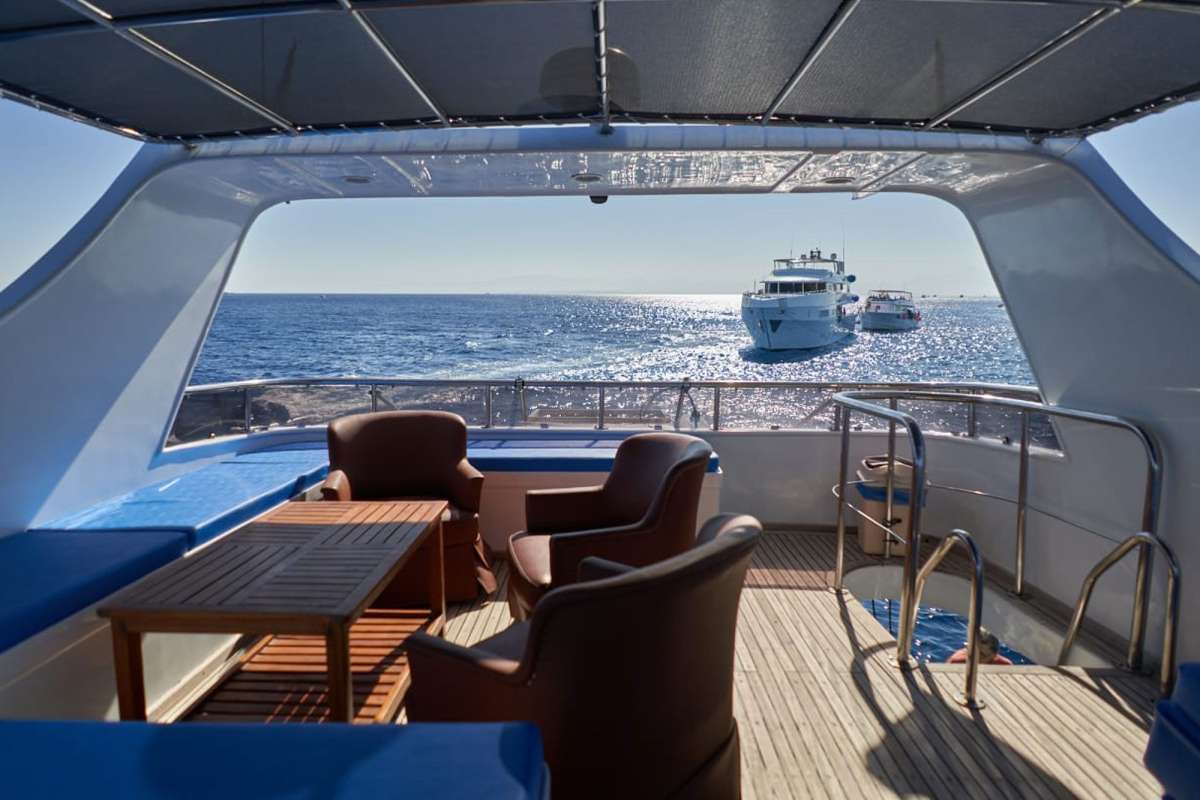
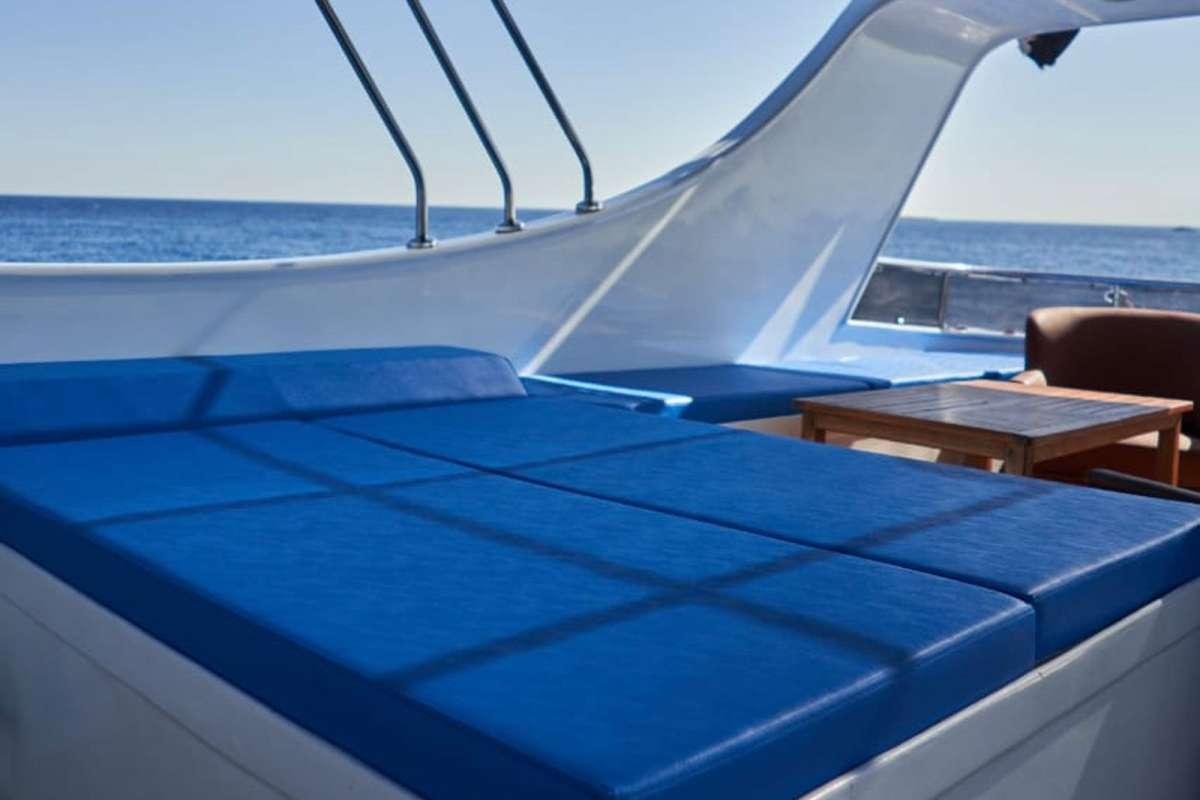
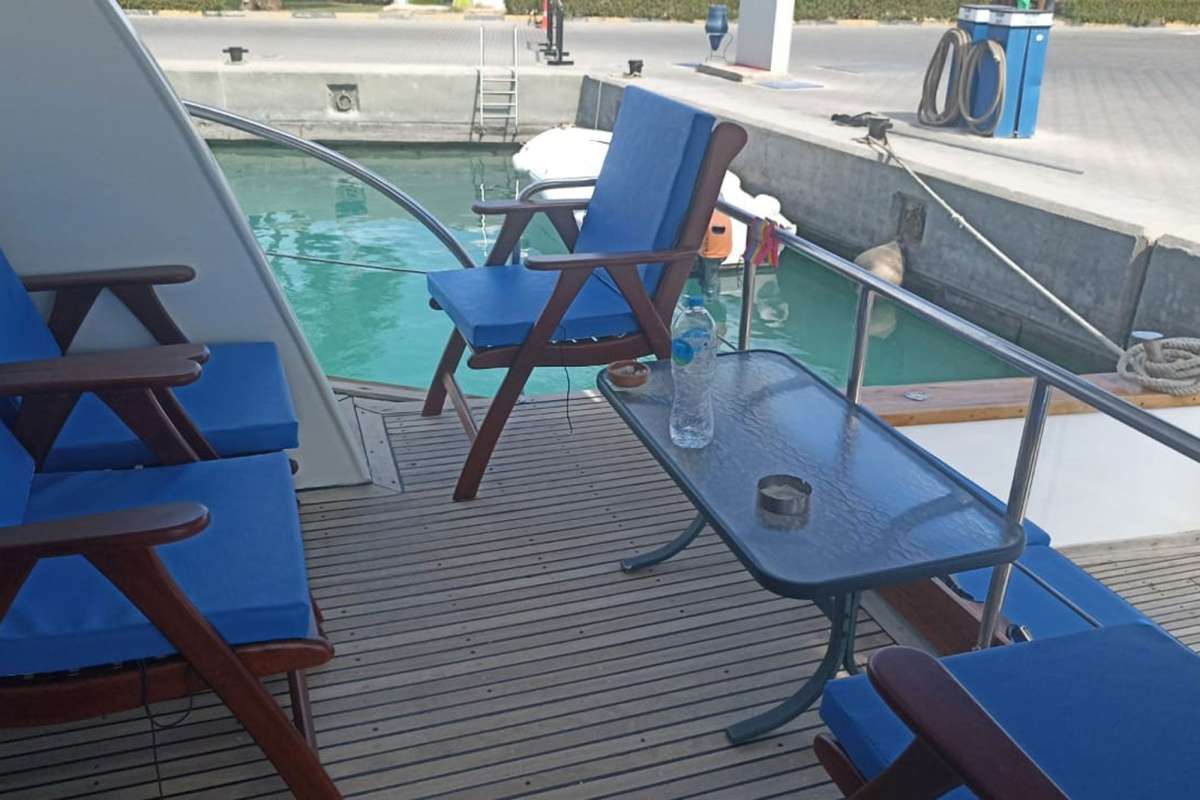
Above, a shaded upper lounge uses fixed cushioned seating, tables and an open view over the anchorage. A separate open deck provides sun space, while the forward working position and observation areas offer a clear sense of the route as Iceberg moves among the northern islands. Outdoor dining and barbecue facilities are published, although where and when meals are served remains a crew decision shaped by wind, passage and the day’s diving.
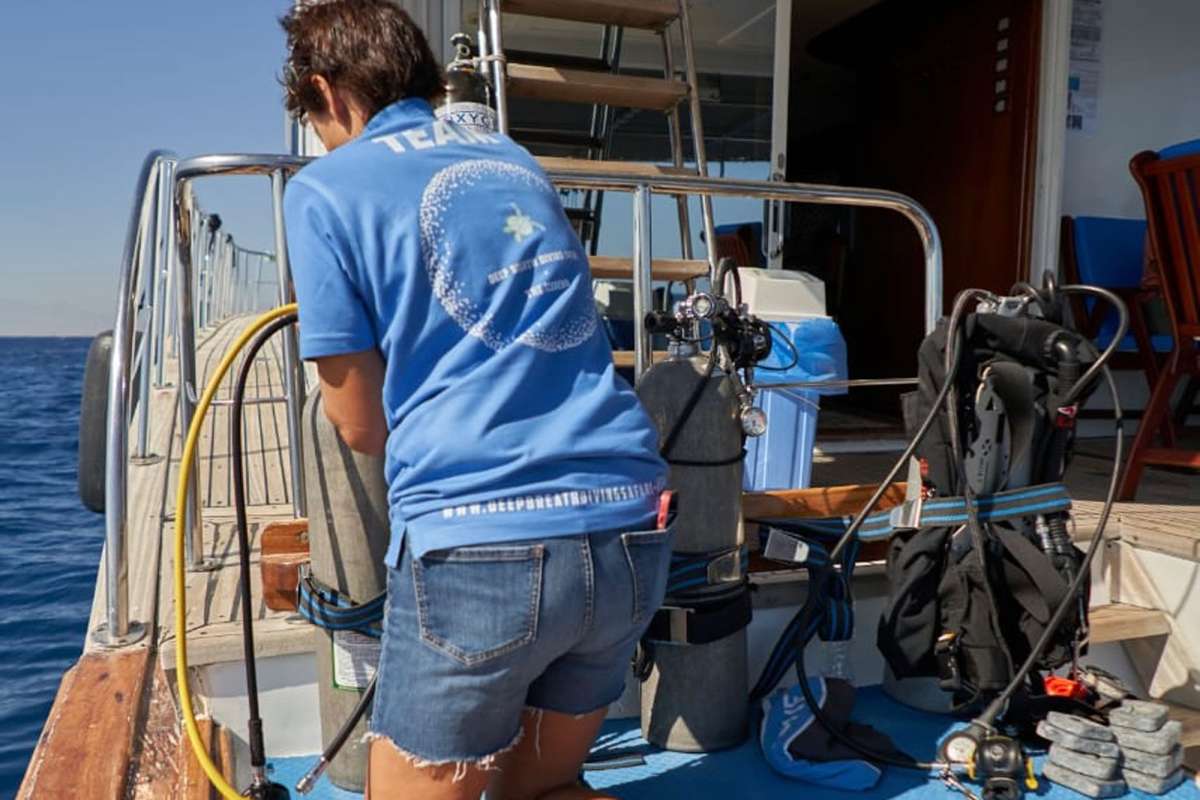
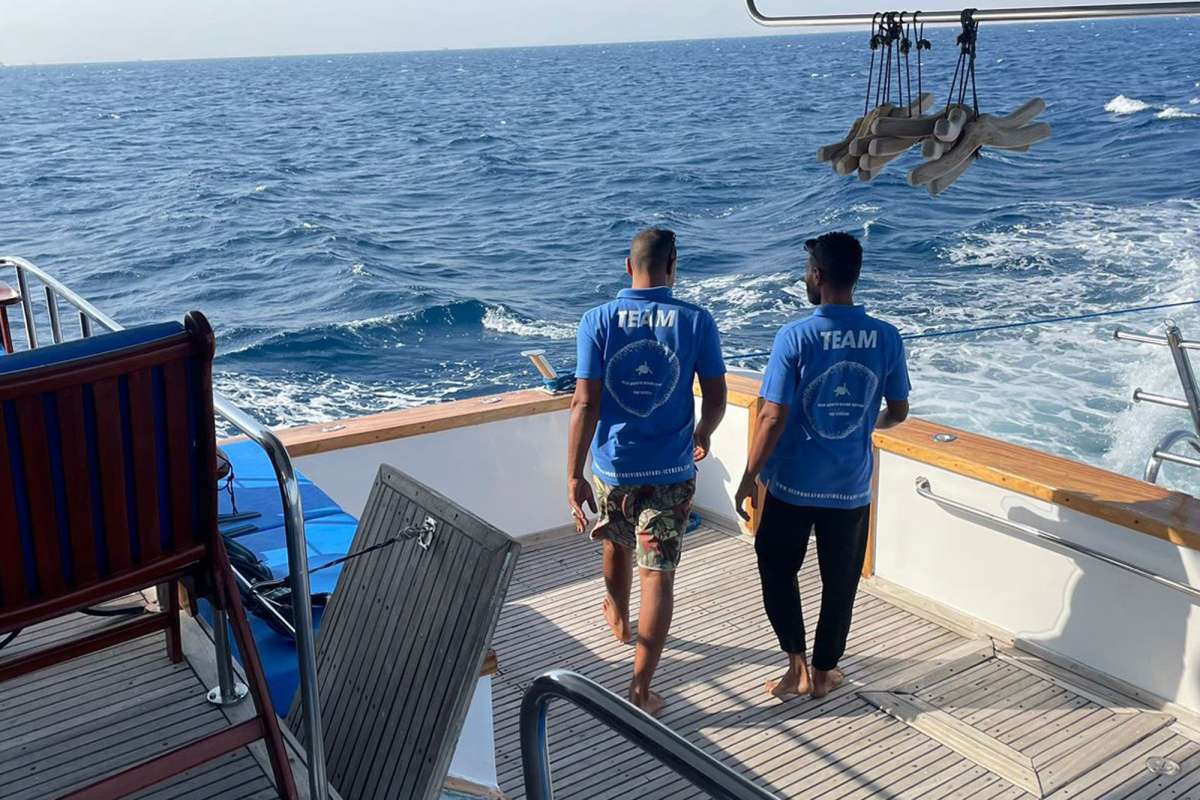
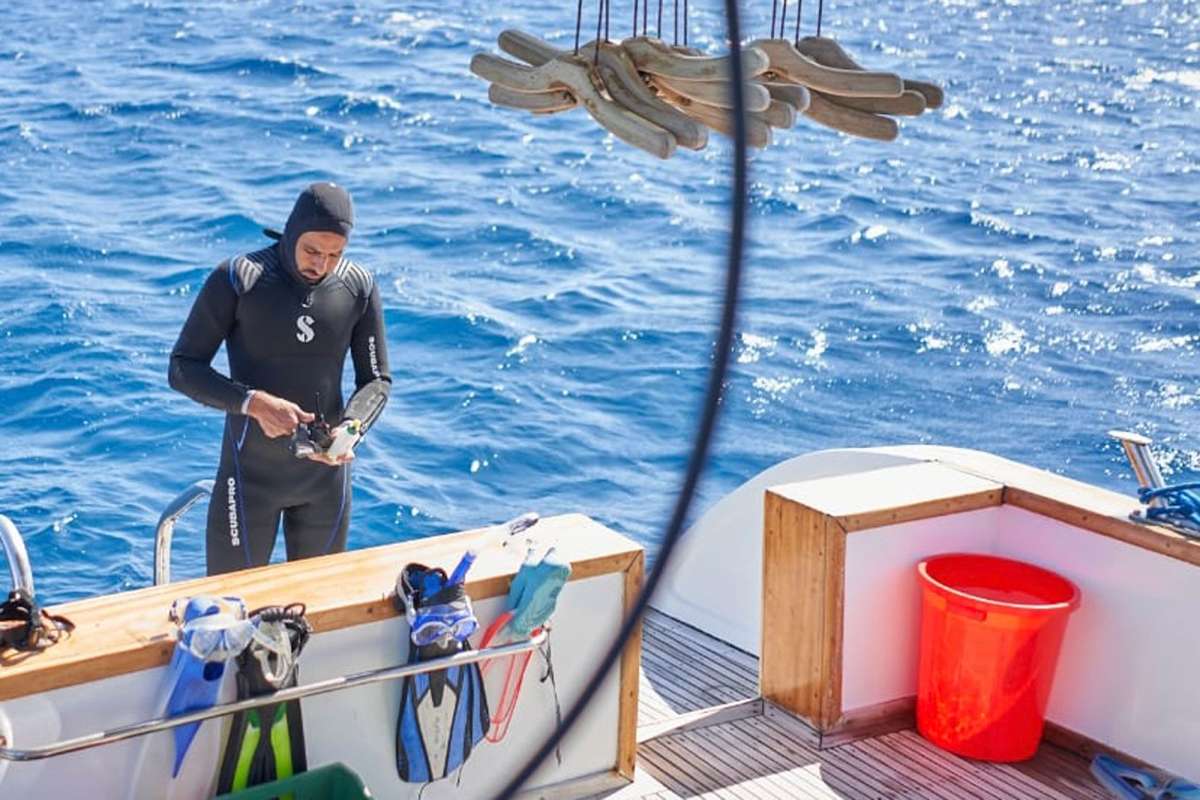
The stern is deliberately open and uncomplicated. Divers prepare beside the platform, use the assigned storage area and can enter from the main vessel or its tender according to the site. The current specialist record lists a shaded diving area, DIN adaptors, rinse hoses, a separate camera rinse, outside showers, charging stations and support for sidemount or technical configurations. Specialist gases, cylinders and components still require written confirmation before travel; a capability label is not an automatic equipment order.
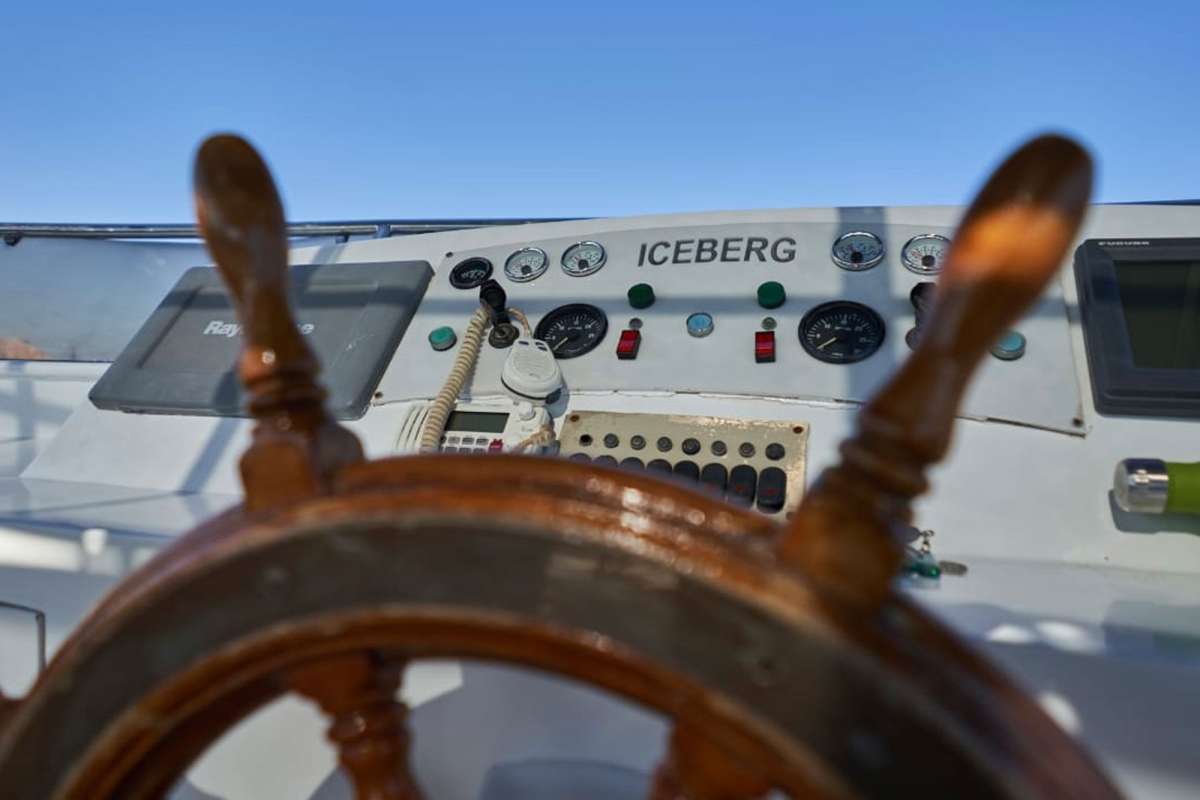
Iceberg is a wooden, twin-engine yacht. The detailed specification lists two 850 hp V10 motors, 15-knot cruising, a 24-knot published maximum, 4,000 litres of fresh-water capacity, 6,000 litres of fuel and approximately 50 m² of deck area. Navigation and emergency equipment includes radar, depth sounder, GPS, VHF/DSC/SSB radio, satellite and mobile phones, emergency rafts, life jackets, fire alarms and extinguishers, oxygen, first-aid kits, flares, searchlight and a bilge-pump alarm. Every guest must still attend the boat briefing and learn the actual exits, life-jacket position and muster procedure.
Cabin
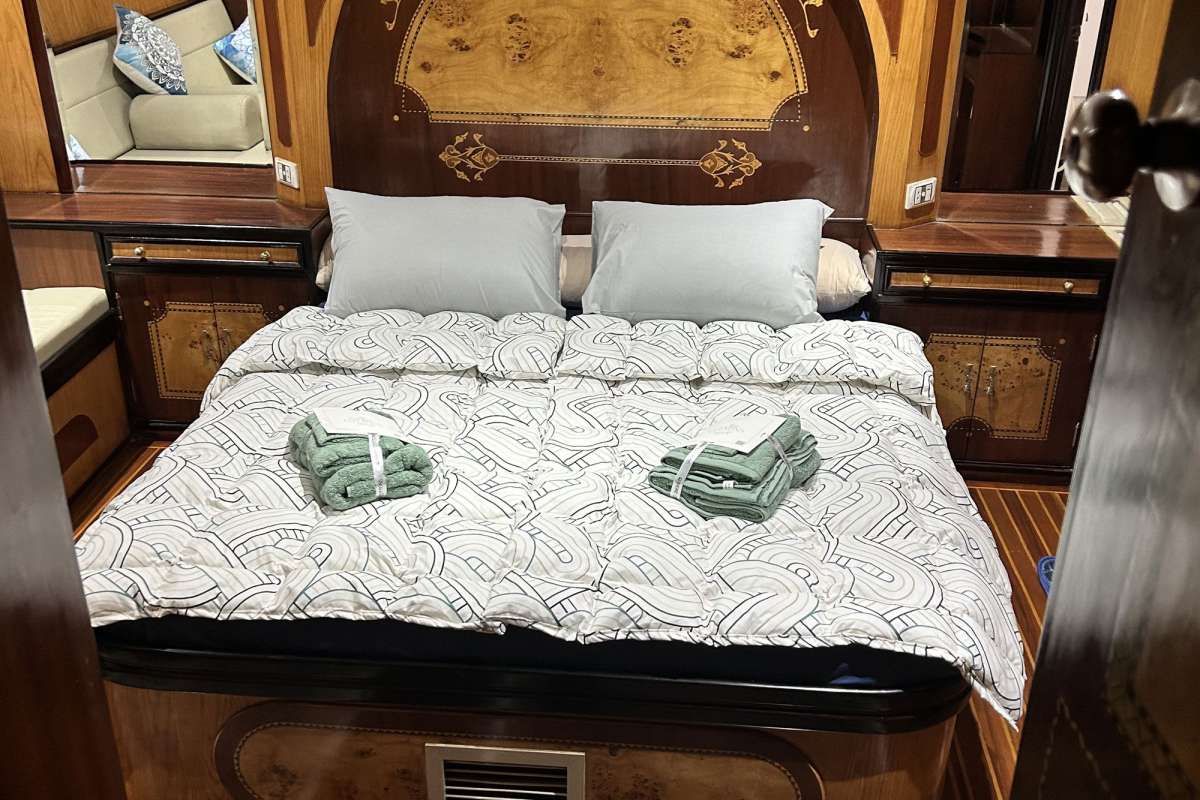
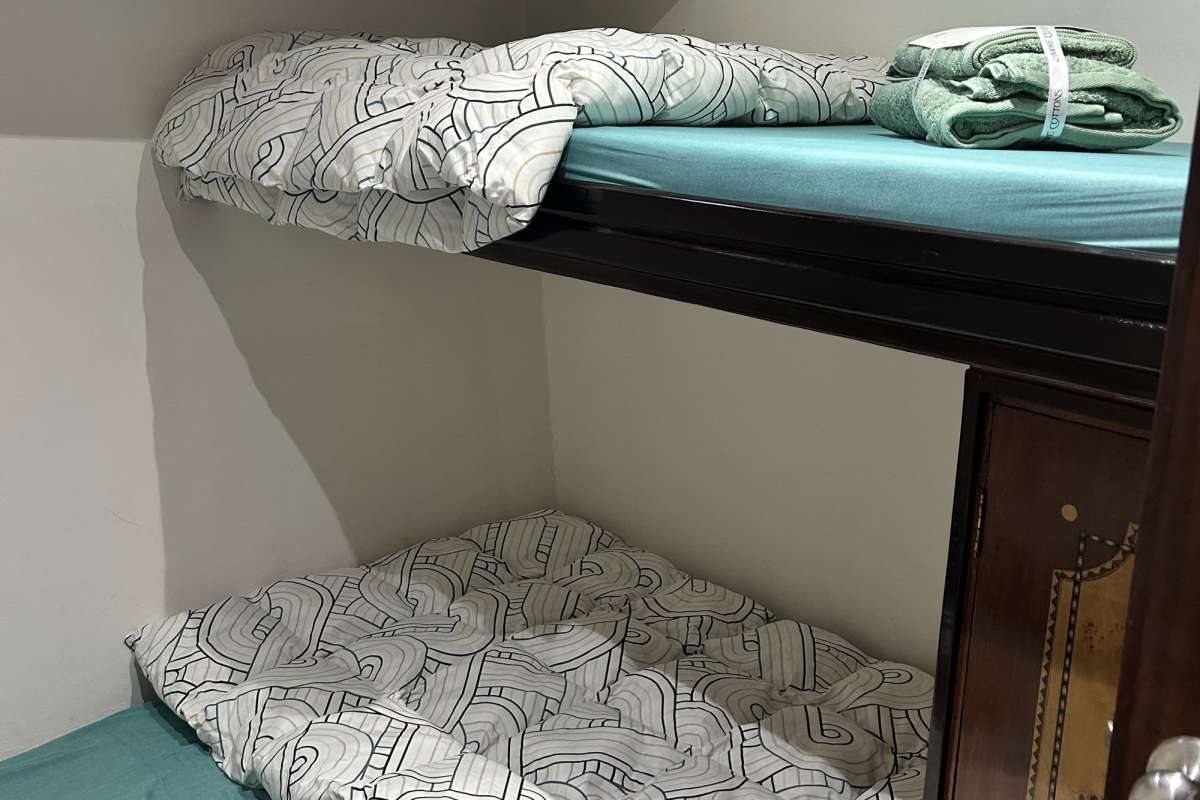
Iceberg accommodates eight guests in exactly four lower-deck, air-conditioned cabins. The current operator inventory names every room and even publishes the bed measurements:
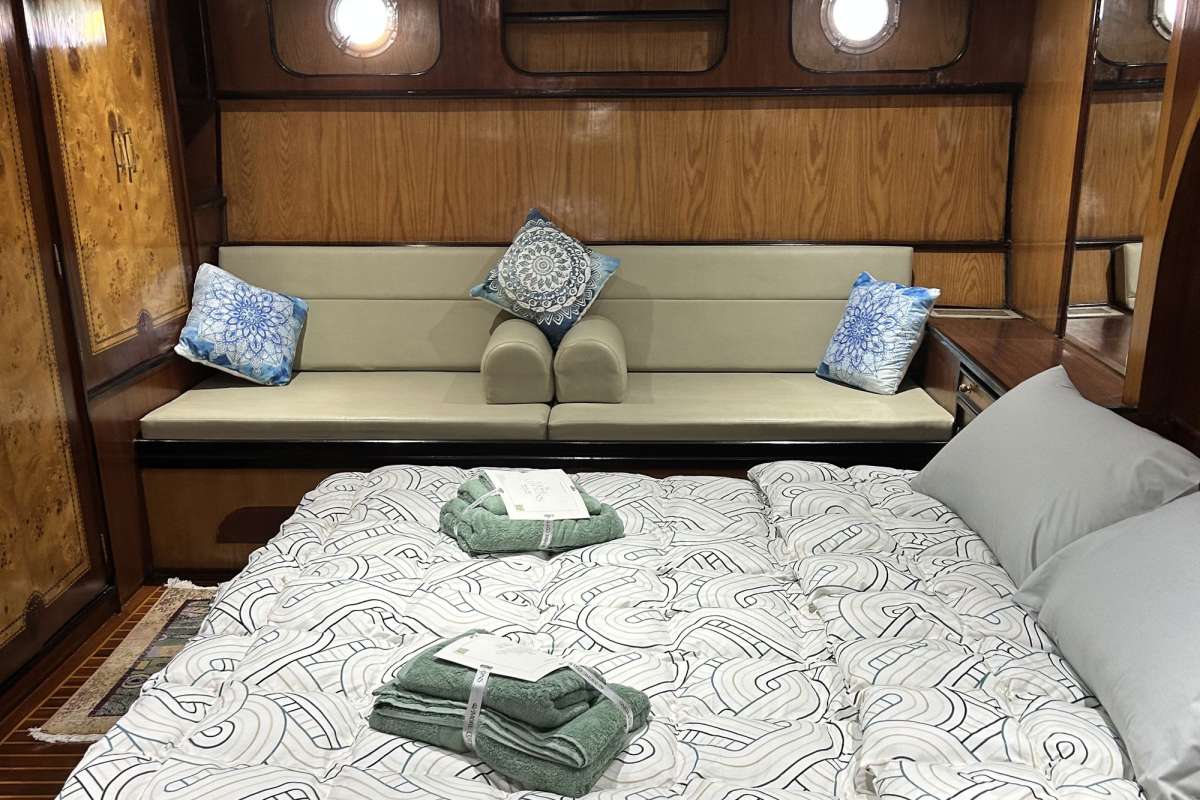
- 1 Privilege Cabin / Suite — approximately 13 m²: one 160 × 200 cm double bed; porthole; individually controlled air conditioning; private ensuite shower and WC; maximum 2 guests
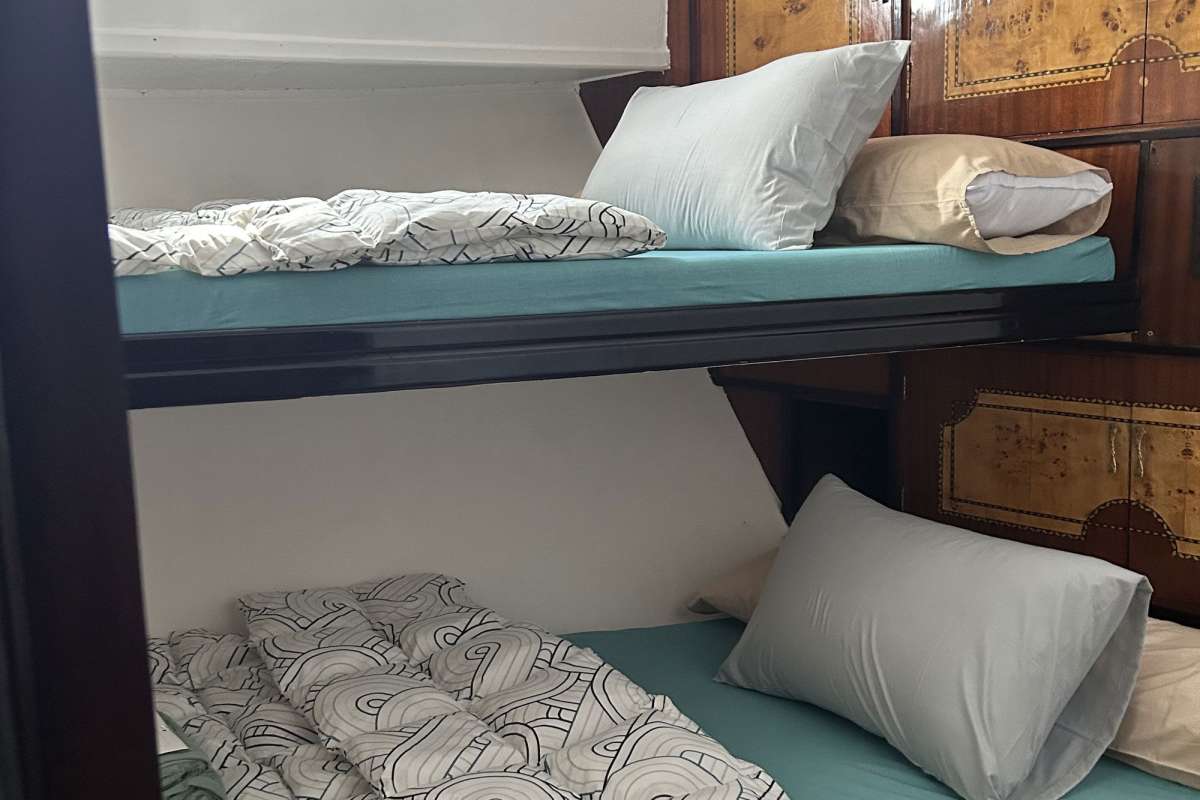
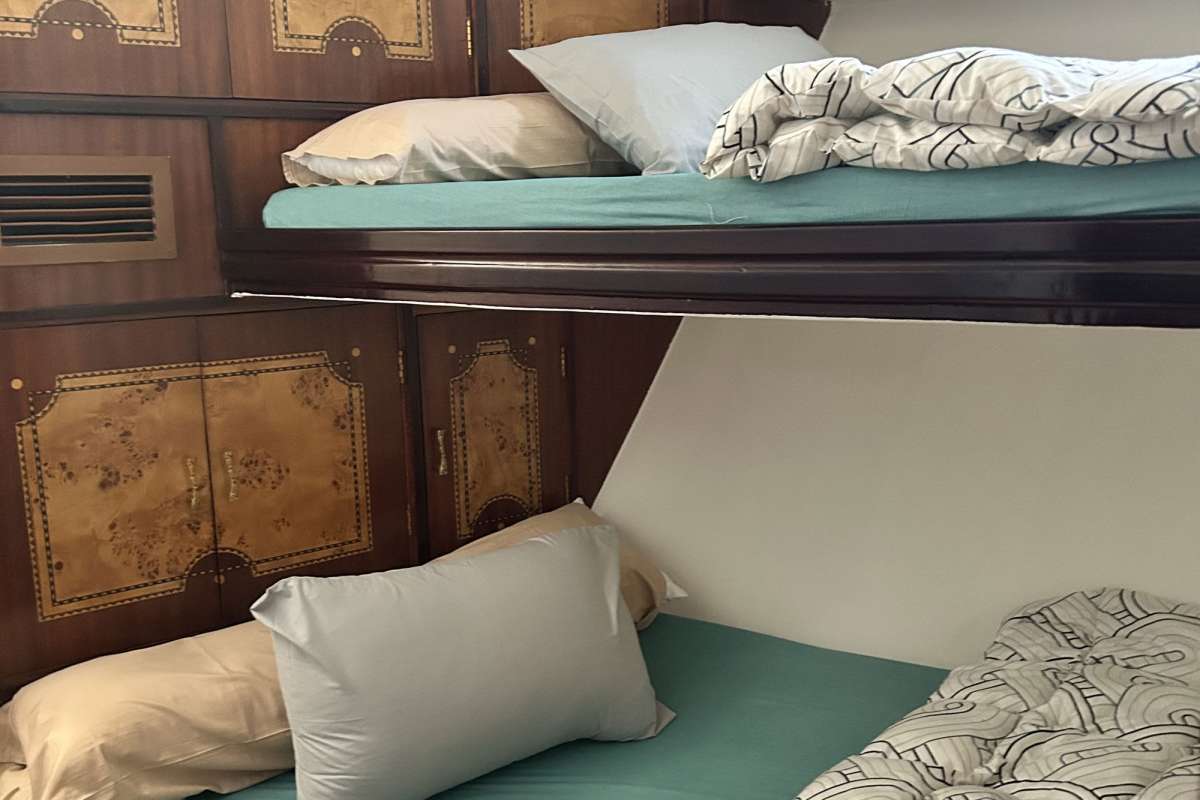
- Twin Cabin 1 — approximately 6.5 m²: two parallel bunk beds measuring 120 × 210 cm above and 110 × 210 cm below; forward lower-deck position; porthole; individually controlled air conditioning; shared corridor bathroom; maximum 2 guests
- Twin Cabin 2 — approximately 6.5 m²: the same parallel-bunk arrangement, 120 × 210 cm above and 110 × 210 cm below; forward lower deck; porthole; individually controlled air conditioning; shared corridor bathroom; maximum 2 guests
- Twin Cabin 3 — approximately 4.8 m²: two perpendicular bunks, with a 120 × 210 cm lower bed and a narrower 75 × 230 cm upper bed; porthole; individually controlled air conditioning; shared corridor bathroom; maximum 2 guests
The arithmetic is complete: one Suite plus three twin cabins equals four rooms and eight berths. There is no unlisted fifth cabin, and none of the rooms accepts a third person. All are on the lower deck and use portholes rather than full-height windows.
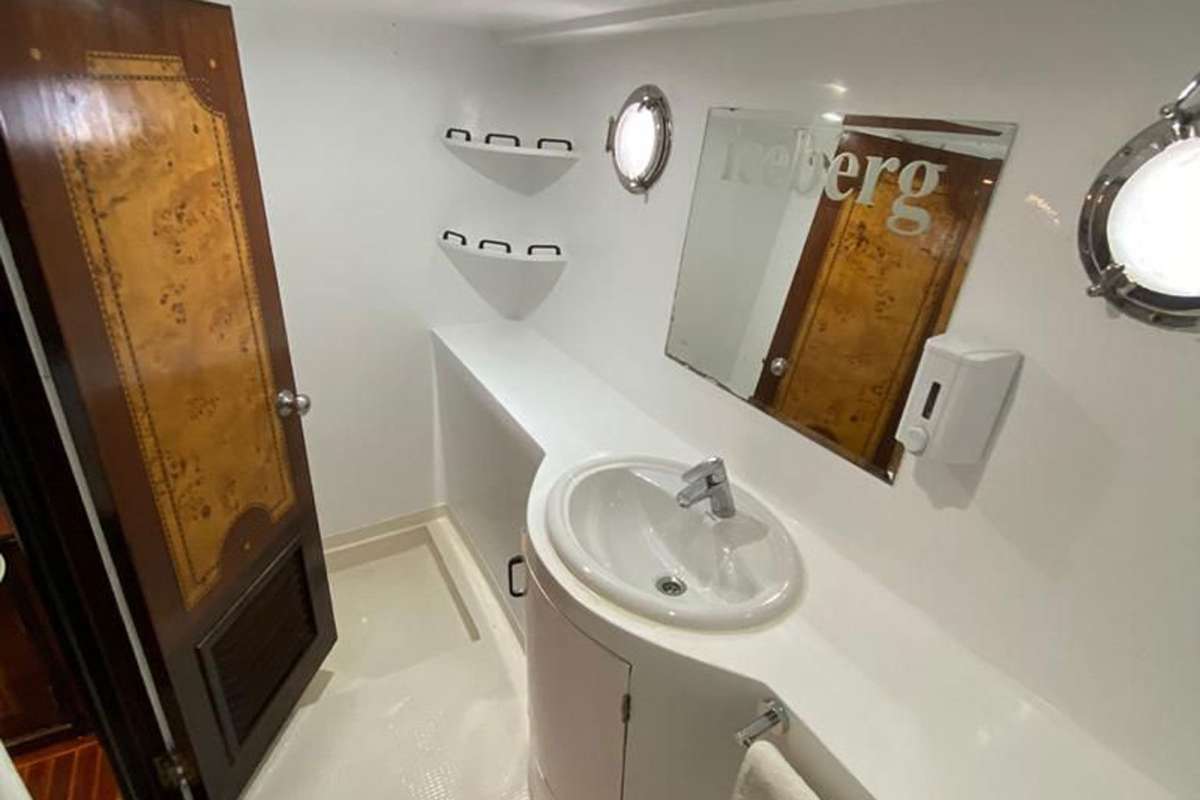
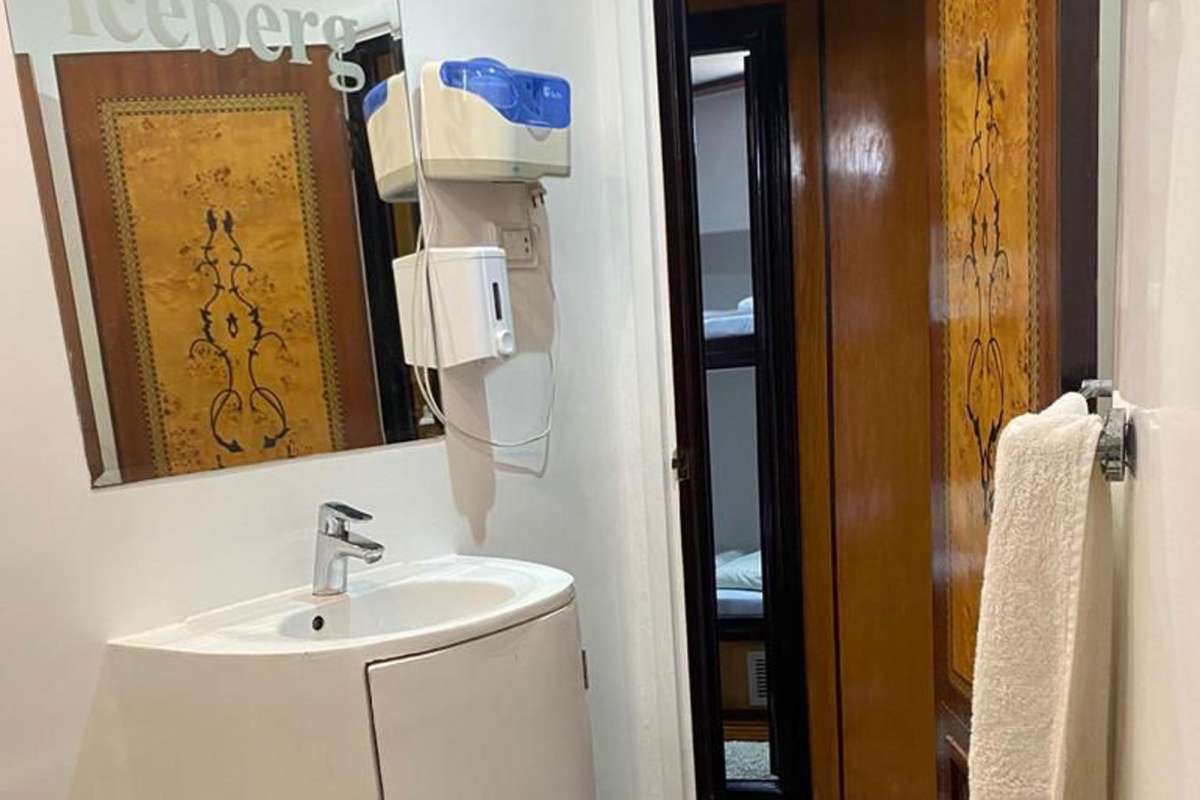
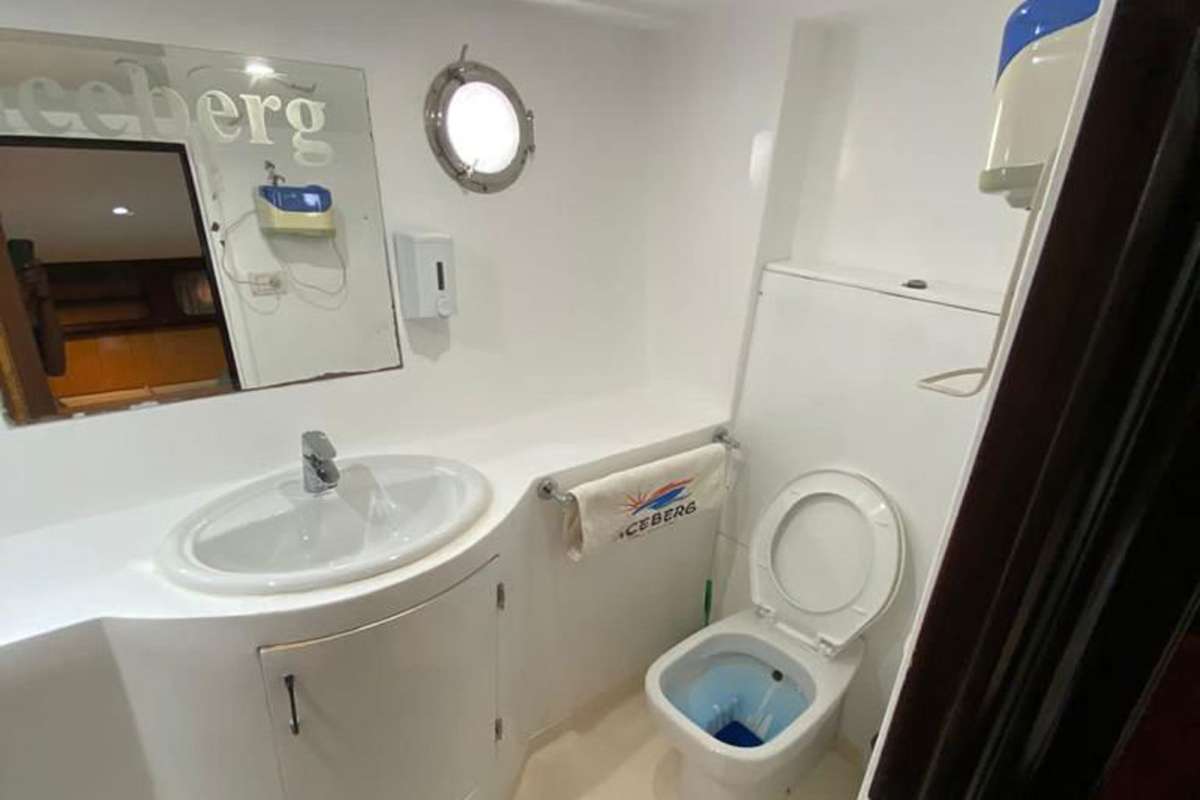
Bathroom wording deserves particular precision. Only the Privilege Cabin has a bathroom inside the room. The three bunk cabins use shower/WC facilities in the corridor. The current detailed vessel record lists three bathrooms in total, which is consistent with one private ensuite and two shared facilities, but the operator does not promise a particular corridor bathroom exclusively to a numbered twin cabin. Broad reseller labels such as “ensuite bathrooms” should therefore not be applied to all four rooms.
The Suite is the clear couple option and is roughly twice the published floor area of Cabins 1 and 2. Its 160 cm bed and private shower/WC justify the premium category without inventing a balcony, separate lounge or panoramic window. Cabins 1 and 2 are compact, near-matching rooms for dive partners comfortable with parallel bunks. Their published widths are generous for boat bunks, but one person still climbs to the upper berth.
Cabin 3 is both smaller and more asymmetrical. Its perpendicular layout makes the lower berth wider, while the 75 cm upper berth is long but notably narrow. That difference should appear in the booking conversation, particularly for larger guests or travellers with limited mobility. A group reserving the whole vessel can allocate rooms transparently before arrival instead of discovering the contrast during embarkation.
The current five-day diving package confirms cabin linen and towels. Storage, headroom, stair angle and the practical access to an upper bunk are not published as measurements. Guests with mobility, size or sleep concerns should request current photographs and a numbered-room confirmation rather than relying on the general phrase “twin cabin.”
Diving
Iceberg’s signature diving product is a five-day / four-night Northern Red Sea safari with up to 14 dives. It leaves Hurghada on Sunday afternoon and returns Thursday morning, linking dolphin territory, island walls, historic wrecks and deeper coral pinnacles. Open Water or equivalent is the published minimum, but individual dives remain subject to depth, current, recent experience and guide approval.
The route begins around Sha’ab El Erg and Umm Usk before working toward Siyul, Blind Reef, Small Gubal and the Ulysses. Abu Nuhas is the structural centrepiece: Giannis D, Carnatic, Chrisoula K and Kimon M lie around the same reef, allowing the guide to choose very different wreck profiles without a long relocation. The return sector includes Umm Gamar and Carless Reef, where coral towers, drop-offs and moving water shift the visual emphasis back from steel to reef life.
Night dives are part of the published plan where conditions allow. They are not guaranteed at every named site, and wreck penetration after dark is never implied. A night entry depends on a legal and secure mooring, group competence, weather and the guide’s chosen route. Similarly, dolphins at Sha’ab El Erg are a natural possibility. Guests may encounter the resident population, but the crew cannot summon, feed or promise an interaction.
For the featured route, the operator includes a professional dive guide, standard tanks and weights, the planned diving programme and Nitrox. Full recreational equipment is optional at a published €150 for the trip. A separate current exact-vessel list gives examples for individual pieces and 15-litre cylinders, but stock, sizes and valve configuration must be reserved. Courses and private coaching are not included.
Other Information
- Destination: Northern Egyptian Red Sea
- Operating base: Hurghada
- Featured duration: 5 days / 4 nights
- Current operator length: 24 m; detailed exact-vessel measurement 22.85 m
- Beam: 6.15 m in the detailed record
- Construction: wood
- Build / renovation: 2012 / 2023 in the current detailed record
- Guest capacity: 8
- Guest cabins: 4 lower-deck cabins
- Cabin split: 1 Privilege double Suite, 2 parallel-bunk twins and 1 perpendicular-bunk twin
- Bathrooms: 3 total; only the Suite is ensuite
- Engines: 2 × V10, 850 hp each
- Published cruising / maximum speed: 15 / 24 knots
- Internet: Wi-Fi, subject to offshore coverage
- Languages currently listed: English, French and German
- Diving: shaded preparation area, main-platform/tender access, Nitrox, rinse hoses, camera rinse and rental equipment by advance request
Confirmed for the current five-day diving safari: four nights’ cabin accommodation; transfer from a Hurghada hotel or airport; all meals and non-alcoholic drinks; up to 14 planned dives; eligible night dives; professional dive guiding; standard tanks and weights; Abu Nuhas wreck-reef access; the operator’s listed onboard reef-site fees; cabin linen and towels; and Nitrox under the operator’s all-routes inclusion statement. “Up to 14” is a maximum plan, not compensation-triggering entitlement when weather, port direction, safety or a guest’s fitness changes the programme.
Required extra for that route: €150 per person in marine-park and government fees. The page also says Abu Nuhas access and onboard reef-site fees are included. These are separate labels: customers should budget the explicit €150 compulsory payment and should not add another generic reef fee unless the dated invoice identifies it.
Optional or excluded on the current route: international and domestic flights; full diving-equipment hire (€150 per person for the five-day trip); alcoholic drinks; private dive coaching or courses; crew gratuity, which the operator leaves to the guest’s discretion; and personal purchases. The general operator FAQ also excludes personal items. No unlisted visa, insurance, cylinder or transfer fee has been invented here; any additional charge must appear on the dated offer.
Check-in is published for Sunday at 15:00, with return to Hurghada on Thursday at 10:00. The route page also advertises a sunrise dive on the final morning. This means checkout time must never be treated as permission to fly immediately. Guests must follow their dive computer, agency guidance and the operator’s required no-fly interval, and may need an additional Hurghada hotel night.
The included transfer is stated from a hotel or airport, but the operating context is Hurghada. Customers should send the exact flight or hotel, obtain the pickup time and marina in writing, and not assume collection from another Red Sea resort. Late arrival can affect sailing clearance and the first dive.
Itineraries
The itinerary below is an original visitor-facing expansion of Deep Breath Safaris’ current five-day Northern Red Sea Diving schedule aboard Iceberg. The operator publishes Sunday 15:00 check-in, Thursday 10:00 return, four nights, up to 14 dives and an Open Water minimum. Site order, total and night diving remain conditional on clearance, weather, current and the real group.
Northern Red Sea Diving — Representative 5 Days / 4 Nights
Day 1 — Sha’ab El Erg, Umm Usk and the first night entry
Guests meet the arranged transfer and board Iceberg for the published 15:00 departure. With only four cabins, room allocation is quick but specific: the crew confirms who has the Suite, which guests use each bunk room and where the two shared corridor bathrooms are located. Certification, medical declarations and rental orders are checked before equipment is assembled. The safety briefing covers the wooden vessel’s exits, fire response, life jackets, oxygen, tender and muster point.
The published route heads toward Sha’ab El Erg for a check dive around the broad lagoon often called Dolphin House. This first entry lets the guide observe weighting, buoyancy, air use and buddy communication before the wreck days. Spinner dolphins may be present, but the plan remains a reef dive rather than a staged encounter. Umm Usk can add a sheltered lagoon profile, followed by a night dive if clearance, daylight and conditions allow. The late departure means the captain controls how many activities genuinely fit without rushing.
Day 2 — Siyul, Blind Reef, Bluff Point and the Ulysses
The second day moves among the outer northern reefs and Small Gubal. Siyul’s walls can bring hard-coral scenery, schooling fish and a gentle drift when the current cooperates. Blind Reef adds a plateau where the guide can shape the depth to the team. Each briefing defines entry side, current, maximum depth and pickup; a calm surface does not prove that water movement is absent below.
At Bluff Point, a coral-covered wall and turtle possibility lead toward the wreck of the Ulysses. The iron steamship has broken into the reef over time, creating open structure and marine-life habitat. The operator names an Ulysses night dive in its schedule. That entry proceeds only if the mooring is secure and the guide selects a route appropriate for darkness. No guest should infer unrestricted penetration from the wreck’s fractured appearance.
Day 3 — The four wrecks of Sha’ab Abu Nuhas
Abu Nuhas is the week’s concentrated history lesson. The official plan names Giannis D, Carnatic, Chrisoula K and Kimon M. Their ages, cargoes, positions and states of collapse differ, giving the guide choices for both experience and visibility. Giannis D’s angled stern and engine spaces create dramatic geometry; Carnatic’s skeletal sections are heavily integrated into the reef; Chrisoula K and Kimon M add machinery, holds and broad exterior structures.
“Four wrecks” describes the route’s access, not a promise that every diver will penetrate or even visit every hull in one day. Traffic, current and group separation can make three carefully executed profiles better than a hurried checklist. Exterior tours retain propellers, bows, coral growth and schooling fish. Any overhead route requires the correct training, gas, light, trim and explicit guide plan. The advertised Abu Nuhas night dive is equally conditional and can be moved to a safer reef face.
Day 4 — Kimon M, Umm Gamar and Carless Reef
The published schedule allows another morning look at Kimon M, useful when the previous day favoured different wrecks or conditions improve. Iceberg then turns south toward Umm Gamar. The island’s coral towers, wall and cave-like openings can create a visually different dive, but swim-throughs are treated according to their real overhead and depth rather than their marketing name. Open Water guests can enjoy an exterior reef plan while appropriately trained divers follow the guide’s approved route.
Carless Reef is formed by two prominent pinnacles rising from deeper surrounding water. Current can concentrate anthias and schooling fish along the coral, while open-water edges reward alert buoyancy and a dependable DSMB. A night dive is listed for this sector where the vessel can hold a safe position. Between entries, eight guests have room to use the shaded lounge without crowding the working platform, one of Iceberg’s strongest advantages on a high-frequency day.
Day 5 — Carless Reef sunrise and the return to Hurghada
The operator’s finale is a sunrise dive at Carless Reef before the downwind return, with arrival in Hurghada advertised for 10:00. Early light can soften the surface while the reef becomes active, but the captain may shorten, relocate or omit the entry to protect the harbour time and no-fly interval. Guests dry equipment only where directed, return rental items and keep passageways clear while Iceberg is underway.
At the marina, the crew checks cabins and shared facilities, guests settle only the charges shown on their confirmation, and the included Hurghada transfer continues to the agreed hotel or airport. A Thursday flight should be chosen only if it respects the actual last dive and accepted no-fly guidance. For many travellers, an additional night ashore is the more relaxed conclusion.
Why this short safari works
Iceberg compresses a classic northern liveaboard experience into four nights without pretending to be a full-week offshore expedition. The route mixes living reef, dolphin habitat, current-shaped island walls and a remarkable density of wrecks. Its eight-guest limit gives guides more opportunity to understand experience, photography interests and comfort than on a large boat, while the 24-metre hull can create a genuinely private atmosphere for a full charter.
That intimacy also asks for realistic expectations. The three bunk cabins share corridor bathrooms, deck space is generous for eight rather than limitless, and the schedule is active. Customers who prioritise a private ensuite should secure the sole Suite; those choosing a twin should compare the exact bunk dimensions. A group that agrees its rooming, equipment and dive goals in advance will gain the most from the yacht’s scale.
The operator lists Open Water as the minimum. This makes the route approachable, not uniform. A newly certified diver may receive a shallower exterior wreck or reef profile while a more experienced buddy team follows a different guide plan. Recent buoyancy, comfortable boat entries, a working DSMB and calm behaviour in current will improve the week. A refresher before travel is better than asking the first liveaboard dive to replace practice.
Other Iceberg programmes
Iceberg also operates an overnight Abu Nuhas and Dolphin House safari. The current plan checks in Friday at 08:30, returns Saturday around 17:00–18:00, includes one cabin night and advertises six to seven dives: afternoon wrecks and a night dive at Abu Nuhas, early dives on the remaining wrecks, then two Sha’ab El Erg profiles with a possible dolphin encounter. Snorkellers are welcome, and groups of four or more can request a private charter.
The separate five-day kitesurfing safari uses Iceberg as a mobile base among three or four northern islands. It advertises up to 15 wind-dependent sessions, professional kite and dive guides, a support dinghy, diving for guests and night dives where possible. Kite equipment is optional and paid. The diving page in this package does not merge those inclusions into the featured wreck safari: customers must be booked on the product they actually want.
Making the week run smoothly
Eight divers can move quickly only when everyone respects the same sequence. Each guest keeps the assigned preparation space organised, analyses Nitrox when used and clips small accessories rather than leaving them on benches. Cameras belong at the designated rinse and charging area. The main platform, ladder and tender loading point remain free until the crew calls the team. A small vessel rewards good habits immediately because every clear passage and correctly stowed fin benefits the whole group.
The day’s real itinerary is always the onboard briefing. It covers the current check, entry direction, maximum depth and time, wreck openings, lost-buddy plan, ascent and recovery signal. A site visited yesterday can behave differently today. Buddies repeat gas and separation procedures before entering, and a diver uncertain about a negative entry, cave or penetration says so early enough for the guide to offer an exterior option.
Meals, hydration and rest are part of the route’s design. A four-night programme can feel more intensive than a seven-night safari because the highlights arrive quickly. Guests should eat and drink between dives, protect themselves from sun and wind, and skip an entry when fatigue or congestion undermines judgement. The shaded upper deck and small salon make that pause comfortable without separating a resting guest from the life of the group.
Nature and navigation retain the final word. Dolphins may keep their distance, a wreck may be busy, wind may close an exposed side and harbour control may change the timing. The captain’s authority protects the trip rather than diminishing it. Iceberg sells best as an intimate journey through the northern Red Sea’s most varied corridor—precise in its rooming and service, ambitious in opportunity, and honest about everything the sea still decides.
Schedules & routes
Prices & conditions
Included
- Transfers from airport and/or hotel to the yacht
- VAT and local taxes
- Full-board meal plan (including snacks)
- Complimentary beverages (water, tea, coffee)
- Soft drinks
- Diving activity (incl. tanks, weights, weight belts)
- Dive guide service
- Nitrox fills
- Cabin towels and complimentary toiletries
- Cabin cleaning service
- Wi-Fi
Not included
- Domestic flights in destination country
- Marine park fees & Port fees
- Fuel surcharge
- Alcoholic beverage
- Dive equipment rentals
- Larger tank (15 L)
- Dive courses on board
- Dive insurance (mandatory requirement)
- Travel insurance (trip cancellation insurance)
- Crew gratuity
Useful information
Northern Egypt
Best time for diving
The best diving conditions are usually from March to May and from September to November, when water temperatures are comfortable and visibility is excellent. During the summer months from June to August, the water becomes warmer and marine life is very active. In winter months, divers can still enjoy great visibility with fewer crowds. Dolphins, turtles, reef sharks, napoleon wrasse, and large schools of barracuda and jacks are commonly seen throughout the year. Wreck diving is one of the main highlights in this region, including the famous SS Thistlegorm, Dunraven, and Abu Nuhas wrecks.
About temperatures
Air : winter months are between 18°C - 24°C, summer months are between 30°C - 38°C.
Sea : winter months are between 21°C - 24°C, summer months are between 26°C - 30°C.
Wetsuit Recommendation
For the Northern Red Sea liveaboard, we recommend a 5mm full wetsuit during the cooler months (Dec – Apr) and a 3mm full wetsuit during the warmer months (May – Nov). Some divers may also prefer a hooded vest during winter dives, especially on repetitive dives and night dives.
Diver requirement
The Northern Routes are suitable for all levels of divers, including beginners on many itineraries. However, some wreck dives and drift dives may require better buoyancy control and experience with currents. Certain wreck penetration dives may require Advanced Open Water certification and previous wreck diving experience. Most liveaboards provide dive guides and detailed dive briefings before every dive. You can find out more information here : Northern Egypt.
Embarkation / Disembarkation
Depending on which route you are heading to, the embarkation and disembarkation can be from Hurghada (HRG), Marsa Alam (RMF), or Sharm El Sheikh (SSH).
Visa Requirements
Most nationalities can obtain a visa on arrival at Egypt’s international airports. If you opt for a visa on arrival, you’ll need a passport that’s valid for at least six months from your arrival date, a travel itinerary, and documentation to prove accommodation or any booked tours.
Vaccinations
A yellow fever vaccination certificate is required if traveling from a country with a risk of YF virus transmission and ≥9 months of age, including transit >12 hours in an airport located in a country with a risk of YF virus transmission. This includes Eritrea, Rwanda, Somalia, Tanzania, and Zambia.1 In the absence of a vaccination certificate, the person will be detained in quarantine for up to 6 days after departure from an area at risk of YF virus transmission. An overview of the countries to which this applies can be downloaded here: Yellow Fever Risk Countries.
Money Matters
The local currency is the Egyptian Pound (EGP), and ATMs are common, especially in the main tourist areas. Major hotels will usually accept payment by credit card. However, smaller hotels may expect cash and hard currency payments (USD/EUR).
Drones
To bring a drone to Egypt and fly it, you need to receive permission from the country’s Civil Aviation Authority (CAA). If you do not have documentation of authorization, your drone will be confiscated at customs. However, getting permission to fly a drone from the CAA is difficult. Should you somehow manage to get your drone in, the onboarding screening will detect your drone and one of two things will happen: 1. your drone will be confiscated at the point of arrival and stored at the airport. 2. the drone will be detected and confiscated when you are leaving the country and you’ll be sanctioned for bringing an illegal commodity to Egypt. - So don't risk it, and leave your drone at home if you’re planning to travel to Egypt.
Extending your holiday
We offer a range of hotels/resorts, land-based diving packages, and excursions that can be arranged before or after your liveaboard holiday. Just ask us if you need such a service.
Southern Egypt
Best time for diving
The Southern Red Sea in Egypt offers excellent diving conditions year round, with warm water, good visibility, and rich marine life throughout the seasons.
Daedalus, Elphinstone & Brothers : The best time is from March to November when sea conditions are calmer and pelagic encounters are more frequent. Oceanic whitetip sharks are commonly seen from October to December, while hammerhead sharks are most frequently encountered from June to September around Daedalus Reef. Thresher sharks can occasionally be spotted early in the morning at Brothers Islands.
St. Johns & Fury Shoals : Best diving conditions are generally from April to November with warm water and excellent visibility. These southern reefs are famous for colorful coral gardens, reef sharks, dolphins, turtles, and abundant macro life. Encounters with manta rays are possible during spring and autumn seasons.
About temperatures
Air : winter months are between 20°C - 26°C, summer months are between 30°C - 40°C.
Sea : winter months are between 22°C - 24°C, summer months are between 27°C - 30°C.
Wetsuit Recommendation
For the Southern Red Sea liveaboards, we recommend a 5mm full wetsuit during the cooler months (Dec – Apr) and a 3mm full wetsuit or shorty during the warmer months (May – Nov).
Diver requirement
The Southern Red Sea routes are generally recommended for Advanced Open Water divers or experienced Open Water divers due to strong currents, deep dives, and blue water drift diving conditions around offshore reefs such as Daedalus, Elphinstone, and Brothers Islands. For St. Johns and Fury Shoals, some itineraries may be suitable for less experienced divers when sea conditions are calm, however good buoyancy control and comfortable drift diving skills are still recommended.
You can find out more information here : Southern Egypt.
Embarkation / Disembarkation
Most Southern Red Sea liveaboard trips depart from either Hurghada, Port Ghalib, or Marsa Alam. Guests usually need to fly into Hurghada International Airport (HRG) or Marsa Alam International Airport (RMF), depending on the itinerary and liveaboard selected.
Visa Requirements
Most nationalities can obtain a visa on arrival at Egypt’s international airports. If you opt for a visa on arrival, you’ll need a passport that’s valid for at least six months from your arrival date, a travel itinerary, and documentation to prove accommodation or any booked tours.
Vaccinations
A yellow fever vaccination certificate is required if traveling from a country with a risk of YF virus transmission and ≥9 months of age, including transit >12 hours in an airport located in a country with a risk of YF virus transmission. This includes Eritrea, Rwanda, Somalia, Tanzania, and Zambia.1 In the absence of a vaccination certificate, the person will be detained in quarantine for up to 6 days after departure from an area at risk of YF virus transmission. An overview of the countries to which this applies can be downloaded here: Yellow Fever Risk Countries.
Money Matters
The local currency is the Egyptian Pound (EGP), and ATMs are common, especially in the main tourist areas. Major hotels will usually accept payment by credit card. However, smaller hotels may expect cash and hard currency payments (USD/EUR).
Drones
To bring a drone to Egypt and fly it, you need to receive permission from the country’s Civil Aviation Authority (CAA). If you do not have documentation of authorization, your drone will be confiscated at customs. However, getting permission to fly a drone from the CAA is difficult. Should you somehow manage to get your drone in, the onboarding screening will detect your drone and one of two things will happen: 1. your drone will be confiscated at the point of arrival and stored at the airport. 2. the drone will be detected and confiscated when you are leaving the country and you’ll be sanctioned for bringing an illegal commodity to Egypt. - So don't risk it, and leave your drone at home if you’re planning to travel to Egypt.
Extending your holiday
We offer a range of hotels/resorts, land-based diving packages, and excursions that can be arranged before or after your liveaboard holiday. Just ask us if you need such a service.
Diver's reviews (0)
Photos