- Best-Price Guarantee
- 24/7 Expert Support
- No Booking Fees
- Direct with Operators
- 500+ Boats Worldwide
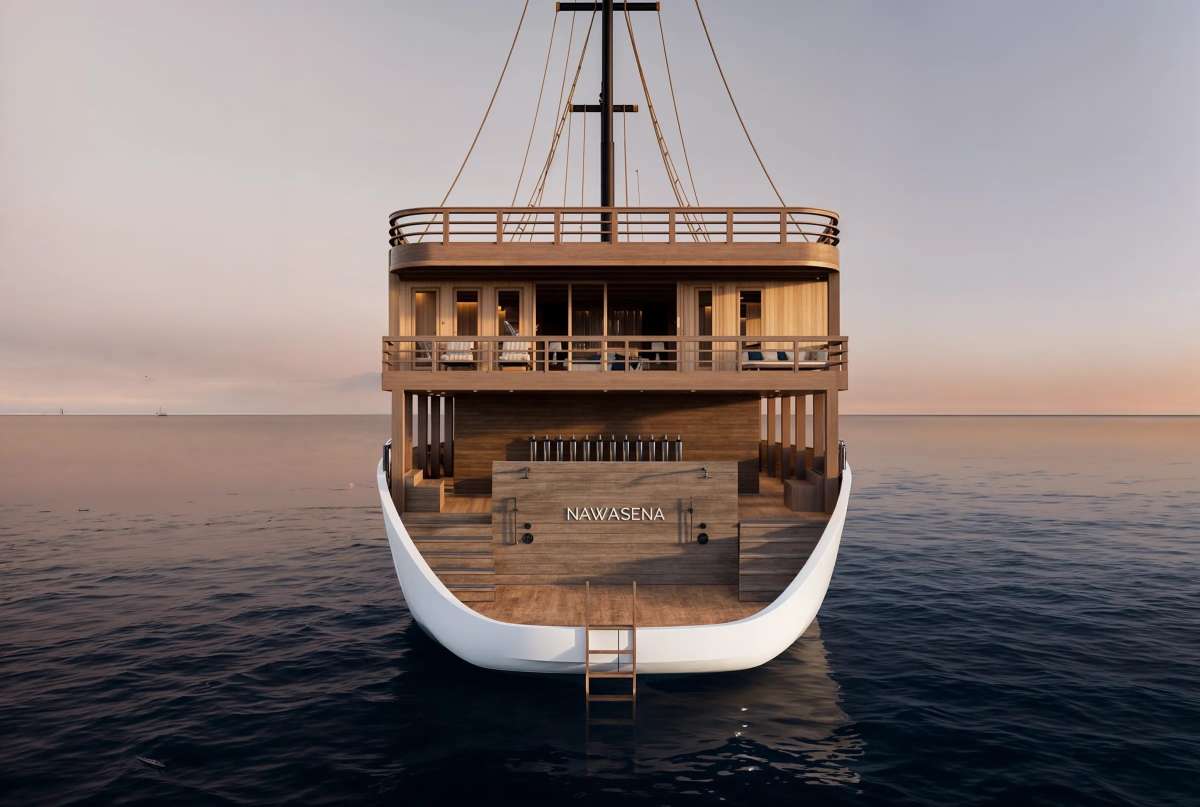
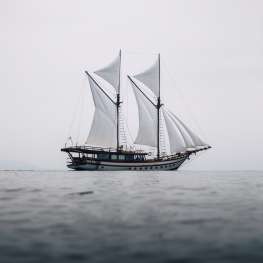
Nawasena is a 44-metre Indonesian phinisi liveaboard for 14 guests in seven ensuite cabins: four flexible Ocean cabins, two upper-deck Balcony cabins and one full-beam Master Suite. Built from ironwood and teak and refitted in 2026, the yacht combines private guiding, Nitrox diving, generous dive facilities and refined indoor and outdoor spaces. Published expeditions range from Komodo and Raja Ampat to Alor, Banda Sea, Triton Bay, Halmahera and North Sulawesi.
Description
Boat
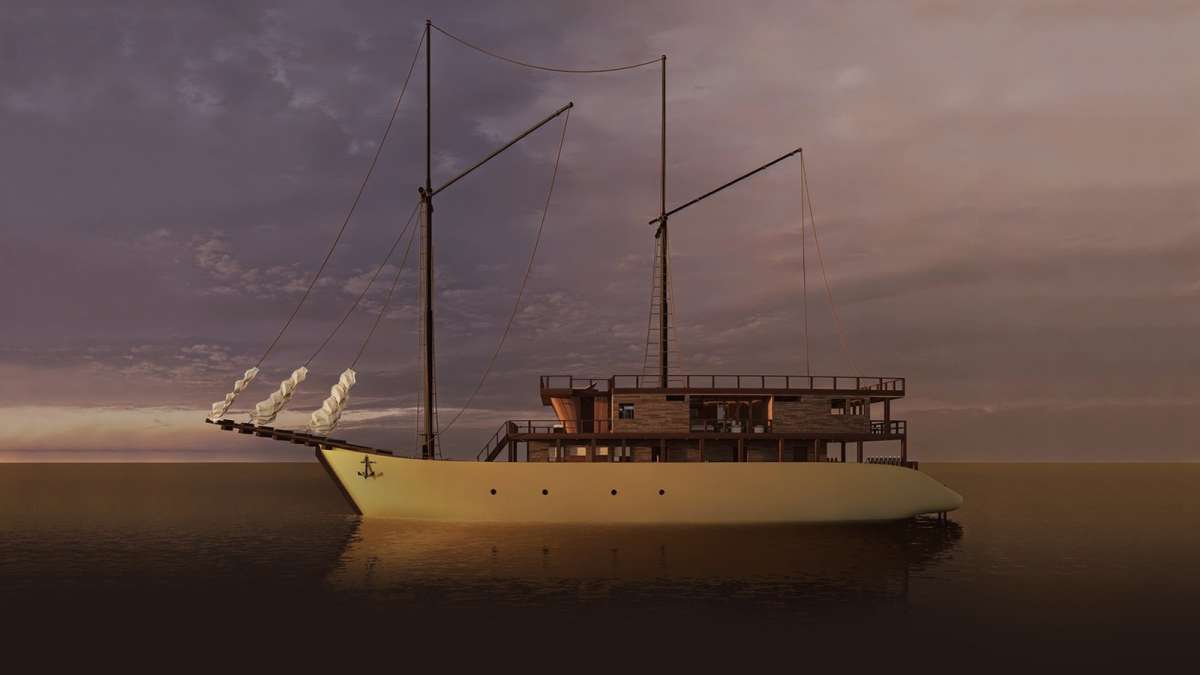
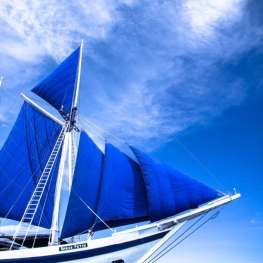
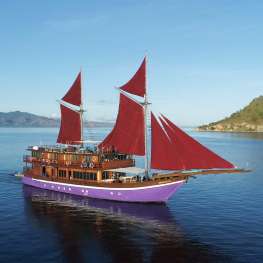
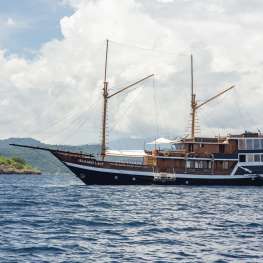
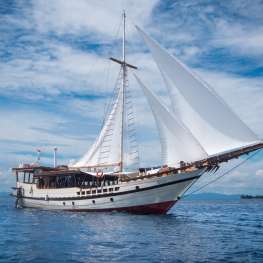
Nawasena Liveaboard is a traditional-style Indonesian phinisi created for small-group diving, snorkelling and private exploration across the Coral Triangle. Its name is derived from Sanskrit and is presented by the operator as meaning “bright future”, a fitting identity for a vessel that combines Indonesian boatbuilding character with a contemporary hospitality concept.
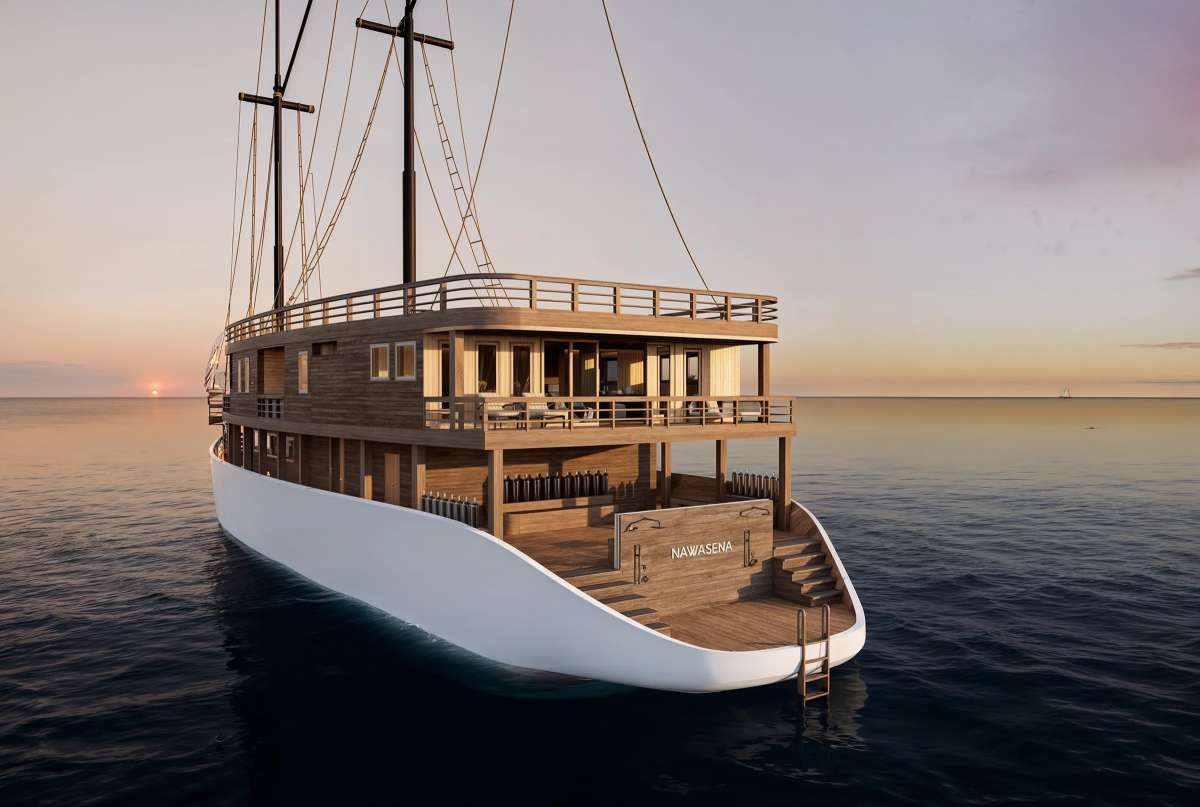
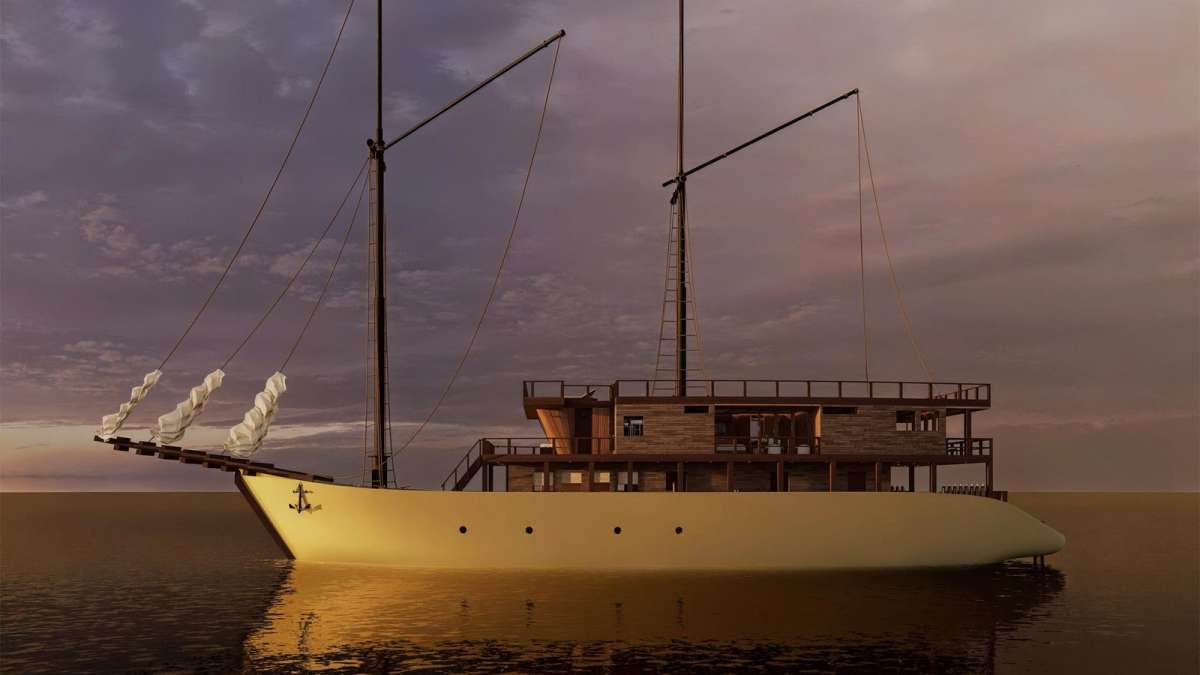
The yacht measures 44 metres overall, with a 33-metre deck length and 8.65-metre beam. It was originally built in 2010 and is listed by the operator as refitted in 2026. The wooden structure uses ironwood and teak, materials long associated with Indonesian working and sailing vessels. A single 650 hp Doosan Marine engine provides propulsion; the public technical sheet does not state cruising speed, range or generator specifications, so these should not be invented in sales material.
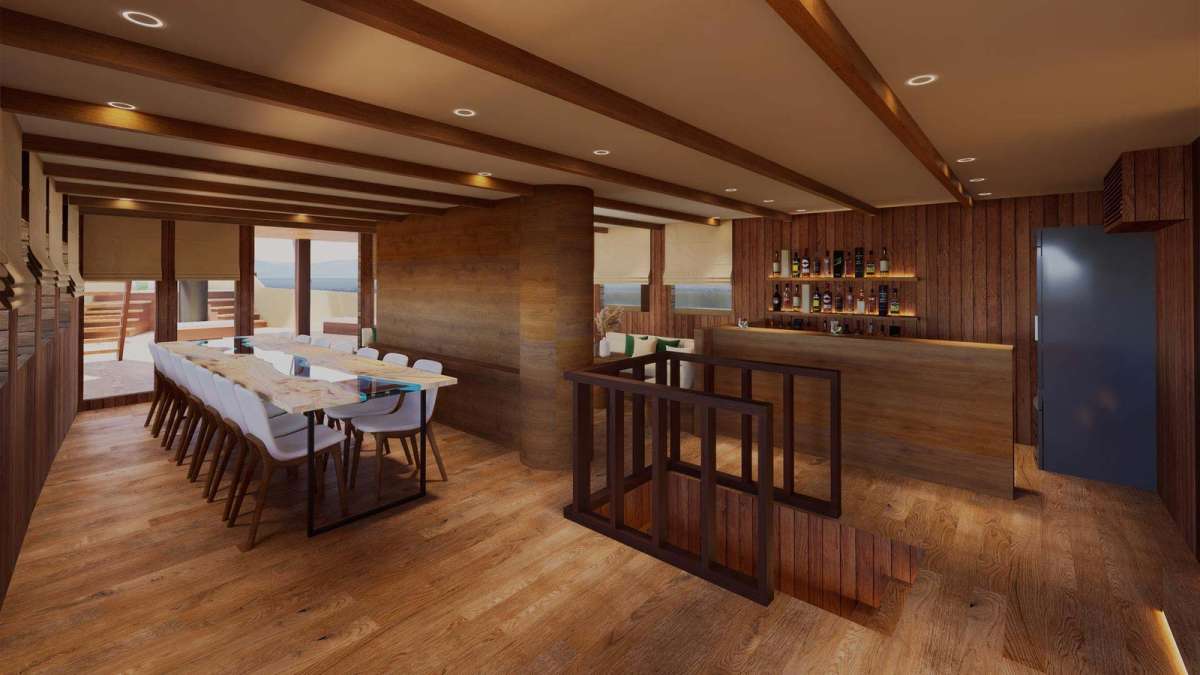
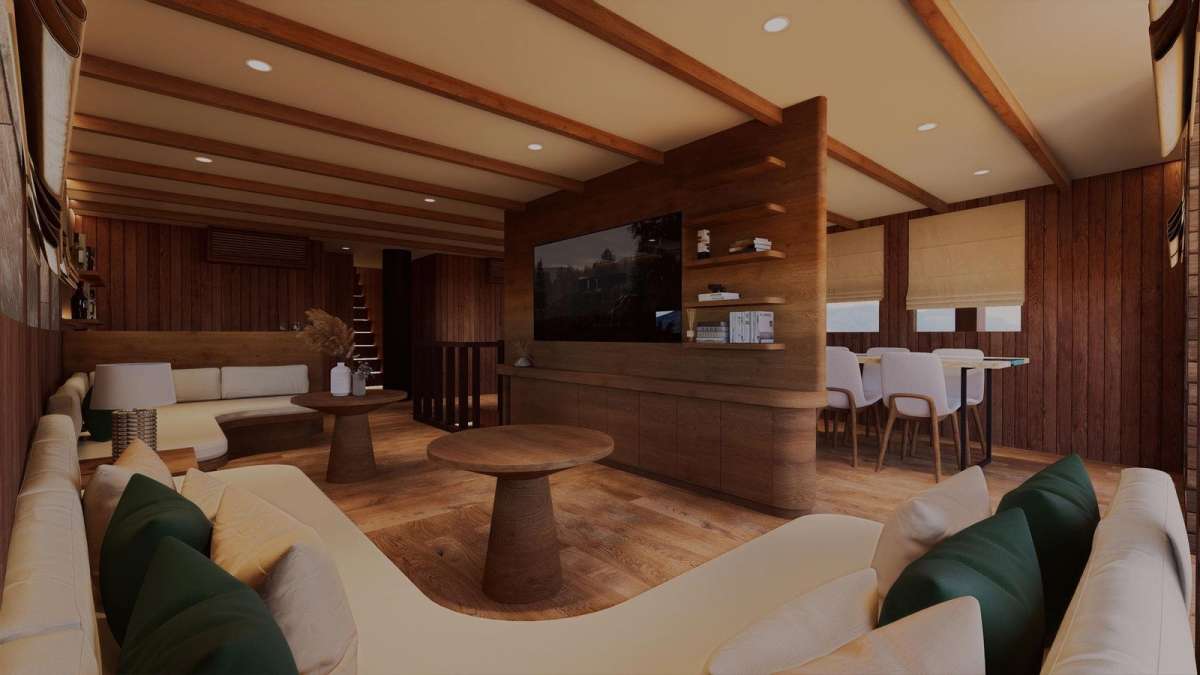
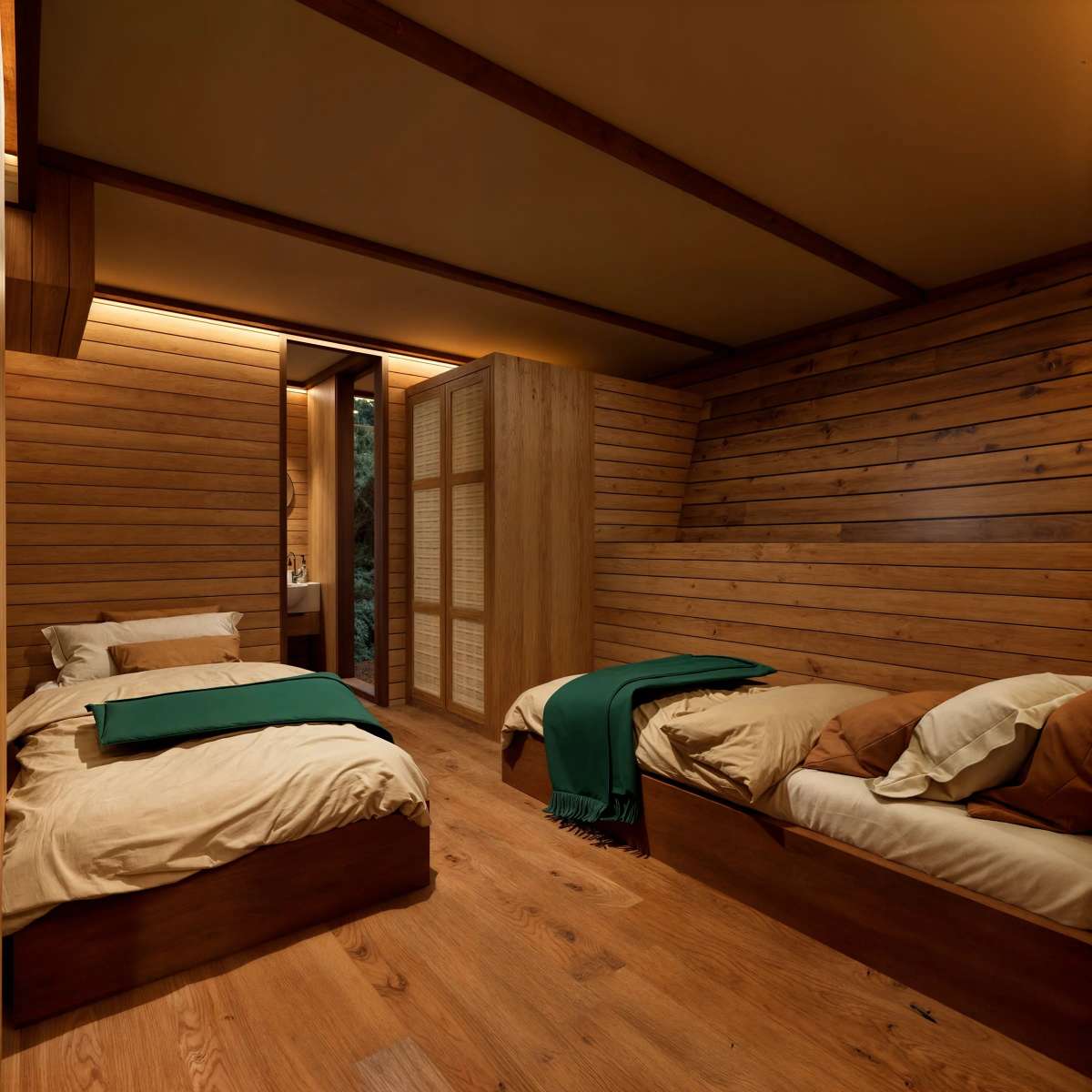
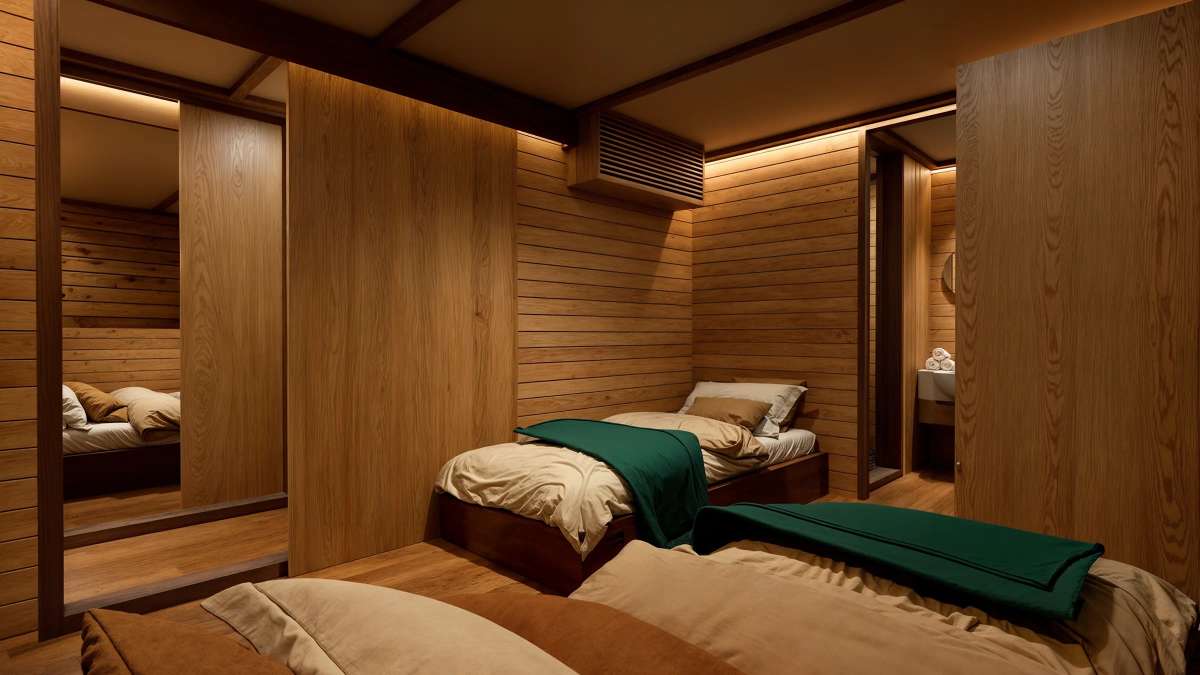
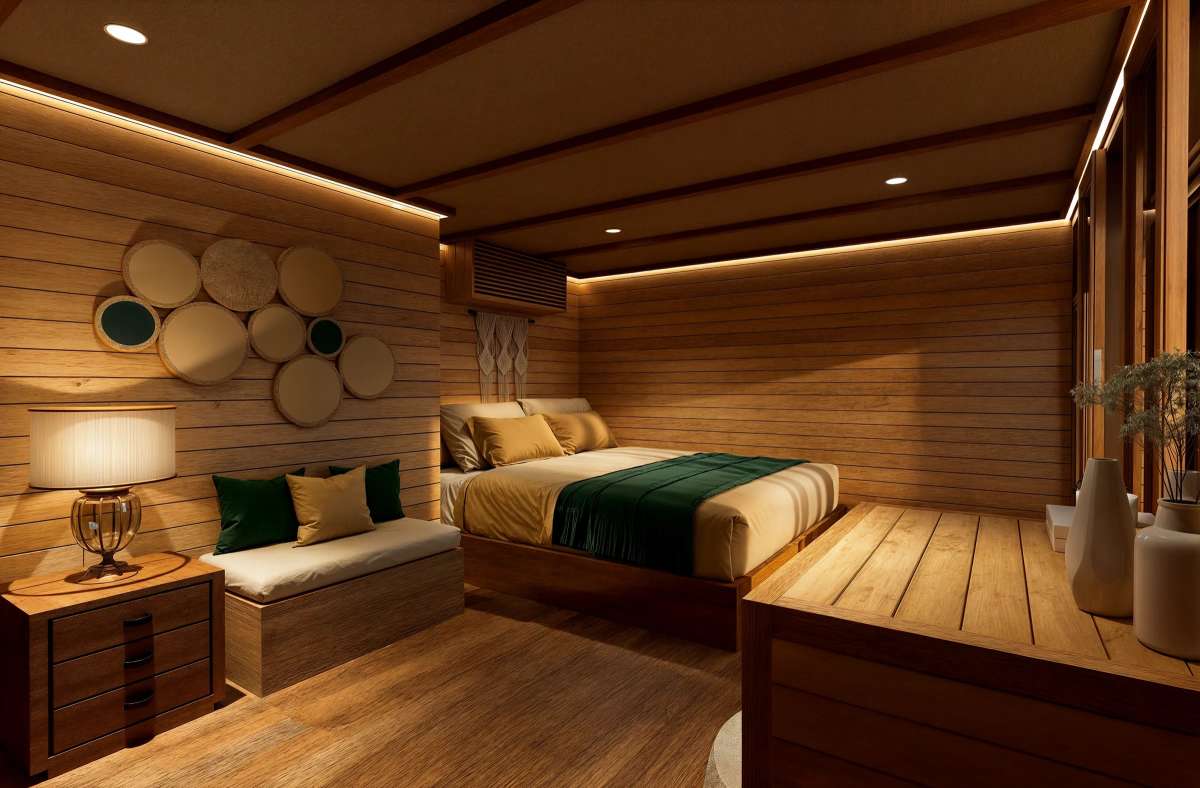
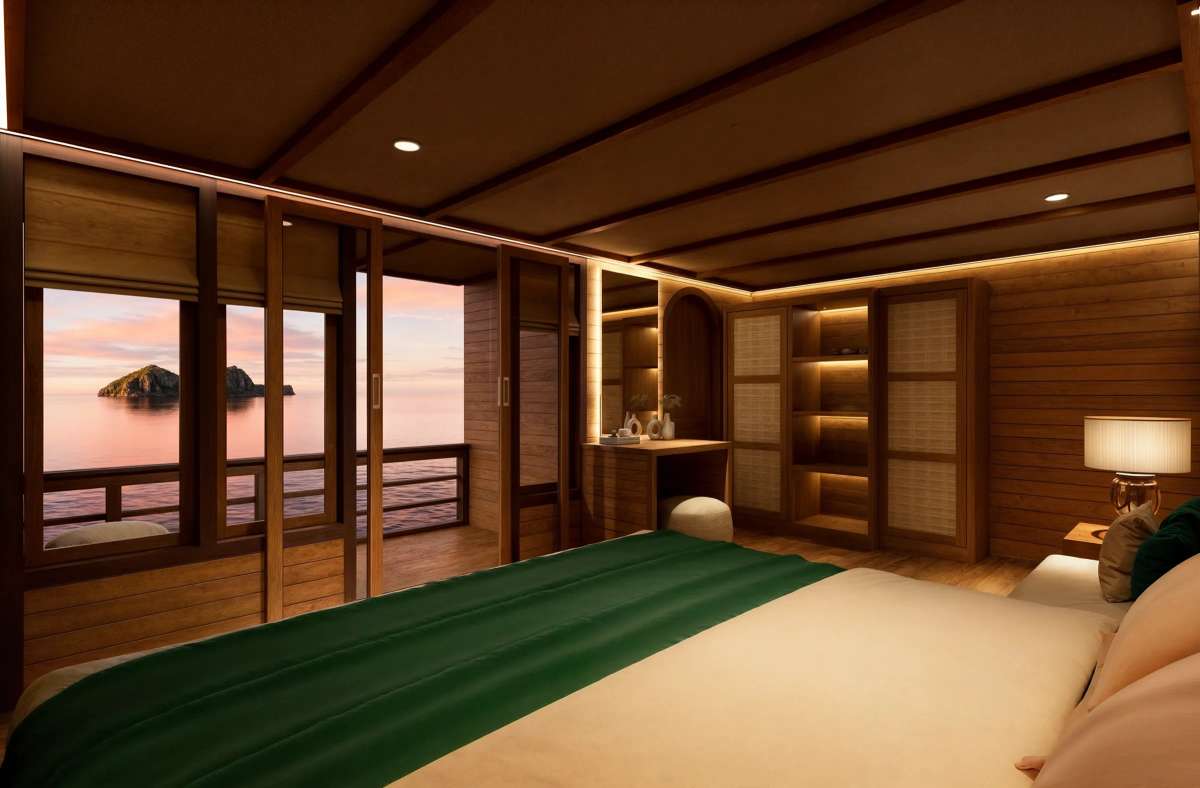
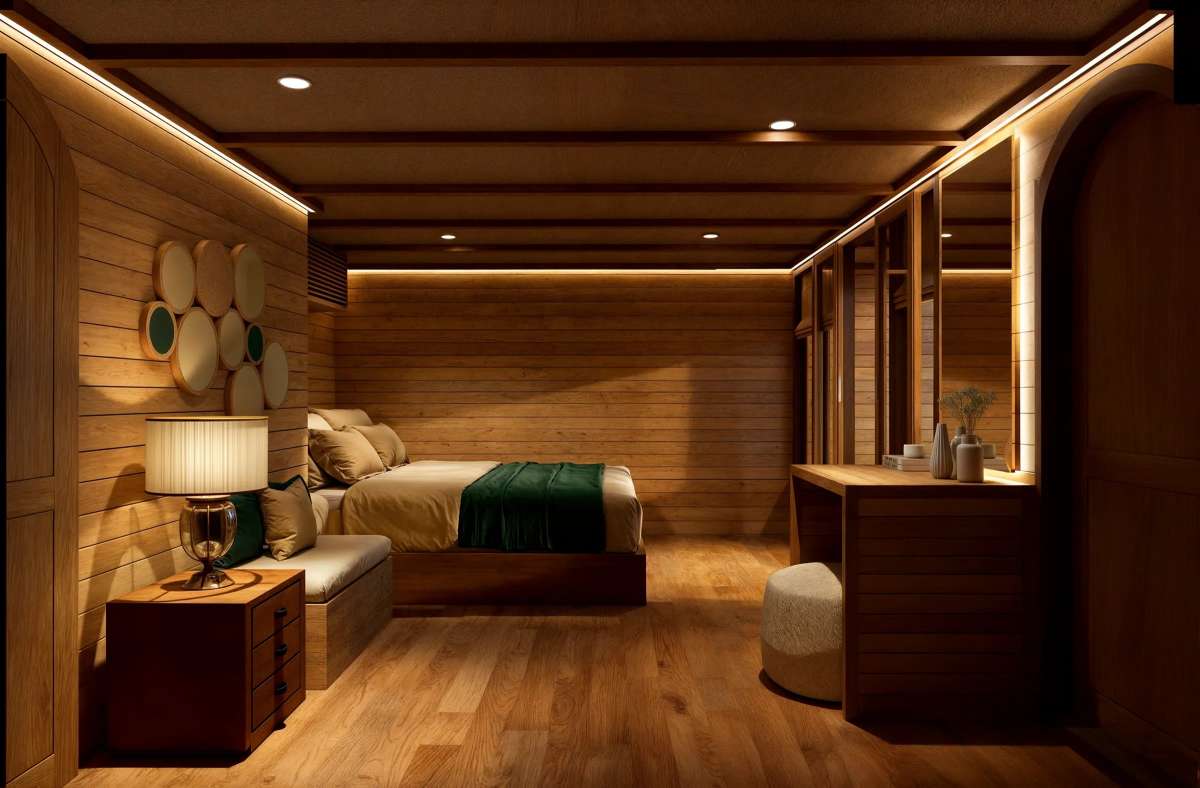
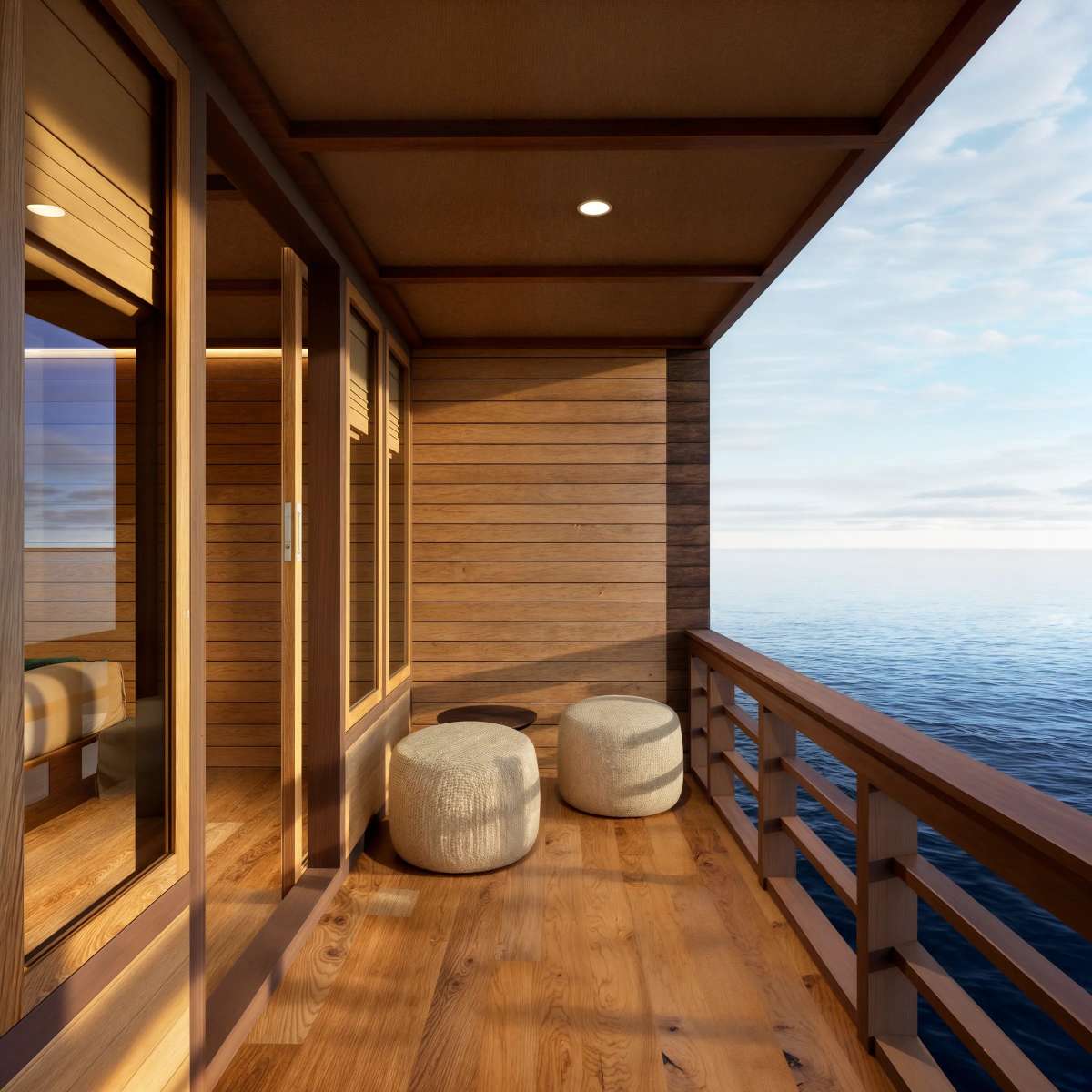
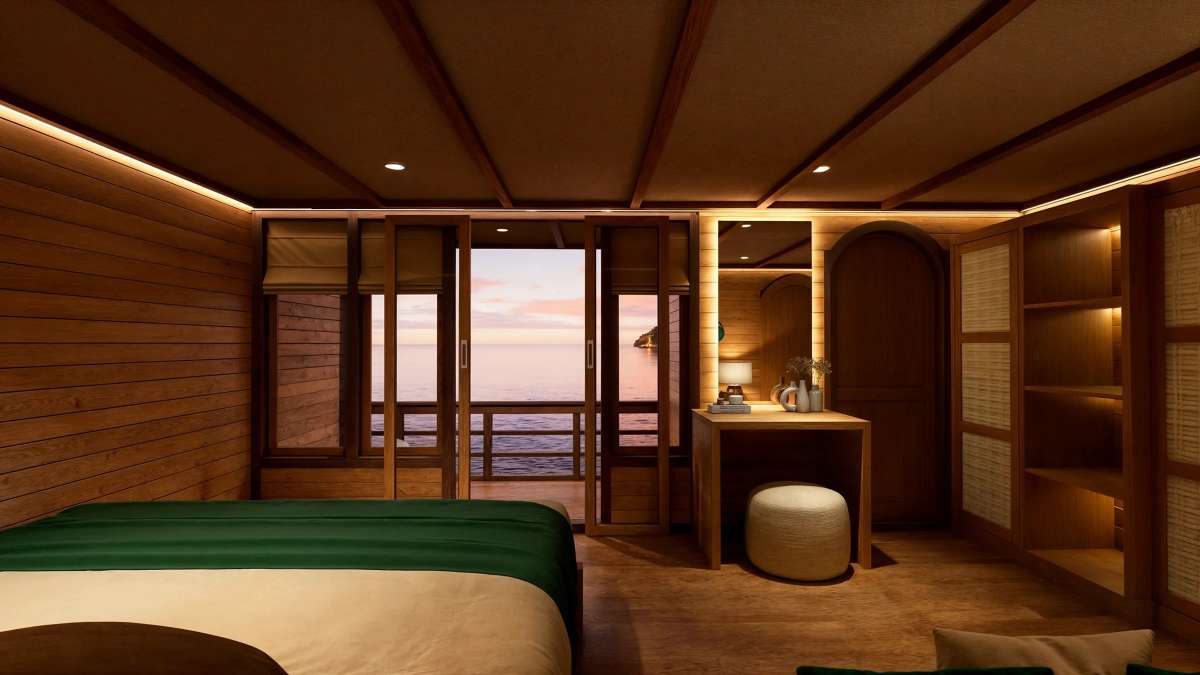
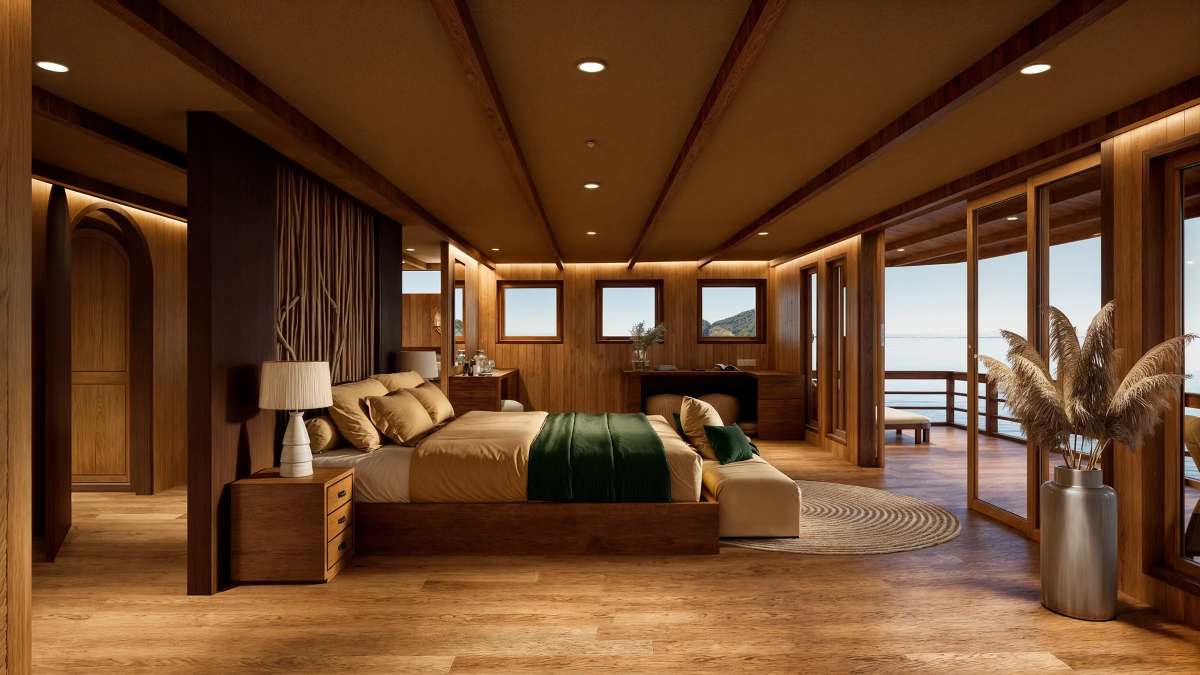
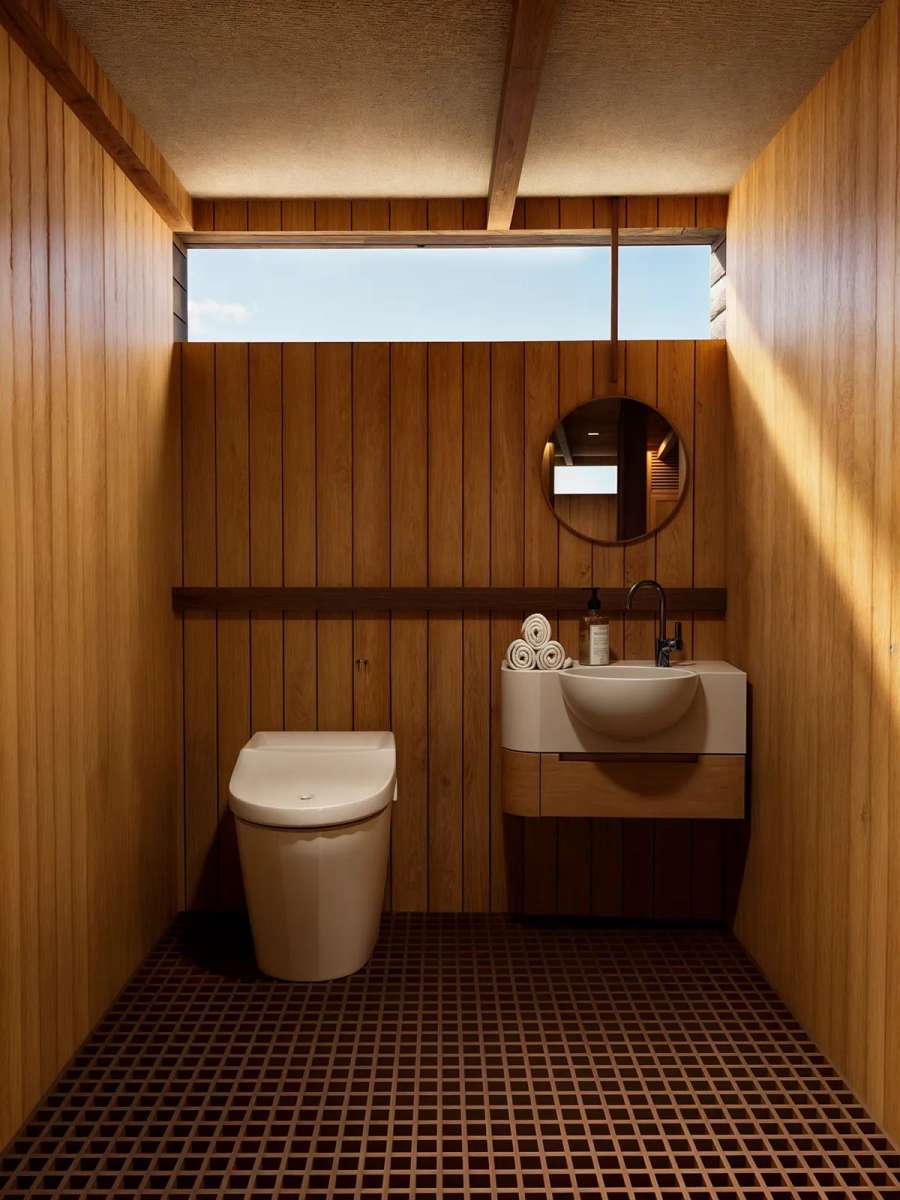
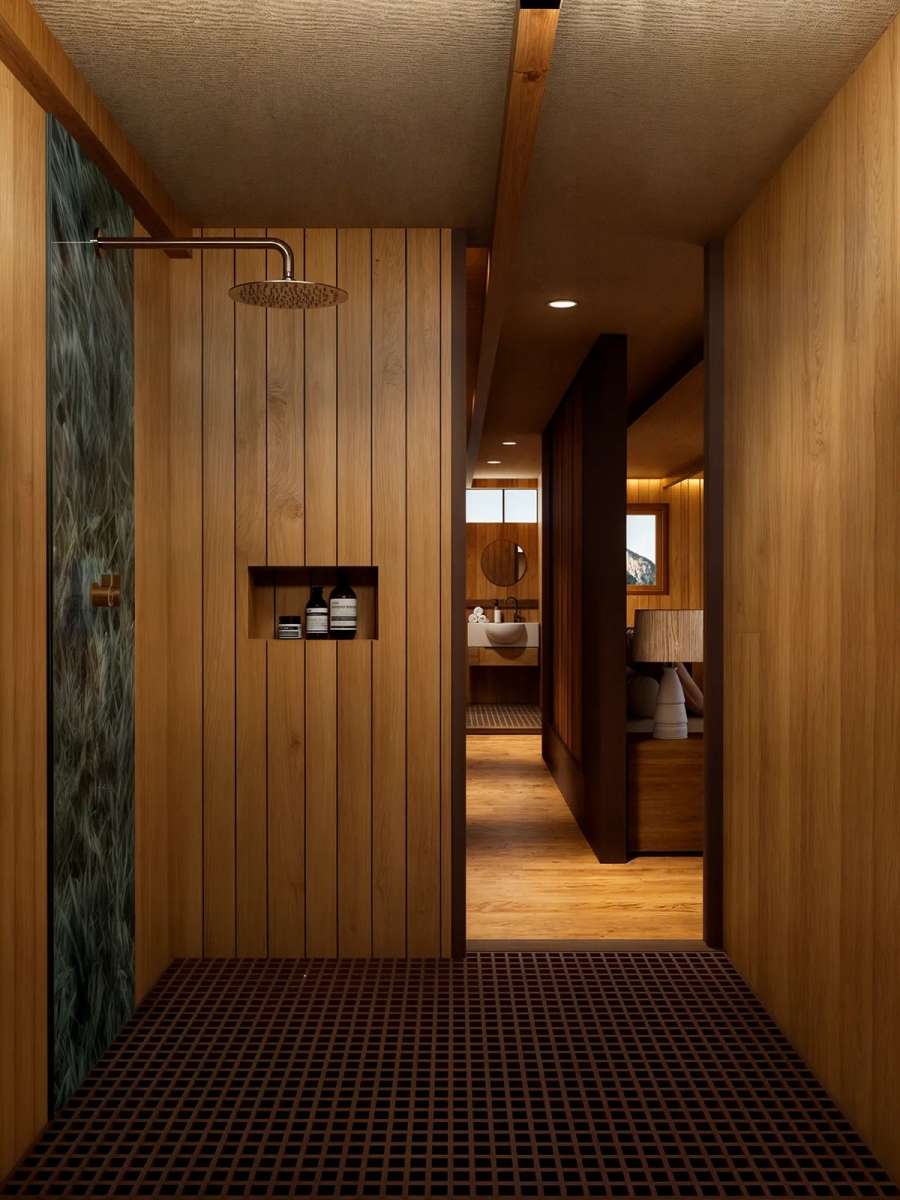
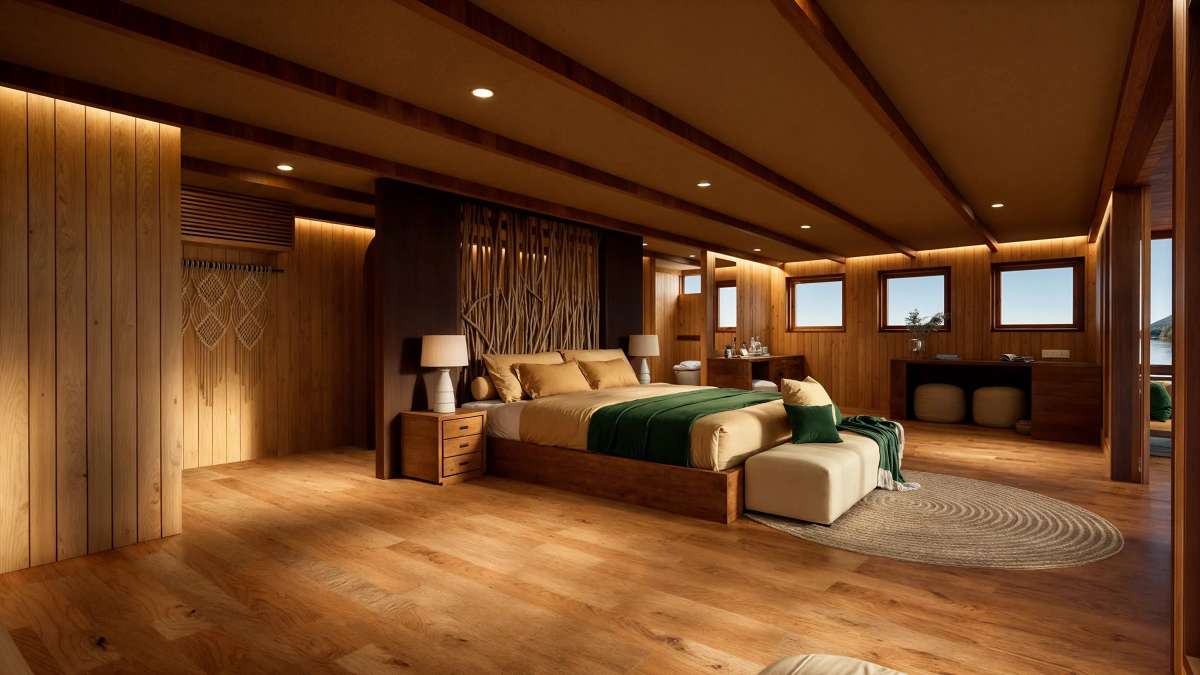
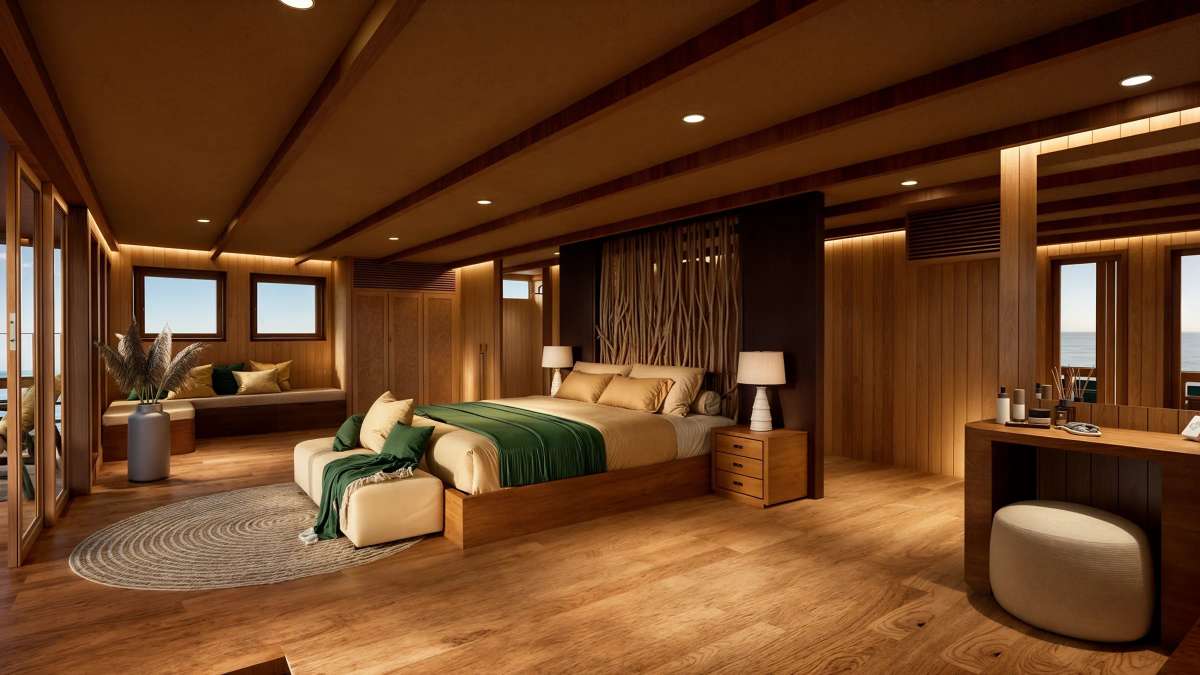
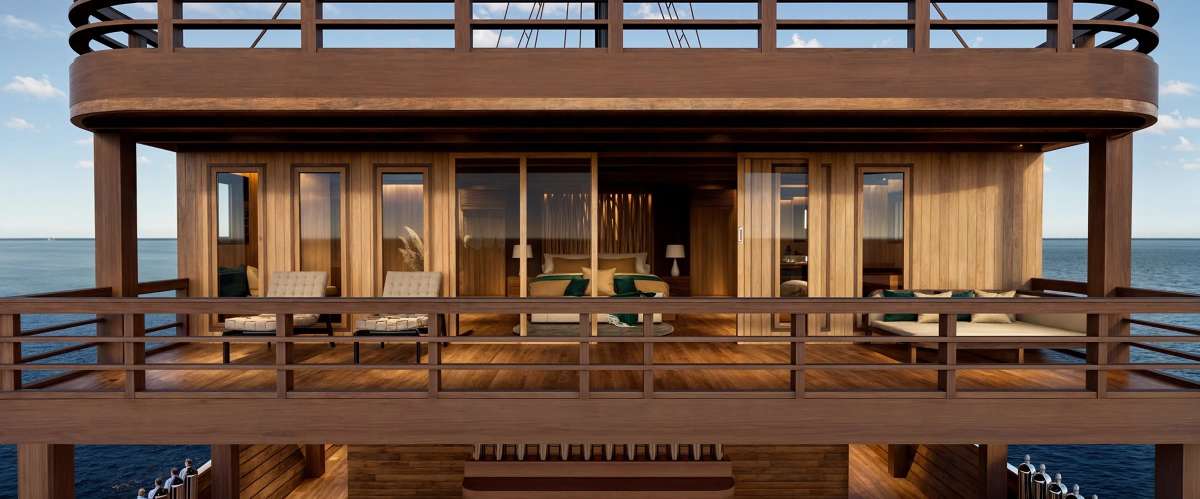
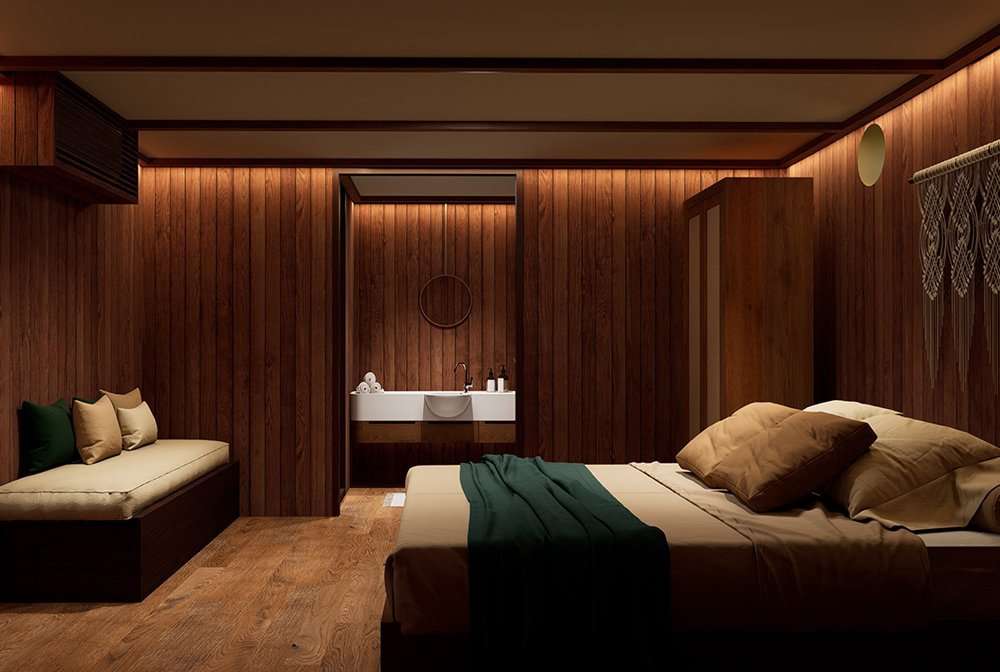
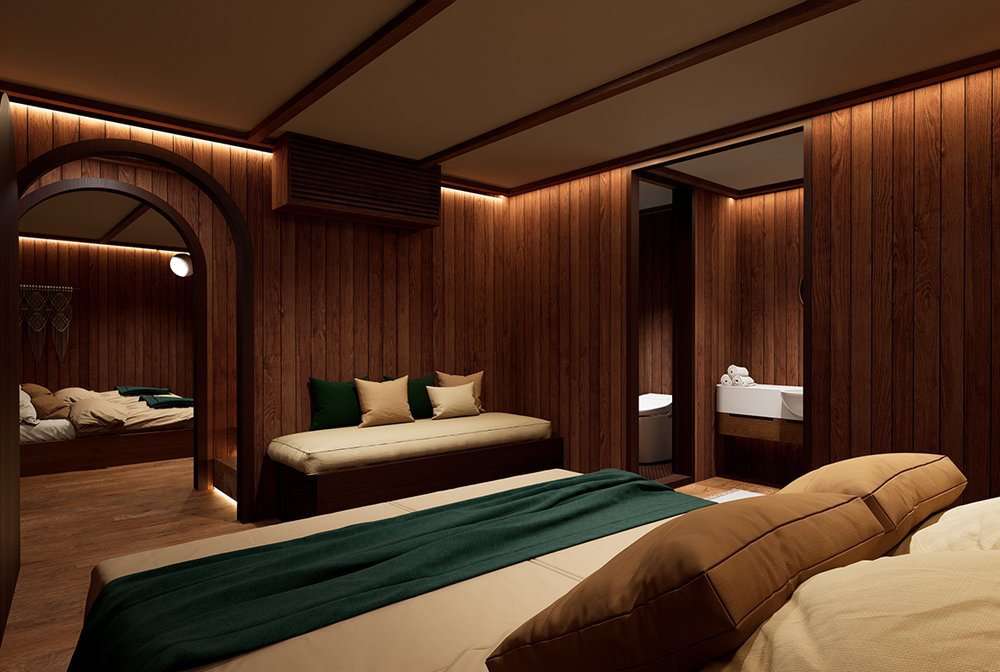
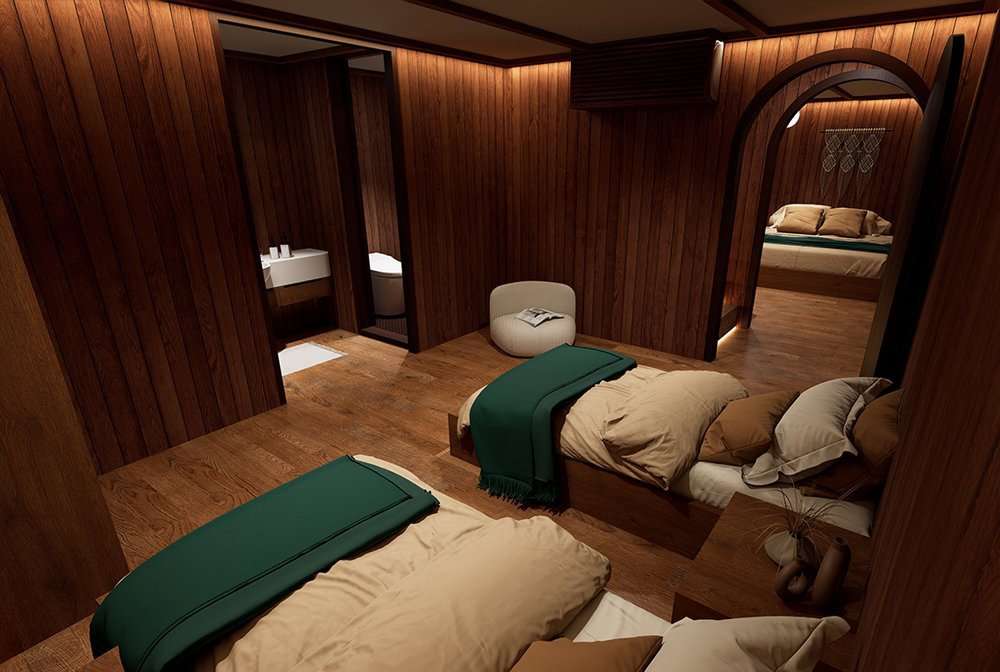
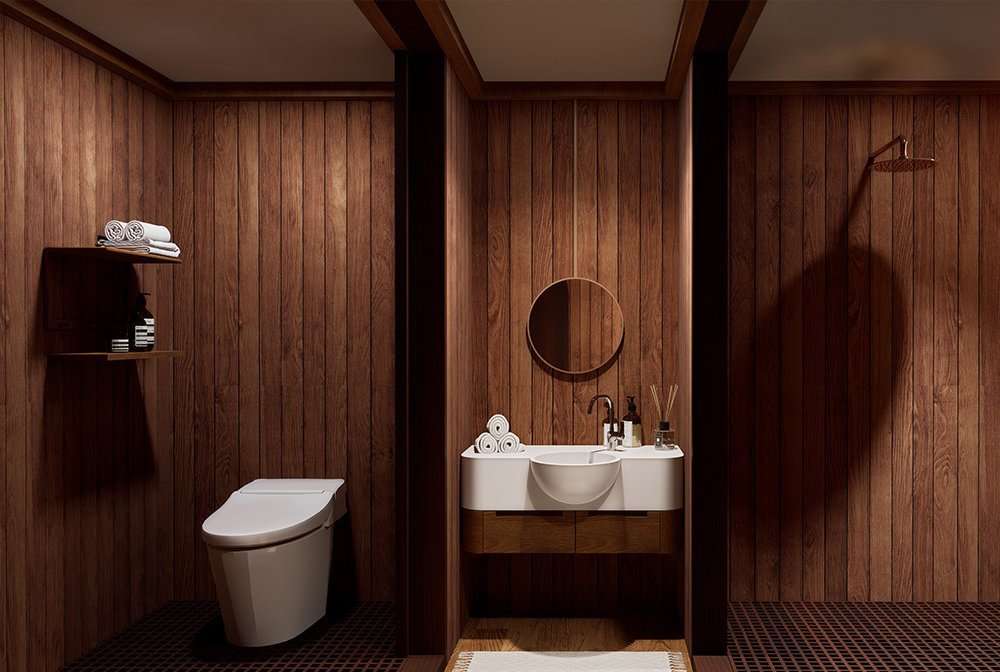
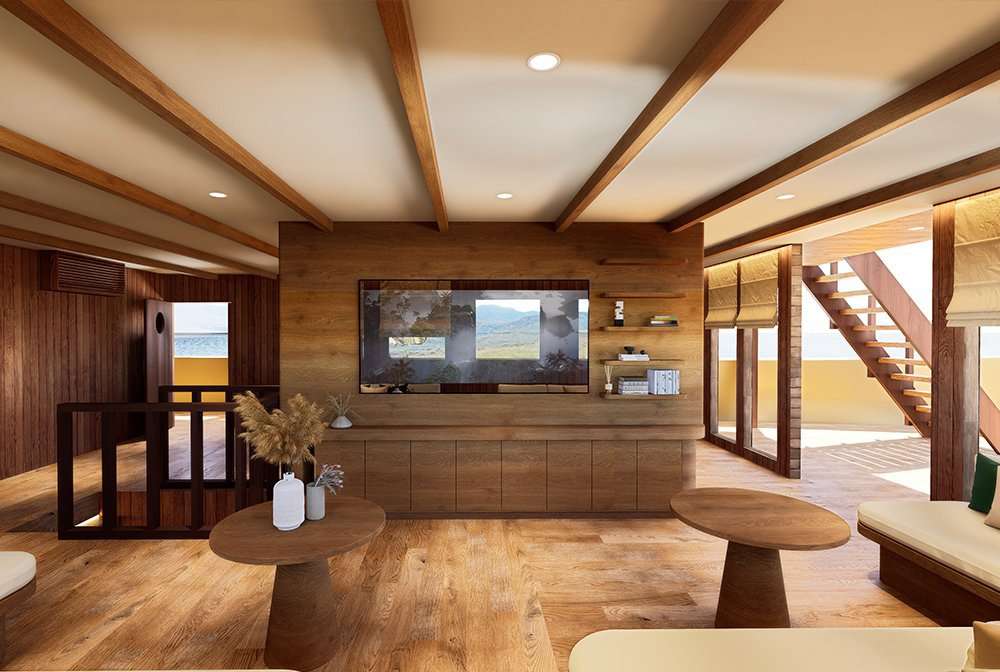
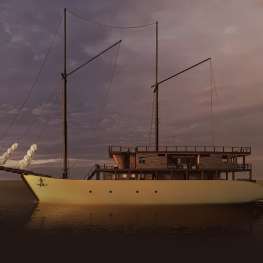
There is an important status caveat. At the research date of 8 August 2026, the operator’s recent official social post still described Nawasena as being built and “almost ready”, while the booking widget displayed departures beginning in August 2026. The cabin and vessel imagery currently published is computer-generated design material rather than documentary photography of the completed refit. Before selling a near-term voyage, obtain written confirmation that the vessel is operational and that the exact departure will run aboard the completed Nawasena.
Nawasena accommodates a maximum of 14 guests in seven cabins. Its signature service model pairs a professional Indonesian guide with each cabin, equivalent to a maximum 2:1 guest-to-guide ratio when a cabin is occupied by two people. This is substantially more personal than the guide ratios found on many larger liveaboards, although daily group formation still depends on certification, experience, interests and conditions.
Social life centres on an air-conditioned salon with lounge seating, a single-table dining area, television, library and bar. Open decks provide separate places for sunbathing, stargazing and quiet time. The upper open deck is promoted for yoga and massage, while sheltered exterior areas allow guests to remain outside between activities without occupying the working dive deck.
Current trip records include breakfast, lunch, dinner and snacks. They also list non-alcoholic beverages and, on departures carrying the operator’s detailed inclusion schedule, one glass of house wine per guest with dinner. Additional alcoholic drinks are chargeable, and the company’s safety policy permits alcohol only after diving has finished for the day.
Non-divers are welcome. Snorkelling, sea kayaking, stand-up paddleboarding, land excursions and water toys can be built into the voyage. Massage and training are offered but are not automatically included. Exact availability is controlled by route, weather, local permission, equipment serviceability and the dated booking confirmation.
Navigation equipment published by the operator includes chart plotting, high- and low-frequency sonar, magnetic compass, radar and GPS. Communications include VHF, SSB/HF radio and a satellite phone. Two rigid inflatable boats and one dinghy support dives and shore visits. The watermaking plant is rated at 10,000 litres per day, while fuel storage is stated as 18,000 litres.
The safety list includes personal location devices, EPIRB, lifejackets, ring buoys, flares, liferaft capacity for 35 people, emergency oxygen, first-aid kits, a backboard and AED. Fire protection includes detectors, extinguishers, heat sensors, a suppression system, fire hose, fire suits with self-contained breathing apparatus and related equipment. This inventory is reassuring but does not replace the embarkation briefing or a guest’s duty to follow the captain and cruise director.
No accessible cabin, lift or step-free circulation route is published. The four Ocean cabins are below deck, and tender boarding, stairs, raised thresholds and moving decks are inherent to this type of vessel. Anyone with reduced mobility, a significant medical condition or powered medical equipment should obtain a written suitability assessment before paying a deposit.
Cabin
Nawasena has exactly seven guest cabins for 14 guests. Every category includes storage, an ensuite bathroom and independently controlled air conditioning. Warm teak finishes are consistent across the accommodation, but the deck position, floor area, bed arrangement and private outdoor space differ materially between categories.
- 4 Ocean Cabins — lower deck, 12 m² each, maximum 2 guests per cabin: these ocean-level cabins can be arranged with one double bed or two twin beds. Each has an ensuite bathroom, independent air conditioning, storage and low-level exterior views. The flexible bedding makes this the practical category for friends, couples or same-gender sharing. The operator does not publish individual cabin numbers, exact mattress dimensions or a statement that every bed can be converted after embarkation; the preferred layout should therefore be confirmed in advance.
- 2 Balcony Cabins — top/upper deck, 16 m² interior plus a 3 m² private balcony, maximum 2 guests per cabin: each stateroom opens directly to its own balcony and includes an ensuite bathroom and independent air conditioning. An earlier operator lookbook described queen-size beds, while the current cabin page does not restate the bed measurement. The safe wording is “double/queen-style bed subject to the current rooming plan” until the operator confirms the installed mattress size in writing.
- 1 Master Suite — top/upper deck aft, 32 m² interior plus a 12 m² private balcony, maximum 2 guests: the Master spans the full beam and has a king bed, abundant natural light and a private balcony with an approximately 180-degree panorama. It is positioned aft of the two Balcony cabins and is the vessel’s largest accommodation. The current operator page lists 32 m²; older promotional material showed 34 m², so the current 32 m² figure should be used.
Capacity is straightforward: 4 Ocean × 2 guests + 2 Balcony × 2 guests + 1 Master × 2 guests = 14 guests. There are no advertised triple, family, bunk or dedicated single cabins. A solo booking therefore uses one of the double-occupancy cabins and may attract a supplement or require sharing, depending on the departure.
The four Ocean rooms are the only flexible twin/double category publicly confirmed. The two Balcony cabins should not be promised as twins, and the Master is specifically presented with a king bed. A charter organiser should collect the complete rooming request before contract, especially when a group contains more than four guests who require separate beds.
All seven cabins are ensuite. The public pages do not specify shower dimensions, separate shower stalls, electric WC type, toiletries, robes, safes, minibars, televisions, USB outlets, voltage, sound insulation or housekeeping frequency. An older operator lookbook mentioned hairdryers in every category, but the current cabin page does not repeat this amenity. These details should be checked on the pre-departure information sheet rather than added as assumptions.
Deck position influences the experience. Lower-deck Ocean cabins sit closer to machinery and water sounds but generally have less high-level motion than upper accommodation. The Balcony and Master categories offer more light and private exterior access, while their elevated position can increase perceived movement. The aft Master may also experience activity from open decks or vessel operations. No cabin can be guaranteed silent on a working wooden yacht.
The phrase “personal guide for each cabin” describes the service ratio, not a private butler permanently assigned to the room. Guides support diving and exploration; cabin cleaning, meals and deck work remain shared crew functions. Private charter guests may request a specific operating style, but the captain retains control of safety and navigation.
Before final payment, request a cabin allocation showing category, deck, bed configuration, occupancy, private balcony where applicable and any single-use supplement. Guests with allergies should also ask what feather, latex or other bedding materials are installed, since mattress and pillow composition is not published.
Diving
Nawasena is designed around highly personalised recreational diving. The operator advertises seven guides for seven cabins, and current detailed trip records describe a 2:1 guest-to-guide ratio. This allows photographers, macro enthusiasts, wide-angle divers and mixed-experience couples to follow different tempos without forcing all 14 guests into one group.
The dive deck provides individual seating and gear storage, with each guest station beside the associated guide station. There are two freshwater showers, a wetsuit hanging area and a rinse tank. Diving is conducted from two rigid inflatable boats, allowing the main vessel to remain at a safe anchorage and enabling separate groups to time entries around current.
On departures with the full current inclusion list, certified divers receive scheduled fun dives, standard tanks, weights, weight belt and SMB. Nitrox fills are included for appropriately certified EANx divers. A 15-litre cylinder, full rental kit, computer, torch and individual equipment pieces are displayed as paid extras. Every diver is required to use a personal dive computer.
Published routes generally require at least Open Water Diver or equivalent certification. The booking system sets a route-specific experience threshold of either 30 or 50 logged dives. Explore Raja Ampat, The Gems of Alor, The Gems of East Nusa, The Secret of Seram Sea and The Banda Saga II currently show 30; many other routes, including Beyond Komodo, Best of Raja Ampat, Raja Ampat Exploration, Halmahera’s Crown and the longer Lesser Sunda crossings, show 50. These are minimum booking indicators, not a promise that every site suits every diver.
Currents can be strong in Komodo, Alor, the Banda Arc, Halmahera and exposed Raja Ampat channels. Blue-water entries, negative entries, reef hooks, deep walls, surge and remote conditions may occur. The cruise director can modify a profile or refuse a particular dive when recent experience, buoyancy, gas management, medical fitness or sea conditions make participation unsafe.
The operator promotes PADI instruction from introductory experiences to advanced and technical training. Courses are separately priced and must be reserved. No public technical inventory confirms twinsets, sidemount cylinders, helium, oxygen boosting, bailout, scrubber material or rebreather support. Technical or CCR divers must obtain an equipment-and-gas confirmation rather than interpreting the word “technical” as universal support.
Wildlife references describe possibilities, not guarantees. Depending on region and season, trips may encounter mantas, wobbegong sharks, schooling hammerheads, reef sharks, whale sharks, turtles, sea snakes, pygmy seahorses and rare macro life. Weather, current, animal movement and conservation restrictions determine actual encounters.
Dive-accident insurance requires special attention. Some current itinerary records list operator-provided dive-accident insurance among inclusions, yet the company’s terms separately require every diver to provide proof of active qualifying insurance covering hyperbaric treatment and evacuation. Unless written confirmation says the included cover fulfils that obligation, guests should arrive with their own policy and proof.
Other Information
Nawasena sells both shared voyages and private charters. Commercial details vary between departure records, and some expedition entries show abbreviated inclusions. The invoice for the selected date is therefore authoritative.
Current departures carrying the operator’s full inclusion schedule list the following as included:
- Accommodation in the confirmed air-conditioned ensuite cabin
- Return transfer between Nawasena and the nearest airport or hotel in the embarkation/disembarkation town
- Breakfast, lunch, dinner and snacks
- Non-alcoholic beverages
- One glass of house wine per person with dinner
- Snorkelling equipment
- Use of paddleboards, sea kayaks and stated water toys
- Dedicated diving guide at a maximum 2:1 guest-to-guide ratio
- Scheduled fun dives for certified divers
- Standard tanks, weights, weight belt and SMB
- Nitrox fills for EANx-certified divers
- Dive-accident insurance as stated on the trip record, subject to the insurance caveat above
- National-park and port fees
- Wi-Fi where local mobile/network coverage is available
Normally excluded or separately charged on those same detailed records:
- International and domestic flights
- Hotels before and after the cruise
- Comprehensive travel and cancellation insurance
- Alcohol beyond the stated dinner wine inclusion
- Rental dive equipment, 15-litre cylinders, computers and torches
- PADI courses, refreshers, specialties and certification costs
- Massage treatments and laundry
- Personal purchases and crew gratuities
- Relocation fees outside standard routes or home ports
- Early arrival or late departure outside standard check-in/check-out times
- Any service not specifically written into the dated confirmation
Itineraries
Nawasena operates a seasonal Indonesia programme rather than one fixed weekly circuit. The published schedule ranges from five-night Komodo trips to eleven-night expeditions crossing the Banda Sea, Raja Ampat, Triton Bay, Halmahera and the Lesser Sunda Islands. Durations below refer to nights; a five-night trip normally spans six calendar days.
Dive counts are approximate maximums from the current booking records. Arrival, check-dive, long-passage and disembarkation days contain fewer activities, and weather or current may reduce the total. The operator may reverse or change a route. Confirm the selected departure rather than treating this catalogue as a permanent timetable.
Beyond Komodo — Labuan Bajo Return
The shortest published Nawasena programme is a Labuan Bajo round trip offered in five- or six-night versions. Current records show approximately 16 dives over five nights or 20 dives over six nights, with Open Water certification and 50 logged dives as the booking threshold.
The precise site order is not published. A balanced Komodo cruise can combine protected central reefs, manta-oriented channels, current-exposed pinnacles and a ranger-led land visit, but no individual site should be promised before the captain and dive team review wind and tide. Komodo’s northern and central zones can offer schooling fish and fast drifts, while southern water may be cooler and greener.
Choose this route for a concentrated liveaboard week with minimal domestic transfers beyond Labuan Bajo. It is not a beginner guarantee despite the Open Water minimum; current and negative entries make recent experience important. Non-divers should confirm whether the selected departure includes the dragon walk, Pink Beach and other land components.
The Spices of Neira — Ambon Return
This seven-night Banda Islands voyage departs and returns to Ambon, with approximately 23 dives and a published threshold of Open Water plus 50 logged dives. It combines volcanic seascapes, deep walls, coral-covered lava flows and the cultural history of Banda Neira.
A typical operating flow uses Ambon for embarkation and a check dive, then crosses toward the Banda group. Diving may include walls and offshore rocks around Banda Neira, Hatta, Ai, Run or Suanggi according to weather. A fort, colonial quarter or spice-plantation visit adds context above water. Open-ocean crossings and exposed sites mean the captain may change islands while preserving the Banda theme.
This route suits divers who want a complete Banda experience without a one-way flight plan. Hammerhead encounters are seasonal possibilities rather than inclusions, and the route should still be valued for walls, reef fish, macro subjects, sea snakes and island history.
The Secret of Seram Sea — Ambon to Sorong
The published eleven-night crossing from Ambon to Sorong lists approximately 43 dives and a 30-dive experience threshold. It connects Banda history with southern Raja Ampat and contains some of the operator’s most specific route information.
Day 1: embark before midday where possible, complete briefings and a check dive, then begin the long Banda Sea passage toward Suanggi. Day 2: make two dives around Suanggi before continuing to Banda Neira for a heritage or spice-focused land visit and possible night dive. Day 3: explore Banda-area sites such as Pohon Miring, Batu Kapal and Karang Hatta. Day 4: dive around Hatta before cruising toward volcanic Manuk.
Day 5: Manuk can provide three dives among volcanic terrain, sea snakes and open-water marine life before the yacht heads toward Koon. Day 6: two Koon dives introduce rich eastern Indonesian reefs, followed by the long transition to South Raja Ampat. Day 7: Fiabacet and Boo may provide up to four dives among pinnacles, windows and dense coral life. Day 8: Jef Pele shifts the emphasis between colourful reef scenery and small subjects.
Day 9: Balok and Wayil can include sites such as Four Kings and Orange Peel. Day 10: Farondi and Balbulol mix walls, overhangs and limestone scenery; a jellyfish-lake visit is possible only when locally permitted and environmentally appropriate. Day 11: two final dives around Sagof precede the cruise to Sorong. Day 12: breakfast and disembarkation complete the one-way voyage.
This is a true expedition with long passages and two different gateway airports. Guests should arrive in Ambon early and schedule a post-cruise night after Sorong. The named sites are the operator’s sample, not contractual guarantees.
Best of Raja Ampat and Raja Ampat Exploration — Sorong Return
Nawasena publishes several Sorong round trips. Best of Raja Ampat is an eleven-night programme with approximately 43 dives and a 50-dive threshold. Raja Ampat Exploration is an eight-night version with approximately 28 dives, also showing 50 logged dives.
Longer departures can combine the central Dampier Strait, northern limestone islands and southern Misool, although the final seasonal route decides the balance. Dampier sites are known for fish biomass and current; northern areas add karst landscapes and viewpoints; Misool brings soft-coral reefs, pinnacles, lagoons and dramatic above-water scenery.
The eight-night option is better for travellers with limited time, but it cannot cover the same geographic range without longer passages. The eleven-night version creates more flexibility for weather and local timing. Both start and finish in Sorong, simplifying flights compared with the one-way expeditions.
Explore Raja Ampat — Misool-Focused Sorong Return
The published seven-night Explore Raja Ampat itinerary lists approximately 19 dives, Open Water certification and 30 logged dives. Its current route text concentrates on southern Raja Ampat.
Day 1: board in Sorong, complete a relaxed check dive and begin the 12–14-hour passage toward Misool. Day 2: dive or snorkel around Balbulol and Wagmab, with Masker Cave, No Contest and a jellyfish-lake visit among the stated possibilities. Day 3: explore Yilliet-area reefs such as Romeo and Antichovy, visit Shark Lagoon when accessible and consider a night dive.
Day 4: focus on Warakaret and Fiabacet, where the sample names Shadow Reef, Boo Window, Boo East and Whale Rock. Day 5: continue with sites such as Nudi Rock, Tank Rock, Kalig Reef or Barracuda Reef before a possible Love Lake viewpoint walk and a Wayil Batan night dive. Day 6: Balok and Wayil Batan may include Four Kings, Orange Peel and Wedding Cake before the overnight passage toward Daram. Day 7: two final dives around Daram, possibly Andiamo and Warna Berwarna, precede the return to Sorong. Day 8: breakfast and disembarkation.
This itinerary is attractive to photographers and mixed dive/snorkel groups who want Misool’s concentrated scenery. Lagoon and lake access remains dependent on local conservation rules.
South Raja Ampat and Triton Bay — Sorong/Kaimana
This remote eleven-night route is published in both directions between Sorong and Kaimana. Current records show ten diving days and approximately 43 dives, with Open Water certification and 50 logged dives.
The voyage links Misool’s limestone reefs with the reefs, soft corals, fish schools and occasional whale-shark opportunities associated with the Triton Bay region. Because the distance is considerable, several passages are operationally necessary. One-way travel also means guests need different domestic flight arrangements at each end.
Do not assume a whale-shark dive, a specific bagan interaction or a fixed Misool lake visit. Local practice, permits, animal presence and sea state control those experiences. The main value is the transition between two rarely combined marine regions.
Halmahera’s Crown — Sorong to Bitung
Halmahera’s Crown is an eleven-night, approximately 43-dive expedition from Sorong to Bitung with a 50-dive threshold. It crosses from Raja Ampat through Halmahera and finishes near the macro-diving centre of Lembeh.
The operator’s sample begins with a Sorong check dive and overnight passage to Misool. The next phase explores Farondi, Fiabacet, Warakaret, Wayil and Jef Pele, with possible visits to a jellyfish lake and the Love Lake viewpoint. Blue-water mangroves create a distinctive shallow-water and snorkelling interval before the yacht moves via Pulau Pisang toward Bacan and Patinti Strait.
Later stages use Guraici and Jailolo for coral-covered seamounts and schooling fish, then Tifore for exposed plateau and wall diving. Two final Lembeh dives change the focus to small and unusual animals on volcanic substrate before disembarkation in Bitung.
The published narrative numbers only eleven calendar days even though the schedule spans eleven nights; the dated confirmation should resolve that missing day rather than having a website invent it. This is one of Nawasena’s most varied routes, but also one of its most transfer-intensive.
Salvador Dali Exploration — Bitung to Gorontalo
This seven-night North Sulawesi and Tomini Bay crossing publishes approximately 18 dives, Open Water certification and 50 logged dives. It begins in Bitung and ends in Gorontalo.
The route can contrast Lembeh-style macro diving and North Sulawesi walls with the less-visited reefs and open-water character of Tomini Bay. Its name references the Salvador Dali sponge formations associated with the Togean area, but the operator does not publish a day-by-day list in the current record.
Book it for the combination of distinct habitats rather than one named formation. Domestic flight schedules, the one-way ports and the relatively low dive count for seven nights should be considered before purchase.
The Gems of Alor — Kalabahi/Alor Return
The Gems of Alor is a seven-night return programme with approximately 22 dives, Open Water certification and a 30-dive threshold. The sample combines high-energy reefs, volcanic macro sites and a village visit.
Day 1: embark in Kalabahi Bay, complete a check dive and possible sunset dive, then cruise toward South Pantar. Day 2: up to four dives around Pulau Rusa and Watu Balu introduce Alor’s dramatic underwater terrain. Day 3: Beangabang shifts attention toward black-sand slopes and unusual small animals. Day 4: Margeta Cape and Treweng provide reef and current variety.
Day 5: central Alor may include Kal’s Dream and Bama Wall, followed by a visit to a local village when arranged. Day 6: North Pantar, Munaseli and Ternate Island combine colourful reef topography with pelagic potential. Day 7: final Munaseli-area dives precede the return to Kalabahi and farewell dinner. Day 8: breakfast and disembarkation.
Water temperature and current can change quickly in Alor. Guests should pack appropriate exposure protection and treat every animal reference as potential rather than promise.
Lesser Sunda Crossings
Three published routes connect Bali, Komodo and Alor. West Meet East sails from Bali to Labuan Bajo over nine nights with approximately 26 dives and a 50-dive threshold. The Gems of East Nusa continues from Labuan Bajo to Alor over eleven nights, with approximately 43 dives and a 30-dive threshold. East Sunda Lesser runs from Alor to Labuan Bajo over eleven nights, with approximately 40 dives and a 50-dive threshold.
These crossings are about geographic progression. Bali-to-Komodo can use sites around eastern Bali, Sumbawa and the Komodo region as conditions allow. Labuan Bajo-to-Alor and its reverse cross the volcanic islands of East Nusa Tenggara, mixing walls, current-swept channels, coral reefs, macro slopes and remote villages.
The direction cannot simply be reversed day for day. Wind, tide, resupply and final flight timing affect the sequence. Travellers must arrange different arrival and departure airports and should allow buffer nights at both ends.
Banda and Triton Expedition Routes
The Banda Saga II is an Ambon-return voyage of eleven nights, approximately 43 dives and a 30-dive threshold. It offers more time than The Spices of Neira for outer Banda sites, volcanic islands and seasonal pelagic potential. Moluccas to Triton Bay travels from Ambon to Kaimana over eleven nights, also publishing approximately 43 dives, with a 50-dive threshold.
The Ambon–Kaimana route may combine Banda Arc islands, remote Moluccan reefs and the Triton Bay region, but its public record provides only an abbreviated itinerary. Long passages and limited shelter make flexibility essential. The precise island chain, permits and domestic-flight plan must be confirmed on the final document.
Typical Day, Transfers and Responsible Planning
On a full dive day, an early briefing and first dive are normally followed by breakfast. Two further daytime dives can be arranged around current and meals, with a late-afternoon, sunset or night dive where the route and guest profile allow. Land excursions, kayaking, paddleboarding, snorkelling and massage compete for the same time; a listed maximum does not mean every guest must complete every dive.
Transfers are included only as described for the selected departure, normally between the boat and the nearest airport or hotel in the port town. International and domestic flights and pre/post hotels remain excluded. One-way routes use combinations of Bali, Labuan Bajo, Alor, Ambon, Sorong, Kaimana, Bitung and Gorontalo, so a generic “airport transfer included” statement is not enough.
Arrive at least one day before embarkation when domestic connections are complex. Keep a land night after disembarkation and respect no-fly and altitude guidance after the final dive. The booking record may show check-in/out times, but the captain’s final dive plan controls the safe flight interval.
Responsible operation means leaving wildlife space, following reef-hook and current procedures, never touching coral, and accepting that a site may be replaced. Personal guiding offers flexibility within the captain’s safe operating plan; it does not allow guests to override marine-park rules, weather decisions or local community permissions.
Schedules & routes
Prices & conditions
Included
- Transfers from airport and/or hotel to the yacht
- Marine park fees & Port fees
- VAT and local taxes
- Fuel surcharge
- Full-board meal plan (including snacks)
- Complimentary beverages (water, tea, coffee)
- Complimentary alcoholic beverage with dinner
- Soft drinks
- Diving activity (incl. tanks, weights, weight belts)
- Dive guide service
- Nitrox fills
- Naturalist guide
- Use of Kayaks or/and SUPs
- Boat accident insurance
- Cabin towels and complimentary toiletries
- Cabin cleaning service
- Wi-Fi
Not included
- Domestic flights in destination country
- Alcoholic beverage
- Dive equipment rentals
- Larger tank (15 L)
- Dive courses on board
- Massage/Spa service
- Dive insurance (mandatory requirement)
- Travel insurance (trip cancellation insurance)
- Crew gratuity
Useful information
Alor
Best time for diving
April to November, as this is when both visibility and weather are at their best, while September is the best time to spot Mola Mola. The currents usually are strongest in October and November, making conditions more challenging. From late December until early March, Alor is usually considered as off-season due to the rainy season.
About temperatures
Air : winter months are between 26°C - 29°C, summer months are between 27°C - 32°C.
Sea : between 25°C - 27°C from March to April & October to November, between 27°C - 30°C from May to September. Thermoclines are common year round, the water can drop at times to 22°C or lower.
Wetsuit Recommendation
We recommend a 5 mm full wetsuit. If you get cold easily, we recommend also bring gloves and a hood, or even a 7 mm full wetsuit.
Diver requirement
Suitable for all levels of diver from beginners to experienced. However, in the open blue, the current can be strong at times, so divers should to be comfortable with their skills. While the muck dive sites only have little current. You can find out more information about diving in Alor here : Alor
Embarkation / Disembarkation
Alor liveaboard trips are usually from Maumere to Maumere, guests need to fly to Maumere airport (MOF).
However, some liveaboards often combine Alor with other destinations like Komodo, Banda Sea, Raja Ampat. Then you might only need to arrive or depart from Maumere.
Visa Requirements
Indonesia offers a free visa on arrival service for many nationalities which allows visitors to stay in the country for up to 30 days. A list of countries that are eligible for visa on arrival can be found on the Indonesian Government's Directorate General of Immigration.
Please note: Immigration officials in Indonesia may ask for proof of onward travel (e.g. a return or onward air ticket).
Vaccinations
Yellow fever vaccination certificate is required for travellers over the age of 9 months arriving from countries with risk of yellow fever transmission.
Money Matters
The local currency is Indonesian Rupiah (IDR), all liveaboards accept cash payments in USD.
Rupiah can be purchased from all major banks and exchange outlets. Credit and debit cards are also accepted in major hotels, restaurants & shops.
Drones
There are very few restrictions on the use of drones for photography purposes within Indonesia. Please check Drone laws in Indonesia for details.
Extending your holiday
We offer a range of hotels/resorts, land-based diving packages, and excursions that can be arranged before or after your liveaboard holiday. Just ask us if you need such service.
Komodo
Best time for diving
May to October, the weather in Komodo is at its best between April and November. During the wet season (December to March) the weather can get a bit windy, with heavy quick rains, sometimes can cause rough surface conditions. However, liveaboards run trips here year-round.
The visibility in the North is excellent at 30 meters or even more, while it ranges between 10-15 meters in the South.
Some dive sites can have significant currents, whirlpools and see downdrafts. Sea conditions might change very quickly. Other dive sites are more quiet and rich in macro, especially in the South.
About temperatures
Air : range between 23°C - 32°C year-round.
Sea : in the North Komodo it can be around 26°C -29°C, while it gets colder towards the south where it can drop down to 22° C.
Wetsuit Recommendation
We recommend a 3 - 5 mm full wetsuit throughout the year for Komodo area.
Diver requirement
Intermediate to Advanced level, A good level in diving and some experience in drift diving are recommended to participate to Komodo cruise.
You can find out more information about diving in Komodo here : Komodo
Embarkation / Disembarkation
Most of the embarkation / disembarkation will be in Labuan Bajo (LBJ).
Unless the trip is from Bali - Komodo, then the embarkation can be in Bali (DPS).
Visa Requirements
Indonesia offers a free visa on arrival service for many nationalities which allows visitors to stay in the country for up to 30 days. A list of countries that are eligible for visa on arrival can be found on the Indonesian Government's Directorate General of Immigration.
Please note: Immigration officials in Indonesia may ask for proof of onward travel (e.g. a return or onward air ticket).
Vaccinations
Yellow fever vaccination certificate is required for travellers over the age of 9 months arriving from countries with risk of yellow fever transmission.
Money Matters
The local currency is Indonesian Rupiah (IDR), all liveaboards accept cash payments in USD.
Rupiah can be purchased from all major banks and exchange outlets. Credit and debit cards are also accepted in major hotels, restaurants & shops.
Drones
There are very few restrictions on the use of drones for photography purposes within Indonesia. Please check Drone laws in Indonesia for details.
Extending your holiday
We offer a range of hotels/resorts, land-based diving packages, and excursions that can be arranged before or after your liveaboard holiday. Just ask us if you need such service.
Triton Bay
Best time for diving
November to April, most liveaboards visit Triton Bay during the Raja Ampat diving season, as from June the winds and rain can cause unpleasant sea conditions. However, rain is possible in West Papua anytime, not just in rainy season.
Some sites are subject to strong currents here, and the visibility in Triton Bay might change abruptly. Rarely exceeding 20 meters, it can lower to less than 10 meters, especially after a lot of raining in Triton Bay. Most of diving is shallow dives, no more than 35 meters.
About temperatures
Air : generally ranges between 25°C - 31°C year-round.
Sea : averaging around 26°C - 27°C from May to October, 29°C - 30°C from November to April.
Wetsuit Recommendation
We recommend a 3 mm full wetsuit for November to April, a 5 mm full wetsuit for May to October.
Diver requirement
Suitable for most divers, however, on a number of sites in Triton Bay, a certain level of currents is necessary to attract interesting fish activities. So divers should be ok with the currents. You can find out more information about diving in Wakatobi here : Triton Bay
Embarkation / Disembarkation
The nearby airport is Kaimana airport (KNG) in West Papua. However, liveaboards may utilize different ports depends on the itinerary, as often liveaboard trips will combine Triton Bay with other destinations like Raja Ampat, Banda Sea, so please ask our agent to know the exact port for your trip.
Visa Requirements
Indonesia offers a free visa on arrival service for many nationalities which allows visitors to stay in the country for up to 30 days. A list of countries that are eligible for visa on arrival can be found on the Indonesian Government's Directorate General of Immigration.
Please note: Immigration officials in Indonesia may ask for proof of onward travel (e.g. a return or onward air ticket).
Vaccinations
Yellow fever vaccination certificate is required for travellers over the age of 9 months arriving from countries with risk of yellow fever transmission.
Money Matters
The local currency is Indonesian Rupiah (IDR), all liveaboards accept cash payments in USD.
Rupiah can be purchased from all major banks and exchange outlets. Credit and debit cards are also accepted in major hotels, restaurants & shops.
Drones
There are very few restrictions on the use of drones for photography purposes within Indonesia. Please check Drone laws in Indonesia for details.
Extending your holiday
We offer a range of hotels/resorts, land-based diving packages, and excursions that can be arranged before or after your liveaboard holiday. Just ask us if you need such service.
Banda Sea
Best time for diving
October to November & March to April, the seas are generally calmer during these months and in October to November there is higher chance to see hammerhead sharks. From May to August the surface conditions can get quite rough.
The visibility is generally good to excellent in Banda Sea areas, except in Ambon bay and in other bays for critter dives. Currents are low to moderate on most of the sites, however, strong currents may occur at times.
About temperatures
Air : range between 25°C - 31°C year-round.
Sea : range between 26°C - 29°C year-round.
Wetsuit Recommendation
We recommend a 3 - 5 mm full wetsuit throughout the year.
Diver requirement
Most dive sites are suitable for all levels with a few exceptions that are suitable only for advanced divers. You can find out more information about diving in Banda Sea here : Banda Sea
Embarkation / Disembarkation
The embarkation / disembarkation can be in Ambon (AMQ), Kaimana (KNG), Maumere (MOF), Sorong (SOQ), Waisai (RJM), Saumalaki (SXK) etc. As some of the Banda Sea trip will combine with other destinations like Raja Ampat, Halmahera, Triton Bay. So please ask our agent to know the exact port for your trip.
Visa Requirements
Indonesia offers a free visa on arrival service for many nationalities which allows visitors to stay in the country for up to 30 days. A list of countries that are eligible for visa on arrival can be found on the Indonesian Government's Directorate General of Immigration.
Please note: Immigration officials in Indonesia may ask for proof of onward travel (e.g. a return or onward air ticket).
Vaccinations
Yellow fever vaccination certificate is required for travellers over the age of 9 months arriving from countries with risk of yellow fever transmission.
Money Matters
The local currency is Indonesian Rupiah (IDR), all liveaboards accept cash payments in USD.
Rupiah can be purchased from all major banks and exchange outlets. Credit and debit cards are also accepted in major hotels, restaurants & shops.
Drones
There are very few restrictions on the use of drones for photography purposes within Indonesia. Please check Drone laws in Indonesia for details.
Extending your holiday
We offer a range of hotels/resorts, land-based diving packages, and excursions that can be arranged before or after your liveaboard holiday. Just ask us if you need such service.
Raja Ampat
Best time for diving
Mid October to April, the wind then picks up in May until the end of August, causing rougher seas and this means Misool area in the south will be shut from June to September. From July until September the diving in the north still can be enjoyable. The visibility can vary from 10 - 30 meters, current can be from mild to strong at times.
About temperatures
Air : fairly constant between 25°C - 31°C year-round.
Sea : it is warm all year round, about 27°C - 31°C
Wetsuit Recommendation
We recommend a 3 mm full wetsuit throughout the year.
Diver requirement
Intermediate to Advanced level. You can find out more information about diving in Raja Ampat here : Raja Ampat
Embarkation / Disembarkation
Most of the embarkation / disembarkation will be in Sorong (SOQ).
Few liveaboards also departs from Waisai (RJM).
The easiest to fly through to & from Sorong (SOQ) via Jakarta (CGK), Makassar (UPG), Bali (DPS), or Manado (MDC).
Visa Requirements
Indonesia offers a free visa on arrival service for many nationalities which allows visitors to stay in the country for up to 30 days. A list of countries that are eligible for visa on arrival can be found on the Indonesian Government's Directorate General of Immigration.
Please note: Immigration officials in Indonesia may ask for proof of onward travel (e.g. a return or onward air ticket).
Vaccinations
Yellow fever vaccination certificate is required for travellers over the age of 9 months arriving from countries with risk of yellow fever transmission.
Money Matters
The local currency is Indonesian Rupiah (IDR), all liveaboards accept cash payments in USD.
Rupiah can be purchased from all major banks and exchange outlets. Credit and debit cards are also accepted in major hotels, restaurants & shops.
Drones
There are very few restrictions on the use of drones for photography purposes within Indonesia. Please check Drone laws in Indonesia for details.
Extending your holiday
We offer a range of hotels/resorts, land-based diving packages, and excursions that can be arranged before or after your liveaboard holiday. Just ask us if you need such service.
Sulawesi
Best time for diving
April to October, with peak season being July and August - it's also the best time to spot whales and dolphins (however, in the peak season, it's usually gonna be super busy, so you need to book your space long ahead). The diving can still be great in late March, November and early December, but the rain are generally a daily occurrence in these months, then the rainiest months will be between January and February but still can have good dives if you don't mind the rain.
The visibility range between 20 - 40 meters, currents are different from one location to another, some have minimal-to-no current, while some other sites can experience strong currents that attract big pelagic fish.
About temperatures
Air : range between 23°C to 32°C throughout the year.
Sea : between 26°C - 29°C, with the Lembeh Strait can be as low as 25°C/26°C during the summer (July/August).
Wetsuit Recommendation
We recommend a 3 - 5 mm wetsuit throughout the year.
Diver requirement
Suitable for all levels. Especially the photographers! You can find out more information about diving in this area here : Sulawesi
Embarkation / Disembarkation
Depending on the liveaboard and the itinerary you chose, it can be Manado (MDC), Kendari (KDI), Luwuk (LUW). Or some itineraries also combined North & Centra Sulawesi with other destinations such as Halmahera, Raja Ampat, Wakatobi (in South Sulawesi). So please ask our agent to know the exact port for your trip.
Visa Requirements
Indonesia offers a free visa on arrival service for many nationalities which allows visitors to stay in the country for up to 30 days. A list of countries that are eligible for visa on arrival can be found on the Indonesian Government's Directorate General of Immigration.
Please note: Immigration officials in Indonesia may ask for proof of onward travel (e.g. a return or onward air ticket).
Vaccinations
Yellow fever vaccination certificate is required for travellers over the age of 9 months arriving from countries with risk of yellow fever transmission.
Money Matters
The local currency is Indonesian Rupiah (IDR), all liveaboards accept cash payments in USD.
Rupiah can be purchased from all major banks and exchange outlets. Credit and debit cards are also accepted in major hotels, restaurants & shops.
Drones
There are very few restrictions on the use of drones for photography purposes within Indonesia. Please check Drone laws in Indonesia for details.
Extending your holiday
We offer a range of hotels/resorts, land-based diving packages, and excursions that can be arranged before or after your liveaboard holiday. Just ask us if you need such service.
Diver's reviews (0)
Photos