- Best-Price Guarantee
- 24/7 Expert Support
- No Booking Fees
- Direct with Operators
- 500+ Boats Worldwide
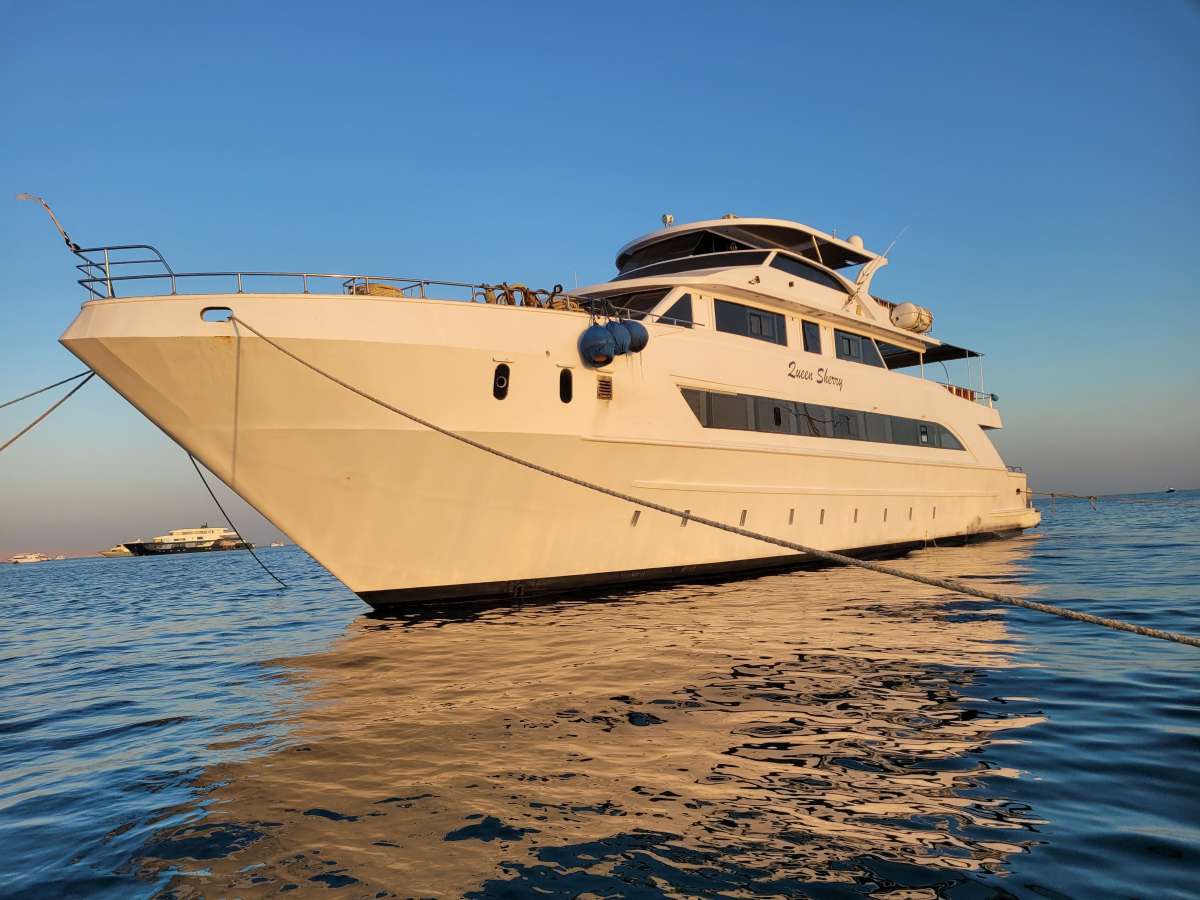
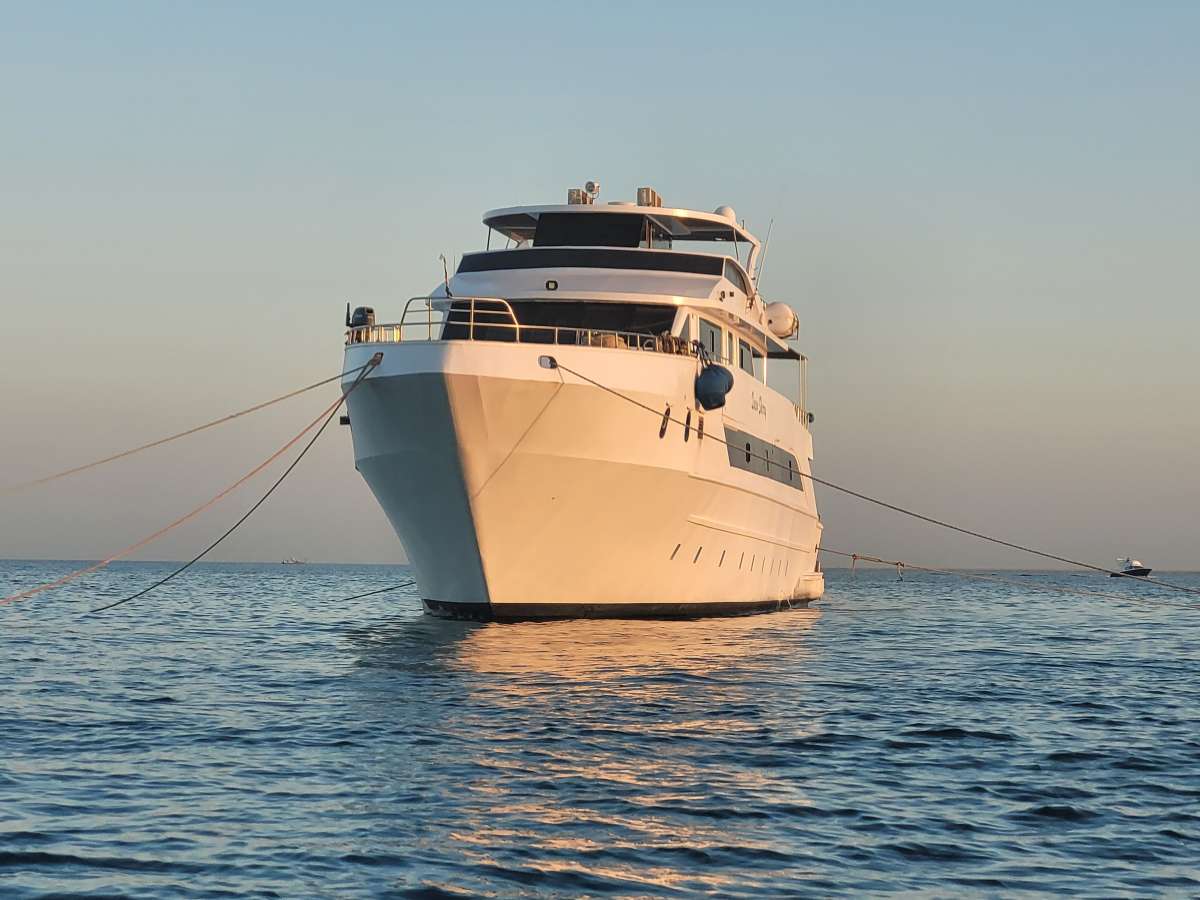
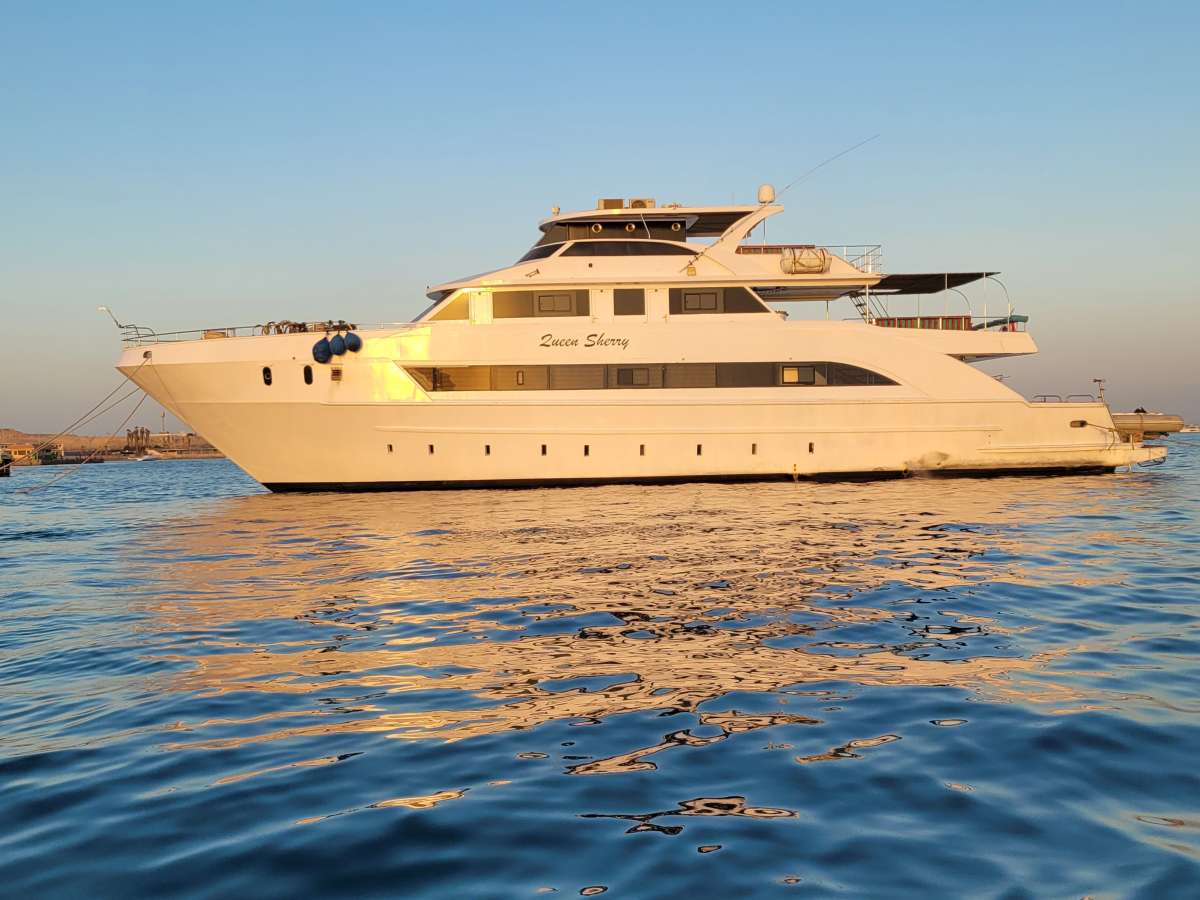
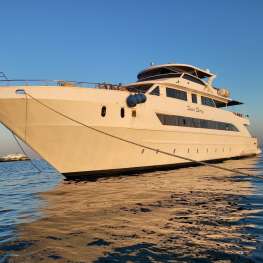
Queen Sherry is a 34-metre steel Red Sea liveaboard built in 2023 for 24 guests. Her 12 air-conditioned ensuite cabins include 11 practical twins and one upper-deck king suite. A broad dive deck, two tenders, indoor and outdoor lounges, specialist dolphin expeditions and weekly routes to Daedalus, Sataya, Elphinstone, Brothers, St. Johns, Rocky and Zabargad make her a versatile choice for divers, snorkellers and mixed groups.
Description
Boat
M/Y Queen Sherry is a modern steel liveaboard built for the long southern Red Sea itineraries that begin from the Marsa Alam region. The current operator specification gives a 2023 build year and an overall length of 34 metres. Twelve cabins accommodate no more than 24 guests, keeping the room plan straightforward while leaving separate indoor, outdoor and working areas for a full week at sea.
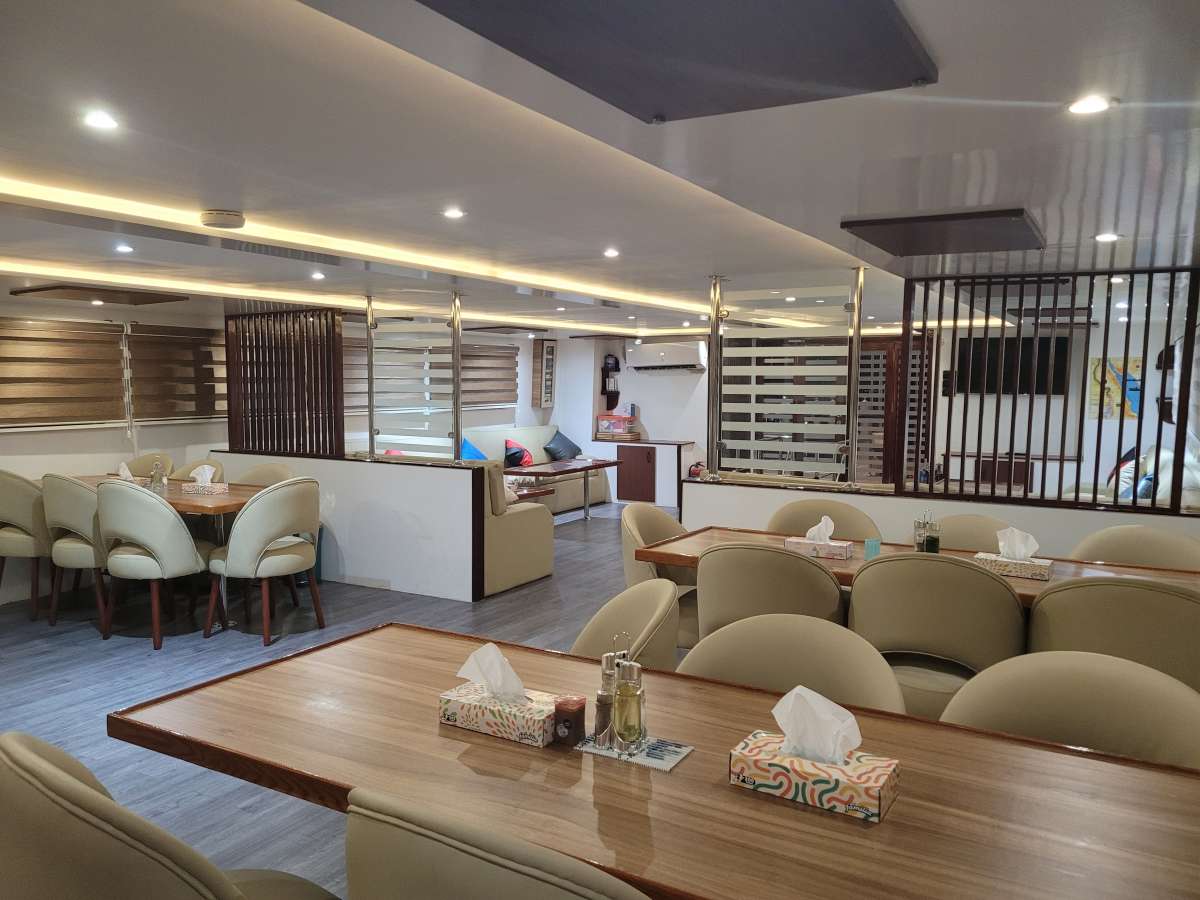
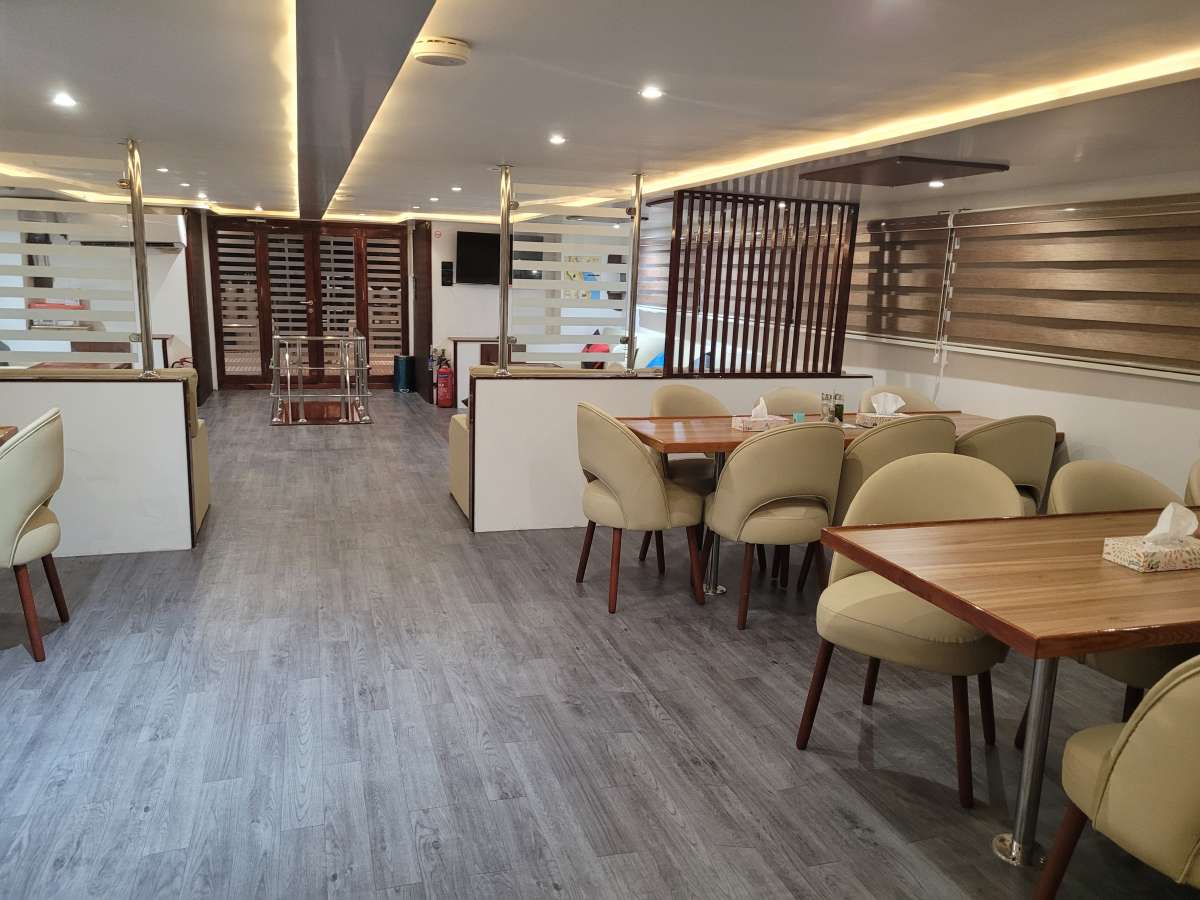
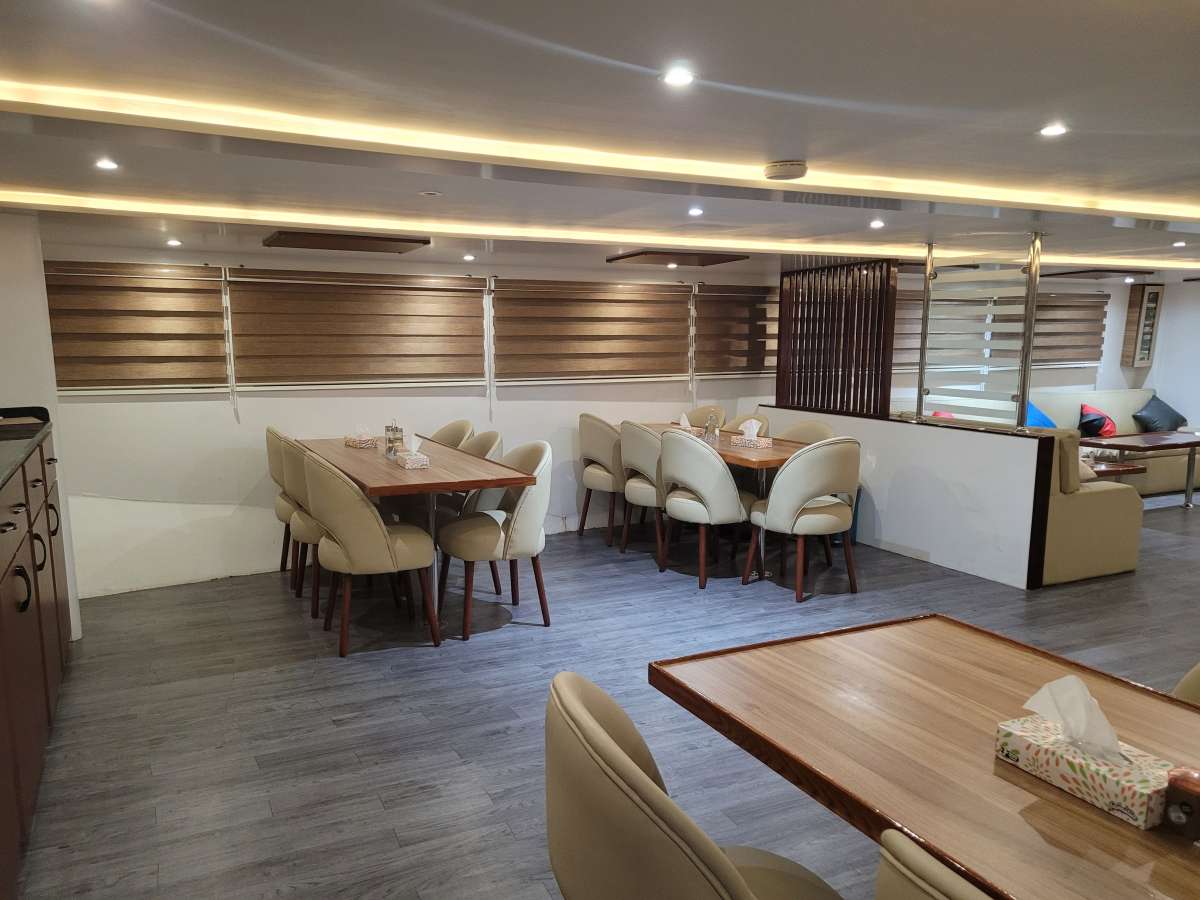
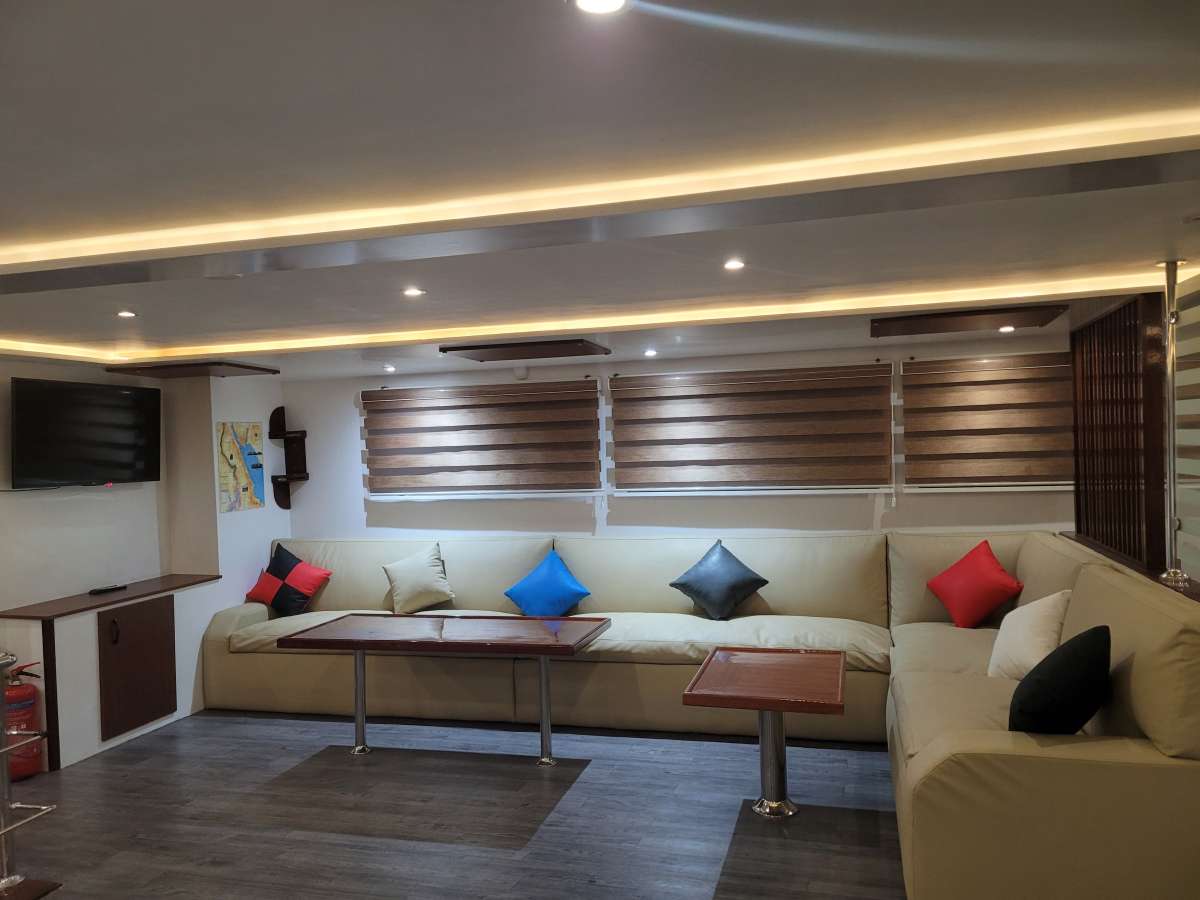
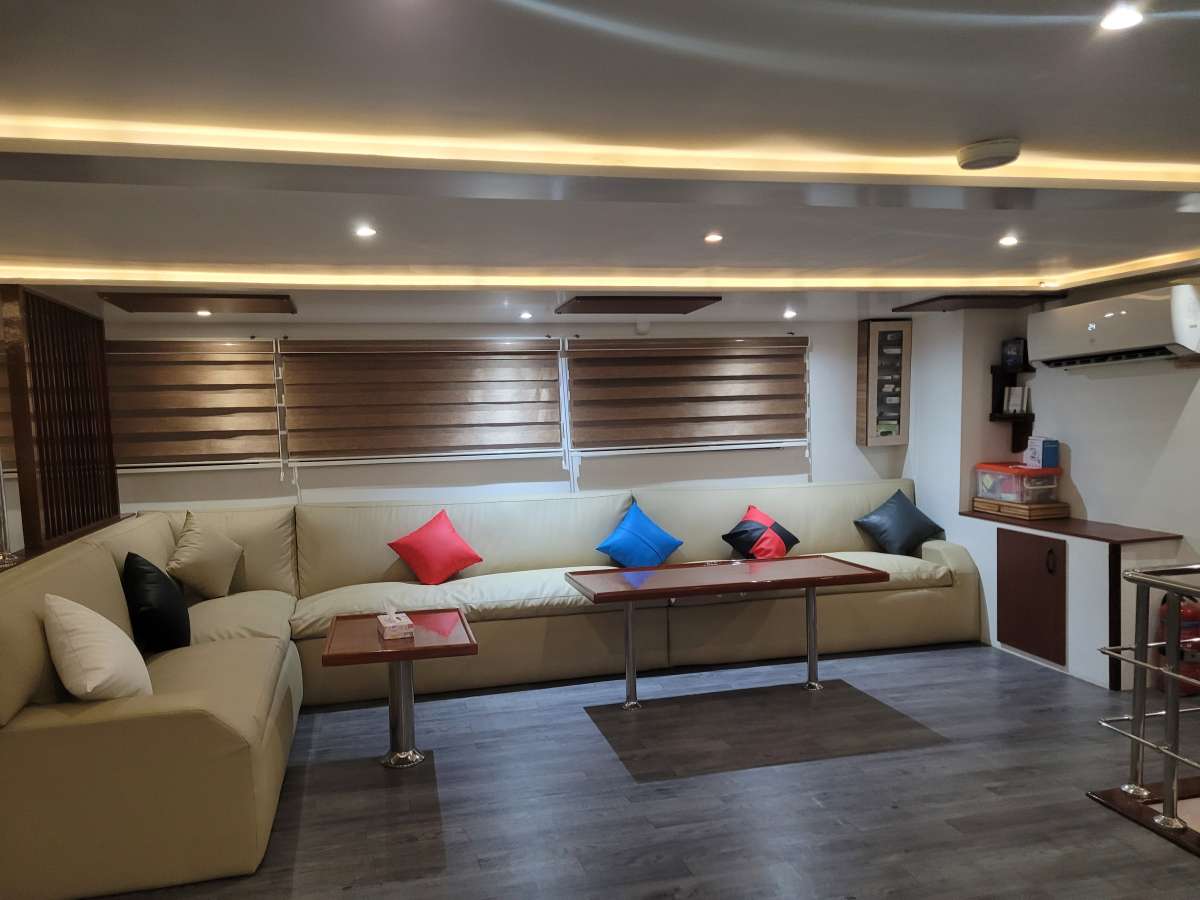
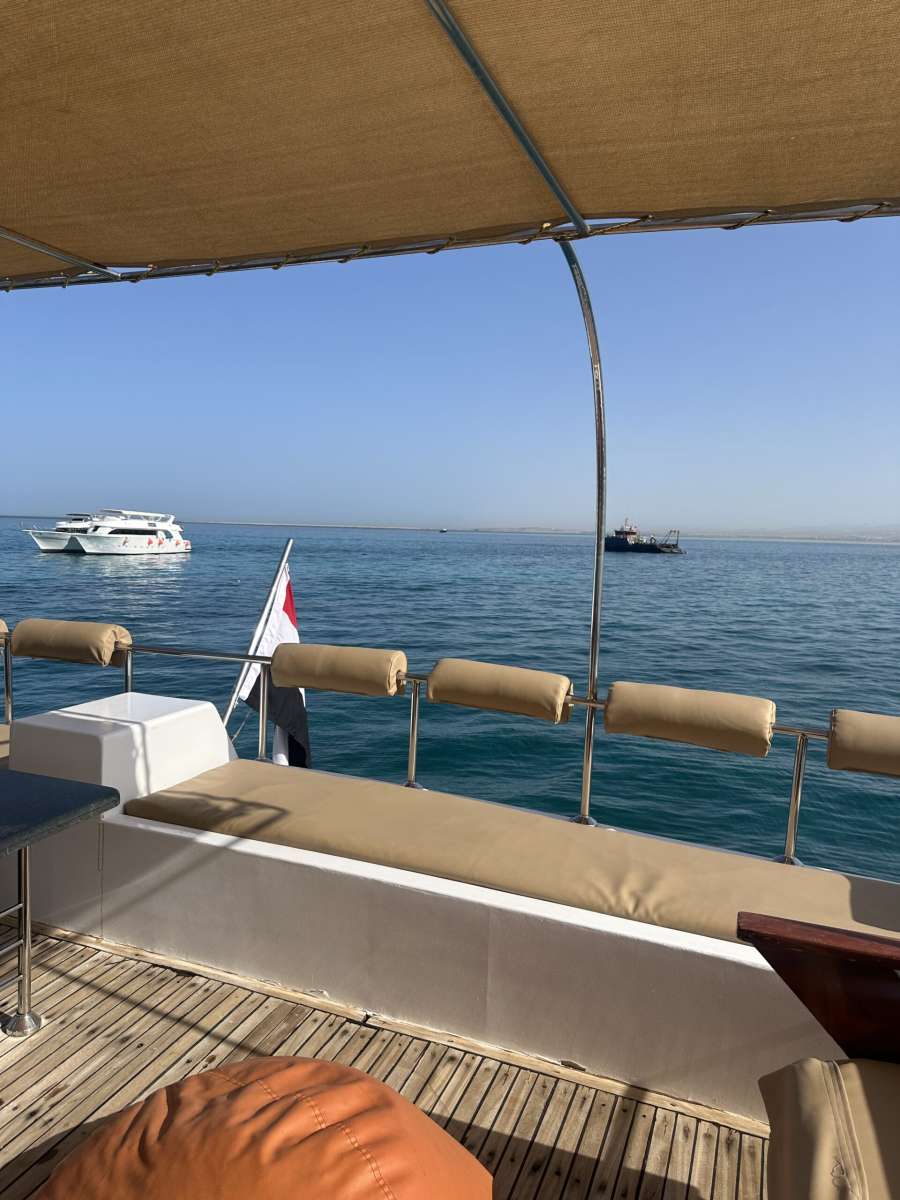
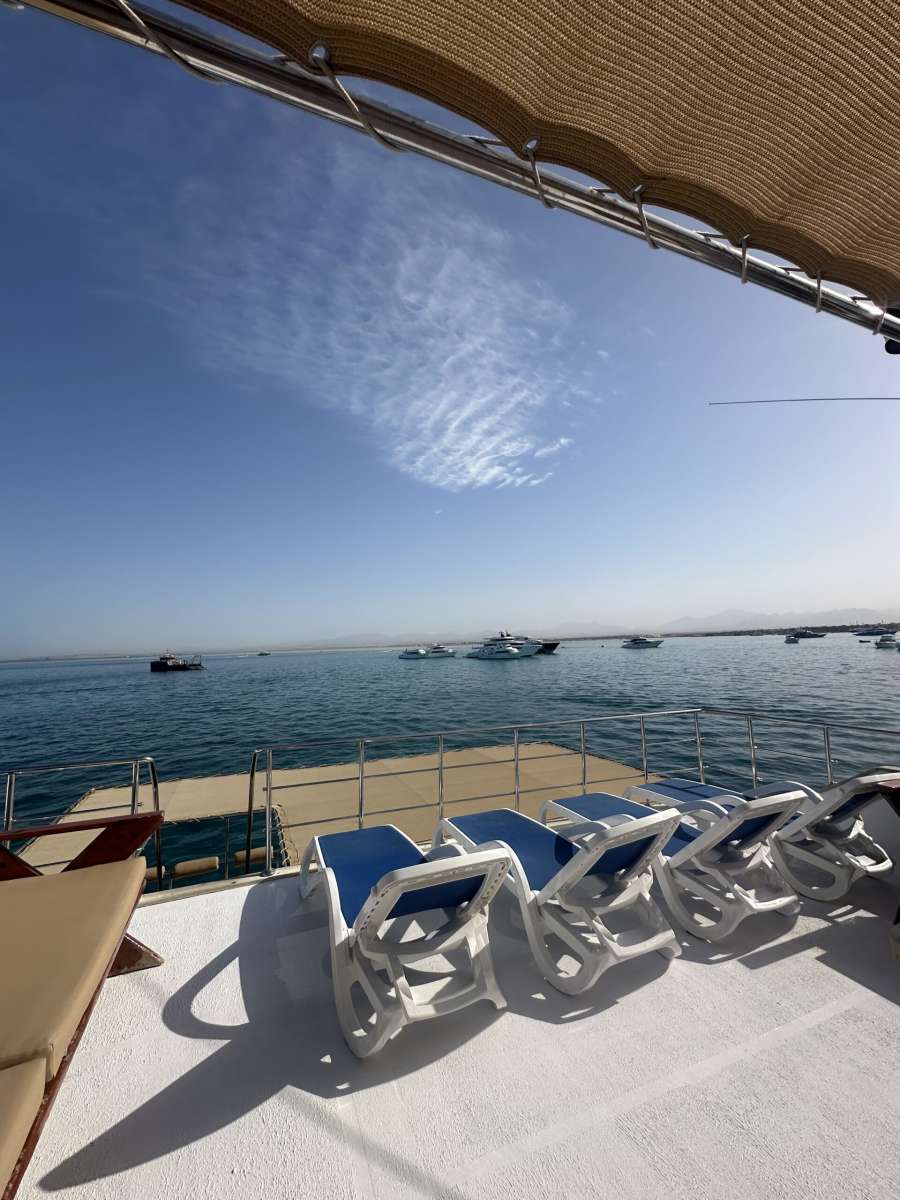
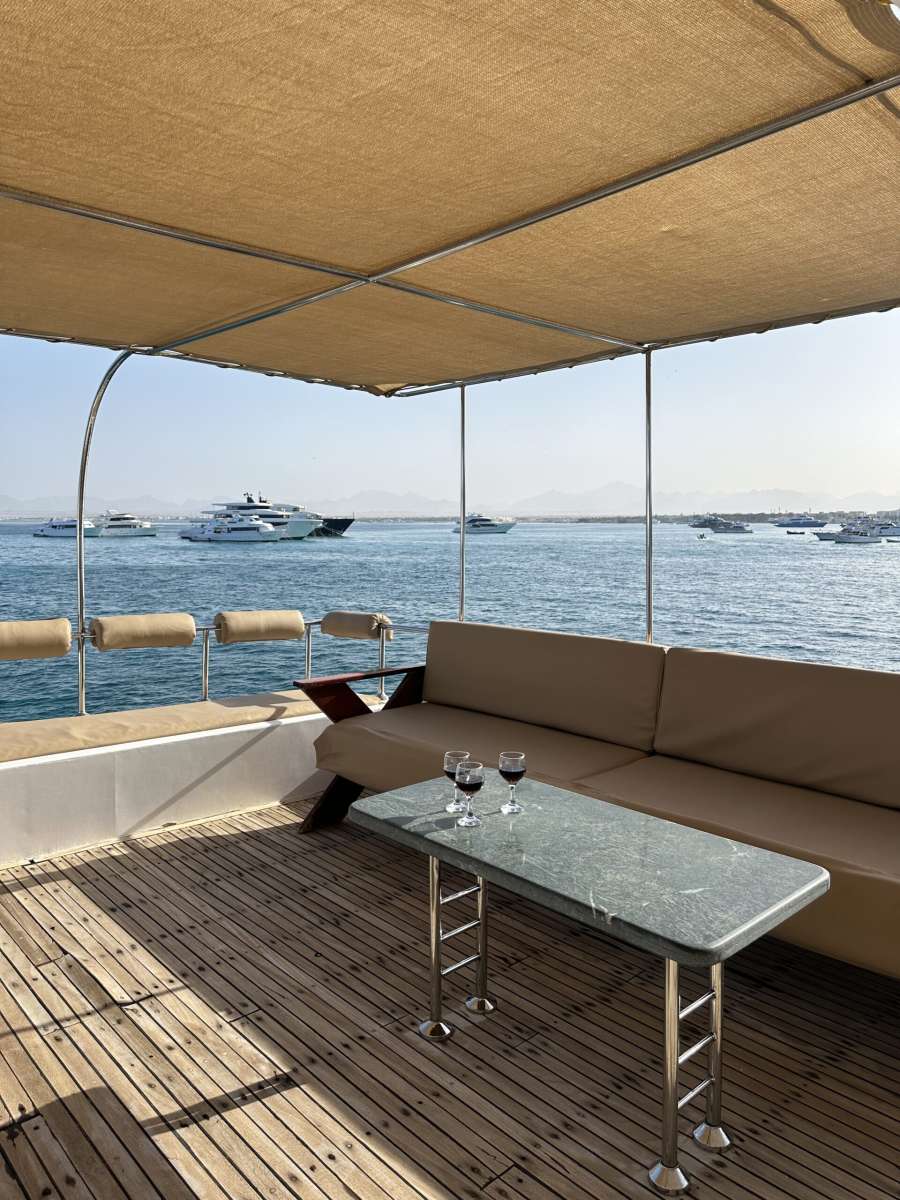
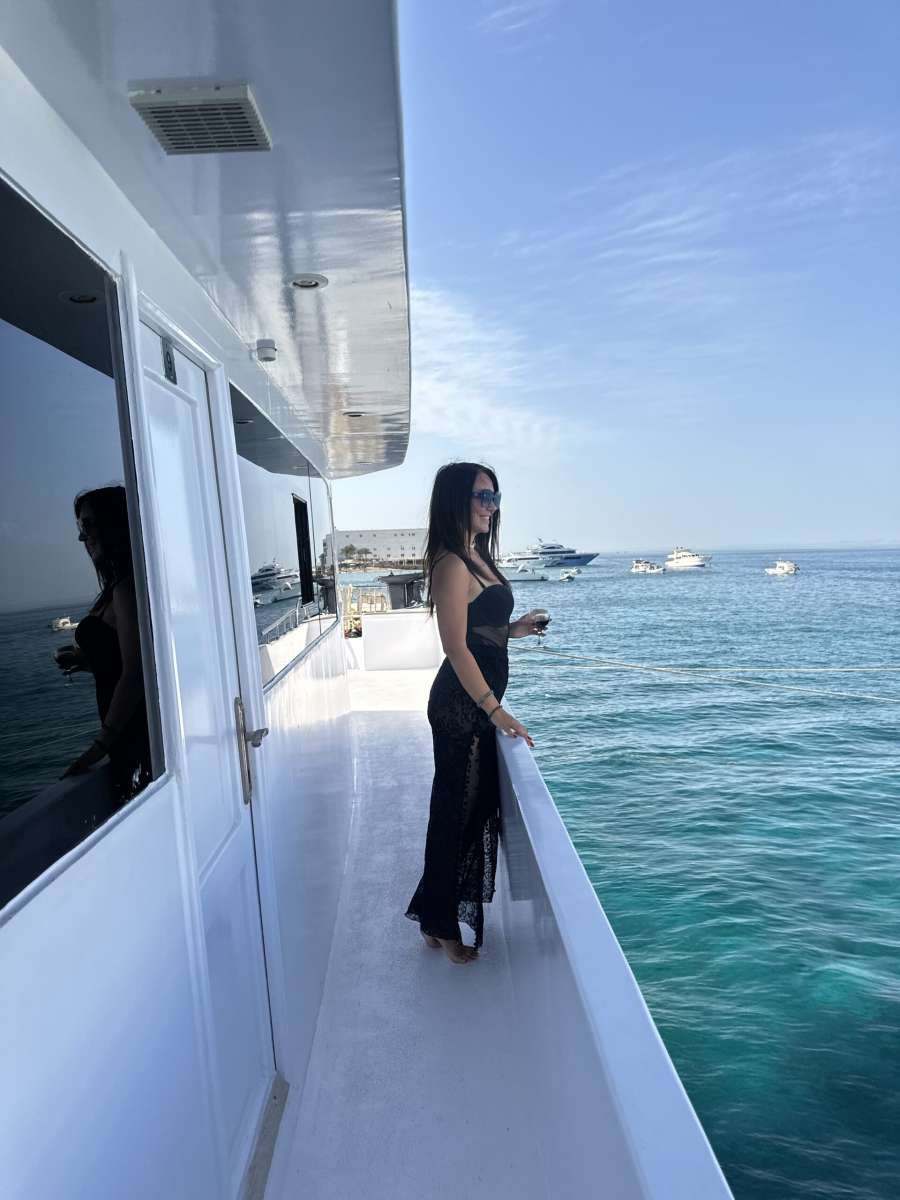
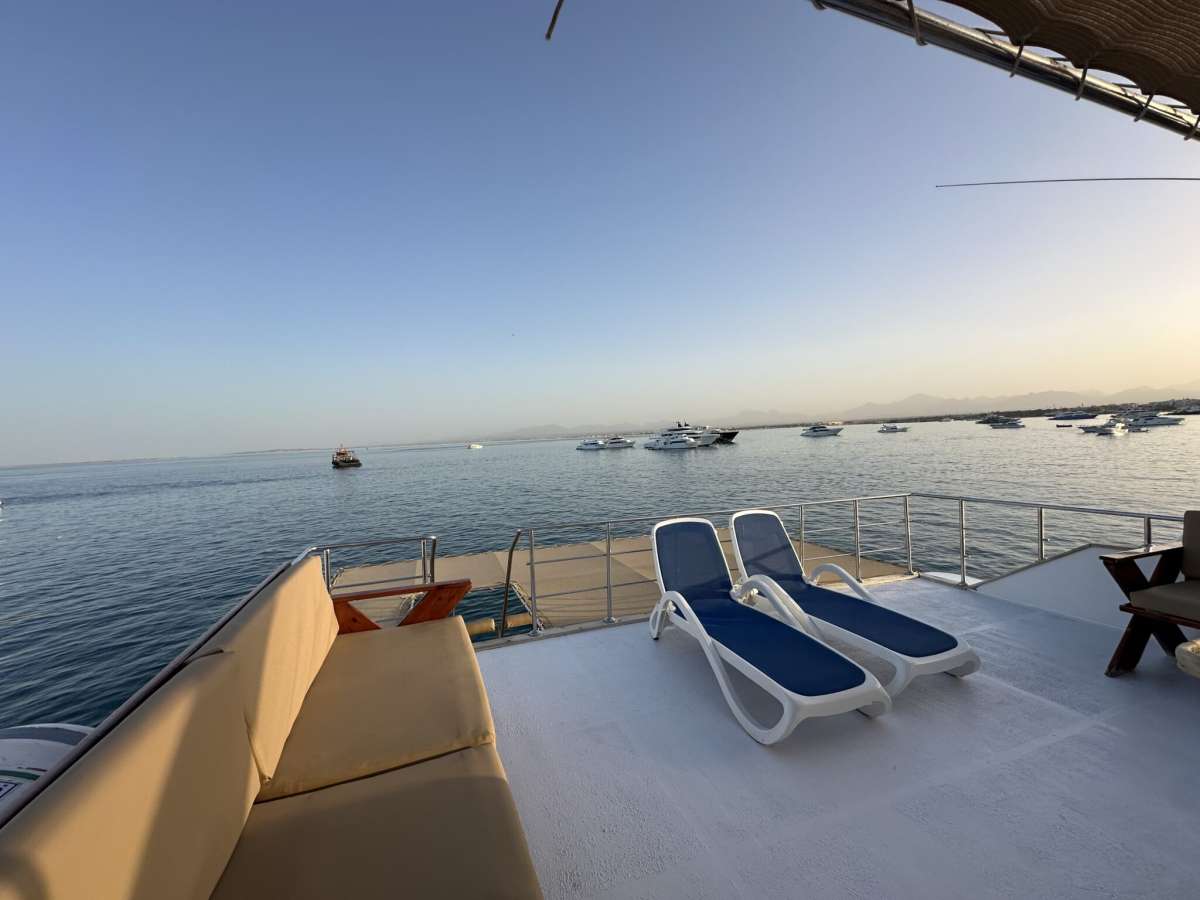
The social layout is practical rather than ceremonial. A large air-conditioned salon combines deep seating with a bright dining section, giving guests somewhere comfortable for meals, briefings, logbooks or a film. Outside, a covered lounge, open sun deck and evening bar deck create different levels of shade and exposure. Travellers can move from a quiet sea-view seat to an open lounger without occupying the dive deck, an important distinction when cylinders are being filled and equipment is being prepared.
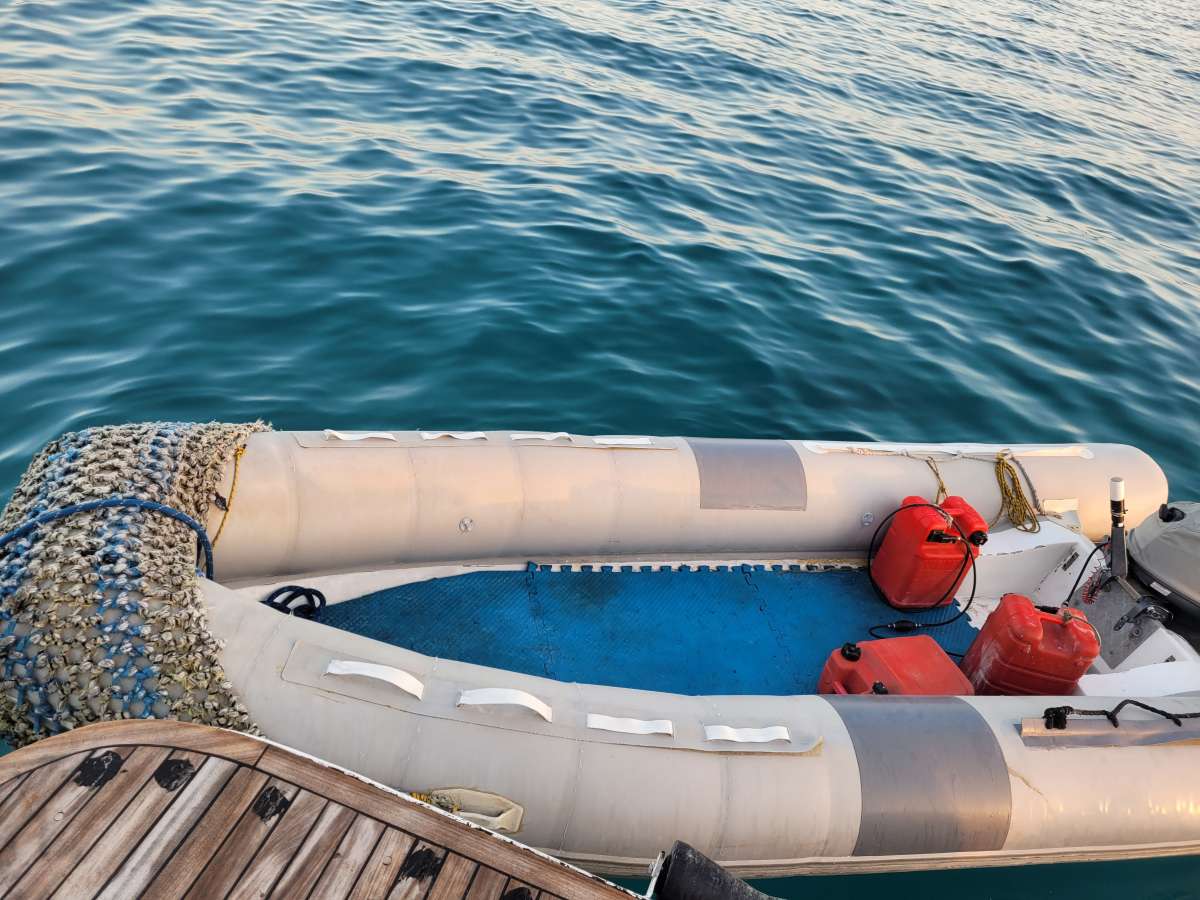
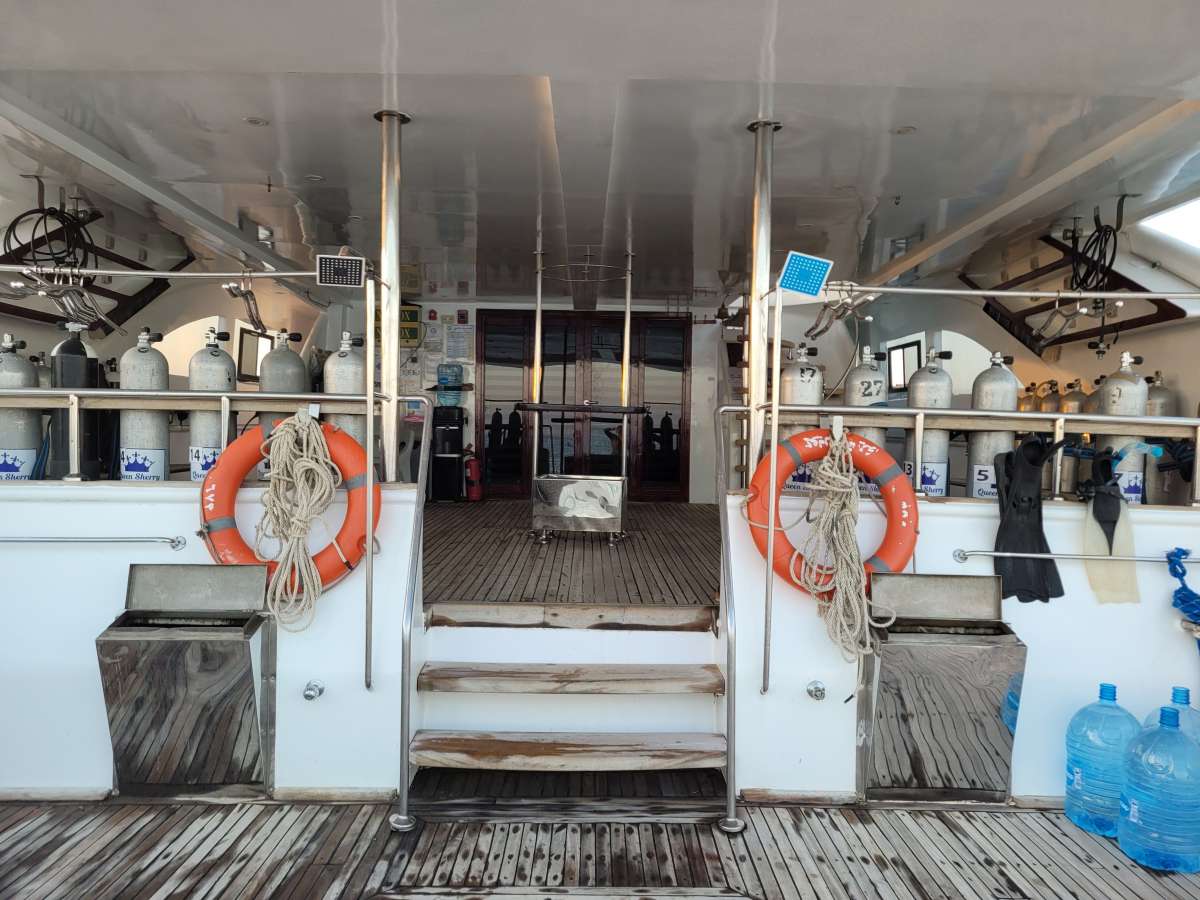
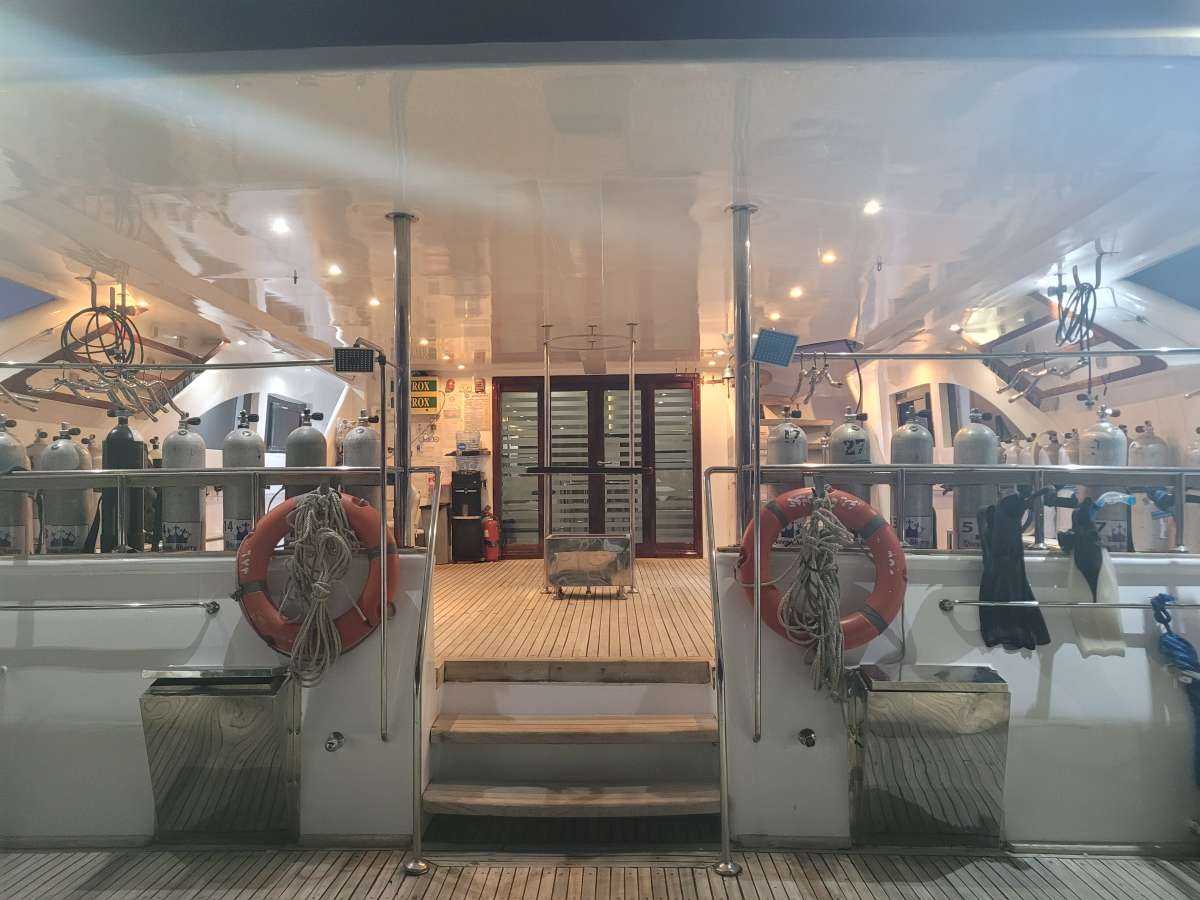
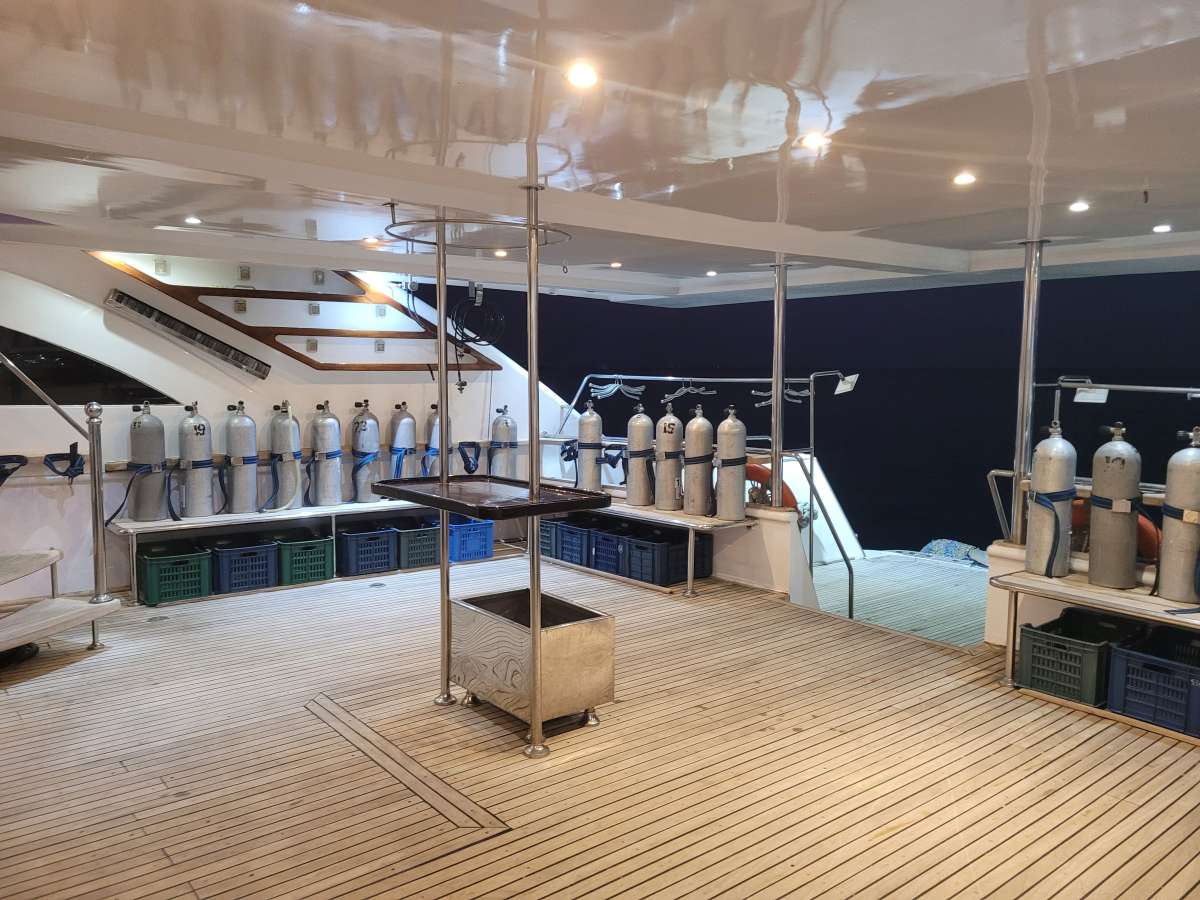
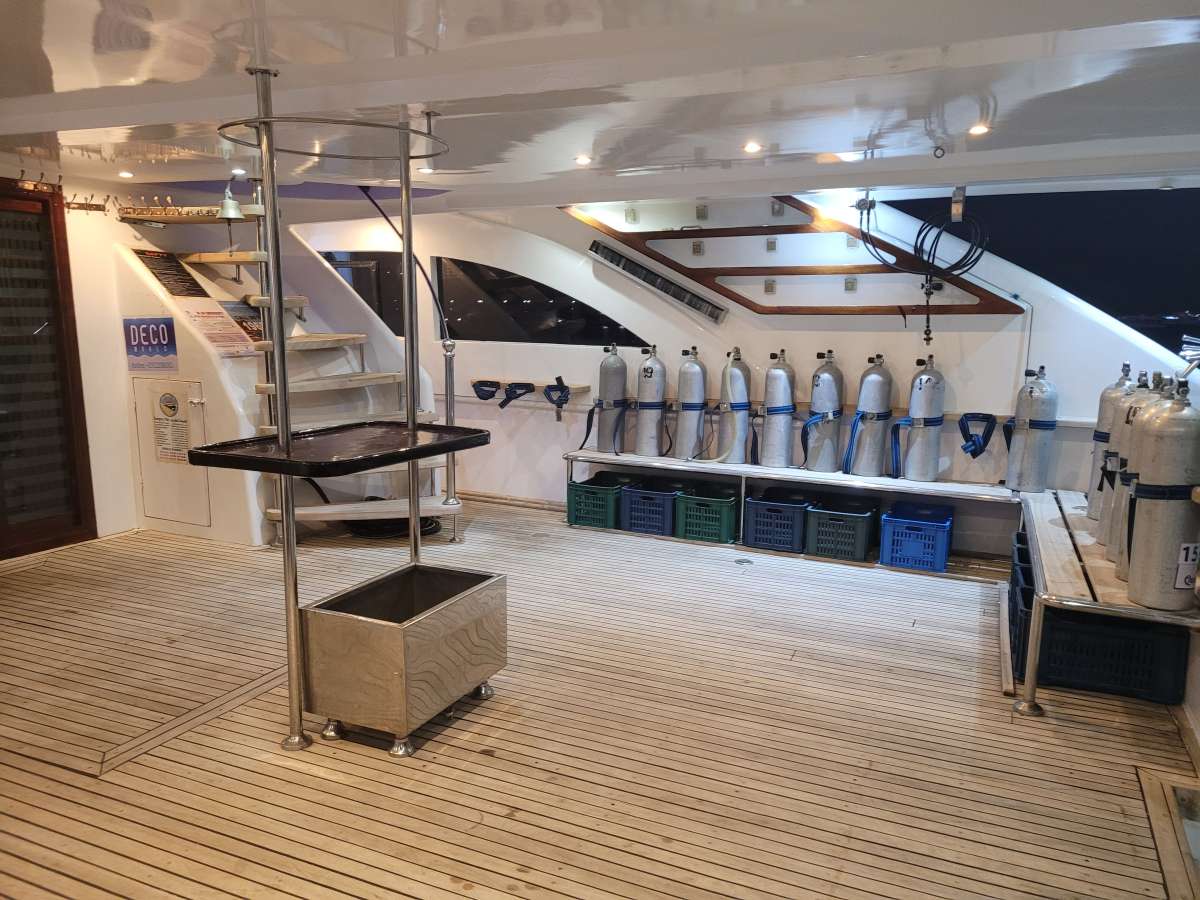
Queen Sherry’s stern is organised around diving. Individual tank stations line the broad working deck, rinse and preparation areas keep equipment together, and two tenders carry groups to entries that the main vessel cannot safely approach. Outdoor showers, dedicated underwater-camera rinsing and charging stations are listed in the current specialist record. The boat also welcomes snorkellers and runs dedicated dolphin and yoga weeks, so the outdoor deck space remains useful even for guests who are not completing every scuba dive.
Two MAN engines rated at 610 hp each are published in both the operator and specialist data. Wi-Fi is available onboard, although offshore coverage and the vessel’s connection determine real performance. Meals are cooked and baked aboard and served buffet-style, with local dishes, full board, snacks, water, tea, coffee and soft drinks included in the current standard seller package. Beer, wine and other alcoholic drinks are available for purchase. Religious or allergy-related dietary needs should be entered during booking before provisioning.
Queen Sherry’s strongest point of difference is the operator’s focus on dolphin and shark expeditions. Selected departures carry a dolphin-behaviour specialist who explains movement, communication and respectful in-water conduct. Shark routes use site-specific briefings and prohibit baiting, chasing, touching or blocking an animal’s path. These natural encounters are presented with educational support while remaining dependent on wild behaviour.
The vessel is Egyptian flagged, with MMSI 622109777. The operator states that a mandatory evacuation drill takes place before every departure and lists emergency oxygen, EPIRB and life rafts. The wider specialist inventory adds radar, GPS, VHF/DSC/SSB radio, life jackets, fire detection and extinguishers, first-aid kits, satellite and mobile communications, search light, engine-room CCTV and flares. Queen Sherry is presented as CDWS licensed and connected with HEPCA environmental standards.
Cabin
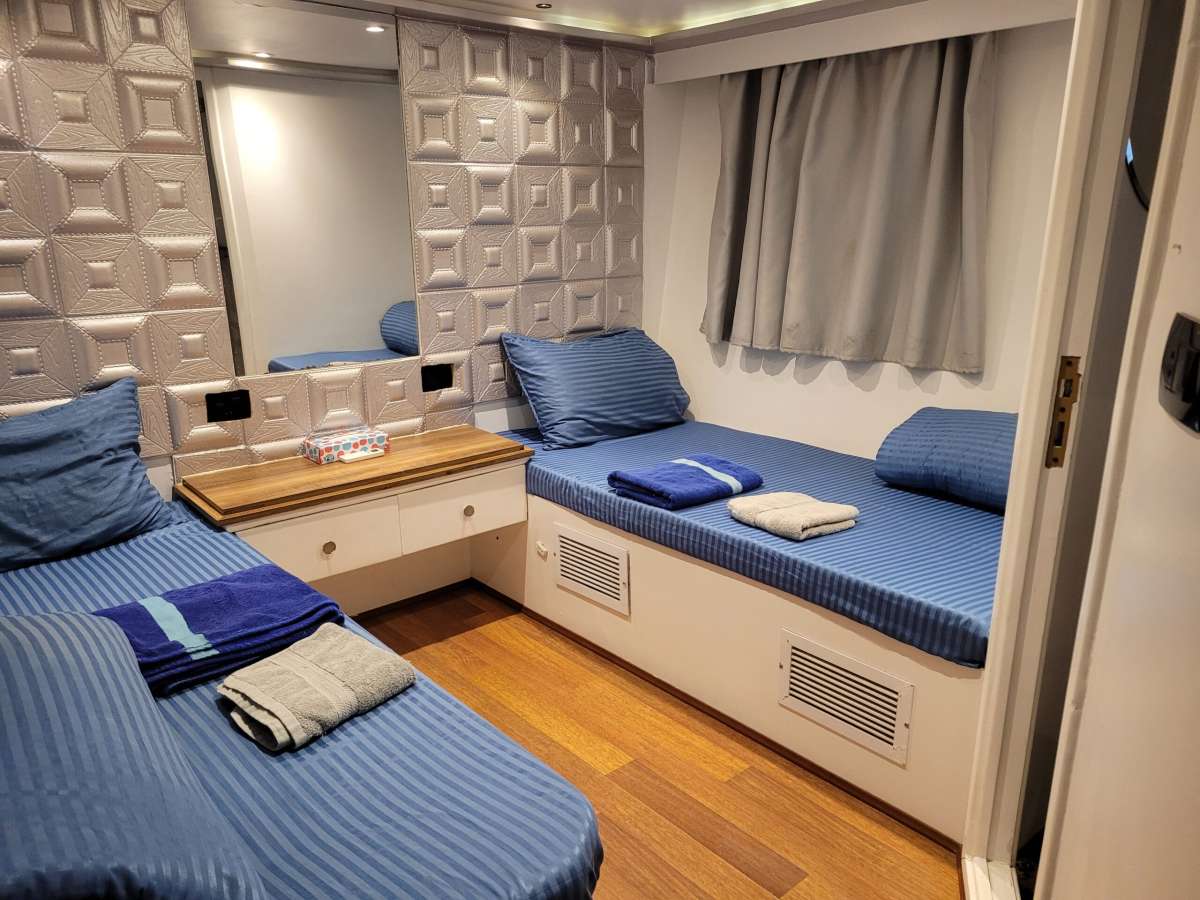
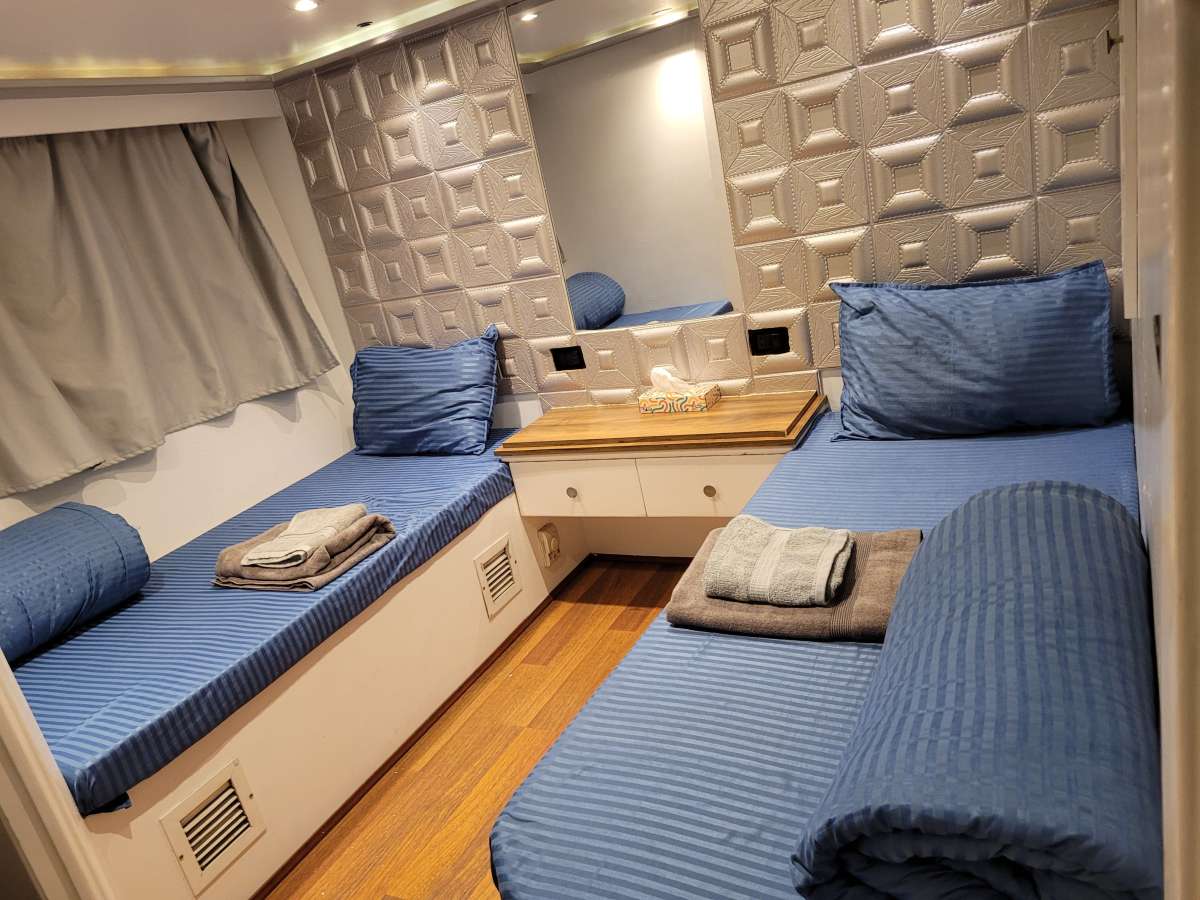
Queen Sherry accommodates exactly 24 guests in 12 air-conditioned cabins with private shower and toilet. The current operator’s deck-by-deck inventory is:
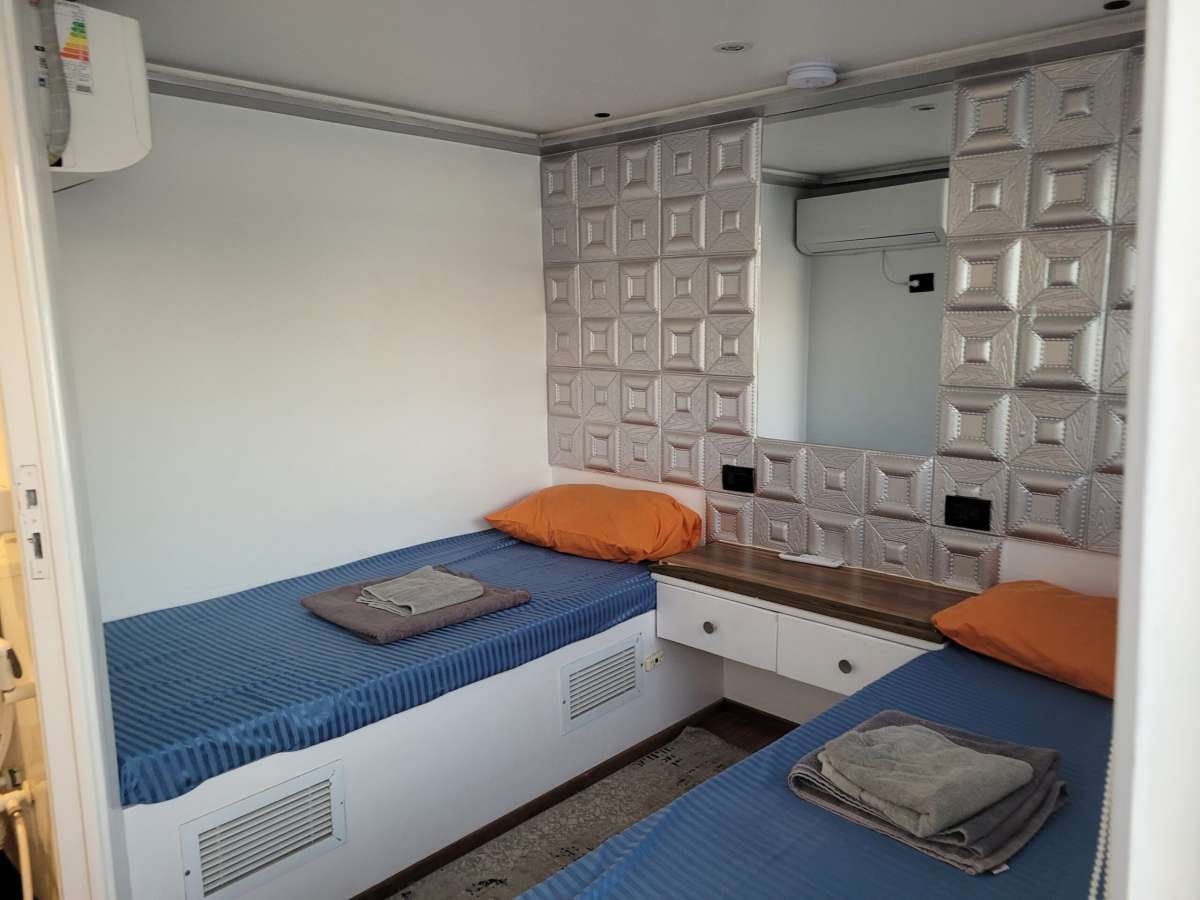
- 7 Lower Deck Twin Cabins: two separate single beds in each room; private ensuite bathroom with shower and toilet; individually controlled air conditioning; porthole; maximum 2 guests per cabin
- 4 Upper Deck Twin Cabins: two separate single beds in each room; private ensuite bathroom with shower and toilet; individually controlled air conditioning; standard exterior window; maximum 2 guests per cabin
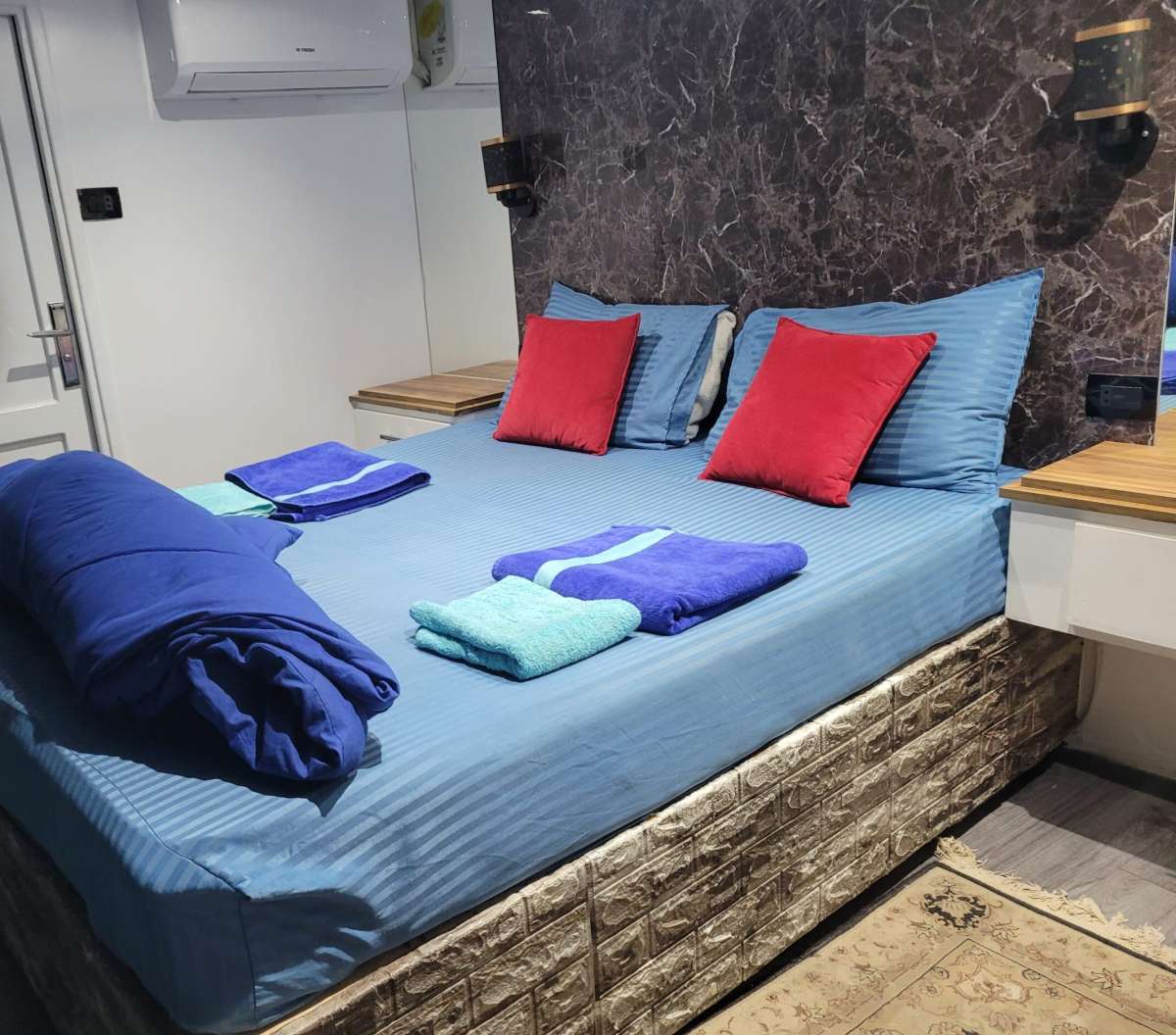
- 1 Upper Deck Suite: one king-size bed; private ensuite bathroom with shower and toilet; individually controlled air conditioning; standard exterior window; maximum 2 guests
The arithmetic is complete: 7 lower twins + 4 upper twins + 1 upper suite equals 12 cabins. Eleven twin rooms provide 22 individual single beds, while the suite provides one shared king for 2 people, giving the published maximum of 24. There are no advertised triple cabins, bunks or convertible sofa beds in the current room inventory.
The lower deck holds most of the accommodation. Its seven rooms use portholes and true separate singles, making them practical for dive partners and solo travellers willing to share. The upper deck contains four more twins with conventional windows. These rooms may appeal to guests who value more direct daylight, but reaching them requires use of the vessel’s exterior or interior stairs and places them closer to upper social areas.
The sole upper-deck suite is the only published double-bed category. The operator specifically describes a king-size bed, while the current photographic record shows a broad central bed rather than two singles pushed together. Couples wanting this arrangement should reserve the named suite; a request for “double” must not be assumed to convert one of the 11 twins.
No reliable cabin floor areas or mattress dimensions are published. None are invented here. Likewise, the sources do not establish that every twin room has the identical footprint or furniture orientation: photographs show both parallel and L-shaped layouts. The booking document should identify deck, category, bed layout and cabin number, especially when mobility, window type or sharing comfort matters.
All categories include private bathroom, shower, toilet and individual air-conditioning control. Cabin and deck towels are included in the current package, and daily housekeeping is listed. Solo-friendly twin sales are advertised, but a traveller booking one berth should confirm who controls the room allocation and whether a single supplement applies on that departure.
Diving
Queen Sherry’s current schedule is built around 8-day / 7-night Saturday-to-Saturday safaris. The named programmes include Pelagic Trail, Brothers–Daedalus–Elphinstone, Golden Mix, Deep South: Secrets of Zabargad, Pelagic Trail Deluxe and specialist dolphin/yoga weeks. Most departures use Marsa Alam as the marina region, with included transfer windows from either Marsa Alam or Hurghada Airport.
The Pelagic Trail is the broadest mixed-level scuba option. It plans 18–21 dives across the Marsa Alam area, Daedalus, Sataya–Fury Shoal and potentially Elphinstone. Open Water divers are accepted, while deeper plateaus and the 40-metre Red Trail demand the relevant certification and experience. The operator can divide a group into a Blue Trail around 15–20 metres and a more demanding Red Trail, allowing friends of different levels to visit the same reef under different plans.
Two days at Daedalus focus on walls, plateaus and blue-water observation. Hammerheads, oceanic whitetips, barracuda, tuna and other pelagics are possible, never guaranteed. Night diving is prohibited there. Sataya and Fury Shoal then add dolphin snorkelling, coral gardens, caves and eligible night dives. The lagoon itself is for snorkelling rather than scuba; surrounding reefs supply the dive programme. A final day may use Elphinstone or Marsa Alam sites according to conditions.
The Brothers–Daedalus–Elphinstone route is more demanding. The operator requires Advanced Open Water or equivalent plus at least 50 logged dives. Currents, deep plateaus, exposed walls and open-water exits make it unsuitable as a first liveaboard. The programme schedules approximately 17–21 dives, with no night diving inside the Brothers and Daedalus marine parks.
Golden Mix combines offshore sharks with Sataya dolphins, St. Johns caves, Rocky Island, Zabargad and its wreck possibilities. Deep South: Secrets of Zabargad pushes farther south and is also published for Advanced Open Water divers. These are route concepts, not a guarantee that every named reef or species will appear; sea state, permissions, guest ability and safe navigation govern the final plan.
The dive package is included, but Nitrox is a paid extra. The current weekly examples are €70 for unlimited 12-litre Nitrox fills or €125 for a 15-litre Nitrox package. A 15-litre air cylinder is also extra. Rental equipment and onboard courses are available only when reserved and should not be treated as unlimited stock. Every diver remains responsible for checking the assigned set before use.
Other Information
- Destination: Egyptian Red Sea
- Home marina region: Marsa Alam; exact port and transfer instructions follow the departure
- Airports served within defined windows: Hurghada (HRG) and Marsa Alam (RMF)
- Construction: steel liveaboard, operator build year 2023
- Length: 34 m in the current operator specification
- Capacity: 24 guests in 12 ensuite cabins
- Cabin split: 7 lower twins, 4 upper twins and 1 upper king suite
- Engines: 2 × MAN, 610 hp each
- Tenders: 2
- Internet: onboard Wi-Fi, connection dependent
- Diving: broad stern deck, fixed tank stations, tenders, equipment rental, courses and paid Nitrox
- Special interests: dolphin-behaviour expeditions, shark programmes, snorkelling and selected yoga retreats
- Registration and safety: Egyptian flag; MMSI 622109777; evacuation drill before departure; emergency oxygen, EPIRB and life rafts
Confirmed as included in the current Queen Sherry standard seller package: VAT; airport transfer and hotel transfer within the operator’s defined timing; drinking water; soft drinks; tea and coffee; full-board meals; snacks; the booked diving package; eligible night dives; naturalist guide; snorkelling guide; cabin towels; deck towels; and Wi-Fi. The exact dive count and night-dive access depend on the selected route.
Required extras in the current Queen Sherry record: mandatory service charge of €70 per person per trip plus €145 per person per trip for park, port and fuel fees. The operator’s route information presents the same combined compulsory amount as €215 from 1 June 2026. These charges are dated and must be rechecked on the invoice.
Optional or excluded services: flights and Egyptian visa; dive insurance, which is mandatory; rental scuba or snorkelling equipment; Nitrox; 15-litre cylinder; dive courses; private guide; alcoholic drinks; and any transfer outside the included windows. Current illustrative extras include a 15-litre air cylinder at €35 per week, selected rental items at €18–42, a complete set with computer at €220, private guide at €350 and courses at €185–285. Prices can change and must not replace a dated quotation.
The included arrival transfer operates on Saturday for flights reaching Hurghada or Marsa Alam Airport between 12:00 and 18:00. On the final Saturday, the group bus leaves the boat at 08:00, reaching Marsa Alam Airport at approximately 10:00–12:00 and Hurghada Airport around 12:00–14:00. Arrivals or departures outside those windows incur an extra transfer charge. Because group transport cannot wait indefinitely, flight timing and any private-car alternative should be confirmed before ticketing.
Insurance covering underwater activity is mandatory for the whole trip, and proof must be shown to the dive guide on the first day. Broader travel protection should address cancellation, delay, medical treatment, evacuation, equipment and baggage. A certification card, logbook, insurance policy, medical declaration and any prescribed medication belong in hand luggage.
Itineraries
Queen Sherry’s schedule ranges from advanced offshore shark expeditions to mixed-level pelagic journeys and snorkelling-focused dolphin retreats. The representative programme below follows the operator’s Pelagic Trail, an 8-day / 7-night route with 18–21 planned dives. It is independently written to show how Daedalus, Sataya–Fury Shoal and the Marsa Alam/Elphinstone sector can fit together without promising a fixed reef order or wildlife encounter.
Pelagic Trail — Representative 8 Days / 7 Nights
Day 1, Saturday — Airport transfer and embarkation
Guests arriving inside the published window are collected from Hurghada or Marsa Alam Airport and transferred toward the boat. Check-in brings cabin allocation, equipment storage and paperwork before the full vessel and emergency briefing. The evacuation drill explains exits, life jackets, muster procedure and the role of the two tenders. Dinner introduces the group and the route concept. No arrival-day dive is planned; Queen Sherry may remain in the marina or begin positioning only when clearance and the captain’s schedule allow.
Day 2, Sunday — Marsa Alam check dives
Two or three dives in the Marsa Alam area provide a controlled beginning. Guides check weighting, buoyancy, air consumption, DSMB use and group compatibility before the offshore passage. Rental equipment is adjusted now rather than at an exposed reef. The sites can still offer coral, turtles and schooling fish, but the operational purpose is preparation. After the final session, cylinders and personal equipment are secured for the crossing toward Daedalus.
Day 3, Monday — Daedalus south plateau
The first Daedalus day normally schedules three or four dives. An early entry may target the south plateau and blue water, where hammerheads are possible at recreational depths when conditions cooperate. Other dives explore walls, shoals and the reef’s dramatic drop-off. Oceanic whitetips, barracuda and tuna may pass, but there is no baiting or pursuit. When marine police authorise it, a lighthouse visit adds a historical interlude. The guides give a fresh shark and current briefing before each entry.
Day 4, Tuesday — Daedalus north point and two-level planning
Queen Sherry remains around Daedalus for another three or four dives. Mixed groups can separate into the Blue and Red Trails: the Blue plan stays around 15–20 metres at suitable sections of the lighthouse, south plateau or north point, while the Red plan may include a deeper drop-off profile for appropriately trained divers. A 40-metre option is not available merely because it appears in the programme. Certification, gas, recent experience and guide approval all apply. Night diving is prohibited at Daedalus, so the evening is used for the southbound crossing, dinner and rest.
Day 5, Wednesday — Sataya dolphins, Fury Shoal caves and night dive
The atmosphere changes at Sataya–Fury Shoal. The programme plans three daylight dives plus one night dive. Snorkellers may enter the protected Dolphin House lagoon under the guide’s instructions, where spinner dolphins sometimes choose to approach. Scuba takes place on the surrounding reef system rather than inside the lagoon. Sites such as Maksur, Claudia, Malahy or Abu Galawa can introduce coral gardens, swim-throughs and cave-like formations. Only clearly briefed, safe passages are used. After sunset, qualified divers explore the reef by torch while non-divers remain aboard.
Day 6, Thursday — A second full Sataya and Fury Shoal day
Another four planned dives give the guides time to use the better tide rather than rushing onward. A second dolphin snorkel is possible, but guests must allow the pod to choose distance and duration. Different Fury Shoal sites can shift the focus from broad coral scenery to smaller nocturnal subjects. The final night dive occurs only where regulations, weather and the group permit. A festive dinner then replaces the usual evening rhythm and brings divers and snorkellers together after two highly varied days.
Day 7, Friday — Elphinstone or the Marsa Alam coast
The final two dives are selected around sea state, travel distance and the required no-fly interval. Elphinstone may offer north or south plateau profiles and a possibility of oceanic whitetips, while a coastal alternative can provide a calmer finale. A dugong-related option is occasionally discussed but is never guaranteed. Diving finishes early enough for equipment to be rinsed and dried as Queen Sherry returns to the marina. Guests complete logs, settle extras and pack without placing wet gear in the cabins.
Day 8, Saturday — Checkout and group transfer
Checkout is scheduled at 08:00. The shared bus then travels to Marsa Alam Airport, expected around 10:00–12:00, and Hurghada Airport, expected around 12:00–14:00. Guests must book flights with a margin for road conditions and the actual no-fly interval from their last dive. A private transfer outside the group plan is chargeable and should be arranged before departure day.
How the Blue and Red Trails Work
The Pelagic Trail can welcome an Open Water diver without pretending that every profile is suitable for that qualification. On a shared Daedalus day, a Blue Trail group may use gentler portions of the reef at approximately 15–20 metres, while the Red Trail group follows deeper walls or the drop-off. Both groups can experience the same offshore setting and surface intervals, but their maximum depth, current exposure and supervision differ.
This system is valuable for couples and clubs with mixed experience. It does not remove individual limits. Each diver must stay within certification, insurance coverage and recent competence; the guide may assign a different plan after the check dives. A guest who cannot join a deep profile still receives a purposeful dive, not a watered-down imitation of the Red route.
Alternative Queen Sherry Routes
Brothers–Daedalus–Elphinstone concentrates on three exposed marine-park systems and plans roughly 17–21 dives. Advanced Open Water or equivalent plus 50 logged dives is required. Big and Little Brother add steep walls and the Numidia and Aida wrecks; Daedalus favours early blue-water searches; Elphinstone combines plateaus and oceanic whitetip possibilities. Night diving is prohibited at Brothers and Daedalus.
Golden Mix links a much wider southern selection: Daedalus, Sataya, St. Johns, Rocky Island and Zabargad. It seeks a combination of sharks, dolphins, caves, coral gardens and wreck history within one week and is published for Advanced Open Water divers. Long navigation and ambitious geography make the exact number of sites condition-dependent.
Deep South: Secrets of Zabargad pushes into the far south for experienced divers. Rocky and Zabargad offer walls, coral, blue-water potential and wreck interest, while St. Johns contributes caverns and reef architecture. This programme also requires Advanced Open Water and should not be sold as an easy alternative to Pelagic Trail.
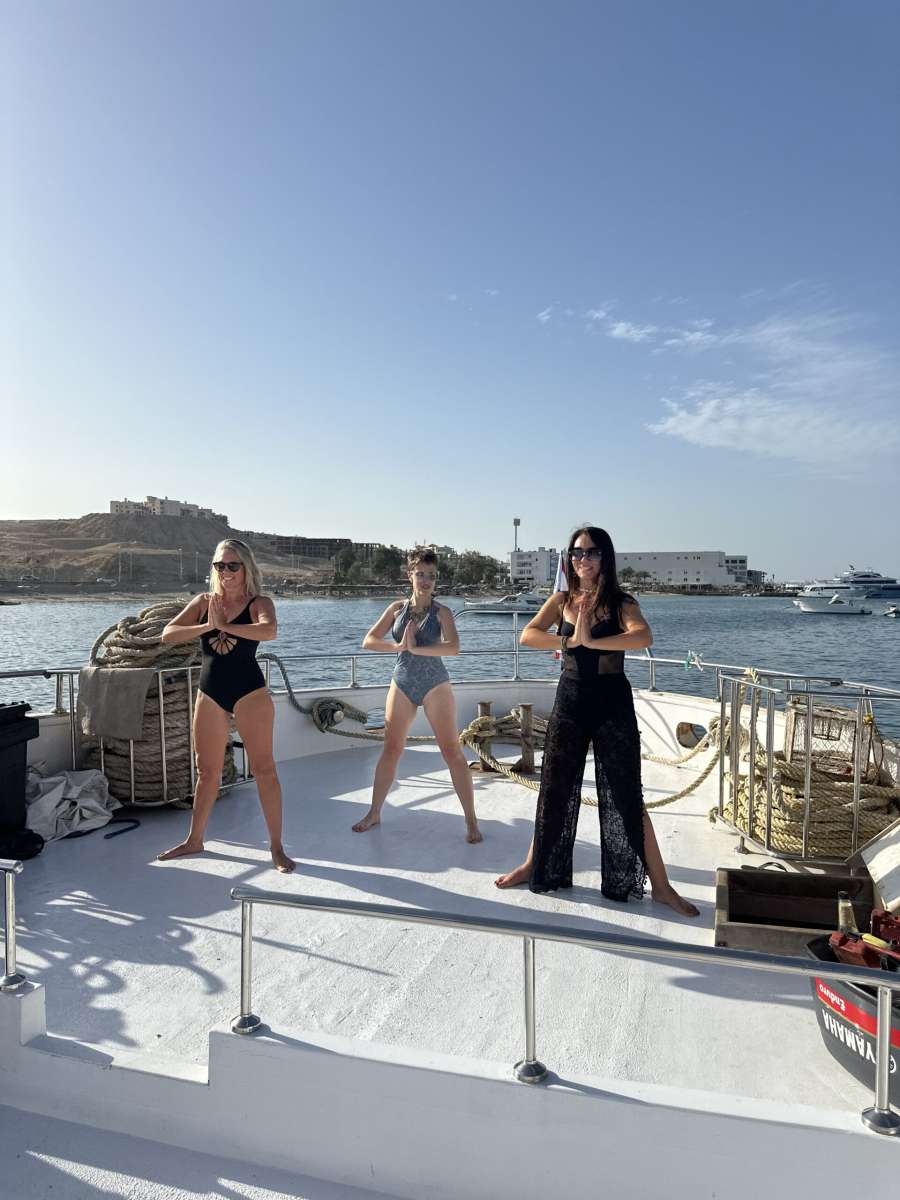
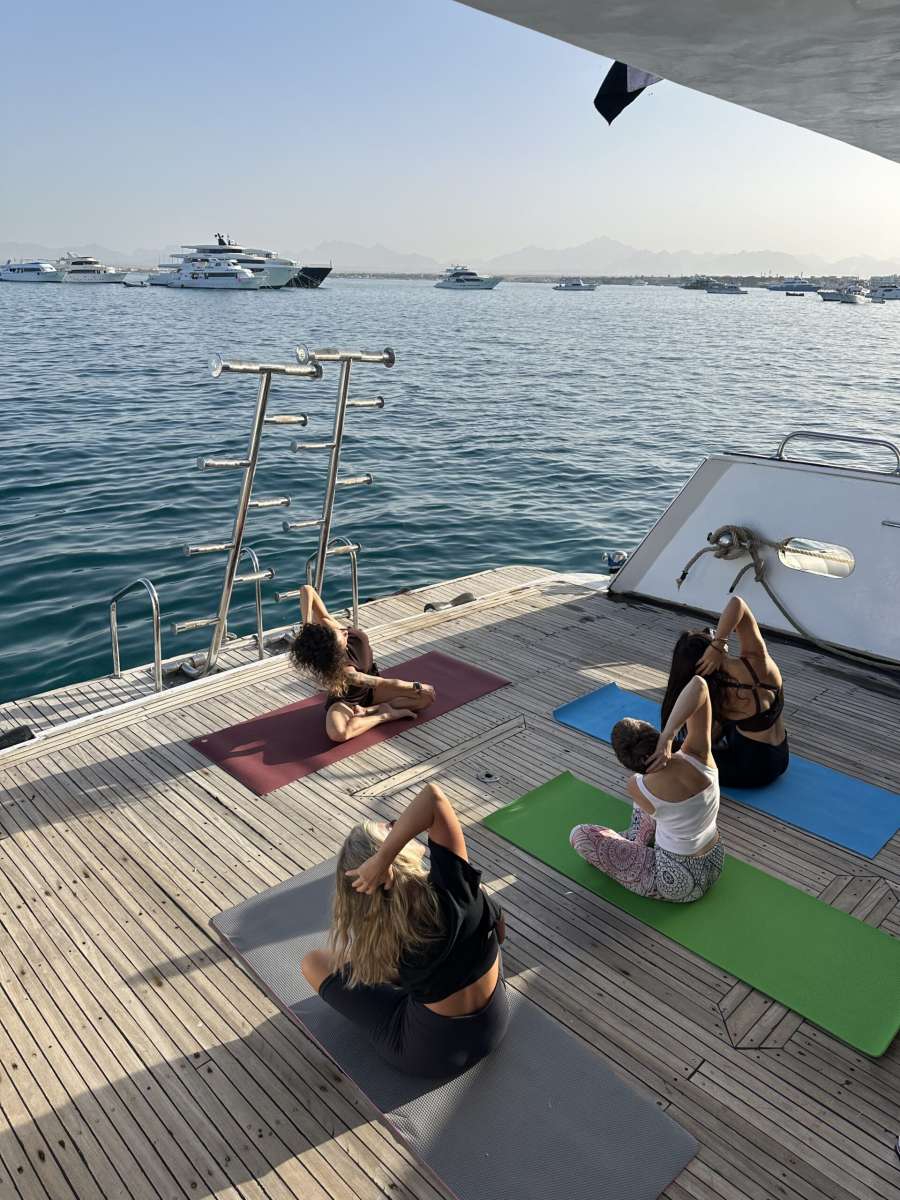
Dolphin and Yoga Retreat is a snorkelling-led week rather than a standard scuba safari. It uses Queen Sherry’s open deck for guided movement sessions and builds the water programme around respectful dolphin observation. Visitors must book the named retreat if they want that balance; normal dive departures do not automatically include daily yoga or a dolphin specialist.
Wildlife and Route Flexibility
The Red Sea offers extraordinary possibilities, but route names are not promises. Hammerheads may remain deep, oceanic whitetips may not approach, a dolphin pod may move away and a dugong may never appear. Ethical encounters depend on giving wildlife control. Queen Sherry’s published practice rejects bait, touching, chasing and blocking, and the crew’s specialist briefings explain how body position changes an encounter.
Wind and current have equal authority. Marine police can restrict a lighthouse visit, a tender entry can move, and an offshore crossing can shorten a dive day. The 18–21 Pelagic total is planned rather than guaranteed. Summer programmes may reach four dives on busy days; winter operation normally uses a lower daily rhythm. A safe alternative is a successful operational decision, not a failure to follow a brochure.
A Typical Day aboard Queen Sherry
Early light often provides the best offshore conditions, so a pre-breakfast briefing and first dive are common. Back on Queen Sherry, the dive deck keeps wet equipment at assigned stations while guests move forward for breakfast. A second briefing follows the required surface interval, with tender groups separated by plan and experience.
Lunch and a rest occupy the warm middle of the day. The salon offers air conditioning, while covered outdoor seating keeps the sea in view. A third dive may lead into sunset; at Fury Shoal an eligible night dive follows after a longer briefing and torch check. Dinner is served around operations, not at a rigid resort hour. On non-night-dive evenings, the bar deck, logs and route presentation take over.
Cabins are for sleep and private preparation rather than wet equipment storage. Chargers belong at the designated stations, tanks remain secured and passages stay clear. This routine allows 24 guests to share the vessel without the working deck spreading into every social space.
Schedules & routes
Prices & conditions
Included
- Transfers from airport and/or hotel to the yacht
- VAT and local taxes
- Full-board meal plan (including snacks)
- Complimentary beverages (water, tea, coffee)
- Soft drinks
- Diving activity (incl. tanks, weights, weight belts)
- Dive guide service
- Boat accident insurance
- Cabin towels and complimentary toiletries
- Cabin cleaning service
- Wi-Fi
Not included
- Domestic flights in destination country
- Marine park fees & Port fees
- Fuel surcharge
- Alcoholic beverage
- Dive equipment rentals
- Larger tank (15 L)
- Nitrox fills
- Dive courses on board
- Dive insurance (mandatory requirement)
- Travel insurance (trip cancellation insurance)
- Crew gratuity
Useful information
Diver's reviews (0)
Photos